

The next major breakthrough in computational biology may not come from a new supercomputer, but from the software that allows scientists to harness one.
Researchers have introduced MDNA, a new open-source molecular modeling framework designed to generate, manipulate, and analyze complex DNA structures with unprecedented flexibility. While the software itself is a biological modeling tool, its broader significance lies in how it could accelerate large-scale molecular simulations, AI-driven biological discovery, and ultimately the long-standing ambition of constructing digital twins of living systems.
At a time when exaflops computing is transforming fields ranging from climate science to astrophysics, biology is increasingly becoming one of the most computationally demanding scientific disciplines. DNA is no longer viewed simply as a sequence of genetic letters. It is a dynamic three-dimensional structure whose geometry, interactions, and modifications influence everything from gene expression to disease progression.
Understanding those behaviors requires simulation at an extraordinary scale.
Building better starting points for supercomputing
Modern molecular dynamics simulations can model systems containing millions, or even billions, of atoms. Researchers have already demonstrated billion-atom DNA simulations on leadership-class supercomputers, revealing how genes fold, interact, and regulate biological activity.
However, one persistent challenge has been constructing biologically realistic DNA configurations suitable for large-scale simulation.
MDNA addresses that bottleneck.
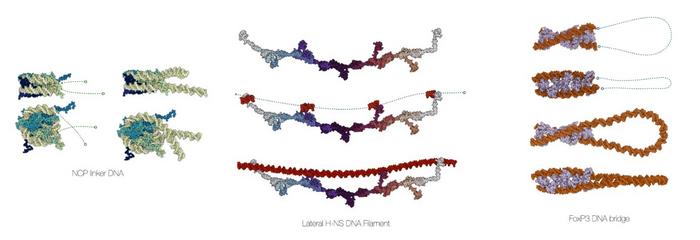
The framework enables researchers to generate DNA structures with arbitrary shapes using spline-based modeling techniques, while also supporting biologically important modifications such as DNA methylation, Hoogsteen base-pair transitions, and non-canonical nucleotide configurations. By integrating structure generation and structural analysis within a single Python-based workflow, the software streamlines the creation of simulation-ready DNA systems.
The result is a platform that reduces the time required to translate a biological hypothesis into a computational experiment.
Bridging AI and molecular simulation
One of the most compelling aspects of MDNA is its compatibility with many computational tools already used across the molecular simulation community.
The software integrates with established platforms such as OpenMM, MDAnalysis, MDTraj, oxDNA, Bio3D, HTMD, and PLUMED, making it easier to connect AI-generated molecular designs with high-performance simulation workflows. According to the authors, the goal is not merely to construct DNA structures, but to enable a complete computational ecosystem for studying DNA-protein interactions and molecular dynamics.
This arrives at a pivotal moment for computational biology.
Artificial intelligence is increasingly being used to design biological molecules, predict molecular structures, and explore vast biochemical design spaces. Recent advances have demonstrated AI-driven approaches to genetic circuit design and biomolecular engineering, generating datasets and candidate structures at scales impossible for human researchers alone.
Yet AI predictions are only the beginning.
Before a new biological design can be trusted, it often must be validated through detailed molecular simulations that capture physical behavior at atomic resolution. These simulations frequently require the resources of modern supercomputing facilities.
MDNA provides a bridge between those two worlds.
Toward digital twins of biology
The implications extend well beyond DNA modeling.
Scientists increasingly envision a future in which entire biological systems can be represented as computational “digital twins,” virtual counterparts capable of predicting molecular behavior, disease progression, or therapeutic outcomes before laboratory experiments are performed.
Recent projects have mapped the four-dimensional organization of the human genome with unprecedented detail, identifying hundreds of thousands of genomic interactions across time and space.
At the same time, researchers are developing computational frameworks capable of simulating cellular processes, cancer evolution, and molecular communication networks.
Such ambitions depend on accurate structural models as foundational inputs.
MDNA represents one piece of that larger puzzle: a software layer capable of generating realistic DNA architectures that can be incorporated into increasingly sophisticated simulations.
The road to whole-cell simulation
Perhaps the most inspiring aspect of the work is what it suggests about the future.
For decades, biologists have dreamed of creating computational models capable of simulating entire living cells. Achieving that goal requires integrating DNA, proteins, RNA, membranes, molecular machinery, and environmental interactions into unified computational frameworks.
Exaflops supercomputers are beginning to provide the raw computational horsepower needed for such efforts. Yet hardware alone is insufficient. Researchers also require software capable of building, organizing, and analyzing the immense biological structures that those machines will simulate.
MDNA helps fill that gap.
By simplifying the construction of highly detailed DNA systems and integrating them with modern simulation ecosystems, the framework contributes to the growing software infrastructure underpinning next-generation computational biology.
A new era for computational life sciences
While the history of supercomputing is often defined by raw hardware power, scientific progress increasingly relies on the sophisticated software frameworks that translate that capacity into actionable insight.
MDNA exemplifies this shift: although it may not be the largest or most intensive platform, its value lies in its ability to bridge the gap between AI-driven discovery and large-scale molecular simulation.
By simplifying the complexity of DNA modeling, MDNA provides a vital tool for the long-term goal of building biological digital twins.
As we enter the exaflops era, such software will be indispensable, proving that while the future of life sciences is written in DNA, it will be mapped through the power of advanced computational modeling.