


SUPERCOMPUTING NEWS SUPERCOMPUTING NEWS
    • MEDIA KIT
    • MOST READ
    • RSS FEED
    • ACADEMIA
    • AEROSPACE
    • APPLICATIONS
    • ASTRONOMY
    • AUTOMOTIVE
    • BIG DATA
    • BIOLOGY
    • CHEMISTRY
    • CLIENTS
    • CLOUD
    • DEFENSE
    • DEVELOPER TOOLS
    • EARTH SCIENCES
    • ECONOMICS
    • ENGINEERING
    • ENTERTAINMENT
    • GAMING
    • GOVERNMENT
    • HEALTH
    • OIL & GAS
    • INDUSTRY
    • INTERCONNECTS
    • MANUFACTURING
    • MIDDLEWARE
    • MOVIES
    • NETWORKS
    • PHYSICS
    • PROCESSORS
    • RETAIL
    • SCIENCE
    • STORAGE
    • SYSTEMS
    • VISUALIZATION
    • AcyMailing subscription form

    • ADD YOUR VIDEOS
    • MANAGE VIDEOS
    • CONVERSATION INBOX
    • SOCIAL ADVERTISER
    • SOCIAL NETWORK VIDEOS
    • SURVEYS
    • GROUPS
    • PAGES
    • MARKETPLACE LISTINGS
    • APPLICATIONS BROWSER
    • PRIVACY CONFIRM REQUEST
    • PRIVACY CREATE REQUEST
    • LEADERBOARD
    • POINTS LISTING
      • BADGES
    • TRADE SHOWS
Sign In
Prof. Dr. Jürgen Bajorath
Tyler O'Neal, Staff Editor APPLICATIONS November 13, 2023, 2:00 pm

Drug discovery research can benefit from the use of GNNs

Drug discovery is a complex and time-consuming process that involves searching for effective active substances to combat diseases. Researchers are constantly seeking efficient compounds that can dock onto proteins, trigger specific physiological actions, or block undesirable reactions in the body. With a vast abundance of chemical compounds available, finding the right molecule can be like searching for a needle in a haystack. To overcome this challenge, drug discovery research has turned to scientific models and, more recently, artificial intelligence (AI) applications.

The use of AI in drug discovery has grown significantly in recent years. Machine learning applications, such as Graph Neural Networks (GNNs), have emerged as powerful tools for predicting the binding affinity of drug molecules to target proteins. GNNs utilize graph representations to train models on protein-ligand complexes, where nodes represent proteins or ligands, and edges represent their structures or interactions. This approach allows researchers to make predictions about the strength of the interaction between a molecule and its target protein.

However, the inner workings of GNNs have remained somewhat of a mystery. According to Prof. Dr. Jürgen Bajorath, a chemoinformatics researcher from the University of Bonn, understanding how GNNs arrive at their predictions is like peering into a black box. To shed light on this issue, Bajorath and his colleagues from Sapienza University in Rome conducted a detailed analysis of GNNs to determine if they truly learn protein-ligand interactions or if their predictions are influenced by other factors.

The field of drug discovery research has been revolutionized by Graph Neural Networks (GNNs), which are being used to develop predictive models for protein-ligand interactions. However, a recent study has revealed that most GNNs fail to learn the crucial interactions between compounds and target proteins, instead focusing on chemically similar molecules encountered during training. This phenomenon is known as the "Clever Hans effect" and has significant implications for drug discovery research.

To investigate this issue, researchers used their specially developed "EdgeSHAPer" method to analyze six different GNN architectures. They trained the GNNs with graphs extracted from known protein-ligand complexes and tested them on other complexes to evaluate their predictive capabilities. The subsequent EdgeSHAPer analysis aimed to uncover how the GNNs generated their predictions.

The results of the study indicated that simpler methods and chemical knowledge may yield forecasts of comparable quality to GNNs. However, the study also identified two GNN models that showed promise in learning more interactions as the potency of test compounds increased. This indicates the potential for further improvements in GNNs through modified representations and training techniques.

Prof. Bajorath, Chair of AI in the Life Sciences at the Lamarr Institute for Machine Learning and Artificial Intelligence in Bonn, emphasizes that AI is not black magic and that the assumption of learning physical quantities based solely on molecular graphs should be treated with skepticism. Understanding how AI models arrive at their results requires the development of methods for explaining their predictions. Prof. Bajorath's team is actively working on analysis tools like EdgeSHAPer and new "chemical language models" to shed more light on the inner workings of AI in drug discovery.

The publication of EdgeSHAPer and other analysis tools marks a step forward in unraveling the black box of AI models. Prof. Bajorath believes that the field of Explainable AI holds great promise in understanding how machine learning algorithms generate their results. Besides GNNs, there are also approaches for other network architectures, such as language models, that can provide insights into the decision-making processes of AI.

In conclusion, the use of AI, particularly Graph Neural Networks, has brought new possibilities to drug discovery research. While GNNs may not fully grasp the intricacies of protein-ligand interactions, there is still potential for improvement. By developing tools and methodologies for explaining AI predictions, researchers can gain a deeper understanding of how these models work. This knowledge will not only enhance drug discovery but also pave the way for more transparent and trustworthy applications of AI in various scientific domains.
The future of supercomputing: Harnessing the power of chiral magnets

The future of supercomputing: Harnessing the power of chiral magnets

Tyler O'Neal, Staff Editor APPLICATIONS November 13, 2023, 4:00 am

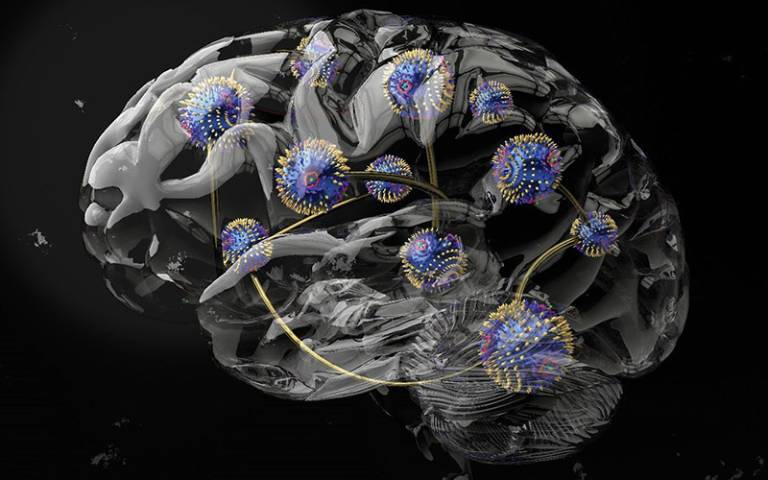
In the pursuit of more energy-efficient supercomputing, researchers from UCL and Imperial College London have made significant strides by utilizing the unique properties of chiral magnets. Their groundbreaking study explores the potential of physical reservoir computing, a brain-inspired approach that uses the intrinsic physical properties of materials. By applying an external magnetic field and manipulating temperature, the researchers demonstrate how chiral magnets can be reconfigured to adapt to different machine-learning tasks, paving the way for more efficient and adaptable supercomputing systems.

Limitations of Traditional Computing

Traditional computing systems, with their separate units for data storage and processing, consume vast amounts of electricity. This architecture necessitates constant shuffling of information between the two units, resulting in energy waste and excessive heat generation. This inefficiency is particularly problematic for machine learning applications that require large datasets for processing. Training a single AI model can generate hundreds of tons of carbon dioxide, highlighting the urgent need for more sustainable computing solutions.

Introduction of Physical Reservoir Computing

Physical reservoir computing is a promising neuromorphic approach that aims to eliminate the need for distinct memory and processing units, leading to more efficient data processing. In addition to its potential as a sustainable alternative to conventional computing, physical reservoir computing can be seamlessly integrated into existing circuitry, offering energy-efficient additional capabilities.

Role of Chiral Magnets

In their study, the international team of researchers focused on chiral magnets as a computational medium. Chiral magnets possess unique physical properties that make them well-suited for specific computing tasks. By leveraging an external magnetic field and temperature variations, the researchers were able to adapt the characteristics of chiral magnets to different machine-learning tasks.

Exploring the Phases of Chiral Magnets

The team discovered that different magnetic phases of chiral magnets excelled at different types of computing tasks. For example, the skyrmion phase, characterized by swirling magnetized particles in a vortex-like pattern, exhibited a remarkable memory capacity ideal for forecasting tasks. On the other hand, the conical phase, with its non-linearity, proved to be excellent for transformation tasks and classification, such as identifying whether an image contains a cat or a dog.

Implications for Energy Efficiency 

By harnessing the unique properties of chiral magnets and their ability to adapt to specific computing tasks, physical reservoir computing holds the potential to revolutionize energy efficiency in computing. With its integration into existing circuitry, this approach could significantly reduce energy consumption while increasing computational capabilities.

Future Directions and Challenges

While the findings of this study are promising, the researchers acknowledge that further research is needed to identify commercially viable and scalable materials and device architectures. The development of practical applications using chiral magnets as a computational medium requires careful consideration of various factors, including cost-effectiveness and manufacturing processes.

Collaborative Efforts and Funding

This groundbreaking study was the result of collaboration between researchers from UCL, Imperial College London, the University of Tokyo, and Technische Universität München. The project received support from esteemed organizations such as the Leverhulme Trust, the Engineering and Physical Sciences Research Council (EPSRC), the Royal Academy of Engineering, the Japan Science and Technology Agency, the Katsu Research Encouragement Award, Asahi Glass Foundation, and the DFG (German Research Foundation).

Conclusion

The study led by UCL and Imperial College London researchers has brought us closer to realizing the full potential of physical reservoir computing. By leveraging the unique properties of chiral magnets and their adaptability to different machine-learning tasks, this brain-inspired approach offers the promise of significantly reducing energy consumption in supercomputing systems. As researchers continue to explore the possibilities and overcome challenges, the integration of physical reservoir computing into existing circuitry holds tremendous potential for creating a more sustainable and efficient future of supercomputing.

Carichino's LEAPS-MPS award highlights the significance of her research in modeling of the interaction between the eye, contact lenses

Carichino's LEAPS-MPS award highlights the significance of her research in modeling of the interaction between the eye, contact lenses

Tyler O'Neal, Staff Editor APPLICATIONS November 10, 2023, 12:00 pm

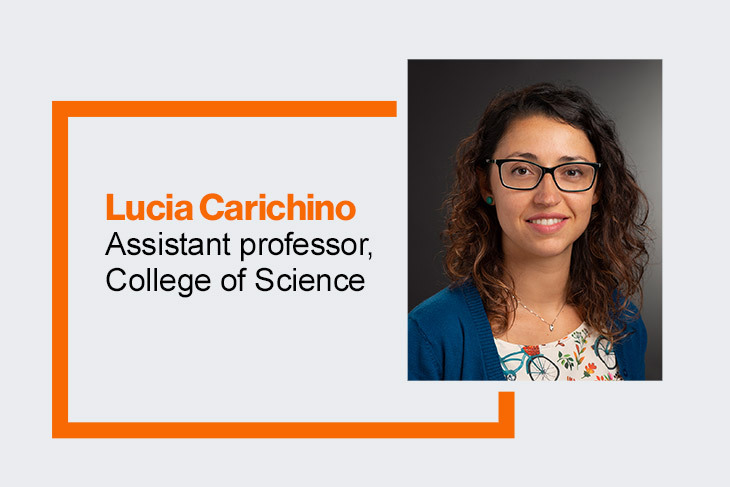
Ortho-k lenses are a unique type of contact lens that can help reduce myopic progression in children and young adults. These lenses are worn overnight and gently reshape the cornea, providing clear vision during the day without the need for glasses or traditional contact lenses. However, finding the right fit for ortho-k lenses can be challenging due to the different shapes available. Lucia Carichino is researching to minimize the trial and error involved in this process. She aims to develop a computational tool that can predict how a particular lens will interact with an individual's eye.

Carichino's research involves working with Riley Supple, a mathematical modeling Ph.D. student, and Kara Maki, an associate professor in the School of Mathematics and Statistics at RIT. They are developing a mathematical model that can anticipate the shape of the eye based on the use of a specific contact lens. By analyzing the interaction between the eye and the lens, their computational tool aims to help eye doctors and contact lens manufacturers select the most appropriate lens for each patient, improving the overall fitting process.

Carichino's research project highlights how mathematics and science intersect in biomedical mathematics. Mathematical modeling plays an important role in predicting and simulating experimental outcomes in biology. By incorporating mathematical components into the study of biology, Carichino aims to optimize the fitting process of ortho-k lenses, benefiting millions of people worldwide who rely on contact lenses.

Carichino's research excellence is recognized by the LEAPS-MPS award program, which also supports increasing diversity and inclusion in the mathematical and physical science fields. She collaborates with RIT's diversity, equity, and inclusion initiatives for the College of Science, and the Undergraduates Research Training Initiative for Scientific Enhancement (U-RISE) program for deaf and hard-of-hearing students offered at the National Technical Institute for the Deaf. Carichino is committed to involving underrepresented groups in her research endeavors, promoting diversity and inclusion in the scientific community.

In conclusion, Lucia Carichino's receipt of the LEAPS-MPS award from the NSF highlights the significance of her research in computational modeling of the interaction between the eye and contact lenses. By developing a mathematical model to predict the fit and performance of ortho-k lenses, Carichino aims to revolutionize the fitting process and enhance the comfort of contact lens wearers. This interdisciplinary research project showcases the importance of mathematics in the field of biology and highlights the commitment to diversity and inclusion in the scientific community. With this award, Carichino is taking a significant step towards advancing eye care and positively impacting the lives of millions of contact lens users worldwide.

  1. Juno Mission finds Jupiter's winds in cylindrical layers, revealing internal structure
  2. AI apps map icebergs 10,000 times faster than humans

Page 2 of 66

  • 1
  • 2
  • 3
  • 4
  • 5
  • 6
  • 7
  • 8
  • 9
  • 10
POPULAR RIGHT NOW
  • Supercomputers uncover a new class of cosmic explosions hidden in plain sight
    Supercomputers uncover a new class of cosmic explosions hidden in plain sight
  • AI supercharges the hunt for stronger magnets: Iowa State researchers launch a new era of intelligent materials discovery
    AI supercharges the hunt for stronger magnets: Iowa State researchers launch a new era of intelligent materials discovery
  • IBM's Historic stock collapse raises questions for the future of enterprise supercomputing
    IBM's Historic stock collapse raises questions for the future of enterprise supercomputing
  • Could a novel dark matter theory simultaneously resolve multiple cosmic enigmas? Supercomputer simulations provide a compelling, albeit currently unverified, potential solution
    Could a novel dark matter theory simultaneously resolve multiple cosmic enigmas? Supercomputer simulations provide a compelling, albeit currently unverified, potential solution
  • Melting icebergs may be reshaping Earth’s greatest ocean current
    Melting icebergs may be reshaping Earth’s greatest ocean current
  • Supercomputers replace ‘bathtub’ flood maps with physics-based digital twins of Britain’s coastline
    Supercomputers replace ‘bathtub’ flood maps with physics-based digital twins of Britain’s coastline
  • Supercomputers push neural quantum simulation beyond previous limits
    Supercomputers push neural quantum simulation beyond previous limits
  • Intel’s AI supercomputing revival: Q2 financial surge signals new era for CPU-powered HPC infrastructure
    Intel’s AI supercomputing revival: Q2 financial surge signals new era for CPU-powered HPC infrastructure
  • AI infrastructure financing fears shake semiconductor sector
    AI infrastructure financing fears shake semiconductor sector
  • AWS supercomputing investment reaches historic scale as Amazon’s AI strategy powers record financial results
    AWS supercomputing investment reaches historic scale as Amazon’s AI strategy powers record financial results
THIS YEAR'S MOST READ
  • Wall Street wants to trade supercomputing power like oil
    Wall Street wants to trade supercomputing power like oil
  • Cosmic ambition at scale: UK’s supercomputer unlocks a 2.5 petabytes universe
    Cosmic ambition at scale: UK’s supercomputer unlocks a 2.5 petabytes universe
  • Hidden order, revealed at scale: Supercomputing, electron ptychography uncover the inner workings of relaxor ferroelectrics
    Hidden order, revealed at scale: Supercomputing, electron ptychography uncover the inner workings of relaxor ferroelectrics
  • Beamforming the future: BeammWave's 6G push signals the rise of orbital-terrestrial wireless networks
    Joakim Axmon
    Joakim Axmon
  • Intel's Q1 results signal supercomputing surge driving Xeon momentum
    Intel's Q1 results signal supercomputing surge driving Xeon momentum
  • When stars fall apart: Supercomputing reveals the hidden physics of black holes
    When stars fall apart: Supercomputing reveals the hidden physics of black holes
  • Multi-layer simulations reveal the hidden supply chain of solar prominences
    Multi-layer simulations reveal the hidden supply chain of solar prominences
  • Japanese scientists decode dolphin speed with supercomputing: Turbulence, vortices, and the hidden physics of propulsion
    Japanese scientists decode dolphin speed with supercomputing: Turbulence, vortices, and the hidden physics of propulsion
  • Cosmic feedback at scale: Supercomputing reveals how quasars regulate the early Universe
    Cosmic feedback at scale: Supercomputing reveals how quasars regulate the early Universe
  • Modeling life at the microscopic scale: A computational breakthrough in oxygen transport
    Modeling life at the microscopic scale: A computational breakthrough in oxygen transport
MOST READ OF ALL-TIME
  • Largest Computational Biology Simulation Mimics The Ribosome
    Details
    112107
    The amino acid (green) slithers into the chemical reaction center, moving through an evolutionarily ancient corridor of the ribosome (purple). The amino acid is delivered to the reaction core by the transfer RNA molecule (yellow).
    The amino acid (green) slithers into the chemical reaction center, moving through an evolutionarily ancient corridor of the ribosome (purple). The amino acid is delivered to the reaction core by the transfer RNA molecule (yellow).
  • Silicon 'neurons' may add a new dimension to chips
    Details
    80990
    Silicon 'neurons' may add a new dimension to chips
  • Linux Networx Accelerators Expected to Drive up to 4x Price/Performance
    Details
    75537
  • Complex Concepts That Really Add Up
    Details
    73635
    Complex Concepts That Really Add Up
  • Blue Sky Studios Donates Animation SuperComputer to Wesleyan
    Details
    68140
    Each rack holds 52 Angstrom Microsystem-brand “blades,” with a memory footprint of 12 or 24 gigabytes each. (Photos by Olivia Bartlett Drake)
    Each rack holds 52 Angstrom Microsystem-brand “blades,” with a memory footprint of 12 or 24 gigabytes each. (Photos by Olivia Bartlett Drake)
  • Humanities, HPC connect at NERSC
    Details
    57945
  • TeraGrid ’09 'Call for Participation'
    Details
    54951
  • Turbulence responsible for black holes' balancing act
    Details
    52310
  • Cray Wins $52 Million SuperComputer Contract
    Details
    50139
  • SDSC Researchers Accurately Predict Protein Docking
    Details
    46078
  • FRONTPAGE
  • LATEST
  • POPULAR
  • REGISTER
  • SOCIAL
  • VIDEO
  • SUBSCRIPTION
  • RSS
  • GUIDELINES
  • PRIVACY
  • TOS
  • ABOUT
  • +1 (816) 799-4488
  • editorial@supercomputingonline.com
© 2001 - 2026 SuperComputingOnline.com, LLC. All rights reserved. This material may not be published, broadcast, rewritten or redistributed without permission.
Sign In
  • FRONT PAGE
  • LATEST
    • MEDIA KIT
    • MOST READ
    • RSS FEED
    • ACADEMIA
    • AEROSPACE
    • APPLICATIONS
    • ASTRONOMY
    • AUTOMOTIVE
    • BIG DATA
    • BIOLOGY
    • CHEMISTRY
    • CLIENTS
    • CLOUD
    • DEFENSE
    • DEVELOPER TOOLS
    • EARTH SCIENCES
    • ECONOMICS
    • ENGINEERING
    • ENTERTAINMENT
    • HEALTH
    • INDUSTRY
    • INTERCONNECTS
    • GAMING
    • GOVERNMENT
    • MANUFACTURING
    • MIDDLEWARE
    • MOVIES
    • NETWORKS
    • OIL & GAS
    • PHYSICS
    • PROCESSORS
    • RETAIL
    • SCIENCE
    • STORAGE
    • SYSTEMS
    • VISUALIZATION
  • VIDEOS
    • ADD YOUR VIDEOS
    • MANAGE VIDEOS
  • COMMUNITY
    • TRADE SHOWS
    • SOCIAL NETWORK VIDEOS
    • SURVEYS
    • APPLICATIONS BROWSER
    • CONVERSATION INBOX
    • SOCIAL ADVERTISER
    • GROUPS
    • MARKETPLACE LISTINGS
    • PAGES
    • LEADERBOARD
    • POINTS LISTING
      • BADGES
    • PRIVACY CONFIRM REQUEST
    • PRIVACY CREATE REQUEST

Hey there! We noticed you’re using an ad blocker.