SUPERCOMPUTING NEWS SUPERCOMPUTING NEWS
    • MEDIA KIT
    • MOST READ
    • RSS FEED
    • ACADEMIA
    • AEROSPACE
    • APPLICATIONS
    • ASTRONOMY
    • AUTOMOTIVE
    • BIG DATA
    • BIOLOGY
    • CHEMISTRY
    • CLIENTS
    • CLOUD
    • DEFENSE
    • DEVELOPER TOOLS
    • EARTH SCIENCES
    • ECONOMICS
    • ENGINEERING
    • ENTERTAINMENT
    • GAMING
    • GOVERNMENT
    • HEALTH
    • OIL & GAS
    • INDUSTRY
    • INTERCONNECTS
    • MANUFACTURING
    • MIDDLEWARE
    • MOVIES
    • NETWORKS
    • PHYSICS
    • PROCESSORS
    • RETAIL
    • SCIENCE
    • STORAGE
    • SYSTEMS
    • VISUALIZATION
    • AcyMailing subscription form

    • ADD YOUR VIDEOS
    • MANAGE VIDEOS
    • CONVERSATION INBOX
    • SOCIAL ADVERTISER
    • SOCIAL NETWORK VIDEOS
    • SURVEYS
    • GROUPS
    • PAGES
    • MARKETPLACE LISTINGS
    • APPLICATIONS BROWSER
    • PRIVACY CONFIRM REQUEST
    • PRIVACY CREATE REQUEST
    • LEADERBOARD
    • POINTS LISTING
      • BADGES
    • TRADE SHOWS
Sign In
According to British researchers, AI language models aid in the diagnosis of schizophrenia
Tyler O'Neal, Staff Editor APPLICATIONS October 9, 2023, 9:00 am

According to British researchers, AI language models aid in the diagnosis of schizophrenia

Scientists at the UCL Institute for Neurology have developed AI language models that can characterize subtle signatures in the speech of patients diagnosed with schizophrenia, which could help with diagnosis and assessment of psychiatric conditions.

The AI language model was tested on 26 participants with schizophrenia and 26 control participants and showed that the answers given by control participants were more predictable by the AI model than those generated by people with schizophrenia.

The team from UCL and Oxford now plan to use this technology in a larger sample of patients, across more diverse speech settings, to test whether it might prove useful in the clinic.

The research team used an AI language model, which had been trained on a vast amount of internet text, to analyze the responses of participants. They aimed to determine if the AI model could predict the words that people would spontaneously recall and whether this predictability was reduced in individuals with schizophrenia. The study found that the AI model could predict the responses of control participants more accurately than those of individuals with schizophrenia, particularly those with severe symptoms.

The researchers believe that this difference may be due to the brain's ability to form relationships between memories and ideas and store them in "cognitive maps." A second part of the same study used brain scans to measure brain activity in parts of the brain involved in learning and storing these cognitive maps, providing support for this theory.

Dr. Matthew Nour, lead author from UCL Queen Square Institute of Neurology and the University of Oxford, said that until recently, the automatic analysis of language was out of reach for doctors and scientists. However, with the advent of AI language models such as ChatGPT, this situation is changing. The study shows the potential of applying AI language models to psychiatry, a medical field that is closely related to language and meaning.

Schizophrenia is a common and debilitating psychiatric disorder that affects over 685,000 people in the UK and approximately 24 million people worldwide.
The NHS has identified hallucinations, delusions, confused thoughts, and changes in behavior as some of the symptoms of the condition. A team from UCL and Oxford University plans to expand its research to a larger sample of patients in more diverse speech settings to test whether the technology can be useful in clinical settings. Dr. Nour believes that the combination of AI language models and brain-scanning technology will help researchers uncover how the brain constructs meaning and how it may malfunction in psychiatric disorders. The study was funded by Wellcome, and Dr. Nour expects that if these tools prove to be safe and reliable, they will be deployed in clinical settings within the next decade.
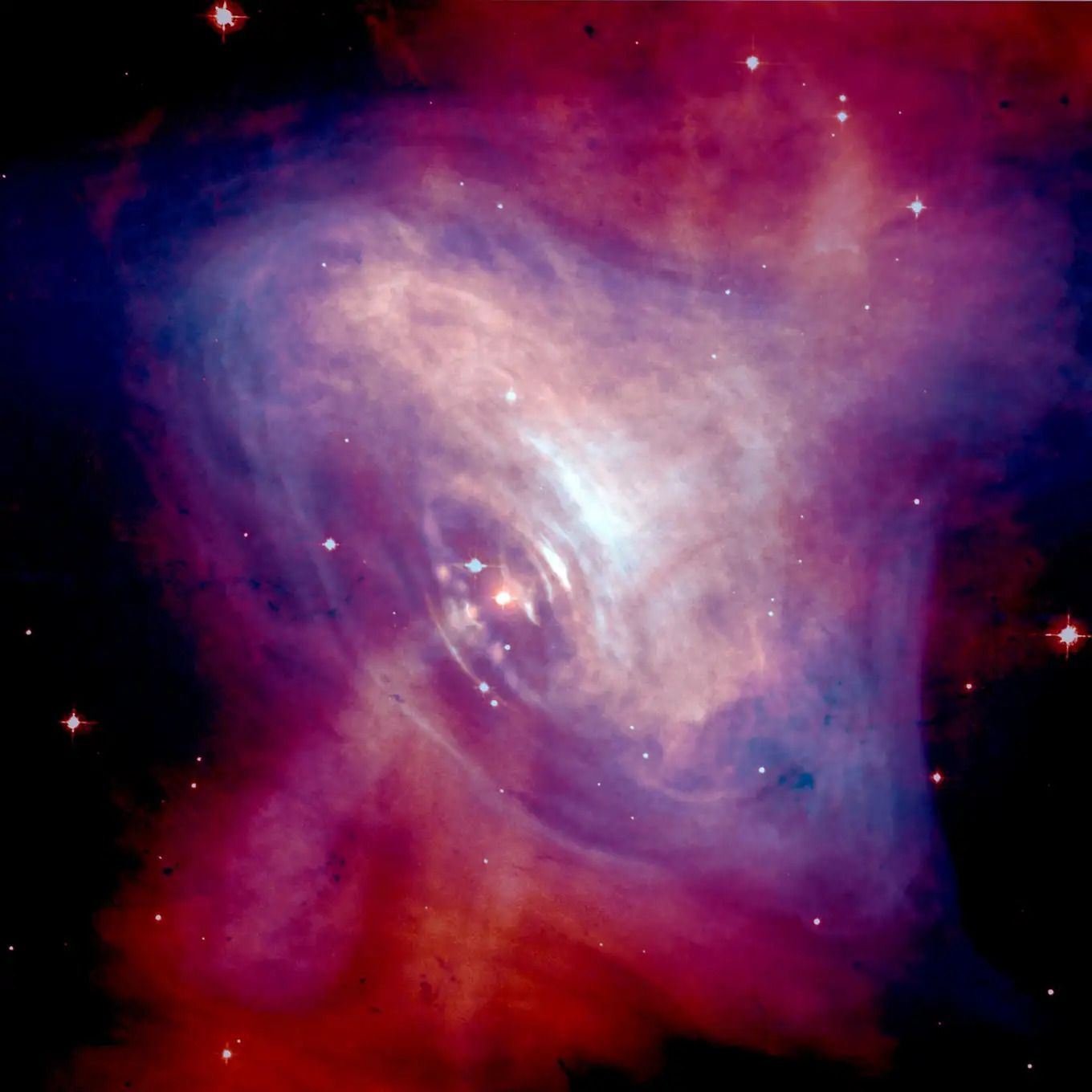

The Crab Nebula – a remnant of a supernova explosion which in its center contains a pulsar. The pulsar makes the ordinary matter in the form of gas in the nebula light up. As the researchers have now shown, it may do the same with dark matter in the form of axions, leading to a subtle additional glow that can be measured. Image: NASA/CXC/ASU/J. Hester et al.

Pulsars: Shedding light on the enigma of dark matter

Tyler O'Neal, Staff Editor APPLICATIONS October 6, 2023, 12:00 pm

The mystery of dark matter remains one of the most intriguing and challenging puzzles of the universe. Although it accounts for a massive 85% of all matter, scientists have struggled to understand its nature and composition for decades. However, recent studies have suggested that pulsars, which are rapidly rotating neutron stars, could hold the key to unlocking the secrets of dark matter.

Exploring the Enigma of Dark Matter

For years, physicists and astronomers have been captivated by the hunt for dark matter. Despite its widespread presence, it cannot be directly detected through conventional methods. Its invisible properties and weak interactions with ordinary matter have made it an elusive target for scientific inquiry. To shed some light on this cosmic enigma, researchers have been exploring various avenues, including the possibility of axions.

Have you ever heard of axions? They're a type of particle that scientists have hypothesized about since the 1970s. Axions were first proposed as a solution to a different problem in particle physics, but they could also potentially account for dark matter. The reason they're so elusive is that they interact very weakly with other known particles.

Now, let's talk about pulsars. These are rapidly rotating neutron stars that emit beams of radiation as they spin. Pulsars are often referred to as celestial lighthouses because of their unique properties, including their intense magnetic fields and high-energy emissions. Scientists think that pulsars could be used to investigate the presence of axions and, in turn, dark matter.

Axions and Pulsars: A Connection Revealed

Recent research conducted by the universities of Amsterdam and Princeton has shed new light on the potential link between axions and pulsars. The study suggests that if axions are a part of dark matter, then they may create an additional, subtle glow in pulsating stars.

The Conversion Mechanism of Axions

The researchers believe that axions around pulsars could transform into detectable light in the presence of strong electromagnetic fields. Pulsars generate intense magnetic fields, which provide an ideal environment for this conversion process. If axions exist, they would be mass-produced around pulsars and then transform into low-energy radio radiation.

Challenging Endeavors in Observing the Glow

Detecting the faint glow caused by axions amidst the overwhelming emissions from pulsars is a challenging task. Scientists need to understand the intrinsic emissions of pulsars precisely and compare them to potential deviations caused by axion conversions to differentiate between a pulsar with and without axions. This intricate analysis requires comprehensive theoretical models and sophisticated supercomputer simulations.

The search for axions persists. Although the initial comparison of supercomputer simulations and observations did not provide definitive proof of axions, it represents a significant step forward in unraveling the mysteries of dark matter. Scientists have narrowed down the possibilities by placing strict limits on the interaction between axions and light, paving the way for future observations.

Looking ahead, the non-detection of axion-induced radio signals from pulsars is a valuable outcome in itself. It offers valuable insights into the properties of axions and enhances our comprehension of their potential role in dark matter. Scientists will continue to refine their models, conduct more extensive observations, and push the boundaries of axion research.

The Interdisciplinary Frontier

The study of axions and their relation to dark matter requires collaboration across multiple disciplines. Physicists and astronomers from different institutions work together to merge their expertise and tackle complex scientific challenges. This collaborative approach has the potential to unlock new avenues of research and revolutionize our understanding of the universe.

Conclusion: Shining a Light on the Shadows

The exciting possibility of pulsars illuminating the mysterious nature of dark matter is a significant step forward in our pursuit of understanding the cosmos. Although the search for axions and their connection to dark matter is ongoing, the progress made so far has paved the way for further exploration and deepened our comprehension of the intricate workings of the universe. As scientists continue to uncover the secrets of dark matter, pulsars remain beacons of hope, shining a light on the shadows and guiding us toward a greater understanding of our cosmic surroundings.

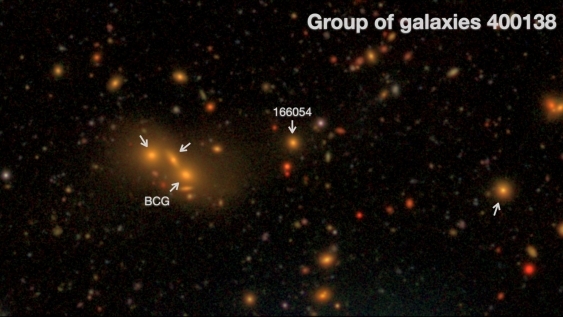
Extremely dim 'Intra-group light’ may be displaced stars gathered in stellar orphanage. Image: Shutterstock/N_Sakarin.

Australian astronomers offer a Python-based technique to analyze intra-group light

Tyler O'Neal, Staff Editor APPLICATIONS November 24, 2022, 5:00 pm

Pioneering a new technique, researchers have peered into the extremely faint light that exists between galaxies to describe the history and state of orphan stars.

An international team of astronomers has turned a new technique onto the faint light between galaxies – known as ‘intra-group light’ – to characterize the stars that dwell there.

Lead author of the study, Dr. Cristina Martínez-Lombilla from the School of Physics at UNSW Science, said “We know almost nothing about intra-group light. Light 'between' the galaxies – the 'intra-group light' – however dim, is radiated from stars stripped from their home galaxy. Image: Supplied.

“The brightest parts of the intra-group light are ~50 times fainter than the darkest night sky on Earth. It is extremely hard to detect, even with the largest telescopes on Earth – or in space.”

Using their sensitive technique, which eliminates light from all objects except that from the intra-group light, the researchers not only detected the intra-group light but were able to study and tell the story of the stars that populate it.

“We analyzed the properties of the intra-group stars – those stray stars between the galaxies. We looked at the age and abundance of the elements that composed them and then we compared those features with the stars still belonging to galaxy groups,” Dr. Martínez-Lombilla said.

“We found that the intra-group light is younger and less metal-rich than the surrounding galaxies.”

Rebuilding the story of intra-group light

Not only were the orphan stars in the intra-group light ‘anachronistic’ but they appeared to be of a different origin to their closest neighbors. The researchers found the character of the intra-group stars appeared similar to the nebulous ‘tail’ of a further away galaxy.

The combination of these clues allowed the researchers to rebuild the history – the story – of the intra-group light and how its stars came to be gathered in their own stellar orphanage.

“We think these individual stars were at some points stripped from their home galaxies and now they float freely, following the gravity of the group,” said Dr. Martínez-Lombilla. “The stripping, called tidal stripping, is caused by the passage of massive satellite galaxies – similar to the Milky Way – that pull stars in their wake.”

This is the first time the intra-group light of these galaxies has been observed.

“Unveiling the quantity and origin of the intra-group light provides a fossil record of all the interactions a group of galaxies has undergone and provides a holistic view of the system's interaction history,” Dr Martínez-Lombilla said.

“Also, these events occurred a long time ago. The galaxies [we’re looking at] are so far away, that we're observing them as they were 2.5 billion years ago. That is how long it takes for their light to reach us.”

By observing events from a long time ago, in galaxies so far away, the researchers are contributing vital data points to the slow-burning evolution of cosmic events.

Tailored image treatment procedure

The researchers pioneered a unique technique to achieve this penetrating view.

“We have developed a tailored image treatment procedure that allows us to analyze the faintest structures in the Universe,” said Dr Martínez-Lombilla.

“It follows the standard steps for the study of faint structures in astronomical images – which implies 2D modeling and the removal of all light except that coming from the intra-group light. This includes all the bright stars in the images, the galaxies obscuring the intra-group light, and a subtraction of the continuum emission from the sky.

“What makes our technique different is that it is fully Python-based so it is very modular and easily applicable to different sets of data from different telescopes rather than being just useful for these images.

“The most important outcome is that when studying very faint structures around galaxies, every step in the process counts, and every undesirable light should be accounted for and removed. Otherwise, your measurements will be wrong.

The techniques presented in this study are a pilot, encouraging future analyses of intra-group light, Dr. Martínez-Lombilla said.

“Our main long-term goal is to extend these results to a large sample of groups of galaxies. Then we can look at statistics and find out the typical properties regarding the formation and evolution of the intra-group light and these extremely common systems of groups of galaxies.

“This is key work for preparing the next generation of deep all-sky surveys such as those to be performed with the Euclid space telescope and the LSST with the Vera C. Rubin Observatory.”


  1. Japanese researchers use supercomputer simulations to discover new crystal structures of hydride compounds showing high-temperature superconductivity
  2. Germany's HZDR extends the QMC method to gain insights into planets, stars

Page 17 of 66

  • 12
  • 13
  • 14
  • 15
  • 16
  • 17
  • 18
  • 19
  • 20
  • 21
POPULAR RIGHT NOW
  • Supercomputers uncover a new class of cosmic explosions hidden in plain sight
    Supercomputers uncover a new class of cosmic explosions hidden in plain sight
  • AI supercharges the hunt for stronger magnets: Iowa State researchers launch a new era of intelligent materials discovery
    AI supercharges the hunt for stronger magnets: Iowa State researchers launch a new era of intelligent materials discovery
  • IBM's Historic stock collapse raises questions for the future of enterprise supercomputing
    IBM's Historic stock collapse raises questions for the future of enterprise supercomputing
  • Could a novel dark matter theory simultaneously resolve multiple cosmic enigmas? Supercomputer simulations provide a compelling, albeit currently unverified, potential solution
    Could a novel dark matter theory simultaneously resolve multiple cosmic enigmas? Supercomputer simulations provide a compelling, albeit currently unverified, potential solution
  • Melting icebergs may be reshaping Earth’s greatest ocean current
    Melting icebergs may be reshaping Earth’s greatest ocean current
  • Supercomputers replace ‘bathtub’ flood maps with physics-based digital twins of Britain’s coastline
    Supercomputers replace ‘bathtub’ flood maps with physics-based digital twins of Britain’s coastline
  • Supercomputers push neural quantum simulation beyond previous limits
    Supercomputers push neural quantum simulation beyond previous limits
  • Intel’s AI supercomputing revival: Q2 financial surge signals new era for CPU-powered HPC infrastructure
    Intel’s AI supercomputing revival: Q2 financial surge signals new era for CPU-powered HPC infrastructure
  • AI infrastructure financing fears shake semiconductor sector
    AI infrastructure financing fears shake semiconductor sector
  • AWS supercomputing investment reaches historic scale as Amazon’s AI strategy powers record financial results
    AWS supercomputing investment reaches historic scale as Amazon’s AI strategy powers record financial results
THIS YEAR'S MOST READ
  • Wall Street wants to trade supercomputing power like oil
    Wall Street wants to trade supercomputing power like oil
  • Cosmic ambition at scale: UK’s supercomputer unlocks a 2.5 petabytes universe
    Cosmic ambition at scale: UK’s supercomputer unlocks a 2.5 petabytes universe
  • Hidden order, revealed at scale: Supercomputing, electron ptychography uncover the inner workings of relaxor ferroelectrics
    Hidden order, revealed at scale: Supercomputing, electron ptychography uncover the inner workings of relaxor ferroelectrics
  • Beamforming the future: BeammWave's 6G push signals the rise of orbital-terrestrial wireless networks
    Joakim Axmon
    Joakim Axmon
  • Intel's Q1 results signal supercomputing surge driving Xeon momentum
    Intel's Q1 results signal supercomputing surge driving Xeon momentum
  • When stars fall apart: Supercomputing reveals the hidden physics of black holes
    When stars fall apart: Supercomputing reveals the hidden physics of black holes
  • Multi-layer simulations reveal the hidden supply chain of solar prominences
    Multi-layer simulations reveal the hidden supply chain of solar prominences
  • Japanese scientists decode dolphin speed with supercomputing: Turbulence, vortices, and the hidden physics of propulsion
    Japanese scientists decode dolphin speed with supercomputing: Turbulence, vortices, and the hidden physics of propulsion
  • Cosmic feedback at scale: Supercomputing reveals how quasars regulate the early Universe
    Cosmic feedback at scale: Supercomputing reveals how quasars regulate the early Universe
  • Modeling life at the microscopic scale: A computational breakthrough in oxygen transport
    Modeling life at the microscopic scale: A computational breakthrough in oxygen transport
MOST READ OF ALL-TIME
  • Largest Computational Biology Simulation Mimics The Ribosome
    Details
    112107
    The amino acid (green) slithers into the chemical reaction center, moving through an evolutionarily ancient corridor of the ribosome (purple). The amino acid is delivered to the reaction core by the transfer RNA molecule (yellow).
    The amino acid (green) slithers into the chemical reaction center, moving through an evolutionarily ancient corridor of the ribosome (purple). The amino acid is delivered to the reaction core by the transfer RNA molecule (yellow).
  • Silicon 'neurons' may add a new dimension to chips
    Details
    80990
    Silicon 'neurons' may add a new dimension to chips
  • Linux Networx Accelerators Expected to Drive up to 4x Price/Performance
    Details
    75537
  • Complex Concepts That Really Add Up
    Details
    73635
    Complex Concepts That Really Add Up
  • Blue Sky Studios Donates Animation SuperComputer to Wesleyan
    Details
    68140
    Each rack holds 52 Angstrom Microsystem-brand “blades,” with a memory footprint of 12 or 24 gigabytes each. (Photos by Olivia Bartlett Drake)
    Each rack holds 52 Angstrom Microsystem-brand “blades,” with a memory footprint of 12 or 24 gigabytes each. (Photos by Olivia Bartlett Drake)
  • Humanities, HPC connect at NERSC
    Details
    57946
  • TeraGrid ’09 'Call for Participation'
    Details
    54951
  • Turbulence responsible for black holes' balancing act
    Details
    52310
  • Cray Wins $52 Million SuperComputer Contract
    Details
    50139
  • SDSC Researchers Accurately Predict Protein Docking
    Details
    46078
  • FRONTPAGE
  • LATEST
  • POPULAR
  • REGISTER
  • SOCIAL
  • VIDEO
  • SUBSCRIPTION
  • RSS
  • GUIDELINES
  • PRIVACY
  • TOS
  • ABOUT
  • +1 (816) 799-4488
  • editorial@supercomputingonline.com
© 2001 - 2026 SuperComputingOnline.com, LLC. All rights reserved. This material may not be published, broadcast, rewritten or redistributed without permission.
Sign In
  • FRONT PAGE
  • LATEST
    • MEDIA KIT
    • MOST READ
    • RSS FEED
    • ACADEMIA
    • AEROSPACE
    • APPLICATIONS
    • ASTRONOMY
    • AUTOMOTIVE
    • BIG DATA
    • BIOLOGY
    • CHEMISTRY
    • CLIENTS
    • CLOUD
    • DEFENSE
    • DEVELOPER TOOLS
    • EARTH SCIENCES
    • ECONOMICS
    • ENGINEERING
    • ENTERTAINMENT
    • HEALTH
    • INDUSTRY
    • INTERCONNECTS
    • GAMING
    • GOVERNMENT
    • MANUFACTURING
    • MIDDLEWARE
    • MOVIES
    • NETWORKS
    • OIL & GAS
    • PHYSICS
    • PROCESSORS
    • RETAIL
    • SCIENCE
    • STORAGE
    • SYSTEMS
    • VISUALIZATION
  • VIDEOS
    • ADD YOUR VIDEOS
    • MANAGE VIDEOS
  • COMMUNITY
    • TRADE SHOWS
    • SOCIAL NETWORK VIDEOS
    • SURVEYS
    • APPLICATIONS BROWSER
    • CONVERSATION INBOX
    • SOCIAL ADVERTISER
    • GROUPS
    • MARKETPLACE LISTINGS
    • PAGES
    • LEADERBOARD
    • POINTS LISTING
      • BADGES
    • PRIVACY CONFIRM REQUEST
    • PRIVACY CREATE REQUEST

Hey there! We noticed you’re using an ad blocker.