SUPERCOMPUTING NEWS SUPERCOMPUTING NEWS
    • MEDIA KIT
    • MOST READ
    • RSS FEED
    • ACADEMIA
    • AEROSPACE
    • APPLICATIONS
    • ASTRONOMY
    • AUTOMOTIVE
    • BIG DATA
    • BIOLOGY
    • CHEMISTRY
    • CLIENTS
    • CLOUD
    • DEFENSE
    • DEVELOPER TOOLS
    • EARTH SCIENCES
    • ECONOMICS
    • ENGINEERING
    • ENTERTAINMENT
    • GAMING
    • GOVERNMENT
    • HEALTH
    • OIL & GAS
    • INDUSTRY
    • INTERCONNECTS
    • MANUFACTURING
    • MIDDLEWARE
    • MOVIES
    • NETWORKS
    • PHYSICS
    • PROCESSORS
    • RETAIL
    • SCIENCE
    • STORAGE
    • SYSTEMS
    • VISUALIZATION
    • AcyMailing subscription form

    • ADD YOUR VIDEOS
    • MANAGE VIDEOS
    • CONVERSATION INBOX
    • SOCIAL ADVERTISER
    • SOCIAL NETWORK VIDEOS
    • SURVEYS
    • GROUPS
    • PAGES
    • MARKETPLACE LISTINGS
    • APPLICATIONS BROWSER
    • PRIVACY CONFIRM REQUEST
    • PRIVACY CREATE REQUEST
    • LEADERBOARD
    • POINTS LISTING
      • BADGES
    • TRADE SHOWS
Sign In
Tyler O'Neal, Staff Editor GOVERNMENT February 28, 2022, 5:00 am

Nixu appoints Teemu Salmi as new CEO to lead the next phase of growth strategy

Nixu’s Board of Directors has appointed Teemu Salmi (49) as the new CEO of Nixu Corporation. Salmi is currently serving as CIO, Head of IT & Digitalisation, and a member of the Group Leadership Team at Stora Enso. Salmi will assume his new position at the latest on September 1, 2022.

Teemu Salmi has over twenty years of experience in senior and executive leadership positions in the IT, telecom, and forest industries. He worked for 17 years at Ericsson in the various cloud business, services business, and IT leadership positions. He joined Stora Enso in 2017 and has, in addition to his CIO and Head of IT & Digitalisation role, served as Managing Director of an intelligent packaging growth company, owned by Stora Enso. Teemu Salmi is a Swedish citizen. He was given the CIO of the Year award in 2020 in Finland for his accomplishments.

“I am very pleased to welcome Teemu to Nixu. He has excellent leadership skills, broad international experience, and a deep understanding of digitalization, business transformation as well as services business. Those will be valuable assets to our company. We are now ready to focus on the next phase of our growth journey, and develop our international company to its full potential to keep the digital society running with cybersecurity services,” remarks Kimmo Rasila, Chair of the Board of Directors at Nixu.

“With the fast digitalization of the society and ever-increasing cyber threats, there is a huge demand for a holistic and trusted cybersecurity partner. I look forward to joining Nixu and strengthening its position in the international cybersecurity market in close collaboration with our employees, clients, and partners,” says Teemu Salmi, new CEO of Nixu.

Nixu’s Board of Directors has appointed Valtteri Peltomäki, Business Area Lead Client Experience and a member of Nixu Corporate Leadership team, as Interim CEO starting from March 1, 2022, until Teemu Salmi will assume his position. Current CEO Petri Kairinen will, until his earlier communicated departure from Nixu, continue supporting Valtteri Peltomäki in his new role.

CUNY ASRC team makes breakthrough discovery in light interactions with nanoparticles, paving the way for advances in optical supercomputing

Tyler O'Neal, Staff Editor GOVERNMENT February 25, 2022, 12:00 pm

The work is a significant step toward realizing a new generation of ultra-compact, low-energy-use computers capable of complex mathematical computation

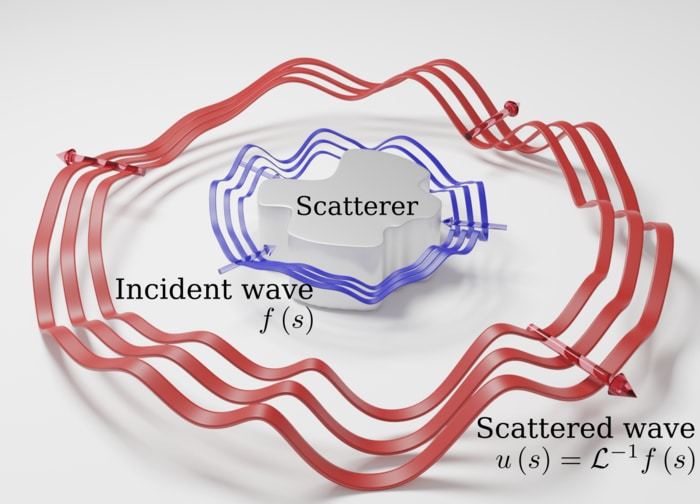
Supercomputers are an indispensable part of our daily lives, and the need for ones that can work faster, solve complex problems more efficiently, and leave smaller environmental footprints by minimizing the required energy for computation is increasingly urgent. Recent progress in photonics has shown that it’s possible to achieve more efficient supercomputing through optical devices that use interactions between metamaterials and light waves to apply mathematical operations of interest on the input signals and even solve complex mathematical problems. But to date, such computers have required a large footprint and precise, large-area fabrication of the components, which, because of their size, are difficult to scale into more complex networks. Scattered waves from a nanoscale object encode the solution of a complex mathematical problem when interrogated by tailored input signals,  CREDIT Heedong Goh

Researchers at the Advanced Science Research Center at the CUNY Graduate Center (CUNY ASRC) document a breakthrough discovery in nanomaterials and light-wave interactions that paves the way for the development of small, low-energy optical computers capable of advanced supercomputing.

“The increasing energy demands of large data centers and inefficiencies in current computing architectures have become a real challenge for our society,” said Andrea Alù, Ph.D., the paper’s corresponding author, founding director of the CUNY ASRC’s Photonics Initiative, and Einstein Professor of Physics at the Graduate Center. “Our work demonstrates that it’s possible to design a nanoscale object that can efficiently interact with light to solve complex mathematical problems with unprecedented speeds and nearly zero-energy demands.” 

In their study, CUNY ASRC researchers designed a nanoscale object made of silicon so that, when interrogated with light waves carrying an arbitrary input signal, it can encode the corresponding solution of a complex mathematical problem into the scattered light. The solution is calculated at the speed of light, and with minimal energy consumption.”

“This finding is promising because it offers a practical pathway for creating a new generation of very energy-efficient, ultrafast, ultracompact nanoscale optical computers and other nanophotonic technologies that can be used for classical and quantum computations,” said Heedong Goh, Ph.D., the paper’s lead author and a postdoctoral research associate with Alù’s lab. “The very small size of these nanoscale optical computers is particularly appealing for scalability because multiple nanostructures can be combined and connected together through light scattering to realize complex nanoscale computing networks.”

World’s most powerful solar telescope reaches historic milestone with first data online

Tyler O'Neal, Staff Editor GOVERNMENT February 24, 2022, 2:00 pm

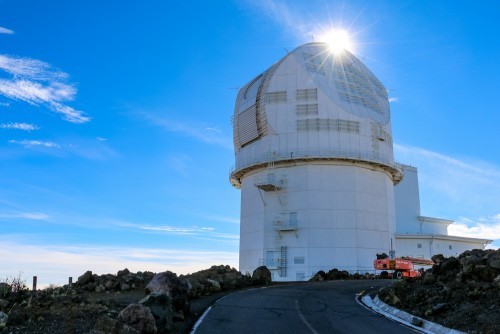
On Wednesday, February 23, 2022, the U.S. National Science Foundation’s (NSF’s) Daniel K. Inouye Solar Telescope (Inouye Solar Telescope) commenced its first science observations, signaling the start of its year-long operations commissioning phase and a new era of solar science. Over 25 years in the making, the world’s most powerful solar telescope is now poised to revolutionize our understanding of the Sun and its impacts on Earth. Inouye Solar Telescope with open aperture: Inouye Solar Telescope with an open aperture and blue skies near Haleakalā summit, Maui, HI.
“We are proud to bring the world’s largest and most powerful solar telescope online,” said Dr. Sethuraman Panchanathan, NSF Director. “The NSF’s Daniel K. Inouye Solar Telescope is a modern technological marvel, named in honor of late Senator Inouye, an American hero, and leader dedicated to scientific research and discovery.”

Hailed as the “crowning achievement” for ground-based solar astronomy, the Inouye Solar Telescope utilizes the next generation of solar observing instruments capable of capturing images of the Sun in unprecedented detail. The facility operates at 10,000 ft above sea level near the summit of Haleakalā on Maui, Hawai‘i, where unique environmental conditions enable observations of the elusive solar corona. The telescope’s operational phase is a long-awaited accomplishment, marking the end of a construction phase bookended by groundbreaking in 2012 and an 18-month delay caused by the COVID-19 global pandemic.

“The Inouye Solar Telescope team remained committed to developing an innovative solar telescope that pushed the frontiers of new technology. From design through construction, they overcame many challenges to realize a world-class facility poised to deliver on its transformational potential for all of humankind,” said Dr. David Boboltz, Program Director in NSF's Division of Astronomical Sciences.

The Inouye Solar Telescope will take high-resolution images and make measurements of the magnetic fields of solar phenomena including sunspots, solar flares, and coronal mass ejections. Solar activity drives space weather events that can impact Earth by disrupting power grids, communication networks, and other technology we depend on. The Inouye Solar Telescope, in concert with other advanced observatories, will provide greater insight into space weather behavior to aid in developing the means of predicting such events.

“Taking the first science observations with the Inouye Solar Telescope marks an exciting moment for the solar science community,” commented Dr. Thomas Rimmele, NSO Associate Director and lead of Inouye Solar Telescope, “There is no other facility like the Inouye Solar Telescope. It is now the cornerstone of our mission to advance our knowledge of the Sun by providing forefront observational opportunities to the research community. It is a game-changer.”

In 2020, the Inouye Solar Telescope’s “First Light” campaign previewed the powerful optical systems by producing the highest resolution image of the solar surface ever taken, followed six months later by the clearest image ever taken of a sunspot. The facility combines numerous state-of-the-art systems including a 4-meter primary mirror, adaptive optics to correct for the effects of the atmosphere, active cooling of all telescope optics, and advanced optical and infrared instrumentations. The combination of instruments is capable of many feats, ranging from capturing images of our Sun's features three times smaller than previously recorded to facilitating regular measurements of the solar corona’s magnetic fields for the very first time. 

This landmark event has been eagerly anticipated by the global solar community. Operations begin with a 12-month commissioning phase as the telescope is gradually brought online. This is a period of “shared risk” where scientists understand that there may be issues to be solved while they exercise the many observing modes of this complex facility, its instruments, and data systems. 

The Inouye Solar Telescope’s resident scientists and operators will execute selected scientific observations, chosen via a peer-reviewed proposal process based on the experiment’s objectives, viewing conditions, and available solar features. The Visible Broadband Imager (developed by the NSO), the Visible Spectro-polarimeter (developed by the High Altitude Observatory), and the Cryogenic Near-Infrared Spectro-polarimeter (developed by the University of Hawai‘i) will be available to the initial phase of scientific proposals. A second infrared spectro-polarimeter, also developed by the University of Hawai‘i, will be made available during the second proposal call expected to be announced early next year. 

The selected science proposal titled, “Electric Field Associated with Magnetic Reconnection Driving a Jet in the Chromosphere” was led by Dr. Tetsu Anan, Principal Investigator with the National Solar Observatory.

The experiment is designed to verify a process known as “magnetic reconnection” by measuring electric fields that are believed to occur during this process. Magnetic reconnection is the mechanism by which solar magnetic fields are suddenly and energetically reconfigured, resulting in jets of plasma ejected from the solar atmosphere. This process has long been theorized but has yet to be proven. Observations from the Inouye Solar Telescope’s unique suite of instruments are allowing scientists to observe this elusive but vital phenomenon for the very first time.

"It is an honor to have been selected as the first science experiment executed at the Inouye Solar Telescope," said Anan, "This a moment we've all looked forward to - a historic welcoming to the new age of solar observations. I’d like to thank the co-investigators and everyone involved with the Inouye Solar Telescope for this monumental milestone.” 

Dr. Jiong Qiu, Montana State University, was one of several co-investigators involved in the experiment. “Magnetic reconnection is the keyword in many energy release events in the Sun's atmosphere,” said Qiu, “For many years, solar physicists could only infer or estimate an average reconnection electric field based on many assumptions. I am hopeful that being able to directly measure this crucial physical parameter with the enabling technology by the Inouye Solar Telescope will bring breakthroughs in solar physics and revolutionize our understanding of magnetic reconnection.”

NSF’s Daniel K. Inouye Solar Telescope Data Center in Boulder, CO is an integral part of the telescope’s operations. The Data Center will receive the data from the telescope, curate and store the data, calibrate it, and distribute it to scientists and the public. Once data from a proposal has been calibrated, the principal investigators & co-investigators will have exclusive access to the data for six months, after which it will be made publicly available.


  1. Missouri S&T researcher uses visible light for Wi-Fi transmission
  2. NC State researchers use AI to predict flood damage risk

Page 46 of 85

  • 41
  • 42
  • 43
  • 44
  • 45
  • 46
  • 47
  • 48
  • 49
  • 50
POPULAR RIGHT NOW
  • AI supercharges the hunt for stronger magnets: Iowa State researchers launch a new era of intelligent materials discovery
    AI supercharges the hunt for stronger magnets: Iowa State researchers launch a new era of intelligent materials discovery
  • IBM's Historic stock collapse raises questions for the future of enterprise supercomputing
    IBM's Historic stock collapse raises questions for the future of enterprise supercomputing
  • Could a novel dark matter theory simultaneously resolve multiple cosmic enigmas? Supercomputer simulations provide a compelling, albeit currently unverified, potential solution
    Could a novel dark matter theory simultaneously resolve multiple cosmic enigmas? Supercomputer simulations provide a compelling, albeit currently unverified, potential solution
  • Melting icebergs may be reshaping Earth’s greatest ocean current
    Melting icebergs may be reshaping Earth’s greatest ocean current
  • Supercomputers replace ‘bathtub’ flood maps with physics-based digital twins of Britain’s coastline
    Supercomputers replace ‘bathtub’ flood maps with physics-based digital twins of Britain’s coastline
  • Supercomputers push neural quantum simulation beyond previous limits
    Supercomputers push neural quantum simulation beyond previous limits
  • Intel’s AI supercomputing revival: Q2 financial surge signals new era for CPU-powered HPC infrastructure
    Intel’s AI supercomputing revival: Q2 financial surge signals new era for CPU-powered HPC infrastructure
  • AI infrastructure financing fears shake semiconductor sector
    AI infrastructure financing fears shake semiconductor sector
  • AWS supercomputing investment reaches historic scale as Amazon’s AI strategy powers record financial results
    AWS supercomputing investment reaches historic scale as Amazon’s AI strategy powers record financial results
  • Catching the wave of the future: Supercomputers unlock the hidden dynamics of Venus
    Catching the wave of the future: Supercomputers unlock the hidden dynamics of Venus
THIS YEAR'S MOST READ
  • Wall Street wants to trade supercomputing power like oil
    Wall Street wants to trade supercomputing power like oil
  • Beamforming the future: BeammWave's 6G push signals the rise of orbital-terrestrial wireless networks
    Joakim Axmon
    Joakim Axmon
  • Cosmic ambition at scale: UK’s supercomputer unlocks a 2.5 petabytes universe
    Cosmic ambition at scale: UK’s supercomputer unlocks a 2.5 petabytes universe
  • Hidden order, revealed at scale: Supercomputing, electron ptychography uncover the inner workings of relaxor ferroelectrics
    Hidden order, revealed at scale: Supercomputing, electron ptychography uncover the inner workings of relaxor ferroelectrics
  • Intel's Q1 results signal supercomputing surge driving Xeon momentum
    Intel's Q1 results signal supercomputing surge driving Xeon momentum
  • When stars fall apart: Supercomputing reveals the hidden physics of black holes
    When stars fall apart: Supercomputing reveals the hidden physics of black holes
  • Multi-layer simulations reveal the hidden supply chain of solar prominences
    Multi-layer simulations reveal the hidden supply chain of solar prominences
  • Japanese scientists decode dolphin speed with supercomputing: Turbulence, vortices, and the hidden physics of propulsion
    Japanese scientists decode dolphin speed with supercomputing: Turbulence, vortices, and the hidden physics of propulsion
  • Cosmic feedback at scale: Supercomputing reveals how quasars regulate the early Universe
    Cosmic feedback at scale: Supercomputing reveals how quasars regulate the early Universe
  • Modeling life at the microscopic scale: A computational breakthrough in oxygen transport
    Modeling life at the microscopic scale: A computational breakthrough in oxygen transport
MOST READ OF ALL-TIME
  • Largest Computational Biology Simulation Mimics The Ribosome
    Details
    112129
    The amino acid (green) slithers into the chemical reaction center, moving through an evolutionarily ancient corridor of the ribosome (purple). The amino acid is delivered to the reaction core by the transfer RNA molecule (yellow).
    The amino acid (green) slithers into the chemical reaction center, moving through an evolutionarily ancient corridor of the ribosome (purple). The amino acid is delivered to the reaction core by the transfer RNA molecule (yellow).
  • Silicon 'neurons' may add a new dimension to chips
    Details
    81042
    Silicon 'neurons' may add a new dimension to chips
  • Linux Networx Accelerators Expected to Drive up to 4x Price/Performance
    Details
    75564
  • Complex Concepts That Really Add Up
    Details
    73695
    Complex Concepts That Really Add Up
  • Blue Sky Studios Donates Animation SuperComputer to Wesleyan
    Details
    68167
    Each rack holds 52 Angstrom Microsystem-brand “blades,” with a memory footprint of 12 or 24 gigabytes each. (Photos by Olivia Bartlett Drake)
    Each rack holds 52 Angstrom Microsystem-brand “blades,” with a memory footprint of 12 or 24 gigabytes each. (Photos by Olivia Bartlett Drake)
  • Humanities, HPC connect at NERSC
    Details
    57974
  • TeraGrid ’09 'Call for Participation'
    Details
    54977
  • Turbulence responsible for black holes' balancing act
    Details
    52341
  • Cray Wins $52 Million SuperComputer Contract
    Details
    50163
  • SDSC Researchers Accurately Predict Protein Docking
    Details
    46116
  • FRONTPAGE
  • LATEST
  • POPULAR
  • REGISTER
  • SOCIAL
  • VIDEO
  • SUBSCRIPTION
  • RSS
  • GUIDELINES
  • PRIVACY
  • TOS
  • ABOUT
  • +1 (816) 799-4488
  • editorial@supercomputingonline.com
© 2001 - 2026 SuperComputingOnline.com, LLC. All rights reserved. This material may not be published, broadcast, rewritten or redistributed without permission.
Sign In
  • FRONT PAGE
  • LATEST
    • MEDIA KIT
    • MOST READ
    • RSS FEED
    • ACADEMIA
    • AEROSPACE
    • APPLICATIONS
    • ASTRONOMY
    • AUTOMOTIVE
    • BIG DATA
    • BIOLOGY
    • CHEMISTRY
    • CLIENTS
    • CLOUD
    • DEFENSE
    • DEVELOPER TOOLS
    • EARTH SCIENCES
    • ECONOMICS
    • ENGINEERING
    • ENTERTAINMENT
    • HEALTH
    • INDUSTRY
    • INTERCONNECTS
    • GAMING
    • GOVERNMENT
    • MANUFACTURING
    • MIDDLEWARE
    • MOVIES
    • NETWORKS
    • OIL & GAS
    • PHYSICS
    • PROCESSORS
    • RETAIL
    • SCIENCE
    • STORAGE
    • SYSTEMS
    • VISUALIZATION
  • VIDEOS
    • ADD YOUR VIDEOS
    • MANAGE VIDEOS
  • COMMUNITY
    • TRADE SHOWS
    • SOCIAL NETWORK VIDEOS
    • SURVEYS
    • APPLICATIONS BROWSER
    • CONVERSATION INBOX
    • SOCIAL ADVERTISER
    • GROUPS
    • MARKETPLACE LISTINGS
    • PAGES
    • LEADERBOARD
    • POINTS LISTING
      • BADGES
    • PRIVACY CONFIRM REQUEST
    • PRIVACY CREATE REQUEST

Hey there! We noticed you’re using an ad blocker.