SUPERCOMPUTING NEWS SUPERCOMPUTING NEWS
    • MEDIA KIT
    • MOST READ
    • RSS FEED
    • ACADEMIA
    • AEROSPACE
    • APPLICATIONS
    • ASTRONOMY
    • AUTOMOTIVE
    • BIG DATA
    • BIOLOGY
    • CHEMISTRY
    • CLIENTS
    • CLOUD
    • DEFENSE
    • DEVELOPER TOOLS
    • EARTH SCIENCES
    • ECONOMICS
    • ENGINEERING
    • ENTERTAINMENT
    • GAMING
    • GOVERNMENT
    • HEALTH
    • OIL & GAS
    • INDUSTRY
    • INTERCONNECTS
    • MANUFACTURING
    • MIDDLEWARE
    • MOVIES
    • NETWORKS
    • PHYSICS
    • PROCESSORS
    • RETAIL
    • SCIENCE
    • STORAGE
    • SYSTEMS
    • VISUALIZATION
    • AcyMailing subscription form

    • ADD YOUR VIDEOS
    • MANAGE VIDEOS
    • CONVERSATION INBOX
    • SOCIAL ADVERTISER
    • SOCIAL NETWORK VIDEOS
    • SURVEYS
    • GROUPS
    • PAGES
    • MARKETPLACE LISTINGS
    • APPLICATIONS BROWSER
    • PRIVACY CONFIRM REQUEST
    • PRIVACY CREATE REQUEST
    • LEADERBOARD
    • POINTS LISTING
      • BADGES
    • TRADE SHOWS
Sign In
Tyler O'Neal, Staff Editor GOVERNMENT March 1, 2021, 4:34 pm

Russians create artificial 'molecules' that open door to ultrafast polaritonic devices

Researchers from Skoltech and the University of Cambridge have shown that polaritons, the quirky particles that may end up running the quantum supercomputers of the future, can form structures behaving like molecules - and these "artificial molecules" can potentially be engineered on demand. The paper outlining these results was published in the journal Physical Review B Letters.

Polaritons are quantum particles that consist of a photon and an exciton, another quasiparticle, marrying light and matter in a curious union that opens up a multitude of possibilities in next-generation polaritonic devices. Alexander Johnston, Kirill Kalinin, and Natalia Berloff, professor at the Skoltech Center for Photonics and Quantum Materials and the University of Cambridge, have shown that geometrically coupled polariton condensates, which appear in semiconductor devices, are capable of simulating molecules with various properties.

Ordinary molecules are groups of atoms bound together with molecular bonds, and their physical properties differ from those of their constituent atoms quite drastically: consider the water molecule, H2O, and elemental hydrogen and oxygen. "In our work, we show that clusters of interacting polaritonic and photonic condensates can form a range of exotic and entirely distinct entities - "molecules" - that can be manipulated artificially. These "artificial molecules" possess new energy states, optical properties, and vibrational modes from those of the condensates comprising them," Johnston, of the University of Cambridge Department of Applied Mathematics and Theoretical Physics, explains.

When researchers were running numerical simulations of two, three, and four interacting polariton condensates, they noticed some curious asymmetric stationary states in which not all of the condensates have the same density in their ground state. "Upon further investigation, we found that such states came in a wide variety of different forms, which could be controlled by manipulating certain physical parameters of the system. This led us to propose such phenomena as "artificial polariton molecules" and to investigate their potential uses in quantum information systems," Johnston says.

In particular, the team focused on an "asymmetric dyad", which consists of two interacting condensates with unequal occupations. When two of those dyads are combined into a tetrad structure, the latter is, in some sense, analogous to a homonuclear molecule - for instance, to molecular hydrogen H2. Furthermore, artificial polariton molecules can also form more elaborate structures, which could be thought of as "artificial polariton compounds."

"There is nothing preventing more complex structures from being created. Indeed, in our work, we have found that there is a wide range of exotic, asymmetric states possible in tetrad configurations. In some of these, all condensates have different densities (despite all of the couplings being of equal strength), inviting an analogy with chemical compounds," Alexander Johnston notes.

In specific tetrad structures, each asymmetric dyad can be viewed as an individual "spin," defined by the orientation of the density asymmetry. This has interesting consequences for the system's degrees of freedom (the independent physical parameters required to define states); the "spins" introduce a discrete degree of freedom, in addition to the continuous degrees of freedom given by the condensate phases.

The relative orientation of each of the dyads can be controlled by varying the coupling strength between them. Since quantum information systems can potentially have increased accuracy and efficiency if they utilize some kind of hybrid discrete-continuous system, the team, therefore, proposed this hybrid tetrad structure as a potential basis for such a system.

"In addition, we have discovered a plethora of exotic asymmetric states in triad and tetrad systems. It is possible to seamlessly transition between such states simply by varying the pumping strength used to form the condensates. This property suggests that such states could form the basis of a polaritonic multi-valued logic system, which could enable the development of polaritonic devices that dissipate significantly less power than traditional methods and, potentially, operate orders of magnitude faster," Professor Berloff says.
Osaka researchers use machine learning to design, virtually test molecules for organic solar cells for renewable energy

Tyler O'Neal, Staff Editor GOVERNMENT March 1, 2021, 12:50 pm

Virtually unlimited solar cell experiments

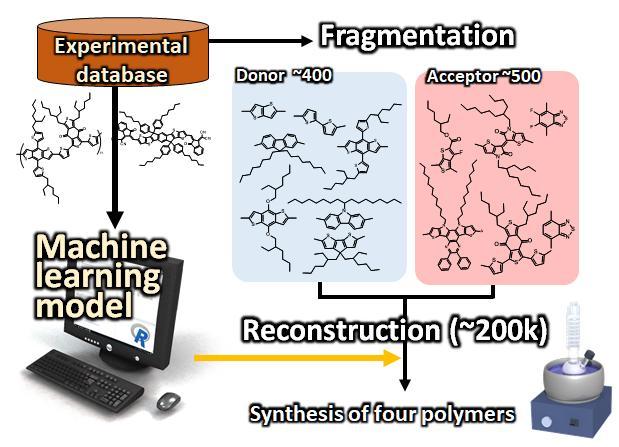
In Japan, Osaka University researchers employed machine learning to design new polymers for use in photovoltaic devices. After virtually screening over 200,000 candidate materials, they synthesized one of the most promising and found its properties were consistent with their predictions. This work may lead to a revolution in the way functional materials are discovered.

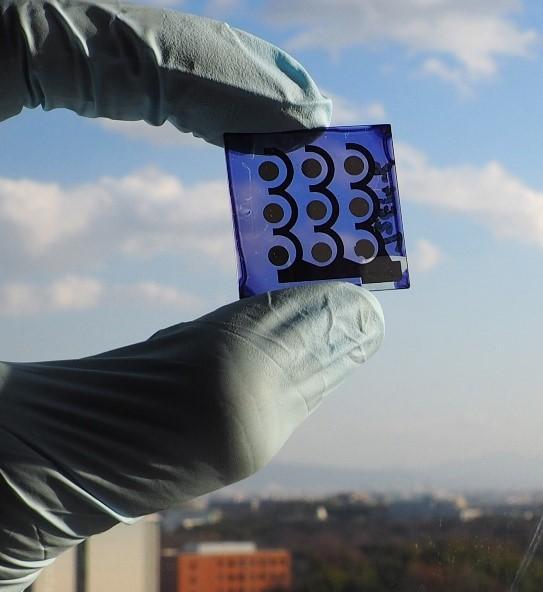
Machine learning is a powerful tool that allows supercomputers to make predictions about even complex situations, as long as the algorithms are supplied with sufficient example data. This is especially useful for complicated problems in material science, such as designing molecules for organic solar cells, which can depend on a vast array of factors and unknown molecular structures. It would take humans years to sift through the data to find the underlying patterns--and even longer to test all of the possible candidate combinations of donor polymers and acceptor molecules that make up an organic solar cell. Thus, progress in improving the efficiency of solar cells to be competitive in the renewable energy space has been slow. Picture of a polymer:non-fullerene acceptor solar cell device, for which the polymer was designed by machine learning.

Now, researchers at Osaka University used machine learning to screen hundreds of thousands of donor: acceptor pairs based on an algorithm trained with data from previously published experimental studies. Trying all possible combinations of 382 donor molecules and 526 acceptor molecules resulted in 200,932 pairs that were virtually tested by predicting their energy conversion efficiency. 

"Basing the construction of our machine learning model on an experimental dataset drastically improved the prediction accuracy," first author Kakaraparthi Kranthiraja says.

To verify this method, one of the polymers predicted to have high efficiency was synthesized in the lab and tested. Its properties were found to conform with predictions, which gave the researchers more confidence in their approach.

"This project may contribute not only to the development of highly efficient organic solar cells but also can be adapted to material informatics of other functional materials," senior author Akinori Saeki says.

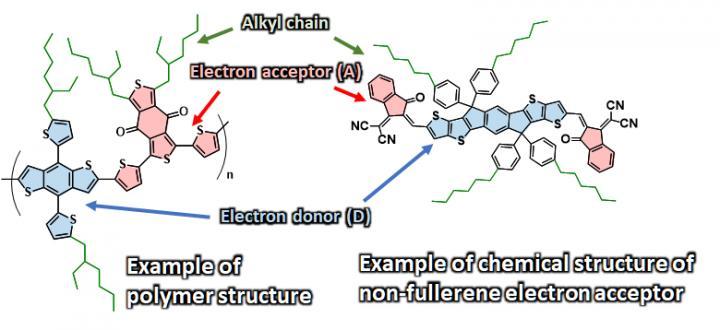
We may see this type of machine learning, in which an algorithm can rapidly screen thousands or perhaps even millions of candidate molecules based on machine learning predictions, applied to other areas, such as catalysts and functional polymers. Example chemical structures of a polymer (left) and a non-fullerene acceptor (right)

Method for the development of the machine learning model, virtual generation of polymers, and selection of polymers for synthesis

NetApp, Aston Martin Cognizant Formula One Team pioneer data-driven racing strategy

Tyler O'Neal, Staff Editor GOVERNMENT March 1, 2021, 9:00 am

Cloud-led, data-centric software leader’s partnership ushers in a new racing era with data fueling continuous performance improvement

NetApp and Aston Martin Cognizant Formula One have announced a multi-year partnership as the world-famous car company gears up for its return to Formula One competition. After more than 60 years away, the British car brand returns to the F1 grid, supported by NetApp, with a new edge: an innovative approach to racing utilizing the power of data. AMCF1 Square 1 f572c

The partnership with NetApp reinforces the Aston Martin Cognizant Formula One Team’s commitment to unlocking the very best of the cloud by outfitting the team with world-class data and cloud services. Broad and ambitious in scope, the partnership will focus on maximizing performance both on and off the track.

From trackside to the factory to the cloud, the data used to inform Aston Martin Cognizant Formula One Team’s racing strategies will be available in real-time on a global scale. With a data fabric powered by NetApp, the team will be able to extract more value from their data to better gauge car performance and address necessary refinements before, during, and after each race.

This data fabric will also help reduce operational complexities while ensuring data compliance, security, and protection of the team’s intellectual property. By standardizing on NetApp across all platforms, the British racing team will be able to maximize resource utilization and remove inefficient data silos, enabling costly IT investments to be diverted back into the car and team development.

“We are thrilled to partner with Aston Martin Cognizant Formula One as it embarks on a highly ambitious data journey in pursuit of greater speed, higher reliability, and unmatched efficiency,” said James Whitemore, chief marketing officer at NetApp. “By tapping into our 28 years of data-centric innovation, we are proudly supporting the team as they push the boundaries of continuous performance improvement beyond the finish line.”

“Formula One teams have always been pioneers in analyzing data for a competitive advantage, especially when milliseconds mean the difference between pole position and starting somewhere in the middle of the pack,” said Otmar Szafnauer, chief executive officer and team principal at Aston Martin Cognizant Formula One. “The team’s partnership with NetApp, along with title partner Cognizant, represents a new stage in our journey of continuous improvement. We are excited to introduce NetApp as we strive to make everything we do faster and smarter. By empowering our brilliant team of people with NetApp’s industry-leading data solutions, we are ushering in a new era of racing where we can constantly evolve to be a faster, smarter, and more exciting team.”

  1. Dutch supercomputer simulations show how wind farms benefit from strong 'low-level jets' in atmosphere
  2. Rice bioinformatics tool accurately tracks synthetic DNA

Page 60 of 85

  • 55
  • 56
  • 57
  • 58
  • 59
  • 60
  • 61
  • 62
  • 63
  • 64
POPULAR RIGHT NOW
  • AI supercharges the hunt for stronger magnets: Iowa State researchers launch a new era of intelligent materials discovery
    AI supercharges the hunt for stronger magnets: Iowa State researchers launch a new era of intelligent materials discovery
  • IBM's Historic stock collapse raises questions for the future of enterprise supercomputing
    IBM's Historic stock collapse raises questions for the future of enterprise supercomputing
  • Could a novel dark matter theory simultaneously resolve multiple cosmic enigmas? Supercomputer simulations provide a compelling, albeit currently unverified, potential solution
    Could a novel dark matter theory simultaneously resolve multiple cosmic enigmas? Supercomputer simulations provide a compelling, albeit currently unverified, potential solution
  • Melting icebergs may be reshaping Earth’s greatest ocean current
    Melting icebergs may be reshaping Earth’s greatest ocean current
  • Supercomputers replace ‘bathtub’ flood maps with physics-based digital twins of Britain’s coastline
    Supercomputers replace ‘bathtub’ flood maps with physics-based digital twins of Britain’s coastline
  • Supercomputers push neural quantum simulation beyond previous limits
    Supercomputers push neural quantum simulation beyond previous limits
  • Intel’s AI supercomputing revival: Q2 financial surge signals new era for CPU-powered HPC infrastructure
    Intel’s AI supercomputing revival: Q2 financial surge signals new era for CPU-powered HPC infrastructure
  • AI infrastructure financing fears shake semiconductor sector
    AI infrastructure financing fears shake semiconductor sector
  • AWS supercomputing investment reaches historic scale as Amazon’s AI strategy powers record financial results
    AWS supercomputing investment reaches historic scale as Amazon’s AI strategy powers record financial results
  • Catching the wave of the future: Supercomputers unlock the hidden dynamics of Venus
    Catching the wave of the future: Supercomputers unlock the hidden dynamics of Venus
THIS YEAR'S MOST READ
  • Wall Street wants to trade supercomputing power like oil
    Wall Street wants to trade supercomputing power like oil
  • Beamforming the future: BeammWave's 6G push signals the rise of orbital-terrestrial wireless networks
    Joakim Axmon
    Joakim Axmon
  • Cosmic ambition at scale: UK’s supercomputer unlocks a 2.5 petabytes universe
    Cosmic ambition at scale: UK’s supercomputer unlocks a 2.5 petabytes universe
  • Hidden order, revealed at scale: Supercomputing, electron ptychography uncover the inner workings of relaxor ferroelectrics
    Hidden order, revealed at scale: Supercomputing, electron ptychography uncover the inner workings of relaxor ferroelectrics
  • Intel's Q1 results signal supercomputing surge driving Xeon momentum
    Intel's Q1 results signal supercomputing surge driving Xeon momentum
  • When stars fall apart: Supercomputing reveals the hidden physics of black holes
    When stars fall apart: Supercomputing reveals the hidden physics of black holes
  • Multi-layer simulations reveal the hidden supply chain of solar prominences
    Multi-layer simulations reveal the hidden supply chain of solar prominences
  • Japanese scientists decode dolphin speed with supercomputing: Turbulence, vortices, and the hidden physics of propulsion
    Japanese scientists decode dolphin speed with supercomputing: Turbulence, vortices, and the hidden physics of propulsion
  • Cosmic feedback at scale: Supercomputing reveals how quasars regulate the early Universe
    Cosmic feedback at scale: Supercomputing reveals how quasars regulate the early Universe
  • Modeling life at the microscopic scale: A computational breakthrough in oxygen transport
    Modeling life at the microscopic scale: A computational breakthrough in oxygen transport
MOST READ OF ALL-TIME
  • Largest Computational Biology Simulation Mimics The Ribosome
    Details
    112127
    The amino acid (green) slithers into the chemical reaction center, moving through an evolutionarily ancient corridor of the ribosome (purple). The amino acid is delivered to the reaction core by the transfer RNA molecule (yellow).
    The amino acid (green) slithers into the chemical reaction center, moving through an evolutionarily ancient corridor of the ribosome (purple). The amino acid is delivered to the reaction core by the transfer RNA molecule (yellow).
  • Silicon 'neurons' may add a new dimension to chips
    Details
    81041
    Silicon 'neurons' may add a new dimension to chips
  • Linux Networx Accelerators Expected to Drive up to 4x Price/Performance
    Details
    75563
  • Complex Concepts That Really Add Up
    Details
    73694
    Complex Concepts That Really Add Up
  • Blue Sky Studios Donates Animation SuperComputer to Wesleyan
    Details
    68166
    Each rack holds 52 Angstrom Microsystem-brand “blades,” with a memory footprint of 12 or 24 gigabytes each. (Photos by Olivia Bartlett Drake)
    Each rack holds 52 Angstrom Microsystem-brand “blades,” with a memory footprint of 12 or 24 gigabytes each. (Photos by Olivia Bartlett Drake)
  • Humanities, HPC connect at NERSC
    Details
    57973
  • TeraGrid ’09 'Call for Participation'
    Details
    54976
  • Turbulence responsible for black holes' balancing act
    Details
    52339
  • Cray Wins $52 Million SuperComputer Contract
    Details
    50162
  • SDSC Researchers Accurately Predict Protein Docking
    Details
    46115
  • FRONTPAGE
  • LATEST
  • POPULAR
  • REGISTER
  • SOCIAL
  • VIDEO
  • SUBSCRIPTION
  • RSS
  • GUIDELINES
  • PRIVACY
  • TOS
  • ABOUT
  • +1 (816) 799-4488
  • editorial@supercomputingonline.com
© 2001 - 2026 SuperComputingOnline.com, LLC. All rights reserved. This material may not be published, broadcast, rewritten or redistributed without permission.
Sign In
  • FRONT PAGE
  • LATEST
    • MEDIA KIT
    • MOST READ
    • RSS FEED
    • ACADEMIA
    • AEROSPACE
    • APPLICATIONS
    • ASTRONOMY
    • AUTOMOTIVE
    • BIG DATA
    • BIOLOGY
    • CHEMISTRY
    • CLIENTS
    • CLOUD
    • DEFENSE
    • DEVELOPER TOOLS
    • EARTH SCIENCES
    • ECONOMICS
    • ENGINEERING
    • ENTERTAINMENT
    • HEALTH
    • INDUSTRY
    • INTERCONNECTS
    • GAMING
    • GOVERNMENT
    • MANUFACTURING
    • MIDDLEWARE
    • MOVIES
    • NETWORKS
    • OIL & GAS
    • PHYSICS
    • PROCESSORS
    • RETAIL
    • SCIENCE
    • STORAGE
    • SYSTEMS
    • VISUALIZATION
  • VIDEOS
    • ADD YOUR VIDEOS
    • MANAGE VIDEOS
  • COMMUNITY
    • TRADE SHOWS
    • SOCIAL NETWORK VIDEOS
    • SURVEYS
    • APPLICATIONS BROWSER
    • CONVERSATION INBOX
    • SOCIAL ADVERTISER
    • GROUPS
    • MARKETPLACE LISTINGS
    • PAGES
    • LEADERBOARD
    • POINTS LISTING
      • BADGES
    • PRIVACY CONFIRM REQUEST
    • PRIVACY CREATE REQUEST

Hey there! We noticed you’re using an ad blocker.