

SUPERCOMPUTING NEWS SUPERCOMPUTING NEWS
    • MEDIA KIT
    • MOST READ
    • RSS FEED
    • ACADEMIA
    • AEROSPACE
    • APPLICATIONS
    • ASTRONOMY
    • AUTOMOTIVE
    • BIG DATA
    • BIOLOGY
    • CHEMISTRY
    • CLIENTS
    • CLOUD
    • DEFENSE
    • DEVELOPER TOOLS
    • EARTH SCIENCES
    • ECONOMICS
    • ENGINEERING
    • ENTERTAINMENT
    • GAMING
    • GOVERNMENT
    • HEALTH
    • OIL & GAS
    • INDUSTRY
    • INTERCONNECTS
    • MANUFACTURING
    • MIDDLEWARE
    • MOVIES
    • NETWORKS
    • PHYSICS
    • PROCESSORS
    • RETAIL
    • SCIENCE
    • STORAGE
    • SYSTEMS
    • VISUALIZATION
    • AcyMailing subscription form

    • ADD YOUR VIDEOS
    • MANAGE VIDEOS
    • CONVERSATION INBOX
    • SOCIAL ADVERTISER
    • SOCIAL NETWORK VIDEOS
    • SURVEYS
    • GROUPS
    • PAGES
    • MARKETPLACE LISTINGS
    • APPLICATIONS BROWSER
    • PRIVACY CONFIRM REQUEST
    • PRIVACY CREATE REQUEST
    • LEADERBOARD
    • POINTS LISTING
      • BADGES
    • TRADE SHOWS
Sign In
Tyler O'Neal, Staff Editor GOVERNMENT July 24, 2019, 1:47 pm

Boston Children's Hospital neuroscientist uses AI to analyze pupil dilation, heart rate to help spot autism early

Study provides much-needed objective measures for predicting neurodevelopmental disorders

Autism and other neurodevelopmental disorders often aren't diagnosed until a child is a few years of age, when behavioral interventions and speech/occupational therapy become less effective. But new research this week in PNAS suggests that two simple, quantifiable measures -- spontaneous fluctuations in pupil dilation or heart rate-- could enable much earlier diagnosis of Rett syndrome and possibly other disorders with autism-like features.

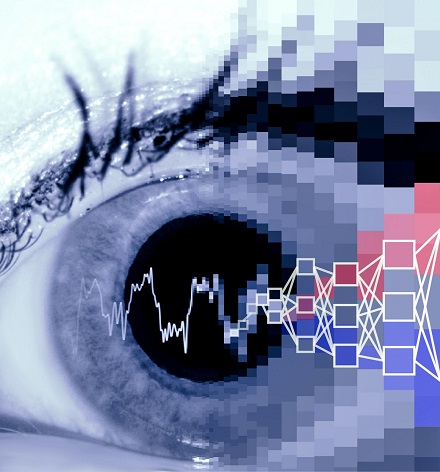
The study, led by Boston Children's Hospital neuroscientist Michela Fagiolini, PhD, and postdoctoral fellow Pietro Artoni, PhD, unveils a machine-learning algorithm that can spot abnormalities in pupil dilation that are predictive of autism spectrum disorder (ASD) in mouse models. It further shows that the algorithm can accurately detect if a girl has Rett syndrome, a genetic disorder that impairs cognitive, sensory, motor, and autonomic function starting at 6 to 18 months of age, as well as autism-like behaviors. CAPTION Michela Fagiolini, PhD, and her colleagues demonstrate a machine-learning algorithm that can spot abnormalities in pupil dilation that are predictive of autism spectrum disorder (ASD) in mouse models. The same algorithm, using heart rate fluctuations instead of pupillary data, successfully identified girls with Rett syndrome.  CREDIT Pietro Artoni/Boston Children's Hospital{module In-article}
Fagiolini and colleagues hope this system could provide an early warning signal not just for Rett syndrome but for ASD in general. In the future, they believe it could also be used to monitor patients' responses to treatments; currently, a clinical trial is testing the drug ketamine for Rett syndrome, and a gene therapy trial is planned.

"We want to have some readout of what's going on in the brain that is quantitative, objective, and sensitive to subtle changes," says Fagiolini. "More broadly, we are lacking biomarkers that are reflective of brain activity, easy to quantify, and not biased. A machine could measure a biomarker and not be affected by subjective interpretations of how a patient is doing."

Altered arousal in autism

Fagiolini and Artoni, in close collaboration with Takao Hensch, PhD, and Charles Nelson, PhD, at Boston Children's, began with the idea that people on the autism spectrum have altered behavioral states. Prior evidence indicates that the brain's cholinergic circuits, which are involved in arousal, are especially perturbed, and that altered arousal affects both spontaneous pupil dilation/constriction and heart rate.

Fagiolini's team, supported by the IRCN at Boston Children's F.M. Kirby Neurobiology Center, set out to measure pupil fluctuations in several mouse models of ASD, including mice with the mutations causing Rett syndrome or CDKL5 disorder, as well as BTBR mice. Spontaneous pupil dilation and constriction were altered even before the animals began showing ASD-like symptoms, the team found.

Moreover, in mice lacking MeCP2, the gene mutated in Rett syndrome, restoring a normal copy of the gene, in cholinergic brain circuits only, prevented the onset of pupillary abnormalities as well as behavioral symptoms.

Predicting Rett syndrome in girls

To systematically link the observed arousal changes to the cholinergic system, the team took advantage of an earlier discovery by Hensch: mice lacking the LYNX1 protein exhibit enhanced cholinergic signaling. Based on about 60 hours of observation of these mice, the investigators "trained" a deep learning algorithm to recognize abnormal pupillary patterns. The same algorithm accurately estimated cholinergic dysfunction in the BTBR, CDKL5, and MeCP2-deficient mice.

The team then brought this algorithm to 35 young girls with Rett syndrome and 40 typically developing controls. Instead of measuring the girls' pupils (as patients may fidget), they used heart rate fluctuations as the measure of arousal. The algorithm nonetheless successfully identified the girls with Rett, with an accuracy of 80 percent in the first and second year of life.

"These two biomarkers fluctuate in a similar way because they are proxies of the activity of autonomic arousal," says Artoni. "It is the so-called 'fight or flight response."

Autonomic arousal, a property of the brain that is strongly preserved across different species, is a robust indicator of an altered developmental trajectory, Fagiolini and Artoni found.

Biomarkers for babies?

In a previous study with Nelson, Fagiolini showed that visual evoked potentials, an EEG measure of visual processing in the brain, could also serve as a potential biomarker for Rett syndrome. She believes that together, such biomarkers could offer robust yet affordable screening tools for infants and toddlers, warning of impending neurodevelopmental problems and helping to follow the progression of their development or treatment.

"If we have biomarkers that are non-invasive and easily evaluated, even a newborn baby or non-verbal patient could be monitored across multiple timepoints," Fagiolini says.
Russian physicists send light through the plane of the world's thinnest semiconductor crystal

Tyler O'Neal, Staff Editor GOVERNMENT July 24, 2019, 1:36 pm

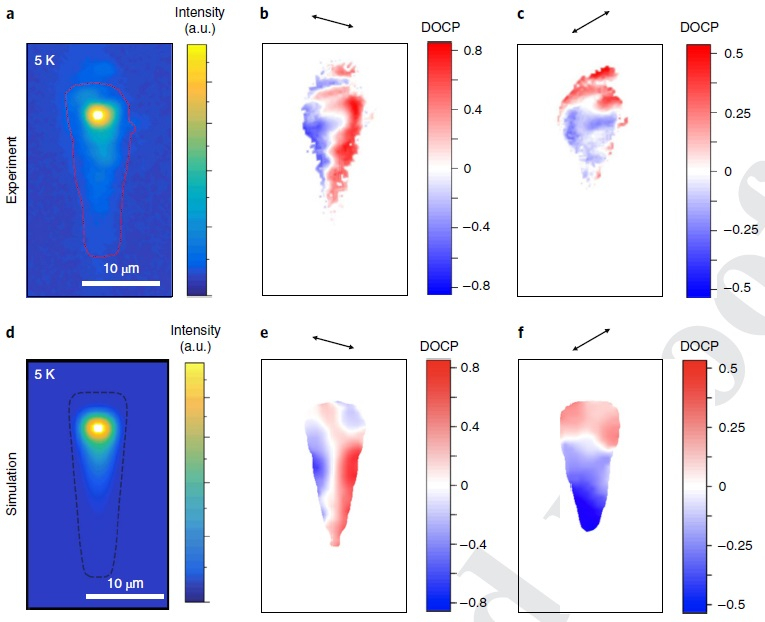
An international research team has studied how photons travel in the plane of the world’s thinnest semiconductor crystal. The distribution of light polarisation in space turned out to be similar to the three-coloured rapana. The results of the physicists’ work open the way to the creation of monoatomic optical transistors – components for quantum supercomputers, potentially capable of making calculations at the speed of light. The research paper has been published in Nature Nanotechnology.

In every modern microcircuit hidden inside a laptop or smartphone, you can see transistors – small semiconductor devices that control the flow of electric current, i.e. the flow of electrons. If we replace electrons with photons (elementary particles of light), then scientists will have the prospect of creating new supercomputing systems that can process massive information flows at a speed close to the speed of light. At present, it is photons that are considered the best for transmitting information in quantum supercomputers. These are still hypothetical computers that live according to the laws of the quantum world and are able to solve some problems more efficiently than the most powerful supercomputers. Alexey Kavokin is the Head of the Spin Optics Laboratory of St Petersburg University; Professor at the University of Southampton (United Kingdom) and the Head of the Department of Nanophysics and Photonics at this university. In 2011, Mr Kavokin won a mega-grant of the Government of the Russian Federation, within which the Spin Optics Laboratory was created. In 2018, he headed the International Centre of Polaritonics at Westlake University in China.{module In-article}

Although there are no fundamental limits for creating quantum supercomputers, scientists still have not chosen what material platform will be the most convenient and effective for implementing the idea of ​​a quantum computer. Superconducting circuits, cold atoms, ions, defects in diamond and other systems now compete for being one chosen for the future quantum supercomputer. It has become possible to put forward the semiconductor platform and two-dimensional crystals, specifically, thanks to scientists from: the University of Würzburg (Germany); the University of Southampton (United Kingdom); the University of Grenoble Alpes (France); the University of Arizona (USA); the Westlake university (China), the Ioffe Physical Technical Institute of the Russian Academy of Sciences; and St Petersburg University.  

The physicists studied the propagation of light in a two-dimensional crystal layer of molybdenum diselenide (MoSe2) which is only one atom thick – this is the thinnest semiconductor crystal in the world. The researchers found that the polarisation of light propagating in a superfine crystalline layer depends on the direction of light propagation. This phenomenon is due to the effects of spin-orbit interaction in the crystal. Interestingly, as the scientists noted, the graph that shows the spatial distribution of the polarisation of light turned out to be rather unusual – it resembles a multi-coloured marine rapana.

Ultrafine molybdenum diselenide crystals for experiments were synthesised in the laboratory of Professor Sven Höfling at the University of Würzburg. It is one of the best crystal growth laboratories in Europe. Measurements were carried out both in Würzburg and in St Petersburg under the supervision of Alexey Kavokin, professor at St Petersburg University. An important role in the development of the theoretical base was made by Mikhail Glazov. He is a corresponding member of the Russian Academy of Sciences, an employee of the Spin Optics Laboratory at St Petersburg University, and a leading research associate at the Ioffe Physical Technical Institute.

‘I foresee that in the near future, two-dimensional monoatomic crystals will be used to transfer information in quantum devices,’ said Professor Alexey Kavokin, head of the Spin Optics Laboratory at St Petersburg University. ‘What classic computers and supercomputers take a very long time to do, a quantum computing device will do very quickly. Therein lies the great danger of quantum technologies – comparable to the danger of an atomic bomb. With their help it will be possible, for example, to hack banking protection systems very quickly. That is why today intensive work is under way, including the creation of means of protecting quantum devices: quantum cryptography. And our work contributes to semiconductor quantum technologies.’

Additionally, as the scientist noted, the research was a major step forward in the study of light-induced (i.e. appearing in the presence of light) superconductivity. It is the phenomenon when the materials that allow electric current to pass through have zero resistance. At present, this state cannot be achieved at temperatures above minus 70 ˚C. However, if the proper material is found, this discovery will make it possible to transfer electricity to any point on Earth without any loss, and to create a new generation of electric motors. It should be recalled that in March 2018, the research team of Alexey Kavokin predicted that structures containing superconducting metals, such as aluminium, can help solve the problem. Nowadays, scientists at St Petersburg University are looking for a way to obtain experimental evidence of their theory.

Russian team finds alternatives to diamonds for drilling

Tyler O'Neal, Staff Editor GOVERNMENT July 23, 2019, 2:22 pm

Using computational methods, scientists have plotted a highly accurate map to guide the synthesis of new, cheaper materials tough enough for the mining and space industries

Diamonds aren't just a girl's best friend -- they're also crucial components for hard-wearing industrial components, such as the drill bits used to access oil and gas deposits underground. But a cost-efficient method to find other suitable materials to do the job is on the way.

Diamond is one of the only materials hard and tough enough for the job of constant grinding without significant wear, but as any imminent proposee knows, diamonds are pricey. High costs drive the search for new hard and superhard materials. However, the experimental trial-and-error search is itself expensive.  {module In-article}

A simple and reliable way to predict new material properties is needed to facilitate modern technology development. Using a computational algorithm, Russian theorists have published just such a predictive tool in the Journal of Applied Physics, from AIP Publishing.

"Our study outlines a picture that can guide experimentalists, showing them the direction to search for new hard materials," said the study's first author Alexander Kvashnin, from the Skolkovo Institute of Science and Technology and Moscow Institute of Physics and Technology.

As fiber optics, with its fast transmission rate, replaced copper wire communications, so too do materials scientists search to find new materials with desirable properties to support modern technology. When it comes to the mining, space and defense industries, it's all about finding materials that don't break easily, and for that, the optimal combination of hardness and fracture toughness is required. But it's tricky to theoretically predict hardness and fracture toughness. Kvashnin explained that although lots of predictive models exist, he estimates they are 10%-15% out off the mark at best.

The Russian team recently developed a computational approach that considers all possible combinations of elements in Dmitri Mendeleev's periodic table -- christened "Mendelevian search." They've used their algorithm to search for optimal hard and tough materials.

By combining their toughness prediction model with two well-known models for material hardness, the scientists' algorithm learned which regions of chemical space of compounds were most promising for tough, hard phases that could be easily synthesized.

Results were plotted on a "treasure map" of toughness vs. hardness, and the scientists were impressed by what they saw. All known hard materials were predicted with more than 90% accuracy. This proved the search's predictive power, and the newly revealed combinations are potential treasures for industry.

Kvashnin explained he is part of an industrial project devoted to new materials for drilling bits, where experimentalists are now synthesizing one of these hard material treasures -- tungsten pentaboride (WB5).

"This computational search is a potential way to optimize the search for new materials, much cheaper, faster and quite accurately," said Kvashnin, who hopes that this new approach will enable the speedy development of new materials with enhanced properties.

But they aren't stopping there with the theory. They want to use their modern methods and approaches to pin down the general rules for what makes hard and superhard materials among the elements to better guide researchers of the future.

  1. Israeli researchers develop algorithm to predict infectious diseases
  2. Chest X-rays contain information that can be harvested with AI

Page 77 of 85

  • 72
  • 73
  • 74
  • 75
  • 76
  • 77
  • 78
  • 79
  • 80
  • 81
POPULAR RIGHT NOW
  • AI supercharges the hunt for stronger magnets: Iowa State researchers launch a new era of intelligent materials discovery
    AI supercharges the hunt for stronger magnets: Iowa State researchers launch a new era of intelligent materials discovery
  • IBM's Historic stock collapse raises questions for the future of enterprise supercomputing
    IBM's Historic stock collapse raises questions for the future of enterprise supercomputing
  • Could a novel dark matter theory simultaneously resolve multiple cosmic enigmas? Supercomputer simulations provide a compelling, albeit currently unverified, potential solution
    Could a novel dark matter theory simultaneously resolve multiple cosmic enigmas? Supercomputer simulations provide a compelling, albeit currently unverified, potential solution
  • Melting icebergs may be reshaping Earth’s greatest ocean current
    Melting icebergs may be reshaping Earth’s greatest ocean current
  • Supercomputers replace ‘bathtub’ flood maps with physics-based digital twins of Britain’s coastline
    Supercomputers replace ‘bathtub’ flood maps with physics-based digital twins of Britain’s coastline
  • Supercomputers push neural quantum simulation beyond previous limits
    Supercomputers push neural quantum simulation beyond previous limits
  • Intel’s AI supercomputing revival: Q2 financial surge signals new era for CPU-powered HPC infrastructure
    Intel’s AI supercomputing revival: Q2 financial surge signals new era for CPU-powered HPC infrastructure
  • AI infrastructure financing fears shake semiconductor sector
    AI infrastructure financing fears shake semiconductor sector
  • AWS supercomputing investment reaches historic scale as Amazon’s AI strategy powers record financial results
    AWS supercomputing investment reaches historic scale as Amazon’s AI strategy powers record financial results
  • Catching the wave of the future: Supercomputers unlock the hidden dynamics of Venus
    Catching the wave of the future: Supercomputers unlock the hidden dynamics of Venus
THIS YEAR'S MOST READ
  • Wall Street wants to trade supercomputing power like oil
    Wall Street wants to trade supercomputing power like oil
  • Beamforming the future: BeammWave's 6G push signals the rise of orbital-terrestrial wireless networks
    Joakim Axmon
    Joakim Axmon
  • Cosmic ambition at scale: UK’s supercomputer unlocks a 2.5 petabytes universe
    Cosmic ambition at scale: UK’s supercomputer unlocks a 2.5 petabytes universe
  • Hidden order, revealed at scale: Supercomputing, electron ptychography uncover the inner workings of relaxor ferroelectrics
    Hidden order, revealed at scale: Supercomputing, electron ptychography uncover the inner workings of relaxor ferroelectrics
  • Intel's Q1 results signal supercomputing surge driving Xeon momentum
    Intel's Q1 results signal supercomputing surge driving Xeon momentum
  • When stars fall apart: Supercomputing reveals the hidden physics of black holes
    When stars fall apart: Supercomputing reveals the hidden physics of black holes
  • Multi-layer simulations reveal the hidden supply chain of solar prominences
    Multi-layer simulations reveal the hidden supply chain of solar prominences
  • Japanese scientists decode dolphin speed with supercomputing: Turbulence, vortices, and the hidden physics of propulsion
    Japanese scientists decode dolphin speed with supercomputing: Turbulence, vortices, and the hidden physics of propulsion
  • Cosmic feedback at scale: Supercomputing reveals how quasars regulate the early Universe
    Cosmic feedback at scale: Supercomputing reveals how quasars regulate the early Universe
  • Modeling life at the microscopic scale: A computational breakthrough in oxygen transport
    Modeling life at the microscopic scale: A computational breakthrough in oxygen transport
MOST READ OF ALL-TIME
  • Largest Computational Biology Simulation Mimics The Ribosome
    Details
    112127
    The amino acid (green) slithers into the chemical reaction center, moving through an evolutionarily ancient corridor of the ribosome (purple). The amino acid is delivered to the reaction core by the transfer RNA molecule (yellow).
    The amino acid (green) slithers into the chemical reaction center, moving through an evolutionarily ancient corridor of the ribosome (purple). The amino acid is delivered to the reaction core by the transfer RNA molecule (yellow).
  • Silicon 'neurons' may add a new dimension to chips
    Details
    81040
    Silicon 'neurons' may add a new dimension to chips
  • Linux Networx Accelerators Expected to Drive up to 4x Price/Performance
    Details
    75563
  • Complex Concepts That Really Add Up
    Details
    73693
    Complex Concepts That Really Add Up
  • Blue Sky Studios Donates Animation SuperComputer to Wesleyan
    Details
    68166
    Each rack holds 52 Angstrom Microsystem-brand “blades,” with a memory footprint of 12 or 24 gigabytes each. (Photos by Olivia Bartlett Drake)
    Each rack holds 52 Angstrom Microsystem-brand “blades,” with a memory footprint of 12 or 24 gigabytes each. (Photos by Olivia Bartlett Drake)
  • Humanities, HPC connect at NERSC
    Details
    57973
  • TeraGrid ’09 'Call for Participation'
    Details
    54976
  • Turbulence responsible for black holes' balancing act
    Details
    52339
  • Cray Wins $52 Million SuperComputer Contract
    Details
    50162
  • SDSC Researchers Accurately Predict Protein Docking
    Details
    46115
  • FRONTPAGE
  • LATEST
  • POPULAR
  • REGISTER
  • SOCIAL
  • VIDEO
  • SUBSCRIPTION
  • RSS
  • GUIDELINES
  • PRIVACY
  • TOS
  • ABOUT
  • +1 (816) 799-4488
  • editorial@supercomputingonline.com
© 2001 - 2026 SuperComputingOnline.com, LLC. All rights reserved. This material may not be published, broadcast, rewritten or redistributed without permission.
Sign In
  • FRONT PAGE
  • LATEST
    • MEDIA KIT
    • MOST READ
    • RSS FEED
    • ACADEMIA
    • AEROSPACE
    • APPLICATIONS
    • ASTRONOMY
    • AUTOMOTIVE
    • BIG DATA
    • BIOLOGY
    • CHEMISTRY
    • CLIENTS
    • CLOUD
    • DEFENSE
    • DEVELOPER TOOLS
    • EARTH SCIENCES
    • ECONOMICS
    • ENGINEERING
    • ENTERTAINMENT
    • HEALTH
    • INDUSTRY
    • INTERCONNECTS
    • GAMING
    • GOVERNMENT
    • MANUFACTURING
    • MIDDLEWARE
    • MOVIES
    • NETWORKS
    • OIL & GAS
    • PHYSICS
    • PROCESSORS
    • RETAIL
    • SCIENCE
    • STORAGE
    • SYSTEMS
    • VISUALIZATION
  • VIDEOS
    • ADD YOUR VIDEOS
    • MANAGE VIDEOS
  • COMMUNITY
    • TRADE SHOWS
    • SOCIAL NETWORK VIDEOS
    • SURVEYS
    • APPLICATIONS BROWSER
    • CONVERSATION INBOX
    • SOCIAL ADVERTISER
    • GROUPS
    • MARKETPLACE LISTINGS
    • PAGES
    • LEADERBOARD
    • POINTS LISTING
      • BADGES
    • PRIVACY CONFIRM REQUEST
    • PRIVACY CREATE REQUEST

Hey there! We noticed you’re using an ad blocker.