


Mount Sinai CEO Brendan G. Carr, Amabel James and Hamilton Evans "Tony" James, and Eric J. Nestler at a recent ribbon-cutting for the Hamilton and Amabel James Center for Artificial Intelligence and Human Health of the Icahn School of Medicine at Mount Sinai.  CREDIT Sami Rauf on behalf of the Mount Sinai Health System
Mount Sinai CEO Brendan G. Carr, Amabel James and Hamilton Evans "Tony" James, and Eric J. Nestler at a recent ribbon-cutting for the Hamilton and Amabel James Center for Artificial Intelligence and Human Health of the Icahn School of Medicine at Mount Sinai. CREDIT Sami Rauf on behalf of the Mount Sinai Health System

Revolutionizing healthcare: The Hamilton and Amabel James Center for Artificial Intelligence, Human Health

Amidst the hustle and bustle of New York City, a new beacon of hope has emerged in healthcare innovation. The Mount Sinai Health System has boldly stepped into the future with the grand opening of the Hamilton and Amabel James Center for Artificial Intelligence and Human Health. This state-of-the-art facility is poised to embark on a transformative journey, spearheading the AI revolution in healthcare.

The Center is a testament to Mount Sinai's unwavering commitment to revolutionizing patient care through groundbreaking innovation and technology. It symbolizes progress, embodying the convergence of artificial intelligence, data science, and genomics in the heart of Manhattan. As one of the first at a US medical school, the Center sets a new precedent for integrating AI technology across various healthcare domains, including genomics, imaging, pathology, and electronic health records.

The driving force behind this monumental endeavor is the generous support from Hamilton Evans, Tony James, and his wife, Amabel. Their investment has culminated in a 12-story, 65,000-square-foot beacon of progress, providing a home for approximately 40 Principal Investigators and 250 support staff. Their generosity has laid the foundation for a collaborative environment, fostering interdisciplinary research to deepen our understanding, diagnosis, and treatment of human diseases.

The integration of artificial intelligence in healthcare holds the promise of transforming how we diagnose and treat patients, reshaping the very fabric of the future of healthcare. The Mount Sinai Health System has been at the forefront of AI research and development and has established a dedicated AI research center to cultivate an optimal environment for researchers. This will lead to groundbreaking discoveries that will fundamentally change the landscape of human health.

Mount Sinai's values and vision, epitomized in the opening of the Hamilton and Amabel James Center, reflect a commitment to using artificial intelligence for the greater good. This bold initiative signifies a leap towards significant progress in healthcare and shines a beacon of hope for future breakthroughs in AI research and development within academic institutions.

Mount Sinai's perseverance and dedication in realizing this ambitious project are truly commendable. Modernizing an existing building has created a space that aligns with contemporary standards and encompasses core facilities dedicated to driving forward their AI initiatives. These initiatives include the Windreich Department of AI and Human Health, the Hasso Plattner Institute for Digital Health at Mount Sinai, the Institute for Genomic Health, the Biomedical Engineering and Imaging Institute, and the Institute for Personalized Medicine.

Mount Sinai's Windreich Department of AI and Human Health, the first of its kind in a US medical school, is a testament to its commitment to advancing and optimizing artificial intelligence and human health. Its innovative NutriScan AI application, designed to facilitate faster identification and treatment of malnutrition in hospitalized patients, has earned it prestigious accolades and showcased the impactful application of AI in healthcare.

The Hamilton and Amabel James Center for Artificial Intelligence and Human Health is a testament to the transformative power of collaboration and innovation. Mount Sinai's unwavering dedication to breakthrough science and clinical care is evident in its commitment to driving progress in precision medicine and fostering a culture of innovation and discovery.

As we stand on the cusp of a new era in healthcare, the Hamilton and Amabel James Center serves as a beacon of inspiration. It symbolizes humanity's unyielding pursuit of progress and the relentless drive to overcome the most challenging barriers. It represents hope, progress, and the indomitable spirit of humanity's quest for a healthier tomorrow.
Hossein Estiri, Ph.D.

A new medical AI tool has revealed previously unrecognized cases of long COVID by analyzing patient health records

Researchers at Mass General Brigham have developed an innovative artificial intelligence (AI) algorithm designed to uncover previously undetected instances of long COVID-19 within patients' health records. This novel approach, termed 'precision phenotyping,' utilizes AI to identify signs of long-term COVID-19, track the evolution of symptoms over time, and rule out alternative explanations for patients' conditions.

The methodology introduced by the team suggests that as many as 22.8% of individuals may be experiencing symptoms consistent with long-term COVID-19, offering a more accurate representation of the ongoing impact of the pandemic. By longitudinally analyzing a patient's medical history, this AI tool provides a personalized healthcare approach that can help reduce the disparities and biases often present in current diagnostic methods for long COVID.

The tool developed by Mass General Brigham investigators enables clinicians to effectively sift through electronic health records, identifying cases of long COVID-19 that present a range of persistent symptoms after SARS-CoV-2 infection, including fatigue, chronic cough, and cognitive impairment. Published in the reputable journal Med, the study's results highlight that many individuals may suffer from long COVID without proper recognition, emphasizing the need for improved diagnostic tools.

Senior author Hossein Estiri, who leads AI Research at the Center for AI and Biomedical Informatics of the Learning Healthcare System (CAIBILS) at Mass General Brigham and is an associate professor of medicine at Harvard Medical School, stated, "Our AI tool could transform a confusing diagnostic process into something clear and focused, equipping clinicians to navigate the complexities of this challenging condition." The research aims to uncover the true nature of long COVID and provide insights into effective treatment strategies.

Long COVID, officially defined as the Post-Acute Sequelae of SARS-CoV-2 infection (PASC), consists of many symptoms that challenge physicians to differentiate between post-COVID symptoms and pre-existing conditions. The algorithm developed by Estiri and colleagues leverages 'precision phenotyping' to explore individual medical records, identify COVID-related symptoms, and track their progression over time, facilitating a distinction between long COVID and other underlying illnesses.

Medical residents, such as Alaleh Azhir from Brigham Women's Hospital within the Mass General Brigham system, have emphasized the potential impact of AI-powered diagnostic tools in streamlining the diagnostic process for long COVID. The patient-centered diagnoses generated by this AI tool can help correct biases present in current long COVID diagnostics, offering a more accurate depiction of the population affected by this condition.

While the researchers acknowledge limitations regarding the algorithm's integration with health record data and the regional scope of the study, they propose further investigations to evaluate the tool's efficacy across diverse patient populations. The planned release of this AI algorithm for global access represents a significant step toward enhancing diagnostic accuracy and clinical care on a broader scale.

This pioneering work by Mass General Brigham researchers lays the groundwork for a more comprehensive understanding of the long-term effects of COVID-19 and opens new avenues for future research into the genetic and biochemical underpinnings of long COVID subtypes. This remarkable AI tool has the potential to revolutionize diagnostic practices and pave the way for targeted interventions that address the complex challenges posed by COVID-19.

Mayo Clinic researchers develop innovative computational tool providing insights into gut microbiome health

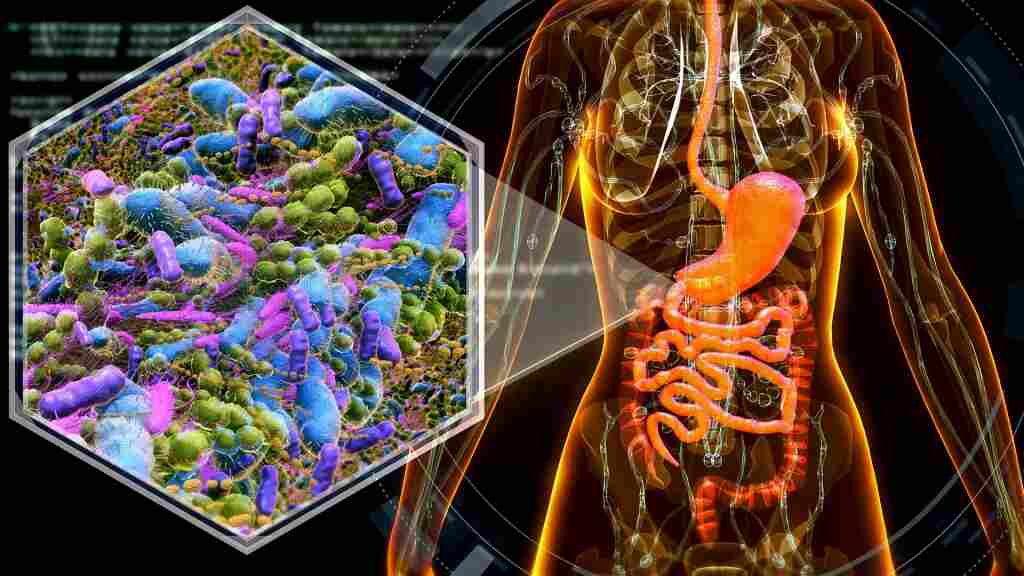
In a recent breakthrough, Mayo Clinic researchers have unveiled an innovative computational tool that marks a significant advancement in the assessment of an individual's gut microbiome health. Published in Nature Communications, the study introduces the Gut Microbiome Wellness Index 2. This tool utilizes bioinformatics and machine learning techniques to analyze stool gut microbiome profiles and can distinguish healthy individuals from those with diseases with an impressive 80% accuracy.

The Gut Microbiome Wellness Index 2 is a major leap in microbiome research, drawing from a large dataset of over 8,000 stool gut microbiome samples representing various diseases, geographical regions, and demographic groups. By applying machine learning, the tool can detect subtle changes in gut health, providing crucial insights into an individual's progression towards, or recovery from, various diseases.

Dr. Jaeyun Sung, the senior author and computational biologist at Mayo Clinic's Microbiomics Program, emphasized that the tool is not meant to diagnose specific diseases but rather to serve as a proactive health indicator. It enables the quantification of subtle shifts in gut health, empowering individuals to take proactive measures in managing their health and making dietary or lifestyle adjustments that could potentially prevent mild issues from escalating into more severe health conditions.

Machine learning played a crucial role in the development of the Gut Microbiome Wellness Index 2. It aided in the precise identification of microbial species, the selection of relevant features, and the optimization of the predictive model. Through extensive testing on a training set of over 8,000 microbiome samples and validation on a new cohort of 1,140 samples, the researchers were able to demonstrate the robustness and precision of the tool.

The tool's versatility was demonstrated in its successful evaluation across varied clinical scenarios, including individuals undergoing fecal microbiota transplantation, altering dietary fiber intake, or having antibiotic exposure. This showcases its ability to capture shifts in gut health and offer a comprehensive assessment of an individual's microbiome status.

Looking ahead, Dr. Sung and the research team aim to enhance the Gut Microbiome Wellness Index 2 by expanding its dataset to include a broader range of microbiome samples from diverse populations and integrating more advanced artificial intelligence techniques, thereby bolstering the tool's predictive accuracy and adaptability.

The development of the Gut Microbiome Wellness Index 2 marks a paradigm shift in the evaluation of gut microbiome health, harnessing the power of machine learning to provide individuals with a proactive and instrumental tool for managing their overall well-being.