

Lancaster University scientist wins fellowship to make supercomputing more sustainable

Dr. Peter Garraghan, a Lecturer in Lancaster University's School of Computing and Communications, has been awarded a £1 million fellowship by the Engineering and Physical Sciences Research Council (EPSRC), part of UK Research and Innovation (UKRI), to research and develop a new supercomputing system that could turn the relationship between computing and energy demand on its head.

The global energy demand, and associated carbon footprint, from computing, is growing rapidly. It is forecast that by 2025, Information and Communications Technology (ICT) will consume a fifth of all electricity generated and will be responsible for around 5.5 percent of greenhouse gas emissions. Forecasts show that by 2040 ICT systems will be responsible for more than 5.2 Gt of CO2 annually - which equates to more than half the emissions caused by transport.

This accelerating growth in energy and emissions is driven by an ever-increasing demand for digital services including the relatively new, but computationally-heavy, domains of Big Data and artificial intelligence. Tasks that require high levels of computation require higher amounts of energy.  {module INSIDE STORY}

Traditional thinking around the problem of ICT energy consumption has looked towards increased efficiency as a panacea. However, this has resulted in a major paradox where increasing efficiencies in ICT leads to increased demand for supercomputing services, which in turn raises energy demand even further. This is known as 'the rebound effect'.

Instead of pushing for further efficiencies that drive ever-growing energy demand, Dr. Garraghan's fellowship aims to unshackle ICT operation from this growth. He will do this by developing a solution centered around ICT systems that can automatically adapt how they run to account for a limited and fluctuating, amount of renewable energy, or to operate within commercial or greenhouse gas emission targets.

His concept will see large ICT systems, such as data centers, that can dynamically reconfigure their components and how they operate with changes in the amount of energy available. This ability to automatically, and dynamically, adapt to changing energy supply is increasingly important as we shift away from dirty but reliable fossil fuels towards renewables that provide energy intermittently depending on how sunny or windy it is.

If less energy is available, Dr. Garraghan envisages a datacentre system would be able to automatically adjust its operation from its code, its hardware, and its cooling. Though this would lead to a temporary change in performance, Dr. Garraghan believes it is a necessary trade-off if we are to achieve our climate-change targets.

He said: "For many decades, improving the efficiency of ICT has been seen as the primary means to make computers more 'green'. However, if we look around, we can see that in many ways it has resulted in the opposite effect. We consume more data than ever before, watch higher resolution videos, and own more devices in the home. Even if we created the most perfectly energy-efficient computer, we would still see increased energy consumption due to greater demand and new technologies. We need to radically rethink, in engineering and society, the idea of sustainable technologies."

This concept has not been possible until now. But thanks to recent breakthroughs in energy-efficient ICT resource management tools and machine learning, it is now possible to design large-scale systems that can autonomously adapt their operation to achieve specified emission targets.

Dr. Garraghan said: "Broadly speaking, there is tangible tension and feelings of powerlessness in public discourse on tackling the problems of reducing emissions and its impact on the economy, and our standards of living. This project is a direct answer to this problem. I am proposing to go beyond forecasts and conceptual models, and engineer real ICT systems to embolden public belief that humanity can overcome these challenges."

Dr. Garraghan will assemble a team of researchers, working with external partners BT and the Science and Technology Facilities Council (STFC), to develop a proof of concept system and hopes his research will enable a rethink of how society uses, perceives, and interacts with ICT systems.
Russian mathematicians develop a new model for predicting epidemics based on precedent

The predictions are based on data on the dynamics of the epidemic in countries where the disease was recorded earlier.

Scientists of the Intelligent Logistics Centre at St Petersburg University have developed a new Case-Based Rate Reasoning (CBRR) model for predicting the dynamics of epidemics. Using this method, the researchers are preparing forecasts for the spread of COVID-19 in Russia. The predictions are based on data on the dynamics of the epidemic in countries where the disease was recorded earlier.

The scientists faced a challenge when they began to build their first forecasts in April-May 2020: all available models for mathematical forecasting the dynamics of epidemics did not work for COVID-19. {module INSIDE STORY}

'In April-May 2020, there were no statistics on the dynamics of the new virus yet, while such statistics are available for viruses already known to mankind. The class of models available at that time was therefore not applicable for forecasting the dynamics of the epidemic. It was necessary to develop a new approach and a new CBRR model. Its feature is that, to predict the epidemic evolution in Russia, it uses data on the dynamics of the spread of the new coronavirus in countries where the epidemic began earlier than in our country,' said Professor Victor Zakharov, Head of the Intelligent Logistics Centre at St Petersburg University, Head of the Department of Mathematical Modelling of Energy Systems at St Petersburg University, Doctor of Physics and Mathematics.

Having established the new model for Russia as a whole, the scientists started to update their forecasts for St Petersburg and Moscow on a weekly basis (their forecasts are available on the website of the Intelligent Logistics Centre at St Petersburg University). According to the latest forecasts, in Russia the daily increase in new cases of COVID-19 over the past two weeks ranges from 24,000 to 27,000. On 3 December 2020, for the first time this figure exceeded 28,000. If this level of growth continues for 7 to 10 days, Russia will flatten the curve of the number of new cases. If it then begins to decrease, scientists believe that Russia may peak on 21-22 December 2020 in the number of active cases: that is according to the number of sick people on a particular day. On these days, the number of infected people in the country as a whole could range from 514,000 to 517,000. These values must be taken into account in order to understand the load level of the health care system and plan its work for the future.

The new CBRR model is built on an iterative approach: the data on which the predictions are based is updated in real time for a period of 2-3 weeks. Thus, the real course of the epidemic over the last analysed time period makes it possible to calculate more accurately the forecast of its dynamics in the near future. 'The forecast for Russia and the United States in the spring was built 2-3 weeks ahead of the current time. In the forecasts for St Petersburg and Moscow, we rely on the data of the previous days (2-3 weeks) and make predictions using the same model, but adjusted for these data,' said Victor Zakharov.

'The developed CBRR model includes an iterative procedure for the heuristic selection of interval lengths, a set of values of percentage growth, and other significant parameters. These include: peaks in terms of the increase in new cases and possible periods of peak height; and peaks in terms of the number of active cases. A significant component of the iterative procedure is the formation of the chain of countries with epidemic spread (Epidemic Spreading Chain, ESC), which includes several countries ranked by the time they reach the same levels of the selected parameters. The country for which the forecast is being built is called the Country Follower, the rest of the countries we refer to as Country Predecessors,' added Victor Zakharov.

Professor Zakharov noted that for the correct tuning of the model, it is necessary that the ESC countries use relatively identical measures against the epidemic spread: quarantine, self-isolation, social distancing, and the like. As he clarified, the epidemic in the Russian Federation, the country-follower, is characterised by a later date when the same percentage growth rates were reached in comparison with other countries. 'Based on this fact, when modelling and predicting the dynamics of the epidemic in Russia, we included Italy, Spain, Great Britain, and France as country-predecessors in the ESC chain. The sequentially generated evolution trajectory of the statistical data on the epidemic, for example, the total number of infected people, is compared with the actual statistical data,' said Victor Zakharov.

University of Kent researchers develop algorithm to prevent misidentification of cancer cells

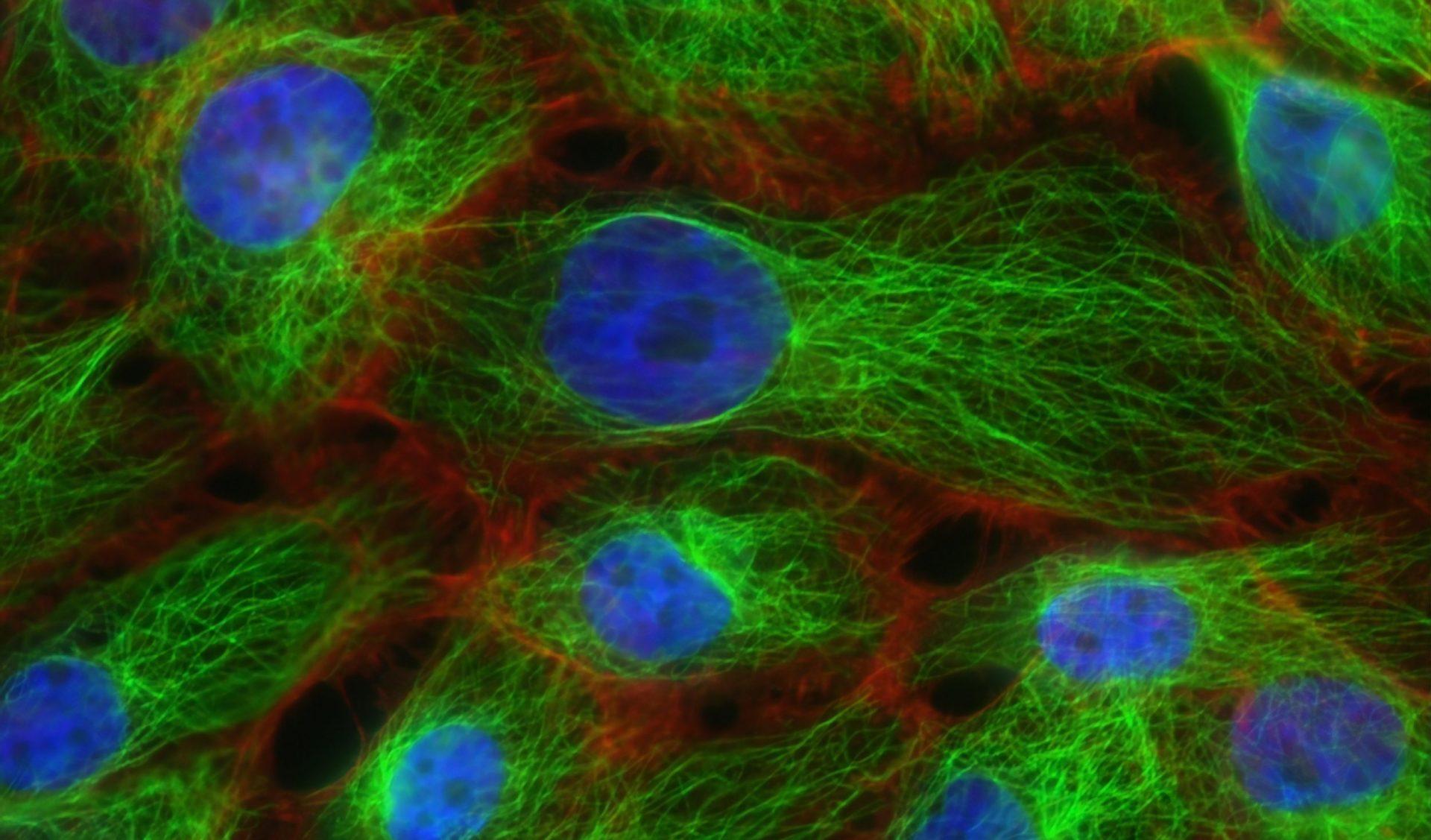
Researchers from the University of Kent have developed a computer algorithm that can identify differences in cancer cell lines based on microscopic images, a unique development towards ending misidentification of cells in laboratories.

Cancer cell lines are cells isolated and grown as cell cultures in laboratories for study and developing anti-cancer drugs. However, many cell lines are misidentified after being swapped or contaminated with others, meaning many researchers may work with incorrect cells.

This has been a persistent problem since work with cancer cell lines began. Short tandem repeat (STR) analysis is commonly used to identify cancer cell lines, but is expensive and time-consuming. Moreover, STR cannot discriminate between cells from the same person or animal. Currently only leading experts can tell between cancer cells.{module INSIDE STORY}

Based on microscopic images from a pilot set of cell lines and utilising supercomputer models capable of 'deep learning', researchers from Kent's School of Engineering and Digital Arts (EDA) and School of Computing (SoC) trained the computers through a period of mass comparison of cancer cell data. From this, they developed an algorithm allowing the computers to examine separate microscopic digital images of cell lines and accurately identify and label them.

This breakthrough has the potential to provide an easy-to-use tool that enables the rapid identification of all cell lines in a laboratory without expert equipment and knowledge.

This research was led by Dr Chee (Jim) Ang (SoC) and Dr Gianluca Marcelli (EDA) with leading cancer cell lines experts Professor Martin Michaelis and Dr Mark Wass (School of Biosciences).

Dr Ang, Senior Lecturer in Multimedia/Digital Systems, said: "Our collaboration has demonstrated tremendous results for potential future implementation in laboratories and within cancer research. Utilising this new algorithm will yield further results that can transform the format of cell identification in science, giving researchers a better chance of correctly identifying cells, leading to reduced error in cancer research and potentially saving lives.

"The results also show that the computer models can allocate exact criteria used to identify cell lines correctly, meaning that the potential for future researchers to be trained in identifying cells accurately may be greatly enhanced too."