New insights into weak shock waves promise safer aerospace designs

Japanese engineers and computational scientists at Yokohama National University (YNU) have shed light on how weak shock waves, those just above the speed of sound, behave in numerical simulations. This finding could improve the accuracy of modeling in aerospace, propulsion, and other high-speed fluid applications. Their results, published in the journal Physics of Fluids, reveal that conventional computational methods may misrepresent very weak shocks by generating extra entropy, thus altering the apparent "thickness" and propagation behavior of such waves.
 

The challenge: capturing weak shock waves

 
Shock waves are commonly known as the abrupt pressure, density, and velocity changes produced when an object moves faster than the local speed of sound, such as a supersonic aircraft or a rocket launch. However, within this category, there is a subtle class: weak shock waves, which travel only slightly faster than sound (for example, a Mach number of ~1.01). In these cases, the shock is gentler and more difficult to capture with sufficient numerical fidelity.
 
The YNU team explains that accurately simulating shock waves is important because these waves cause instantaneous compressions and produce increases in entropy – a measure of disorder or irreversibility in the fluid. 

However, when simulations use standard finite-volume methods (dividing the flow domain into discrete cells and solving conservation equations cell-by-cell) to "capture" these discontinuities, the result is that the shock is spread across several cells ("thickened") or diffused, rather than treated as a near-discontinuity as in theory and ideal physical behavior. The question then becomes: How does this numerical diffusion influence key quantities like entropy generation or shock thickness in the model?

What the team found: three distinct regimes

In their study, the researchers (led by Keiichi Kitamura and Gaku Fukushima) performed numerical tests of moving shocks of varying strength and analyzed how the numerical representation evolved, especially focusing on entropy generation.
 

Their core findings:

The “final state” of a moving numerical shock tends to fall into one of three regimes: dissipated, transitional, and thinly captured.
 
For very weak shocks (e.g., Mach ~ 1.01), the simulation often lands in the dissipated regime, meaning the shock is heavily spread out or even “washed out” numerically.
 
The researchers show that the thickness of the numerical shock is dictated by how much entropy is generated in that numerical representation; in other words, the simulation will spread out the shock until the entropy increase matches what the discretized representation can accommodate. Put simply: a moving weak shock cannot be accurately represented by a very “thin” numerical shock front in many conventional schemes because if it were too thin, the entropy generation would become excessive (numerical artifact) or instability would arise.
 
In the words of the authors: “A moving weak shock wave cannot be accurately represented with a thin profile owing to excessive entropy production.”
 
These findings carry implications beyond academic nuance. In practical engineering scenarios—rocket launches, supersonic jets, high-speed aerodynamic maneuvers—weak shock waves or near-sonic compression waves may arise. If the computational model misrepresents their propagation or dissipation, designers could misjudge structural loads, thermal stresses, or noise propagation. The YNU team points out that “precise computations of flows involving shock waves are crucial” for safe and economical designs. By “bridging the understanding gap between theoretical and physical weak shock waves,” they hope future computational approaches can deliver improved fidelity, thereby enabling more accurate simulations, less conservative margins, and potentially lower cost/weight in aerospace systems.

The computational takeaways: what to watch for

From a computational science perspective, this study highlights several practical considerations: The choice of numerical flux function (how the simulation handles flow across cell faces) and resolution (number of cells across the shock) significantly influence how the shock evolves numerically. The study's tests showed that outcomes depend on shock strength and flux scheme.
 
Numerical methods must balance shock thickness spread (which reduces oscillations or instabilities) against excessive numerical dissipation (which can wash out physical features of the shock). For weak shocks, because the physical entropy jump is very small, the simulation's built-in numerical dissipation or diffusion may dominate, leading to unrealistic "dissipated" shock behavior.
 
Therefore, computational practitioners should be cautious when interpreting simulation results for very near-sonic shocks: what appears to be a weak shock may in fact be a heavily smeared numerical artifact.
 
Although much shock-wave research has historically focused on strong shocks (high Mach numbers), where the discontinuity is dramatic and easier to capture, this work reminds us that "weak" shocks present unique computational challenges. The YNU research emphasizes that simulating such subtle effects is not simply a scaled-down version of the strong shock case; entropy generation, numerical diffusion, and shock thickness interact in non-trivial ways. As aerospace and high-speed transport technologies push toward new frontiers (e.g., near-sonic or slightly supersonic flight, reusable launch vehicles, advanced propulsion systems), the ability to simulate these subtle flows with confidence will matter. By elucidating the "peculiarity" of moving weak shock computations, the researchers provide a roadmap for more accurate, trustworthy modeling, a quiet but important step in the evolution of fluid-dynamics simulation science.

New AI shines a beacon of hope against biological invasions

In an era of increased global connectivity, which brings not just people and ideas but also unintended ecological threats, innovators at the University of Connecticut (UConn) are turning to artificial intelligence to restore balance to nature. Their newly developed framework harnesses machine-learning algorithms to predict which plant species may become invasive before they arrive in a new area.

A New Frontier

Ecologists have long grappled with the problem of invasive species, plants introduced into non-native habitats that rapidly proliferate, displacing native flora and altering entire ecosystems. As the UConn team notes, by the time traditional risk assessments identify a species as invasive, the damage is often already done. 

Enter AI. Led by Assistant Professor Julissa Rojas-Sandoval (Geography, Sustainability, Urban, and Community Studies), in collaboration with Physics Associate Professor Daniel Anglés-Alcázar and Ecology/Evolutionary Biology Professor Michael Willig, the team reimagined machine-learning techniques borrowed from astrophysics—specifically, galaxy-classification tools—to address terrestrial biology. 

Rojas-Sandoval explains: “What is exciting is that we are not just providing a framework to classify plants as invasive and not, we are providing a way to identify which species have the potential to become invasive and problematic before they arrive in a new area.” 

How It Works


The system analyzes three primary data streams:

  • Biological and ecological traits of the plant such as reproduction strategies and growth form.
  • Historical invasion records where and when a species has already caused problems.
  • Habitat preference characteristics which ecosystems the species thrives in.

Feeding this data into machine-learning models, the team identified strong invasion predictors, such as species with a history of invasiveness elsewhere, those capable of reproducing via multiple methods (seeds, cuttings, etc.), or those that generate many generations in a single growing season.

Remarkably, the framework achieved over 90% accuracy in predicting invasive species in the tested region, an improvement over traditional assessments.

Why This Matters

This tool is designed to supplement, not replace, existing risk-assessment methods. As Rojas-Sandoval emphasizes, "This is a new strategy to take advantage of the wonderful datasets and machine learning tools available… to complement previous methods and become more effective at preventing new invasions." 

With the ability to screen species before they are imported, policy-makers and regulators could prevent ecological problems rather than react to them. This shift from reactive to proactive is powerful.

A Vision for the Future


While the current models were developed using data from Caribbean islands, the team is already looking ahead. They invite researchers in other regions to contribute data so that similar frameworks can be trained to address invasions elsewhere. 


They also acknowledge the complexity of global ecosystems: no single model will solve every scenario overnight. However, by identifying generalizable patterns thanks to AI’s pattern-recognition capabilities the hope is to build a toolkit that can be customized to each region and ecosystem.
In a world where human activity increasingly blurs ecological boundaries, this AI-driven approach offers a spark of hope. It reminds us that with creativity, data, and technology, we can turn the tide protecting biodiversity, empowering communities, and safeguarding nature for future generations.

In Summary


The new machine-learning framework from UConn demonstrates that artificial intelligence isn’t solely about self-driving cars or chatbots; it can be a guardian of the living world. By identifying threats before they occur, it sets a new standard for ecological resilience. The research team’s work points toward a future where we don’t just react to invasions we prevent them.

Auburn's 'quantum crystals': Breakthrough or hype?

A recent claim from researchers at Auburn University, highlighted in a press release, announces the development of a new class of materials called "surface-immobilized electrides." These materials reportedly can host electrons free from atomic constraints, potentially providing advancements in quantum computing and catalytic technologies.

The announcement is ambitious, suggesting the possibility of free-electron "islands" functioning as quantum bits, and "electron seas" aiding in catalysis, along with a tunable platform for future materials. However, as with many striking scientific press releases, a healthy dose of skepticism is warranted.

What the Researchers Claim

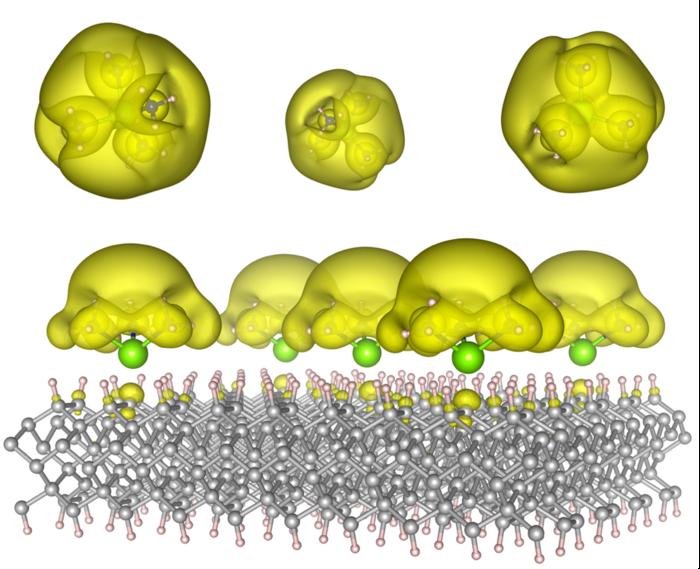
The Auburn team, publishing in ACS Materials Letters, describes a theoretical design for materials in which solvated-electron precursor molecules are anchored on rigid surfaces, such as diamond or silicon carbide.

By altering the molecular arrangement, they suggest that the electrons can adopt different states: localized "islands" that act as quantum bits, or extended metallic states that facilitate catalytic behavior.

The researchers frame this advancement as a solution to longstanding challenges with electrides (materials where electrons are loosely bound) by combining stability (through anchoring) with tunability.

The ultimate claim is bold: these materials could "change the way we compute and the way we manufacture." 

Gaps, Uncertainties, and Cautionary Flags

A closer inspection raises several red flags and caveats that temper the excitement about this work:

1. No Experimental Validation Yet
   The research is purely computational. There are no lab-grown samples, no spectroscopy data, no transport measurements, and no demonstration of the claimed states in real materials. All effects are predicted but not observed.

   While simulations can guide experiments, they often overlook real-world complications such as defects, thermal fluctuations, interface issues, impurities, and fabrication challenges.

2. Stability and Scalability Remain Speculative
   The press release emphasizes that anchoring helps improve stability compared to previous electrides, which have been notoriously fragile and sensitive to their environment. However, actually achieving a stable, air-tolerant, and scalable version in a real device is a significant leap.

   Moreover, the practicality of anchoring such molecules uniformly across device-scale surfaces, along with adequate yields and reproducibility, has yet to be tested.

3. Tuning Electrons Is Harder Than It Seems  
   Electron-electron interactions, screening, disorder, coupling to phonons, electron leakage, and decoherence can all degrade theoretical predictions when applied to actual materials. The press release glosses over these complex details.

   In quantum computing especially, coherence times and error correction thresholds are demanding. A material that theoretically supports a localized “island” electron does not guarantee it will behave reliably in a real qubit environment.

4. Broad Claims, Loosely Connected Applications  
   The press release shifts between quantum computing and catalysis, suggesting that a single class of materials could serve both purposes. This all-encompassing narrative is appealing but also indicates a lack of focus. The real-world constraints in catalysis (surface chemistry, stability in reactive conditions) differ significantly from those in a quantum processor (low noise, ultralow temperature, isolation).

   Additionally, many material proposals tend to overpromise. The idea of “one platform to rule them all” has misled numerous prior claims in materials science and quantum technology.

5. Media Framing vs. Scientific Modesty
   The press release is highly promotional, using phrases like “Imagine … supercomputers that learn ….” Such language raises concerns that what is being sold is hype or, at the very least, aspirational marketing rather than solid, near-term deliverables.

Why the Work Might Still Matter, But With Caution

Despite these concerns, the computational modeling presented is nontrivial, and exploring new electron-anchoring schemes is a legitimate direction in materials science. The concept of tuning delocalization versus localization of electrons is critical to many functional materials, including superconductors, topological insulators, and 2D materials.

If the theoretical groundwork is sound, it could inspire experimentalists to undertake synthesis trials, surface chemistry approaches, or thin-film growth strategies. In this regard, the paper may serve as a generative idea rather than a fully realized technology.

Bottom Line

The claim by the Auburn team that "quantum crystals" could serve as a blueprint for future computing and chemistry is an intriguing hypothesis but is not yet a proven advancement. Without experimental validation and with many unknowns regarding stability, scalability, and real-world performance, it is advisable for readers and funders to consider this as speculative frontier research promising, but far from certain.

Ultimately, enthusiasm should be tempered with prudent scientific caution. Time and experimentation will reveal whether these innovative electron designs can withstand the challenges presented by real-world materials.