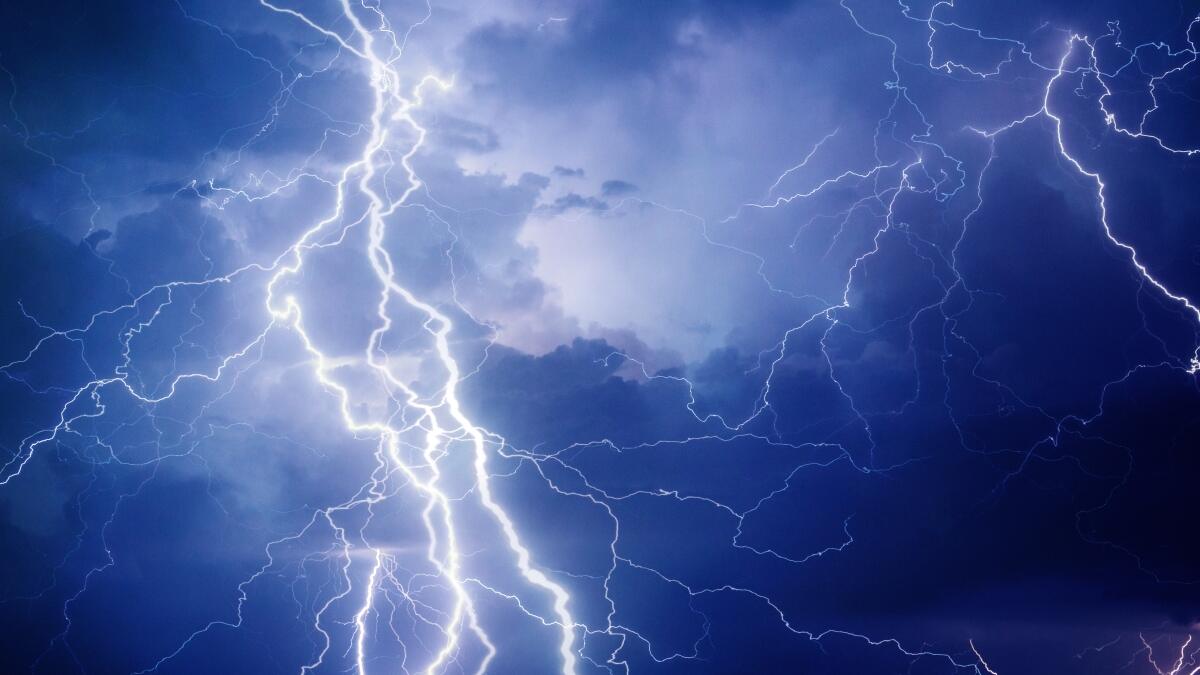
ASU researchers uncover gigantic lightning

A decade-old thunderstorm that stretched across the Great Plains, from eastern Texas to nearly Kansas City—spanning 515 miles—has set a new world record for lightning, as discovered through an advanced global network of antennas located above Earth's surface.

In a recent study led by scientists at Arizona State University (ASU) and published in the Bulletin of the American Meteorological Society, the team re-examined satellite data from October 2017. They identified an astonishing megaflash extending 38 miles longer than the previous record set in April 2020.

From Antennas on Earth to Lightning Mappers in Orbit

Traditionally, lightning networks have relied on ground-based antenna arrays scattered across regions to locate strikes. However, this megaflash could only be fully mapped using space-based sensors. NOAA’s GOES-16 satellite, the first geostationary satellite equipped with a lightning mapper, joins similar instruments operated by Europe and China, enabling the detection of lightning from orbit.

These lightning mappers function like ultra-precise antennas in space. Each time a flash occurs, the sensors record its origin to the millisecond and trace its horizontal extent across continents.

Weaving Together Petabytes of Flash Data

The volume of data is staggering. GOES-16 detects about one million flashes each day, with each flash logged by time, location, and geographic extent. This massive stream of data must be continuously processed to identify the rare megaflashes, which are defined as exceeding approximately 100 kilometers (60 miles) in length.

Michael Peterson at Georgia Tech, the lead author of the published report, explains that modern data-processing techniques are essential. They sift through the vast number of ordinary lightning flashes, connecting fragmented pulses that belong to the same extended stroke. Only then can researchers reconstruct the full scale of these flashes, which can span hundreds of miles.

Networks of Antennas at Multiple Scales

Imagine dozens of satellite antennas, including GOES-16 in geostationary orbit and its counterparts operated by European and Chinese agencies. Together, they create a continuous, overlapping network of detection. Because these satellites cover most storm regions globally, even sprawling flashes can be captured in great detail.

While traditional ground networks are still useful for finer localization and cross-validation, the real breakthrough lies in the ability to measure continent-sized flashes from space.

Why It Matters—in Curiosity and Science

Fewer than 1% of thunderstorms produce megaflashes, which typically develop over more than 14 hours and cover areas the size of New Jersey. Capturing these rare phenomena allows scientists to explore storm dynamics and extreme weather from a new perspective.

Cerveny, a rapporteur for weather and climate extremes at the World Meteorological Organization, states, “It is likely that even greater extremes still exist.” As satellite systems advance and data archives grow, our ability to detect increasingly longer lightning events continues to improve.

In Summary

Satellites act as a network of space-based antennas, capturing lightning with millisecond precision and continental coverage. Advanced data-processing pipelines analyze millions of flash events each day, enabling the reconstruction of rare megaflashes that stretch across hundreds of miles. Ground networks still play a role, but the true advancement lies in the synergy of multiple satellites, assisting researchers in finding and analyzing the planet’s most extreme electrical events.

ASU’s work illustrates how innovations in detection and processing are redefining the limits of what we thought lightning could achieve—stretching across nations.

NIH researchers develop GeneAgent AI for gene-set analysis

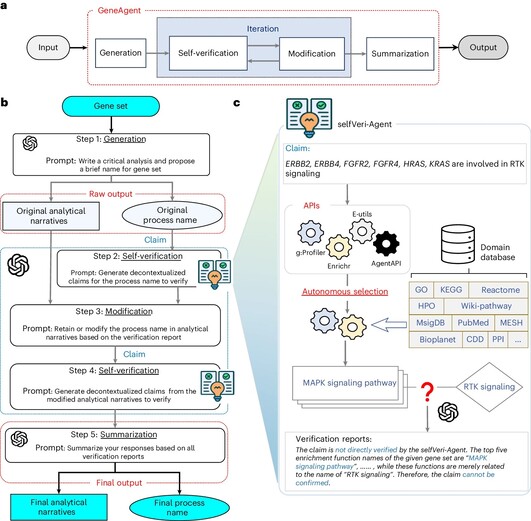
Researchers at the National Institutes of Health (NIH) have created an artificial intelligence (AI) agent called GeneAgent that enhances the accuracy and informativeness of gene set analysis. This AI is powered by a large language model (LLM) and improves upon existing systems by providing more accurate and detailed descriptions of biological processes and their functions.

GeneAgent cross-checks its initial predictions, also known as claims, for accuracy against information stored in established, expert-curated databases. It then generates a verification report that details its successes and failures. This AI agent aids researchers in interpreting high-throughput molecular data and identifying relevant biological pathways or functional modules, which can deepen our understanding of how various diseases and conditions impact groups of genes both individually and collectively.

While AI-generated content is produced by LLMs trained on vast amounts of text data from the internet, these models are not designed to verify facts. As a result, AI-generated content can sometimes be false, misleading, or fabricated—a phenomenon known as AI hallucination. LLMs can also exhibit circular reasoning, whereby they fact-check their outputs against their data, which can increase confidence in incorrect information.

Addressing AI hallucinations is crucial when using LLM tools for gene set analysis, which involves generating collective functional descriptions of grouped genes and their potential interactions. Previous studies utilizing LLMs to answer genomic questions or summarize biological processes did not adequately address the issue of hallucinations in generated content.

GeneAgent tackles this challenge by independently comparing its claims against established knowledge in external expert-curated databases. The research team initially tested GeneAgent on 1,106 gene sets sourced from existing databases that had known functions and process names. For each gene set, GeneAgent first generated an initial list of functional claims. It then used its self-verification module to cross-check these claims against the curated databases and produced a verification report indicating whether each claim was supported, partially supported, or refuted.

To evaluate the accuracy of its self-verification process, the researchers enlisted two human experts to manually review 10 randomly selected gene sets, comprising a total of 132 claims. The experts assessed whether GeneAgent's self-verification reports were correct, partially correct, or incorrect. Their analysis revealed that 92% of the decisions made by GeneAgent were accurate, demonstrating high performance in self-verification, particularly when compared to GPT-4. The experts confirmed the model's effectiveness in reducing hallucinations and producing more reliable analytical narratives.

The research team also explored real-world applications of GeneAgent using animal-model gene sets. When tested on seven novel gene sets derived from mouse melanoma cell lines, GeneAgent provided valuable insights into the functions of specific genes, potentially leading to the discovery of new drug targets for diseases such as cancer.

While LLMs like GeneAgent are still constrained by the information they can access and their inability to reason like humans, GeneAgent's self-driven fact-checking capability shows significant promise in addressing AI hallucinations.

AI reveals hidden patterns of Yellowstone’s supervolcano

Beneath the stunning geysers and expansive landscapes of Yellowstone lies a hidden world of seismic activity, now revealed through advanced machine learning techniques.

A groundbreaking study led by Professor Bing Li at Western University in Canada, in collaboration with Universidad Industrial de Santander in Colombia and the U.S. Geological Survey, has utilized advanced machine learning on 15 years of seismic data from the Yellowstone caldera (2008–2022). The outcome? A seismic catalog of 86,276 earthquakes—nearly ten times more than previously recorded.

Machine Learning: The Seismic Detective 🔍

Historically, detecting earthquakes involved a labor-intensive process of manual review, where researchers would spend hours sifting through waveform data to identify seismic events. However, AI-powered algorithms have scanned the entire dataset, automatically identifying and determining magnitudes for previously overlooked small earthquakes.

Professor Li explains, “If we had to rely on traditional methods, where someone manually clicks through all this data, it’s not scalable.” Machine learning has not only accelerated detection but has also fundamentally transformed our understanding of the seismic patterns beneath Yellowstone.

Revealing Earthquake Swarms and Young Faults

More than half of the detected events were part of “earthquake swarms,” which are bursts of closely spaced small tremors. These swarms illustrate fractal-like fault structures—rough and immature fractures beneath the caldera. By mapping these features, scientists are gaining insights into how subsurface fluids trigger cascades of tremors.

This detailed seismic view enables researchers to apply robust statistical methods to analyze swarm dynamics and the interactions between fluids and faults in unprecedented detail.

As Li noted, these methods are not limited to Yellowstone; they have the potential to revolutionize monitoring at volcanoes worldwide.

In summary, machine learning is transforming Yellowstone from a breathtaking surface spectacle into a finely tuned seismic symphony. With AI guiding the way, scientists are now better equipped than ever to understand the hidden rhythms of our planet’s most famous supervolcano, turning once-silent tremors into enlightening discoveries.