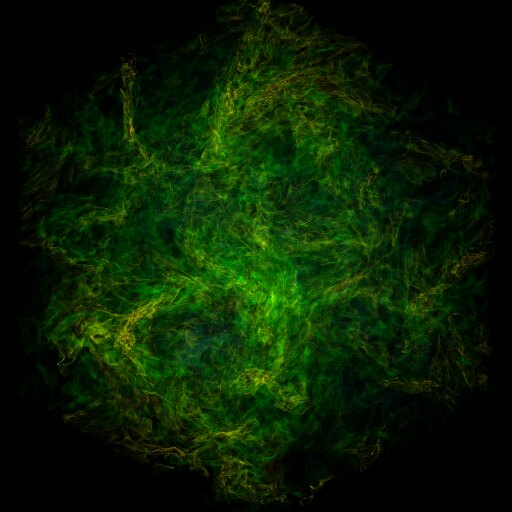
The first image of Sagittarius A*, the supermassive black hole at the center of our galaxy.

Revolutionary cosmic discovery unveils origins of supermassive black hole in galaxy's center

Researchers leverage advanced supercomputer simulations to shed light on the enigmatic phenomenon

The mysterious origins of supermassive black holes, massive entities at the center of most galaxies, have puzzled scientists for a long time. However, a recent discovery by the Nevada Center for Astrophysics at UNLV has brought these cosmic enigmas to the forefront. This discovery offers compelling evidence that sheds light on the formation of the supermassive black hole at the center of our Milky Way galaxy.

In a groundbreaking study, UNLV astrophysicists Yihan Wang and Bing Zhang have proposed a fascinating hypothesis. They suggest that the supermassive black hole, named Sagittarius A* (Sgr A*), might have formed as a result of a cosmic merger in the ancient universe. Wang and Zhang used data from the Event Horizon Telescope (EHT), a remarkable instrument created through global collaboration, to investigate the unique characteristics of Sgr A*, such as its incredible spin and apparent misalignment relative to the Milky Way's angular momentum.

The results of their investigation suggest that the unusual attributes of Sgr A* are most likely due to a massive merger event involving this colossal entity and another supermassive black hole from a satellite galaxy. This groundbreaking proposal raises important questions about the implications of this discovery and the detailed simulations that support it.

How significant are the supercomputer simulations designed to replicate the aftermath of such a massive merger? How do we comprehend the complexity of these computational models, which aim to mirror the colossal clash of cosmic titans that may have given rise to Sgr A* as we know it today? As we grapple with the implications of this transformative revelation, we ponder its profound implications for our comprehension of black hole evolution, cosmic dynamics, and the fabric of the universe itself.

This discovery marks a transformative moment in our quest for cosmic understanding, as we consider the exciting possibilities and profound insights emerging from this exploration into the heart of our galaxy. The cosmic dance of supermassive black hole mergers has ignited our imagination and prompted deep reflection. We now stand on the verge of an extraordinary juncture, anticipating the next captivating revelations in the boundless expanse of the cosmic ocean.

USACE awards Woolpert $49M geospatial capacity contract for national security, infrastructure projects

Woolpert has been awarded a $49 million Geospatial Capacity Contract by the U.S. Army Corps of Engineers (USACE), signaling a significant development in the geospatial industry. This contract highlights the crucial role of Geographic Information Systems (GIS) technology in supporting national security and infrastructure projects across the United States.

The collaboration between Woolpert and USACE represents a joint effort to utilize advanced geospatial capabilities for enhancing decision-making processes, planning, and execution of critical initiatives. As GIS continues to evolve as an indispensable tool across various sectors, Woolpert's expertise and resources are expected to strengthen the nation's strategic infrastructure and security frameworks.

The $49 million Geospatial Capacity Contract emphasizes a dedication to innovation and excellence, as well as the importance of leveraging diverse perspectives and expertise in the GIS domain.

With Woolpert leading this prestigious contract, the combination of cutting-edge technology, domain knowledge, and a commitment to excellence is poised to drive geospatial solutions to new heights. Embracing diverse perspectives and championing diversity in the field of GIS, Woolpert's appointment by USACE exemplifies the inclusive and collaborative spirit that underpins transformative initiatives in geospatial technology.

The $49 million Geospatial Capacity Contract awarded to Woolpert by USACE marks a new chapter in the evolution of GIS applications and exemplifies the power of harnessing varied perspectives to drive innovation, enhance security measures, and fortify national infrastructure on an unprecedented scale.

In summary, the partnership between Woolpert and USACE, combined with the dynamic landscape of GIS technology, sets the stage for a transformative journey toward a more resilient, secure, and interconnected future.

Artist's impression of an exoplanet in front of its central star, created by the authors with support from DALL-E.

Do PINN models shed new light on exoplanets?

Researchers from the Ludwig Maximilian University of Munich in Bavaria, Germany (LMU), the ORIGINS Excellence Cluster, the Max Planck Institute for Extraterrestrial Physics (MPE), and the ORIGINS Data Science Lab (ODSL) claim to have made a groundbreaking discovery in the study of exoplanet atmospheres. According to their findings, they have utilized physics-informed neural networks (PINNs) to model the complex light scattering in exoplanet atmospheres with unprecedented precision. However, it's important to approach such claims with a healthy dose of skepticism.

The research analyzes the interaction between distant exoplanets and starlight as these planets pass in front of their stars. This interaction results in variations in the light spectrum, providing insights into the atmospheric and chemical composition, temperature, and cloud cover of the observed exoplanets.

The key to this breakthrough lies in the application of physics-informed neural networks, which are said to efficiently solve complex equations involved in the modeling process. The researchers developed two models: one focused on accuracy without considering light scattering, and the other incorporated approximations of Rayleigh scattering, a phenomenon responsible for the blue color of the sky on Earth.

The first model demonstrated impressive accuracy, with relative errors mostly under one percent. However, further improvements are required for the second model to better capture the complexities of light scattering off clouds.

While the findings are intriguing, a skeptical lens suggests the need for cautious interpretation. It's crucial to evaluate the robustness of the method and consider the limitations of the study. Additionally, the use of PINNs in modeling exoplanet atmospheres still requires refinement, as emphasized in a separate study that highlights the need to address uncertainties and improve the approximations used in the neural network models.

Experts argue that in exoplanet research, models are only as good as the quality and accuracy of the observational data they are fed. As the highly anticipated James Webb Space Telescope (JWST) is expected to provide more detailed observations, the demand for equally sophisticated atmospheric models will increase. However, it remains to be seen if the PINN models can handle this increased complexity and offer reliable predictions.

While the researchers behind this breakthrough express optimism about AI-based methods in physics, it's crucial to recognize the potential pitfalls and limitations that come with relying heavily on computational models. Further research and validation are necessary to truly ascertain the reliability and significance of these advancements.

Xockets files lawsuit against Nvidia, alleging patent infringement, antitrust violations

In an unexpected development, Xockets, Inc., the pioneering inventor of Data Processing Units (DPUs), has filed a lawsuit against tech giants Nvidia Corp., Microsoft Corp., and RPX Corp. The lawsuit, lodged in the United States District Court for the Western District of Texas, Waco Division, alleges that Nvidia and Microsoft violated federal antitrust laws through illegal monopoly practices and patent infringement.

Xockets claims that Nvidia and Microsoft formed an unlawful cartel with the assistance of RPX to avoid fairly compensating Xockets for its patented DPU technology. This technology is crucial for transforming GPUs into the driving force behind the AI revolution, enabling Nvidia to dominate the market for GPU-enabled AI supercomputer systems.

The crux of the matter is that Nvidia's infringement of Xockets' patents began with its acquisition of Mellanox in 2020. Xockets alleges that the violation originated from Nvidia's takeover of Mellanox, following Xockets' public showcasing of its DPU technology at a 2015 conference.

This legal battle takes place amidst allegations of illegal cartel behavior and monopolistic practices by Nvidia and Microsoft, which are under scrutiny by regulatory bodies such as the U.S. Department of Justice, the U.S. Federal Trade Commission, and the European Union. Xockets claims that attempts to negotiate with Nvidia and Microsoft were unsuccessful, leading to the decision to pursue legal action.

Robert Cote, a board member of Xockets with expertise in intellectual property rights, emphasized the significance of the case, noting that Nvidia and Microsoft are using their dominance in AI to avoid fairly compensating innovators like Xockets. Cote characterized the actions of these tech giants as part of a broader strategy to devalue the IP of innovators.

The lawsuit aims not only to halt the alleged illegal activities of the cartel but also to prevent the release of Nvidia's new Blackwell GPU-enabled AI computer systems and Microsoft's use of these systems for its generative AI platforms. Xockets is firm in its stance on enforcing its IP rights and is resolute in seeking injunctive relief against what it perceives as willful patent infringement.

As this legal battle unfolds, the tech industry anticipates a potential shift in patent disputes and antitrust accusations. The outcome of this case could have far-reaching implications for the tech landscape and the dynamics of intellectual property rights within the AI sector.

Discovery expands list of cancer driver genes

Researchers at the Centre for Genomic Regulation (CRG) in Barcelona have made a groundbreaking discovery by identifying hundreds of potential new cancer driver genes. This finding significantly broadens the spectrum of possible therapeutic targets in cancer treatment.

According to COSMIC, a global cancer mutation database, gene mutations are pivotal in triggering cancer. The study conducted by CRG researchers now reveals that non-mutational mechanisms play a significant role as well. The team identified 813 genes that facilitate cancer cell proliferation through the understudied process of splicing using an innovative algorithm. In contrast to traditional mutation-focused approaches, targeting splicing poses a promising alternative strategy in combating cancer.

Miquel Anglada-Girotto, co-corresponding author of the study, emphasizes the potential of these newly discovered genes as a diverse array of cancer drivers that have long been overlooked due to their divergence from the conventional mutation-centric model. The study found only a minority of these newly identified cancer-driving genes to overlap with those documented in the COSMIC database, indicating the untapped potential of delving into alternative molecular mechanisms.

The researchers developed an algorithm named "spotter" to computationally predict cancer-driver exons which play a crucial role in tumor growth. This predictive model, while promising, requires thorough experimental validation to confirm its efficacy in real-world applications. The team's efforts led to the identification of specific exons with significant roles in cancer progression and drug resistance, offering a novel perspective in the realm of precision oncology.

Dr. Luis Serrano, co-corresponding author of the research, underscores the importance of translating these computational predictions into effective clinical treatments, acknowledging the significant challenges involved in the process. While spotter serves as a powerful tool in identifying potential cancer-driving exons, extensive validation across a range of cancer types and patient samples is imperative to pave the way for personalized cancer therapies.

The study not only sheds light on the role of splicing in cancer pathology but also poses a shift in paradigm towards exploring novel therapeutic targets beyond the traditional mutation-focused approach. As the researchers work towards bridging the gap between computational predictions and clinical applications, the untapped potential of splicing in cancer treatment offers a promising avenue for future breakthroughs in oncology.

These discoveries mark a significant milestone in cancer research and open doors to an innovative approach to combating this complex disease. As science continues to unveil the mysteries of cancer biology, the exploration of non-mutational pathways offers new hope in the fight against one of the most formidable health challenges of our time.