Image: Geio Tischler

AI finds new roads threatening rainforests, aiding conservation

In a groundbreaking move towards the protection of our planet's precious rainforests, scientists at James Cook University in Australia have harnessed the power of machine learning to uncover previously unknown roads that pose a significant danger to these vital ecosystems. This remarkable breakthrough has the potential to revolutionize conservation efforts worldwide.

The study, led by Distinguished Professor Bill Laurance, utilized convolutional neural networks trained on satellite images to detect unmapped roads in wilderness areas. These hidden pathways, often associated with environmental destruction resulting from activities like logging, mining, and land clearing, have largely evaded detection until now.

The scope of the road-building wave we are currently experiencing is staggering, with an estimated 25 million kilometers of new paved roads projected by mid-century. Developing nations, particularly those in tropical and subtropical regions boasting exceptional biodiversity, bear the brunt of this infrastructure expansion.

Traditionally, road mapping has been a labor-intensive process, requiring the time-consuming task of manually tracing road features using satellite imagery. However, the integration of artificial intelligence and machine learning is transforming this process, enabling incredible progress in large-scale road mapping projects.

Through the development and training of machine-learning models, the researchers successfully identified road features from high-resolution satellite imagery covering remote and forested areas of Papua New Guinea, Indonesia, and Malaysia. This automated approach revealed up to 13 times more road length than previously reported in government or road databases.

Professor Laurance, a co-author of the study, emphasizes the immense potential of machine learning for addressing global road-mapping challenges, stating, "We're not there yet, but we're making good progress." With continued advancements, artificial intelligence holds the promise of providing us with the means to map and monitor roads across the world's most environmentally critical areas.

Undoubtedly, proliferating roads constitute one of the most significant direct threats to tropical forests on a global scale. However, this breakthrough offers renewed hope for combating environmental disruptions associated with unchecked road construction. By strengthening our ability to identify and monitor these hidden roads, we can take proactive measures to mitigate their devastating impact on our fragile ecosystems.

The implications of this study reach far beyond rainforests alone. Through the application of machine learning, we have the potential to enhance global conservation efforts in various ecosystems facing similar threats.

From tackling deforestation to addressing illegal activities, the innovative utilization of artificial intelligence expands our capability to drive positive change.

It is crucial to acknowledge the collaborative nature of this endeavor, involving researchers, technology experts, and policymakers working together to protect our natural heritage. By integrating diverse perspectives, we can ensure the successful implementation of AI-driven solutions while considering the social, economic, and environmental implications that come with it.

As we continue to make strides in advancing machine learning capabilities, we now stand on the threshold of a new era in conservation. With optimism and determination, we are poised to unlock the potential of artificial intelligence, one road at a time, in safeguarding our planet's most valuable ecosystems. Together, we have the power to make a difference and create a more sustainable future.

Decoding the SARS-CoV-2 puzzle: Simulations reveal insights into M protein interactions

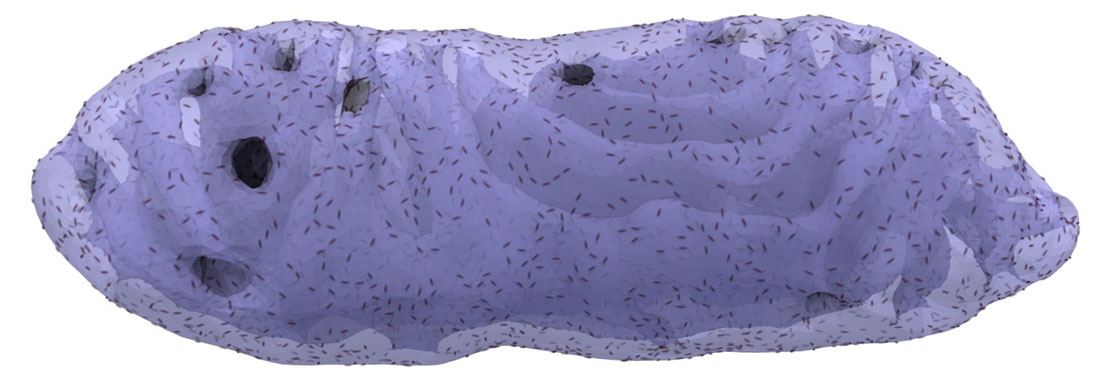
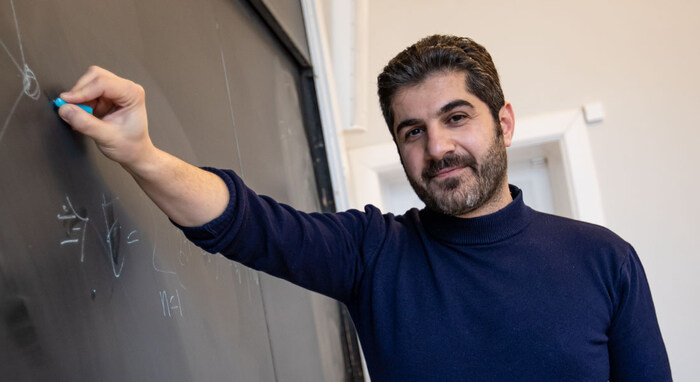
Scientists at the University of California, Riverside, have used supercomputer simulations to understand the role of a small protein, known as the Membrane protein or M protein, in shaping the SARS-CoV-2 virus into its distinctive spherical structure. The team's study details their approach to producing large quantities of M protein, characterizing its physical interactions with the viral membrane, and using theoretical modeling and simulations to paint a clearer picture of how these interactions contribute to the virus's spherical shape. From L to R: Roya Zandi, Thomas Kuhlman, and Umar Mohideen.

The researchers have discovered that when the M protein becomes embedded in the membrane, it induces localized reductions in membrane thickness, triggering curvature and ultimately resulting in the virus's distinctive spherical shape. The team turned to Escherichia coli bacteria to produce the M protein, but they encountered a problem as the proteins tended to clump together leading to cellular death. To solve this issue, the researchers induced the E. coli cells to produce an additional protein called Small Ubiquitin-related Modifier (SUMO) alongside the M protein, which prevented unwanted protein aggregation.

This research holds broader implications for coronaviruses as M proteins are integral components of various coronaviruses, making these findings valuable in understanding viral formation and potentially identifying interventions not only for SARS-CoV-2 but also for other pathogenic coronaviruses. The team plans to expand their investigations to explore how M proteins interact with other SARS-CoV-2 proteins, to potentially disrupt these interactions using targeted drugs.

The study's success was due to the collaboration of diverse perspectives within the research team. The team plans to leverage the power of supercomputing simulations to provide critical insights that could aid in the development of effective antiviral strategies. By harnessing the power of diverse perspectives and cutting-edge computational tools, scientists move closer to decoding the intricate mechanisms of SARS-CoV-2 and developing targeted interventions that may help bring an end to the global crisis.

Earth scientist Stephanie Pennington. Credit: Ben Bond-Lamberty

Uncertainties, gaps in data make it difficult to fully understand the impact of soil respiration on climate change

A recent review of soil respiration science published in the Journal of Geophysical Research: Biogeosciences sheds light on the complex process of soil respiration and its crucial role in the global carbon cycle.

Unfortunately, the review unveils a worrying reality – the lack of observational data and uncertainties surrounding this essential component of climate change. The quest to comprehend the flow of carbon dioxide (CO2) from the soil to the atmosphere using supercomputing methods seems to be constantly hindered, raising concerns about the accuracy of climate change models. Furthermore, the review highlights the need to address the lack of diversity within the global research community to overcome data gaps and improve estimations of global soil respiration.

Soil respiration, a process through which plants and microbes release CO2 into the atmosphere, surpasses human emissions by almost tenfold. Understanding and accurately calculating this flow on a global scale is vital to comprehend the intricate dynamics of the carbon cycle and climate change feedback. However, the review emphasizes that bridging the knowledge gap is challenging due to limited observational data and uncertainties surrounding soil respiration measurements.

One study mentioned in the review examined how soil respiration responds to rainfall, while another focused on the effects of tree stress on respiration by girdling trees. These laboratory studies, along with measurements in natural settings and simulations, have contributed to progress in understanding soil respiration. However, the lack of comprehensive data coverage and the inability to precisely measure this intricate process prevent scientists from building robust models.

To compound concerns, the review suggests that efforts to diversify the global research community must run parallel to advancements in machine learning and mechanistic modeling. By including scientists from lower-income regions, not only can data coverage be improved, but estimates of global soil respiration can also be refined. The current lack of diversity within the research community hampers progress in accurately quantifying soil respiration and its implications for climate change.

The challenges and uncertainties surrounding soil respiration have profound implications for climate change projections. The accuracy of climate models relies heavily on understanding the intricate dynamics of the carbon cycle, and soil respiration plays a significant role in this process. By accurately quantifying the flow of CO2 from the soil to the atmosphere, scientists can refine climate change models and identify potential feedback loops that may intensify the warming trend.

However, without comprehensive data coverage and reliable measurement techniques, these models will remain shrouded in uncertainty. The gaps in observational data, coupled with the lack of diversity within the research community, raise questions about the validity of climate change projections and the ability to make informed policy decisions.

The research community, policymakers, and funding agencies must prioritize addressing these issues. Investing in supercomputing technologies to analyze the vast amount of available data and making concerted efforts to diversify perspectives within soil respiration research are essential steps in advancing our understanding of climate change.

In conclusion, despite progress in soil respiration science, uncertainties and data gaps continue to hinder efforts to accurately quantify the flow of CO2 from the soil to the atmosphere. Understanding this crucial process is vital for refining climate change models and informing policy decisions. Addressing the lack of observational data and promoting diversity within the research community are imperative steps toward building a more comprehensive understanding of soil respiration's role in climate change. Only by doing so can we hope to combat the challenges posed by an increasingly uncertain climate future.

NARMAX modeling plays a role to define the next generation of supercomputer forecasting models

A group of scientists from the Universities of Lincoln, Sheffield, and Reading have collaborated on an innovative research project that could significantly improve seasonal weather predictions in the UK and Northwest Europe. They have developed a new method called the NARMAX model that uses artificial intelligence (AI) and machine learning to understand atmospheric changes and provide more accurate forecasts.

The NARMAX model has implications for various industries, including agri-food, energy, leisure, and tourism. Traditionally, weather forecasting centers have relied on costly supercomputer models that often fall short of accurately capturing the variations of atmospheric conditions during the summer months. However, the NARMAX model uses AI and machine learning algorithms to forecast the state of the North Atlantic jet stream and atmospheric circulation, which are crucially connected to surface air temperature and precipitation anomalies.

Dr. Ian Simpson, a Postdoctoral Research Associate at the University of Lincoln, explained that the NARMAX models can translate the links between circulation and jet stream patterns and seasonal surface weather conditions in northwest Europe into predictions of seasonal weather patterns, such as temperature and precipitation anomalies.

The study's outcomes hold tremendous potential for enhancing seasonal forecasting. Farmers, for example, will benefit from more accurate predictions, allowing them to plan their crops and optimize their farming systems accordingly. Additionally, the study provides insights into the causes behind atmospheric circulation changes, enabling scientists to improve the outputs of supercomputer models.

The three-year research initiative, titled 'Northwest European Seasonal Weather Prediction from Complex Systems Modelling,' received £650,000 in grant funding from the UK Government's Natural Environment Research Council. The study's findings have been published in esteemed scientific journals, Meteorological Applications and the International Journal of Climatology.

This study demonstrates the potential of AI and machine learning for improving seasonal weather predictions. With the help of these cutting-edge technologies, the researchers have taken a significant step toward providing more accurate and reliable seasonal forecasts.

Astronomers make breakthrough discovery with the help of machine learning

The European Southern Observatory’s (ESO) Very Large Telescope (VLT) has made an incredible discovery. A quasar has been identified, which is the brightest of its kind and holds the key to unlocking the mysteries of our universe. Quasars are the radiant cores of distant galaxies, fueled by supermassive black holes. This particular quasar has the fastest-growing black hole known to date, which is devouring matter with the equivalent mass of our sun each day. The lead author of the study, Dr. Christian Wolf, Australian National University, calls it "the most luminous object in the known Universe." It's named J0529-4351 and is so far away that its light took over 12 billion years to reach us.

The quasar has been hiding in plain sight, despite being present in images taken by the ESO Schmidt Southern Sky Survey in 1980. However, it was not recognized as a quasar until years later when the advanced instruments of the VLT uncovered its true nature. Machine learning algorithms and models are used to distinguish quasars from other celestial objects, but the identification of new quasars presents challenges. These models are trained on existing data, which limits their ability to recognize objects that differ significantly from what is already known.

The discovery of J0529-4351 highlights the transformative power of advanced technologies like machine learning and the importance of embracing diverse perspectives in scientific research. Dr. Wolf shares that he pursues quasars because "personally, I simply like the chase. For a few minutes a day, I get to feel like a child again, playing treasure hunt, and now I bring everything to the table that I have learned since."

The team of researchers who made this discovery comprised Christian Wolf, Samuel Lai, Christopher A. Onken, Neelesh Amrutha, Fuyan Bian, Wei Jeat Hon, Patrick Tisserand, and Rachel L. Webster.