New method improves precision of particle collision simulations

High-energy particle physics is built on two essential foundations: cutting-edge accelerators and advanced computational techniques. Researchers at the Institute of Nuclear Physics Polish Academy of Sciences, have now introduced a novel method that promises to greatly enhance the reliability of large-scale simulations, interpreting results from experiments like those at the Large Hadron Collider. This breakthrough holds significant promise for the supercomputing community.
 
A central challenge remains: how can computational physicists estimate the effects of calculations that are prohibitively resource-intensive to perform?

When Computation Meets the Limits of Physics

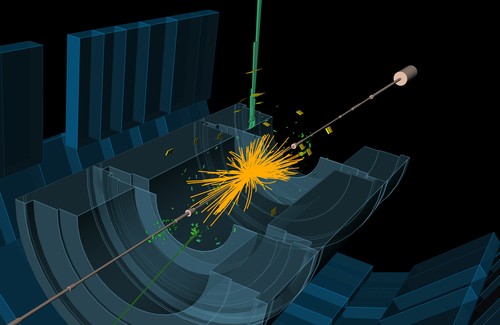
Modern particle physics experiments generate enormous datasets describing the aftermath of high-energy proton collisions. To interpret these events, scientists must compare experimental observations with theoretical predictions derived from complex numerical simulations based on quantum chromodynamics (QCD) and the Standard Model.
 
But the calculations required to simulate these interactions grow explosively in complexity. Perturbation theory, the mathematical framework typically used, expresses results as a series of corrections. Each successive order in the series represents a more precise description of the physics, but also requires dramatically more computational effort.
 
For large-scale collider simulations, computing higher-order corrections can become computationally prohibitive, even on modern HPC systems. As a result, physicists usually truncate the series after a manageable number of terms and then estimate the uncertainty introduced by the missing higher-order contributions.
 
The question, however, remains difficult: How large are the effects of the corrections that were never computed?

A New Approach to Estimating the Unknown

Physicists Matthew A. Lim of the University of Sussex and Dr. René Poncelet of IFJ PAN have proposed a new methodology for estimating these missing higher-order effects in perturbative calculations. Their work, published in Physical Review D, introduces a refined technique based on varying so-called nuisance parameters rather than relying solely on the traditional renormalization-scale variation method.
 
In the standard approach, theorists adjust the renormalization scale, a parameter linked to the energy scale of particle interactions, to evaluate how sensitive simulation results are to changes in that value. This variation provides a rough estimate of theoretical uncertainty.
 
The new method instead explores variations in physically interpretable parameters such as particle masses, coupling constants, or probability distribution functions. Because these quantities correspond more directly to measurable physics, the resulting uncertainty estimates can be less arbitrary and more grounded in experimental constraints.
 
For supercomputing engineers familiar with numerical modeling, the strategy resembles sensitivity analysis performed on large-scale simulations: perturb inputs within physically meaningful ranges and observe how the system responds.

Validating Against Real Collider Data

The researchers tested their framework across ten categories of proton-collision processes observed at the LHC. These included phenomena such as Higgs boson production, W and Z boson pair production, heavy-quark pair formation, and interactions generating gamma quanta and hadronic jets.
 
In cases where the traditional scale-variation approach already performed well, the new method yielded comparable results. However, in previously problematic scenarios, the nuisance-parameter technique produced more realistic uncertainty estimates, improving agreement between theoretical predictions and experimental observations.
 
According to Dr. Poncelet, the method offers a practical framework for estimating the impact of higher-order corrections in perturbative calculations, a capability that could sharpen the interpretation of collision data from both current and future accelerators.

Why This Matters for HPC

For the supercomputing community, the significance of the work extends beyond particle physics theory.
 
Large-scale collider simulations already consume vast computational resources across distributed HPC infrastructures worldwide. As researchers push toward higher precision, especially in the search for subtle deviations from the Standard Model that might signal new physics, computational demand continues to escalate.
 
Methods that improve the statistical reliability of truncated simulations can reduce the need for prohibitively expensive higher-order calculations while still preserving scientific accuracy. In other words, smarter mathematical frameworks can complement brute-force computing.
 
This interplay between algorithmic innovation and HPC capability is becoming increasingly central to modern scientific discovery. Even with the world’s fastest supercomputers, physicists cannot compute everything. The art lies in determining what must be calculated, what can be approximated, and how to quantify the difference.

Toward More Precise Digital Experiments

As next-generation particle accelerators and upgraded detectors deliver increasingly precise experimental data, theoretical models must advance alongside them. Improved methods for estimating uncertainty, such as the approach proposed by Lim and Poncelet, offer a practical way to keep simulations aligned with observations without demanding impractical levels of computational power.
 
For HPC engineers working at the intersection of physics and large-scale computation, the lesson is both technical and conceptual: improving simulations is not solely about building faster machines. It also requires better strategies for understanding and quantifying the uncertainties embedded within the equations that drive those simulations.
CoreWeave, Perplexity forge a strategic HPC-driven AI partnership

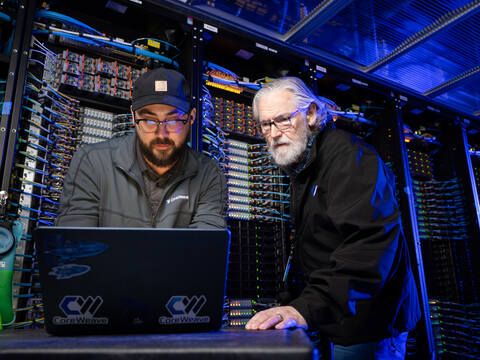
CoreWeave, Inc. has entered a multi-year partnership with Perplexity AI to provide the infrastructure for Perplexity’s next-generation inference workloads via its specialized AI cloud platform. This strategic collaboration demonstrates how advanced HPC-grade architectures, especially GPU clusters optimized for AI inference, are enabling production-scale AI systems with stringent performance, scalability, and reliability demands.
 
The partnership centers on deploying Perplexity’s inference workloads on CoreWeave’s cloud infrastructure, leveraging dedicated NVIDIA GB200 NVL72-powered clusters to support the high throughput and low latency needed by Perplexity’s Sonar and Search API ecosystem as usage scales.

Inference at Scale: Technical Imperatives

AI inference, serving predictions from pre-trained models in real time, poses unique computational challenges compared with training. While training benefits from large batch sizes and long-duration GPU utilization, inference workloads demand ultra-low latency responses, predictable performance under bursty query patterns, and efficient resource utilization across multi-tenant clusters. For a company like Perplexity, which handles billions of user queries per month, infrastructure that can orchestrate inference workloads at scale with minimal jitter is critical.
 
CoreWeave’s platform is built on a Kubernetes-orchestrated service layer that abstracts and automates resource allocation across GPU clusters. By pairing container orchestration with dedicated hardware, specifically GB200 NVL72 accelerators, CoreWeave ensures that inference models can be deployed without rigid re-architecture while maintaining consistent latency profiles, even at peak demand. This pattern is particularly important as AI models grow in size and complexity, often requiring substantial GPU memory and bandwidth to serve real-time applications effectively.
 
From an engineering perspective, this deployment highlights several critical infrastructure considerations:
  • Workload specialization: Automated tiering of resources for inference vs. training, recognizing that inference tasks often require different memory and throughput characteristics than model training.
  • Latency control: Optimization of GPU-to-network pathways to reduce end-to-end inference time, a key metric for conversational AI and search APIs.
  • Scalability: Dynamic scaling mechanisms that transparently add or remove GPU nodes as load fluctuates, coupled with robust orchestration to prevent resource fragmentation.
  • Cost predictability: Infrastructure designed to avoid over-provisioning while meeting performance SLAs, aided by load-aware scheduling and GPU utilization monitoring. 
Perplexity has already begun running inference workloads on CoreWeave’s platform through its Kubernetes Service and is leveraging tools such as W&B Models to manage models from experimentation to production. This reflects a broader multi-cloud strategy that allows Perplexity to balance resilience, capacity, and vendor flexibility as its AI footprint expands.

Implications for the HPC Community

For supercomputing engineers and architects, this collaboration is emblematic of a broader trend: HPC technologies are transitioning from niche scientific workloads to mainstream AI infrastructure stacks. Traditionally, HPC clusters were associated with physics simulations, climate modeling, and other numerically intensive domains. Increasingly, similar architectures, especially GPU-centric clusters, are now critical for production AI services, requiring operational excellence not just in computational throughput but also in orchestration, fault tolerance, and real-time responsiveness.
 
Platforms like CoreWeave demonstrate that HPC principles, such as parallelism, memory hierarchy optimization, and workload specialization, are foundational to delivering commercial AI services at a global scale. For inference workloads in particular, engineers must consider not just peak compute, but sustained, predictable performance across thousands of queries per second.
 
This shift also presents opportunities for HPC professionals to influence how AI infrastructure evolves: from advising on cluster design and interconnect topologies to developing efficiency-aware scheduling policies that reduce energy consumption without sacrificing performance, an increasingly important consideration as production AI systems grow in scale and footprint.
 
In summary, the CoreWeave, Perplexity alliance exemplifies how cloud platforms purpose-built with HPC knowledge and advanced GPUs are forming the foundation of modern AI services. As inference workloads expand and diversify, platforms that consistently deliver high performance at scale will set themselves apart from general-purpose clouds, reshaping the architecture and deployment of AI applications across industries.
Marina Sirota
Marina Sirota

AI agents open new frontiers in predicting preterm birth

In a compelling example of artificial intelligence (AI) and high-performance computing (HPC) revolutionizing medical research, scientists at the University of California, San Francisco (UCSF) have created advanced AI tools capable of precisely analyzing vast healthcare datasets to predict preterm birth, a major contributor to infant mortality and long-term health issues globally. Their findings, recently published in Cell Reports Medicine, offer fresh optimism for early intervention and underscore the transformative potential of supercomputing-powered data science in addressing complex biological challenges.
 
Preterm birth, defined as delivery before 37 weeks of gestation, impacts about one in ten pregnancies worldwide and carries a heightened risk of complications, including respiratory distress, neurodevelopmental disorders, and chronic long-term illnesses. Despite years of research, accurately pinpointing which pregnancies are most at risk has proven difficult, primarily because of the complex mix of genetic, environmental, clinical, and lifestyle factors influencing gestational outcomes.
 
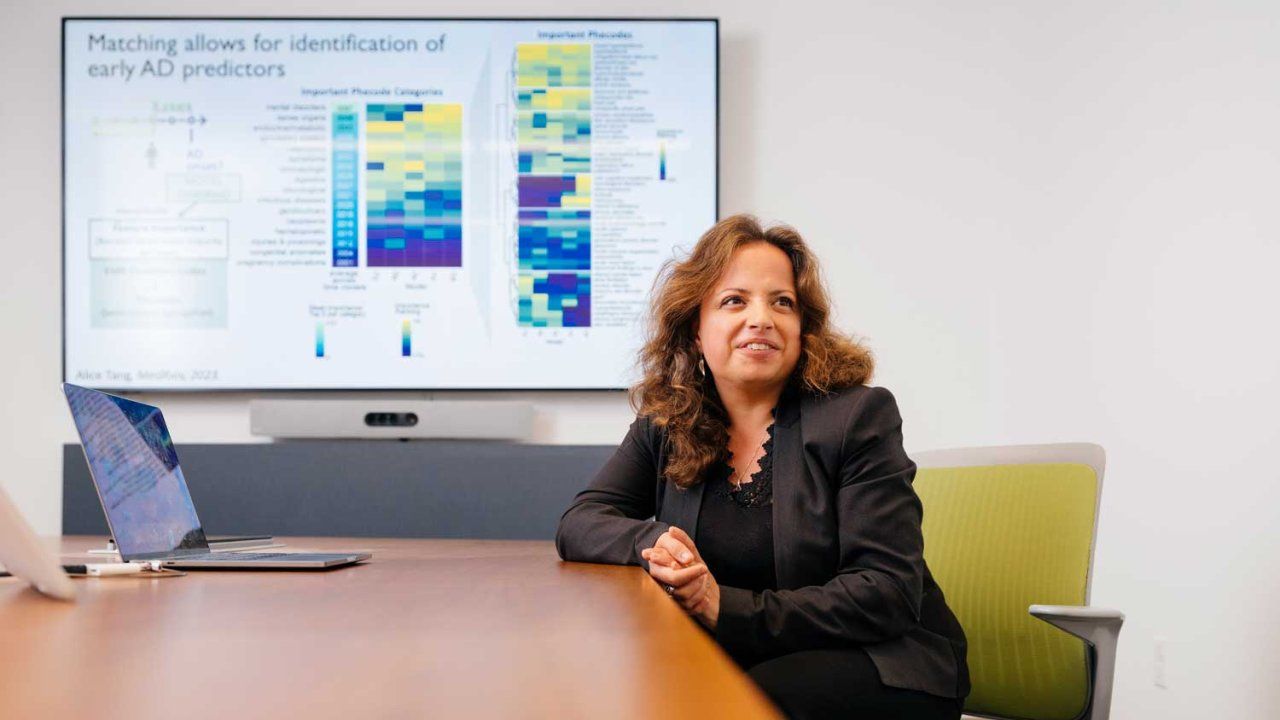
The UCSF team, led by Marina Sirota, PhD, professor of Pediatrics and interim director of the Bakar Computational Health Sciences Institute, approached the problem not by narrowing the dataset, but by embracing its scale.
 
The UCSF team addressed this complexity by harnessing machine learning algorithms trained on a vast multi-institutional dataset encompassing millions of electronic health records (EHRs), biomarker measurements, and demographic information. To manage and extract meaningful patterns from such a voluminous and heterogeneous dataset, the researchers relied on a supercomputing infrastructure that could efficiently process and analyze large-scale data in parallel, an essential capability when training and validating predictive AI models.
 
Their model integrates clinical features such as maternal age, blood test results, previous obstetric outcomes, and lifestyle information. Through iterative learning and exposure to diverse cases, AI developed the ability to distinguish subtle signals predictive of preterm birth, achieving significantly higher accuracy than traditional risk scoring systems. The findings reported in Cell Reports Medicine affirm that AI models trained on robust, high-dimensional data can discern patterns that may elude even experienced clinicians.
 
Crucially, the supercomputing element of this research was not merely about speed, but scale and integration. Handling millions of records, each with potentially hundreds of variables, demands computational resources capable of orchestrating complex matrix operations, optimization routines, and cross-validation loops that ensure model generalizability. Standard computing environments struggle with datasets of this magnitude, but HPC systems equipped with parallel processing and optimized data pipelines enabled researchers to train, test, and refine models within feasible time frames.
 
According to the study, this approach represents a paradigm shift in obstetric research. By applying AI to large-scale datasets, we can identify risk profiles long before symptoms manifest. This opens the door to earlier, more personalized interventions that could improve outcomes for mothers and infants alike.
 
The implications are profound. Early prediction of preterm birth could allow clinicians to tailor monitoring schedules, recommend targeted therapies, and provide proactive support to high-risk patients, ultimately reducing the incidence of complications and associated healthcare costs. In regions with limited access to specialized care, AI-driven models could empower frontline providers with actionable insights based on data patterns derived from large cohorts.
 
For the supercomputing community, the model illustrates the expanding role of HPC beyond traditional domains like physics, climate modeling, and astrophysics. In the era of digital medicine, vast datasets generated by electronic health records, genomic sequencing, and wearable sensors present both a challenge and an opportunity: how to turn data into life-saving knowledge. Supercomputers, with their ability to orchestrate trillions of calculations across distributed architectures, are becoming essential partners in this transformation.
 
Moreover, the success of the AI underscores the importance of ethical, transparent, and clinically grounded AI development. The UCSF researchers emphasize that predictive models must be rigorously validated across diverse populations to ensure fairness and avoid perpetuating healthcare disparities. Supercomputing resources make such comprehensive validation feasible, enabling researchers to test model performance across subgroups defined by race, socioeconomic status, and geographic region.
 
As AI continues to mature alongside advances in supercomputing, the pace of medical discovery is poised to accelerate. From predicting preterm birth to personalized cancer therapies and beyond, computational models trained on big data are charting new frontiers in health science, turning complexity into clarity and raw data into actionable insight. 
 
As Sirota and her colleagues demonstrate, when scientific AI meets scalable computing, the result is more than faster analysis. It is the possibility of foresight, the ability to identify risk before crisis emerges.

In maternal health, that foresight could mean healthier pregnancies, stronger newborns, and lives changed by the power of computation.