Century-old Pi mysteries power bleeding-edge physics

How Ramanujan’s formulae for π fuel modern high-energy physics and supercomputational frontiers

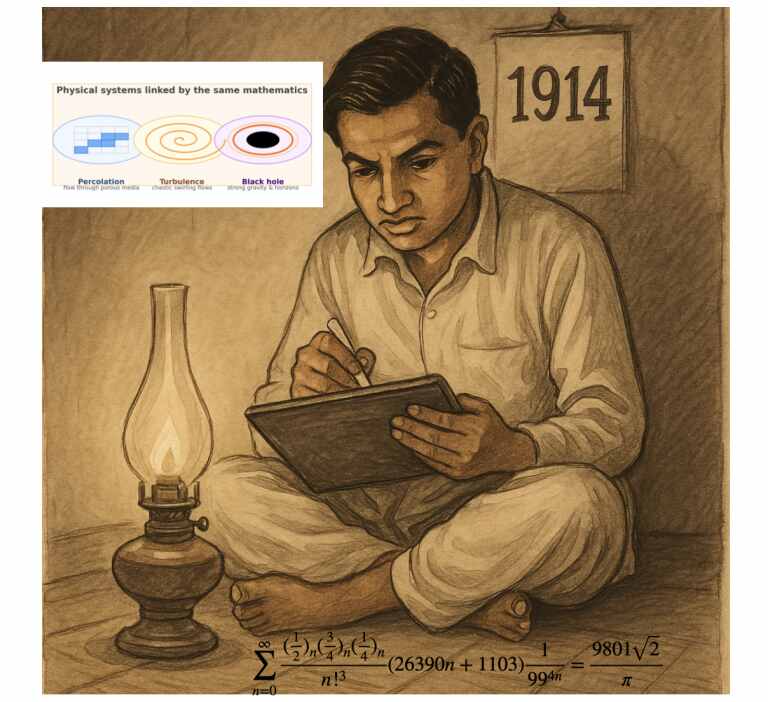
When Srinivasa Ramanujan penned his remarkable series for the constant π more than a century ago, he could hardly have imagined that his deep mathematical insights would one day illuminate some of the most baffling questions in physics. Yet a new study, published this December in Physical Review Letters, reveals that structures Ramanujan discovered in 1914 are not mere curiosities of pure mathematics, but lie at the heart of modern high-energy physics and advanced computational methods.
 
Ramanujan’s enigmatic infinite series for 1/π compact formulas that accelerate calculations with astonishing efficiency were originally formulated in the early 20th century with no apparent connection to the physical world. In recent years, they have become the basis for modern algorithms that compute π to staggering precision, exceeding 200 trillion digits.
 
Yet the real surprise comes from interdisciplinary exploration at the Centre for High Energy Physics (CHEP) at the Indian Institute of Science (IISc), where Professors Aninda Sinha and Faizan Bhat asked an audacious question: Why do Ramanujan’s formulas work so brilliantly, and could they be pointing to more than arithmetic beauty?
 
Their answer bridges mathematics and physics in an unprecedented way. The team discovered that Ramanujan’s formulas naturally arise from logarithmic conformal field theories (LCFTs), sophisticated theoretical frameworks used to describe systems with scale invariance, where phenomena appear the same at every magnification. These theories are central to understanding critical physical processes, such as fluid turbulence, percolation (the process by which substances spread through media), and aspects of black hole physics.
 
In essence, the formulas Ramanujan discovered as elegant mathematical identities are now showing up as powerful computational tools in physical models. Specifically, the underlying structure of his 1/π series mirrors the mathematics governing two-dimensional LCFTs, models that appear across diverse physical contexts, from polymer physics to quantum Hall effects.
 
What makes this discovery especially profound for supercomputing and high-energy physics is the computational leverage it offers. By exploiting the shared mathematical architecture between Ramanujan’s series and LCFTs, researchers can compute key quantities in these theories with greater efficiency, much as Ramanujan originally harnessed compact formulas to leapfrog slower π approximations a century ago. This reflects a deep and inspiring symmetry between mathematical ingenuity and physical law.
 
“We wanted to see whether the starting point of his formulas fits naturally into some physics,” said Sinha, underscoring that the aim was not merely computational optimization but understanding why such formulas exist at all.
 
Indeed, logarithmic conformal field theories, once thought of as abstract mathematical playgrounds, have now become a nexus where century-old mathematics meets the frontiers of theoretical physics and advanced computation. These theories describe systems at critical points where small changes can lead to dramatic shifts, including transitions from laminar to turbulent flows and the exotic behavior near black holes’ event horizons. The fact that Ramanujan’s series resonates within these contexts highlights how pure thought, unfettered by application, can anticipate the structures of nature itself.
 
For the supercomputing community, this research is more than a historical curiosity. It represents a testament to the enduring power of mathematical ideas to accelerate computing and advance our understanding of the universe. As supercomputers tackle ever more complex simulations, from plasma dynamics to quantum field computations, the legacy of Ramanujan’s pi formulas proves that efficiency and deep structure often go hand in hand.
 
In an age where computation, mathematics, and theoretical physics intertwine more closely than ever, the resurrection of Ramanujan’s work in high-energy physics stands as a beacon of inspiration, a reminder that the mathematical rhythms discovered in solitude can echo across the cosmos, shaping how we compute, model, and ultimately grasp the universe’s deepest secrets.
WSU study pinpoints molecular weak spot in virus entry; supercomputing helps reveal the hidden dance

In a discovery that elegantly bridges biology and computation, researchers at Washington State University (WSU) have uncovered a microscopic "Achilles' heel" in how viruses invade human cells, with supercomputing-informed simulations playing a key role. While it appears to be a molecular biology breakthrough at first glance, a closer look reveals how computational science steered the experiment toward this target much faster than trial-and-error alone could have.
 
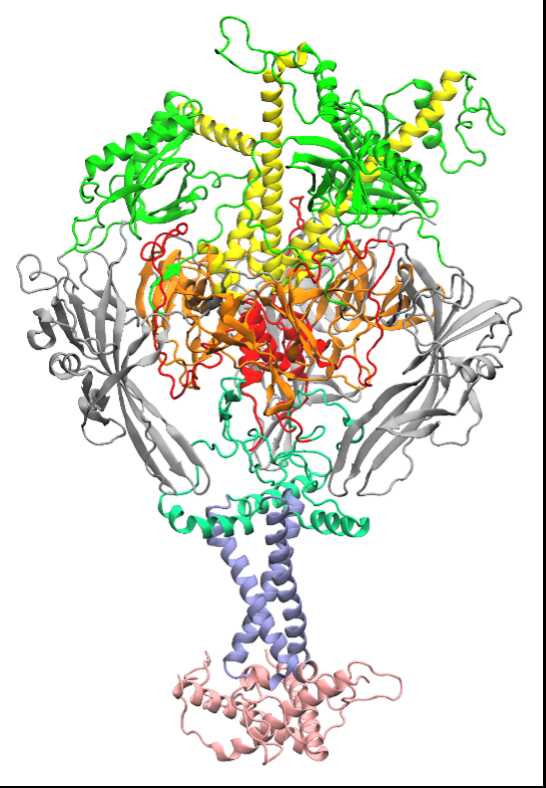
At the heart of the study is glycoprotein B, a complex protein that many viruses, including herpesviruses, use as a molecular grappling hook. This protein changes shape to fuse the viral membrane with a host cell’s membrane, allowing the virus to enter the host cell and begin its infectious cycle. Historically, researchers have known that fusion proteins like glycoprotein B are critical to infection, but pinpointing which interactions matter most among thousands of possible atomic-scale contacts is like searching for a needle in a haystack.

Simulations Sift the Signal from the Noise

WSU’s team, a collaboration between mechanical engineers and veterinary microbiologists, leveraged artificial intelligence and large-scale simulation to navigate this haystack. Instead of testing each possible interaction experimentally (a process that could take years), they used machine learning to screen thousands of potential amino-acid contacts inside the fusion protein. The algorithms flagged the interactions that most strongly influence the protein’s ability to change shape and initiate membrane fusion.
 
That's where the supercomputing mindset comes in. While the press release doesn't explicitly name a specific HPC center or piece of hardware, the workflow described, training machine learning models on massive combinatorial data from protein structures and simulating dynamic interactions at the atomic scale, is precisely the sort of work that depends on high-performance computing. Without it, biologically relevant simulations of proteins in motion would be prohibitively slow.
 
Leveraging computationally derived insights, the team introduced a targeted mutation in one of the key amino acids identified by their model. The outcome was striking: viruses with the modified glycoprotein were unable to fuse with cells and gain entry. The invasion was effectively halted.
 
"This demonstrates how computational filtering can accelerate the pace of discovery," stated Jin Liu, the paper's corresponding author and professor in the School of Mechanical and Materials Engineering. Without these tools, the team believes the critical interaction could have remained hidden for years amidst the molecular background noise.

Why Supercomputing Matters Beyond Speed

High-performance computing isn’t just about running simulations faster. In complex biological systems, it’s about making the impossible tractable. Here’s how:
  • Exploring vast interaction networks: The space of possible amino-acid interactions in a protein like glycoprotein B is enormous. Computational analysis helps narrow this down with statistical precision.
  • Coupling dynamics with structure: Proteins are not static ornaments; they breathe, flex, and contort. Supercomputing helps us simulate these fluctuations, data that would otherwise be invisible.
  • Guiding biological experiments: By pointing experiments toward the most promising hypotheses, computation accelerates the entire research cycle.
The elegance of the WSU approach lies in its integration of wet-lab biology with in silico discovery, where simulations enhance rather than replace experiments.

Beyond This Study, Toward Broad Antiviral Insight

Blocking viral entry is a key strategy in antiviral design. Whether targeting influenza, HIV, herpesviruses, or coronaviruses, the initial molecular interaction between a virus and a host cell often determines the outcome. If computational methods can systematically identify the weakest points in these interactions, the implications for future drug development are significant.
 
Supercomputing is increasingly central to this effort. Exascale simulations of viral proteins enable researchers to observe molecular motions occurring within microseconds, dynamics that would otherwise remain unseen.
 
The WSU discovery doesn’t yet translate into a new drug or therapy; far more work lies ahead to understand how the mutated interaction affects the virus's full structural behavior in real biological systems. But it does represent a proof of concept: guided by computation, we can unmask the subtlest viral strategies and pre-emptively strike at them.
 
In a world still deeply familiar with the consequences of viral outbreaks, this kind of synergy between supercomputing and biology isn’t just intellectually exciting, it’s potentially transformative.

New low-memory fluid & heat flow algo could turbocharge supercomputing simulations

If there's one thing supercomputing enthusiasts appreciate as much as raw processing power, it's achieving more with less memory. Researchers at Tokyo Metropolitan University have made a promising advancement by reimagining the Lattice-Boltzmann Method (LBM), a workhorse in computational fluid dynamics, which significantly reduces memory requirements while maintaining accuracy and stability.

Why This Matters to Supercomputing

Fluid and heat flow simulations, from modeling airflow over aircraft wings to predicting climate patterns and even simulating blood flow in biomedical research, are classic examples of problems that push supercomputers hard. These simulations partition a physical domain into millions, or even billions, of grid points. At each point, the Lattice-Boltzmann Method (LBM) tracks the distributions of particle “parcels” as they move and collide across the grid to compute phenomena such as velocity and temperature.
 
However, there's a catch: storing additional information at each grid point significantly increases memory usage. In large-scale HPC environments, memory is a valuable resource. Memory costs, both financially and in terms of energy, can restrict the scale, resolution, and duration of simulations. This is where the new algorithm truly excels.

The Innovation: Low-Memory LBM

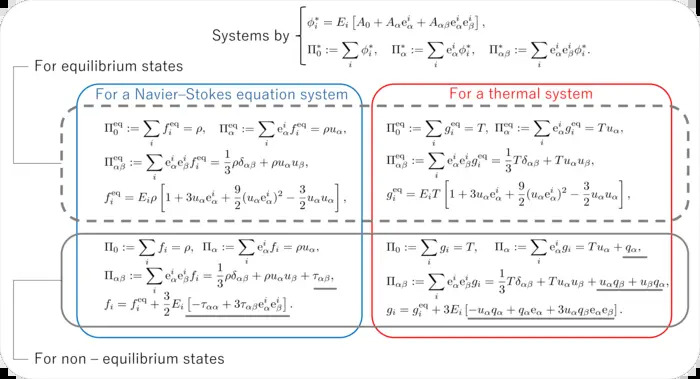
Associate Professor Toshio Tagawa and doctoral student Yoshitaka Mochizuki redesigned the LBM, incorporating a clever trick: they added small "optional moments" that implicitly encode gradient information, essentially, telling the algorithm how values change from point to point without needing to store all that data explicitly. Because gradients are built into the formulation, the simulation doesn’t have to keep huge sets of intermediate variables in memory.
 
In tests across multiple fluid and heat flow benchmarks, the new method slashed memory usage by roughly 50% in certain scenarios, which is enormous in HPC terms. If a simulation previously just barely fit into a supercomputer’s memory, this approach could make it comfortably fit or allow it to run at a much higher resolution.

Why Supercomputers Will Care

Supercomputers are extremely parallel machines, but they still contend with finite memory per node, per core, and per job. Reducing memory footprints can:
  • Enable larger, more detailed simulations without needing bigger machines.
  • Lower energy use (memory operations are a significant power draw).
  • Improve scalability by reducing communication overhead tied to data shuffling.
In practice, this algorithmic advance can influence how developers optimize code for systems and next-generation HPC architectures. Memory constraints are a major bottleneck in fluid and heat simulations, particularly in 3D, multiphysics, or long-duration runs. The new low-memory LBM addresses this challenge.

Wide Relevance Beyond Academia

The innovation isn’t just for textbook problems. LBM and similar lattice-based schemes are used in:
  • Aerospace and automotive design
  • Weather and climate modeling
  • Porous media flow (e.g., oil reservoir simulation)
  • Biomedical simulations (e.g., capillary networks)
Any domain where fluid or heat behavior matters at scale and where HPC resources are stretched thin could benefit.

Computational Insight, Not Just Raw Power

It’s always tempting in supercomputing to chase more cores, more flops, or bigger clusters. But advances like this remind us that algorithmic ingenuity often beats brute force. Memory efficiency isn’t just a nice-to-have; it’s a multiplier that lets existing systems do far more with what they already have.
 
As future systems come online, low-memory formulations like this will be an important part of the HPC playbook. They help supercomputers push into previously unreachable problem sizes, enabling science, engineering, and industry to ask bigger questions and get answers faster.
 
In the world of supercomputing, sometimes less memory used means more science done, and that’s worth celebrating.