

SUPERCOMPUTING NEWS SUPERCOMPUTING NEWS
    • MEDIA KIT
    • MOST READ
    • RSS FEED
    • ACADEMIA
    • AEROSPACE
    • APPLICATIONS
    • ASTRONOMY
    • AUTOMOTIVE
    • BIG DATA
    • BIOLOGY
    • CHEMISTRY
    • CLIENTS
    • CLOUD
    • DEFENSE
    • DEVELOPER TOOLS
    • EARTH SCIENCES
    • ECONOMICS
    • ENGINEERING
    • ENTERTAINMENT
    • GAMING
    • GOVERNMENT
    • HEALTH
    • OIL & GAS
    • INDUSTRY
    • INTERCONNECTS
    • MANUFACTURING
    • MIDDLEWARE
    • MOVIES
    • NETWORKS
    • PHYSICS
    • PROCESSORS
    • RETAIL
    • SCIENCE
    • STORAGE
    • SYSTEMS
    • VISUALIZATION
    • AcyMailing subscription form

    • ADD YOUR VIDEOS
    • MANAGE VIDEOS
    • CONVERSATION INBOX
    • SOCIAL ADVERTISER
    • SOCIAL NETWORK VIDEOS
    • SURVEYS
    • GROUPS
    • PAGES
    • MARKETPLACE LISTINGS
    • APPLICATIONS BROWSER
    • PRIVACY CONFIRM REQUEST
    • PRIVACY CREATE REQUEST
    • LEADERBOARD
    • POINTS LISTING
      • BADGES
    • TRADE SHOWS
Sign In
Tyler O'Neal, Staff Editor APPLICATIONS November 4, 2022, 7:00 am

Prof Koyama offers insights into gravity on cosmological scales

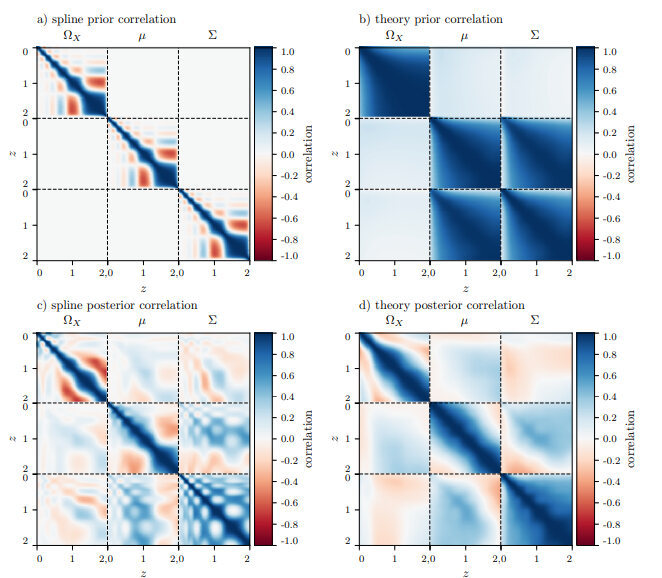
a) The implicit correlation prior, as a function of redshift, induced by using the cubic spline to connect the 11 redshift nodes. All three functions, ΩX, µ and Σ, are subject to the same implicit prior, with no cross-correlation between different functions. b) The Horndeski prior correlating the nodes of ΩX, µ and Σ. The correlation between the nodes of each function is much stronger than that introduced by the cubic spline. The Horndeski prior also introduces a strong correlation between µ and Σ. c) The correlation obtained from our “Baseline” data posterior covariance of the nodes, i.e. that determined by the data and the implicit prior correlation in Panel (a). d) The correlation corresponding to the posterior covariance derived from the Baseline data with the help of the Horndeski prior in Panel (b).Scientists from around the world have reconstructed the laws of gravity, to help get a more precise picture of the Universe and its constitution.

The standard model of cosmology is based on General Relativity, which describes gravity as the curving or warping of space and time. While the Einstein equations have been proven to work very well in our solar system, they had not been observationally confirmed to work over the entire Universe.

An international team of cosmologists, including scientists from the University of Portsmouth in England, has now been able to test Einstein's theory of gravity in the outer reaches of space.

They did this by examining new observational data from space and ground-based telescopes that measure the expansion of the Universe, as well as the shapes and the distribution of distant galaxies.

The study, published in Nature Astronomy, explored whether modifying General Relativity could help resolve some of the open problems faced by the standard model of cosmology. 

Professor Kazuya Koyama, from the Institute of Cosmology and Gravitation at the University of Portsmouth, said: “We know the expansion of the universe is accelerating, but for Einstein’s theory to work we need this mysterious cosmological constant.

“Different measurements of the rate of cosmic expansion give us different answers, also known as the Hubble tension. To try and combat this, we altered the relationship between matter and spacetime and studied how well we can constrain deviations from the prediction of General Relativity. The results were promising, but we’re still a long way off a solution.”

An earlier version of the code used in this work, MGCosmoMC, is publicly available on GitHub. 

Possible modifications to the General Relativity equation are encased in three phenomenological functions describing the expansion of the Universe, the effects of gravity on light, and the effects on matter. Using a statistical method known as the Bayesian inference, the team reconstructed the three functions simultaneously for the first time.

“Partial reconstructions of these functions have been done in the last 5 to 10 years, but we didn't have enough data to accurately reconstruct all three at the same time”, added Professor Koyama.

“What we found was that current observations are getting good enough to get a limit on deviations from General Relativity. But at the same time, we find it very difficult to solve this problem we have in the standard model even by extending our theory of gravity.

“One exciting prospect is that in a few years we’ll have a lot more data from new probes. This means that we will be able to continue improving the limits on modifications to General Relativity using these statistical methods.”

Up-and-coming missions will deliver a highly accurate 3D map of the clustered matter in the Universe, which cosmologists call large-scale structure. These will offer an unprecedented insight into gravity at large distances.

Professor Levon Pogosian, from Simon Fraser University in Canada, said: “As the era of precision cosmology is unfolding, we are on the brink of learning about gravity on cosmological scales with high precision. Current data already draws an interesting picture, which, if confirmed with higher constraining power, could pave the way to resolving some of the open challenges in cosmology.”
Intel reports sharp sales drop, more bad news ahead

Tyler O'Neal, Staff Editor APPLICATIONS October 28, 2022, 6:00 am

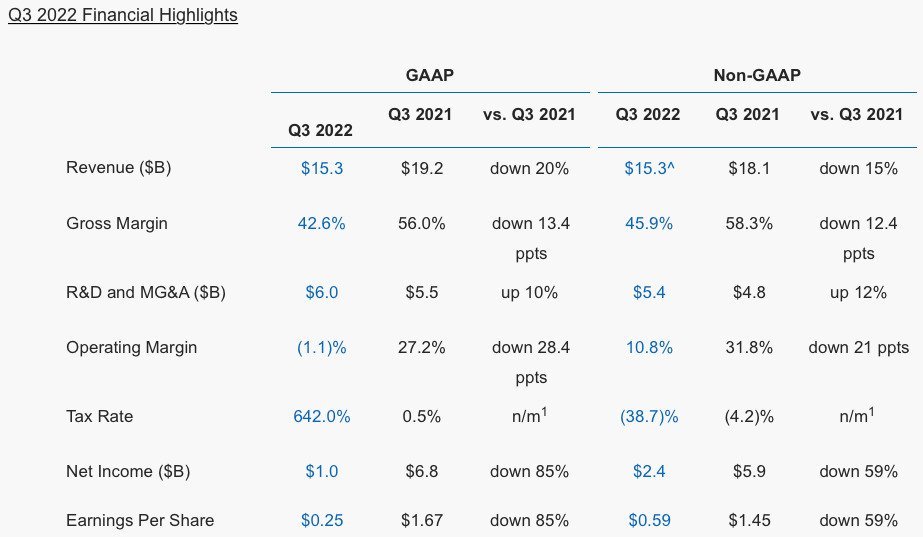
Intel has reported a 20% decline in the third quarter sales to $15.3 billion, and a shocking 85% decline in profit to $1 billion for the quarter. In the previous quarter, Intel’s revenue declined by 22%.

The chipmaker also lowered its annual revenue guidance for the second time this year to $63 billion, down from the $65 billion-$68 billion it expected at the end of last quarter, which was lower than the original revenue guidance of $76 billion.

The company's data center chips declined by 27% during the quarter to $4.21 billion.

ezgif 5 6504fc4c5f c7cf7

Intel plans up to $10 billion in cost reductions and efficiency improvements in the next three years.

“We are planning for the economic uncertainty to persist into 2023,” declared Pat Gelsinger, Intel CEO on a teleconference. “Inclusive in our efforts will be steps to optimize our headcount. These are difficult decisions affecting our loyal Intel family.”

“Despite the worsening economic conditions, we delivered solid results and made significant progress with our product and process execution during the quarter,” said Gelsinger. “To position ourselves for this business cycle, we are aggressively addressing costs and driving efficiencies across the business to accelerate our IDM 2.0 flywheel for the digital future.”

“As we usher in the next phase of IDM 2.0, we are focused on embracing an internal foundry model to allow our manufacturing group and business units to be more agile, make better decisions and establish a leadership cost structure,” said David Zinsner, Intel CFO. “We remain committed to the strategy and long-term financial model communicated at our Investor Meeting.”


Japanese prof Ishimoto predicts where the wear will occur in engines

Tyler O'Neal, Staff Editor APPLICATIONS October 6, 2022, 5:00 am

183 computationally predicting where wear will occur t a6791A research group has created an analysis method to predict wear and seizure locations in the sliding parts of engine piston pins. The breakthrough will help limit wear and tear on transportation and industrial machinery components and make them more fuel efficient.
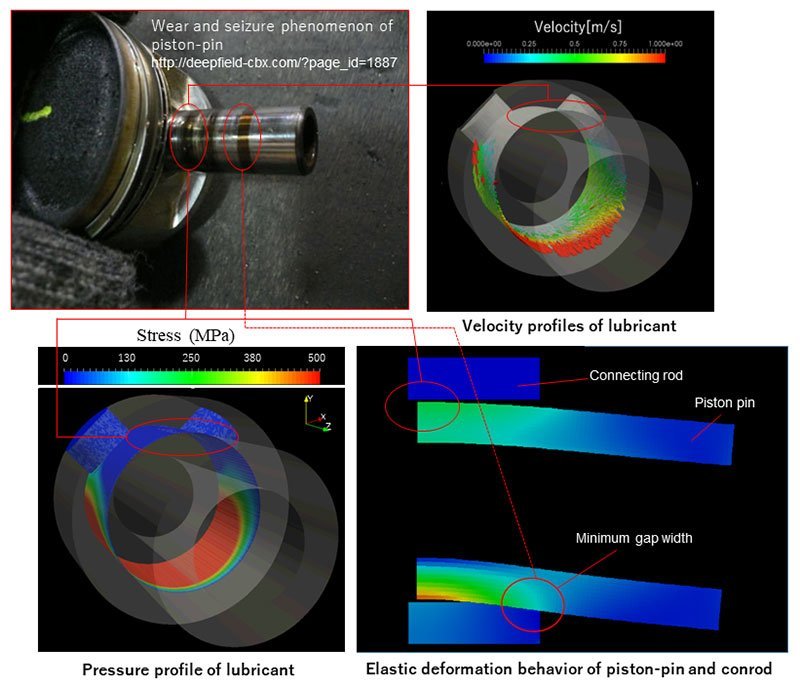
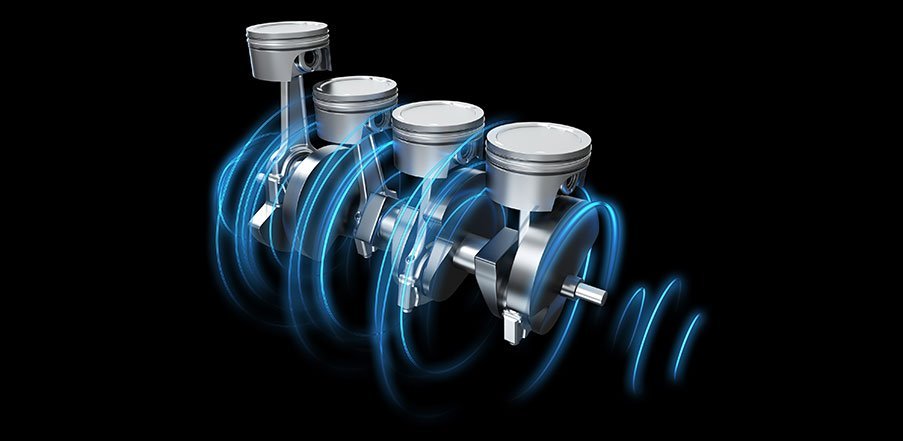
Improvements to the efficiency of internal combustion engines are necessary if we are to overcome their environmental and sustainability problems. Reciprocating engines use reciprocating pistons to extract power from combustion and convert it into rotational motion. They are commonly used in automobiles.

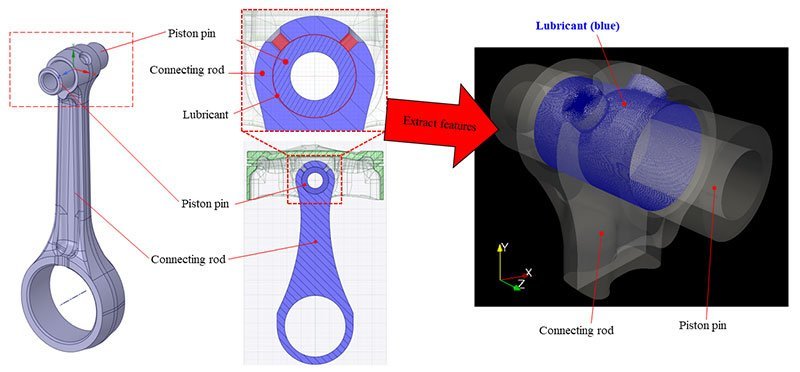
The most common cause of reciprocating engine failure occurs when the oil film of the lubricating oil breaks, causing metal parts to come into contact, resulting in scratching and sticking. When such a seizure happens, it is impossible to start the engine. A fluid lubrication calculation model between piston pin and connecting rod. ©Jun Ishimoto

Piston pins and connecting rods in constant reciprocating and rotating motion require fluid lubrication. However, long-term loading tests are needed to verify the wear and seizure locations in fluid lubrication and predicting or calculating this was thought to be unattainable.

That was until Professor Jun Ishimoto led a group at Tohoku University's Institute of Fluid Science and Honda Motor Co., Ltd. that established the multiphase fluid-structure coupled analysis method. It not only simulated and predicted tribological properties under severe loading conditions but also identified the piston pin's bow-like defamation as the cause of mechanical contact and seizure at the connecting rod edge.

"Proper safety guidelines that help prevent unnecessary damage to automobile engines and other industrial machinery will be easier to create thanks to this prediction method," said Ishimoto.The researchers succeed in computationally predicting the wear and seizure locations in sliding parts of engine piston pins. Results show the coupled 3D multiphase fluid-structure analyses, factoring in the elastic deformation of both the piston-pin and connecting rod, and also the thin-film cavitation lubrication with an unsteady flow channel variation. ©Jun Ishimoto

  1. Australian made AI may improve suicide prevention in the future
  2. Korean Artificial Sun discovers new high-temperature plasma operating mode for fusion energy

Page 24 of 66

  • 19
  • 20
  • 21
  • 22
  • 23
  • 24
  • 25
  • 26
  • 27
  • 28
POPULAR RIGHT NOW
  • Supercomputers uncover a new class of cosmic explosions hidden in plain sight
    Supercomputers uncover a new class of cosmic explosions hidden in plain sight
  • AI supercharges the hunt for stronger magnets: Iowa State researchers launch a new era of intelligent materials discovery
    AI supercharges the hunt for stronger magnets: Iowa State researchers launch a new era of intelligent materials discovery
  • IBM's Historic stock collapse raises questions for the future of enterprise supercomputing
    IBM's Historic stock collapse raises questions for the future of enterprise supercomputing
  • Could a novel dark matter theory simultaneously resolve multiple cosmic enigmas? Supercomputer simulations provide a compelling, albeit currently unverified, potential solution
    Could a novel dark matter theory simultaneously resolve multiple cosmic enigmas? Supercomputer simulations provide a compelling, albeit currently unverified, potential solution
  • Melting icebergs may be reshaping Earth’s greatest ocean current
    Melting icebergs may be reshaping Earth’s greatest ocean current
  • Supercomputers replace ‘bathtub’ flood maps with physics-based digital twins of Britain’s coastline
    Supercomputers replace ‘bathtub’ flood maps with physics-based digital twins of Britain’s coastline
  • Supercomputers push neural quantum simulation beyond previous limits
    Supercomputers push neural quantum simulation beyond previous limits
  • Intel’s AI supercomputing revival: Q2 financial surge signals new era for CPU-powered HPC infrastructure
    Intel’s AI supercomputing revival: Q2 financial surge signals new era for CPU-powered HPC infrastructure
  • AI infrastructure financing fears shake semiconductor sector
    AI infrastructure financing fears shake semiconductor sector
  • AWS supercomputing investment reaches historic scale as Amazon’s AI strategy powers record financial results
    AWS supercomputing investment reaches historic scale as Amazon’s AI strategy powers record financial results
THIS YEAR'S MOST READ
  • Wall Street wants to trade supercomputing power like oil
    Wall Street wants to trade supercomputing power like oil
  • Cosmic ambition at scale: UK’s supercomputer unlocks a 2.5 petabytes universe
    Cosmic ambition at scale: UK’s supercomputer unlocks a 2.5 petabytes universe
  • Hidden order, revealed at scale: Supercomputing, electron ptychography uncover the inner workings of relaxor ferroelectrics
    Hidden order, revealed at scale: Supercomputing, electron ptychography uncover the inner workings of relaxor ferroelectrics
  • Beamforming the future: BeammWave's 6G push signals the rise of orbital-terrestrial wireless networks
    Joakim Axmon
    Joakim Axmon
  • Intel's Q1 results signal supercomputing surge driving Xeon momentum
    Intel's Q1 results signal supercomputing surge driving Xeon momentum
  • When stars fall apart: Supercomputing reveals the hidden physics of black holes
    When stars fall apart: Supercomputing reveals the hidden physics of black holes
  • Multi-layer simulations reveal the hidden supply chain of solar prominences
    Multi-layer simulations reveal the hidden supply chain of solar prominences
  • Japanese scientists decode dolphin speed with supercomputing: Turbulence, vortices, and the hidden physics of propulsion
    Japanese scientists decode dolphin speed with supercomputing: Turbulence, vortices, and the hidden physics of propulsion
  • Cosmic feedback at scale: Supercomputing reveals how quasars regulate the early Universe
    Cosmic feedback at scale: Supercomputing reveals how quasars regulate the early Universe
  • Modeling life at the microscopic scale: A computational breakthrough in oxygen transport
    Modeling life at the microscopic scale: A computational breakthrough in oxygen transport
MOST READ OF ALL-TIME
  • Largest Computational Biology Simulation Mimics The Ribosome
    Details
    112108
    The amino acid (green) slithers into the chemical reaction center, moving through an evolutionarily ancient corridor of the ribosome (purple). The amino acid is delivered to the reaction core by the transfer RNA molecule (yellow).
    The amino acid (green) slithers into the chemical reaction center, moving through an evolutionarily ancient corridor of the ribosome (purple). The amino acid is delivered to the reaction core by the transfer RNA molecule (yellow).
  • Silicon 'neurons' may add a new dimension to chips
    Details
    80994
    Silicon 'neurons' may add a new dimension to chips
  • Linux Networx Accelerators Expected to Drive up to 4x Price/Performance
    Details
    75538
  • Complex Concepts That Really Add Up
    Details
    73637
    Complex Concepts That Really Add Up
  • Blue Sky Studios Donates Animation SuperComputer to Wesleyan
    Details
    68141
    Each rack holds 52 Angstrom Microsystem-brand “blades,” with a memory footprint of 12 or 24 gigabytes each. (Photos by Olivia Bartlett Drake)
    Each rack holds 52 Angstrom Microsystem-brand “blades,” with a memory footprint of 12 or 24 gigabytes each. (Photos by Olivia Bartlett Drake)
  • Humanities, HPC connect at NERSC
    Details
    57947
  • TeraGrid ’09 'Call for Participation'
    Details
    54952
  • Turbulence responsible for black holes' balancing act
    Details
    52311
  • Cray Wins $52 Million SuperComputer Contract
    Details
    50140
  • SDSC Researchers Accurately Predict Protein Docking
    Details
    46079
  • FRONTPAGE
  • LATEST
  • POPULAR
  • REGISTER
  • SOCIAL
  • VIDEO
  • SUBSCRIPTION
  • RSS
  • GUIDELINES
  • PRIVACY
  • TOS
  • ABOUT
  • +1 (816) 799-4488
  • editorial@supercomputingonline.com
© 2001 - 2026 SuperComputingOnline.com, LLC. All rights reserved. This material may not be published, broadcast, rewritten or redistributed without permission.
Sign In
  • FRONT PAGE
  • LATEST
    • MEDIA KIT
    • MOST READ
    • RSS FEED
    • ACADEMIA
    • AEROSPACE
    • APPLICATIONS
    • ASTRONOMY
    • AUTOMOTIVE
    • BIG DATA
    • BIOLOGY
    • CHEMISTRY
    • CLIENTS
    • CLOUD
    • DEFENSE
    • DEVELOPER TOOLS
    • EARTH SCIENCES
    • ECONOMICS
    • ENGINEERING
    • ENTERTAINMENT
    • HEALTH
    • INDUSTRY
    • INTERCONNECTS
    • GAMING
    • GOVERNMENT
    • MANUFACTURING
    • MIDDLEWARE
    • MOVIES
    • NETWORKS
    • OIL & GAS
    • PHYSICS
    • PROCESSORS
    • RETAIL
    • SCIENCE
    • STORAGE
    • SYSTEMS
    • VISUALIZATION
  • VIDEOS
    • ADD YOUR VIDEOS
    • MANAGE VIDEOS
  • COMMUNITY
    • TRADE SHOWS
    • SOCIAL NETWORK VIDEOS
    • SURVEYS
    • APPLICATIONS BROWSER
    • CONVERSATION INBOX
    • SOCIAL ADVERTISER
    • GROUPS
    • MARKETPLACE LISTINGS
    • PAGES
    • LEADERBOARD
    • POINTS LISTING
      • BADGES
    • PRIVACY CONFIRM REQUEST
    • PRIVACY CREATE REQUEST

Hey there! We noticed you’re using an ad blocker.