SUPERCOMPUTING NEWS SUPERCOMPUTING NEWS
    • MEDIA KIT
    • MOST READ
    • RSS FEED
    • ACADEMIA
    • AEROSPACE
    • APPLICATIONS
    • ASTRONOMY
    • AUTOMOTIVE
    • BIG DATA
    • BIOLOGY
    • CHEMISTRY
    • CLIENTS
    • CLOUD
    • DEFENSE
    • DEVELOPER TOOLS
    • EARTH SCIENCES
    • ECONOMICS
    • ENGINEERING
    • ENTERTAINMENT
    • GAMING
    • GOVERNMENT
    • HEALTH
    • OIL & GAS
    • INDUSTRY
    • INTERCONNECTS
    • MANUFACTURING
    • MIDDLEWARE
    • MOVIES
    • NETWORKS
    • PHYSICS
    • PROCESSORS
    • RETAIL
    • SCIENCE
    • STORAGE
    • SYSTEMS
    • VISUALIZATION
    • AcyMailing subscription form

    • ADD YOUR VIDEOS
    • MANAGE VIDEOS
    • CONVERSATION INBOX
    • SOCIAL ADVERTISER
    • SOCIAL NETWORK VIDEOS
    • SURVEYS
    • GROUPS
    • PAGES
    • MARKETPLACE LISTINGS
    • APPLICATIONS BROWSER
    • PRIVACY CONFIRM REQUEST
    • PRIVACY CREATE REQUEST
    • LEADERBOARD
    • POINTS LISTING
      • BADGES
    • TRADE SHOWS
Sign In
Tyler O'Neal, Staff Editor ECONOMICS June 30, 2021, 7:38 pm

Black Hat USA 2021 announces full schedule, hybrid event programming

Black Hat has announced its full schedule including in-person and virtual programs for Black Hat USA 2021. Taking place in Las Vegas at the Mandalay Bay Convention Center and virtually, this year’s event will feature over 90 Briefings, four days of virtual training, and new virtual programs.

Black Hat Briefings

Briefings will be both presented in a live format, as well as virtually on Aug. 4 and 5 from 9 a.m. to 5 p.m. PT. Hand-selected by the Black Hat Review Board, attendees will learn the latest in information security risks, research, and trends covering everything from critical infrastructure to widely used enterprise computer systems and more. Attendees will experience 40 in-person Briefings with highlights including:

  • A Hole in the Tube: Uncovering Vulnerabilities in Critical Infrastructure of Healthcare Facilities – This briefing will uncover nine critical vulnerabilities discovered in the firmware of the pneumatic tube system (PTS), the system that transports critical care items within modern hospitals, of one of the most popular vendors used by thousands of hospitals in North America.
  • The Ripple Effect: Building a Diverse Security Research Team - In this Briefing, the researchers will share how they successfully increased their female representation within their organization from 0% to 50%. They will teach the tools they used to create a more inclusive environment to increase gender equality within the cybersecurity industry.
  • A New Class of DNS Vulnerabilities Affecting Many DNS-as-Service Platforms – This talk reveals the vulnerabilities that have been proven and successfully exploited on three major cloud providers including AWS Route 53 and others that may have been affected. The researchers will detail a specific vulnerability that is common across many major DNS service providers which leads to information leakage in connected corporate networks.

Black Hat Business Hall

Attendees have the option of a virtual or in-person Business Hall pass for the 2021 event, showcasing the latest technology from leading information security solution providers. Hours for the Business Hall in-person hours will be 10 a.m. to 6 p.m. on Aug. 4 and 10 a.m. to 4 p.m. on Aug. 5, while the virtual Business Hall will be 8:30 a.m. to 5 p.m. on Aug. 4 and 8:30 a.m. to 4:00 p.m. on Aug. 5. Business Hall Pass holders will have access to the Keynote, Arsenal, Dark Reading Sessions, Innovation City, Business Hall Sessions, and more. All briefing pass holders have access to the Business Hall.

Black Hat Arsenal

The Black Hat Arsenal will welcome researchers and the open-source community for two days of live demos of innovative tools on Aug. 4 and 5. In-person attendees will have the opportunity to interact with over 30 presenters for an up-close experience with tools used for network attacks, exploitations, and more, while 60 demos will go live on the virtual platform.

Black Hat CISO Summit

Returning virtually this year, the CISO Summit will take place on Aug. 3 starting at 9 a.m. The CISO Summit brings together top security executives from global corporations and government agencies for a full day of discussions and insights into the latest security trends and technologies with networking opportunities.

Omdia Analyst Summit

New this year, Black Hat will host the inaugural Omdia Analyst Summit on Aug. 2 beginning at 9 a.m. on the virtual platform. Media analysts will provide exclusive insights into the security impacts of evolving front and back-office capabilities in today’s “reset normality”, and what businesses must consider to maintain and enhance security posture faced with this continuing organizational evolution.

Black Hat Training

Cybersecurity professionals looking to enhance their skills can participate in this year’s Training, being held virtually from July 31 through August 3. These deeply technical, hands-on courses are led by the information security industry’s top trainers and professionals. Topics will span from malware, penetration testing, advanced infrastructure hacking, reverse engineering, and more.

Top partners and sponsors of Black Hat 2021 include:

Titanium Sponsors: Crowd Strike, Cybereason Inc., Palo Alto Networks, Qualys, SentinelOne, KnowBe4, VMware; Diamond Sponsors: Accenture, Acronis, AT&T Cybersecurity, Cisco, CyberArk Software, Darktrace, Optiv Security, Proofpoint, Inc., Rapid7, SecurityScorecard, Synopsys, Tenable, ThreatLocker, Trend Micro, Verizon; Sustaining Partners: Qualys, ExtraHop Networks, KnowBe4; Global Partners: Auth0, Chronicle, DomainTools, KnowBe4, Orca Security, and Snyk Ltd.

For registration and information on Black Hat USA 2021, please visit https://blackhat.com/us-21/.
Russian scientists discover a new type of quasiparticle for quantum supercomputing apps

Tyler O'Neal, Staff Editor ECONOMICS June 30, 2021, 6:00 pm

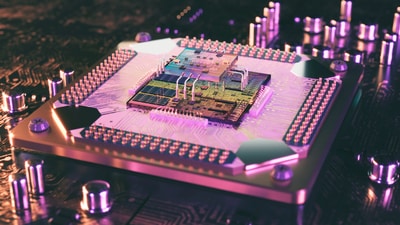
Russian scientists have experimentally proved the existence of a new type of quasiparticle, previously unknown excitations of coupled pairs of photons in qubit chains. This discovery could be a step towards disorder-robust quantum metamaterials. The study was published in Physical Review B.

Superconducting qubits are a leading qubit modality today that is currently being pursued by industry and academia for quantum supercomputing applications. However, the performance of quantum computers is largely affected by decoherence that contributes to a qubits extremely short lifespan and causes computational errors. Another major challenge is the low controllability of large qubit arrays. Webp

Metamaterial quantum simulators provide an alternative approach to quantum supercomputing, as they do not require a large number of control electronics. The idea behind this approach is to create artificial matter out of qubits, the physics of which will obey the same equations as for some real matter. Conversely, you can program the simulator in such a way as to embody matter with properties that have not yet been discovered in nature. 

Arrays of superconducting qubits are generally described by the Bose-Hubbard model. An interesting feature of the Bose-Hubbard model is the emergence of bound boson pairs (doublons) caused by the strong quantum nonlinearity. The topological physics of doublons has been extensively explored in a series of recent theoretical works. However, the experimental investigation of topological properties of bound photon pairs is still lacking.

A group of scientists from NUST MISIS, Russian Quantum Center, ITMO University, Bauman Moscow State Technical University, Dukhov Automatics Research Institute (VNIIA), and Ioffe Institute used an array of superconducting qubits to engineer a quantum simulator. Quantum utilizes entanglement and many-particle behaviors to explore and solve hard scientific, engineering, and computational problems.

“By registering the properties of qubits, we can draw conclusions about a broader class of physical systems described by the same equations. And if we can change the parameters of these equations in a controlled way, then such a device can be considered a ‘specialized simulator’. Of course, its programmability is not the same as that of a quantum computer, but its scaling requires significantly fewer resources,” explains the main author of the study Ilya Besedin, junior researcher at the NUST MISIS Laboratory of Superconducting Metamaterials. 

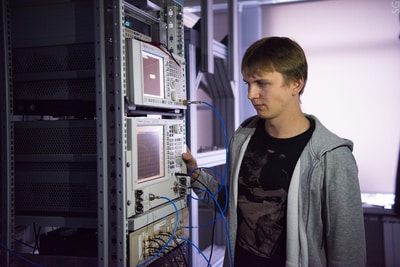
The scientists engineered an array of superconducting transmon qubits with alternating coupling. Due to the alternation of strong and weak bonds, two zones and an edge state appear in this system. This state is classified as topological. Moreover, the experiment shows that doublons also form an edge state.The main author of the study Ilya Besedin, junior researcher at the NUST MISIS Laboratory of Superconducting Metamaterials. Credit: Sergey Gnuskov/NUST MISIS

“We were able to see how doublons form these zones, and we even managed to detect how an edge doublon state appeared at the upper edge of the doublon zone as we increased the length of the array,” notes Ilya Besedin.

Thus, the scientists were able to demonstrate for the first time that a new type of quasiparticles — doublon topological excitations — can arise in qubit chains.

“Research on superconducting qubits and quantum circuits is currently underway in many countries around the world, and competition in this area is growing. This study on 11 qubits shows that Russia has attained a high level of scientific development in the field of superconducting quantum computing”, notes Prof. Alexey Ustinov, Head of the Laboratory for Superconducting Metamaterials at NUST MISIS and Group Head at Russian Quantum Center, who co-authored the study.

Tel Aviv University researchers launch the world's thinnest technology, only two atoms thick

Tyler O'Neal, Staff Editor ECONOMICS June 30, 2021, 12:00 pm

A scientific breakthrough: Researchers from Tel Aviv University have engineered the world's tiniest technology, with a thickness of only two atoms. According to the researchers, the new technology proposes a way for storing electric information in the thinnest unit known to science, in one of the most stable and inert materials in nature. The allowed quantum-mechanical electron tunneling through the atomically thin film may boost the information reading process much beyond current technologies.

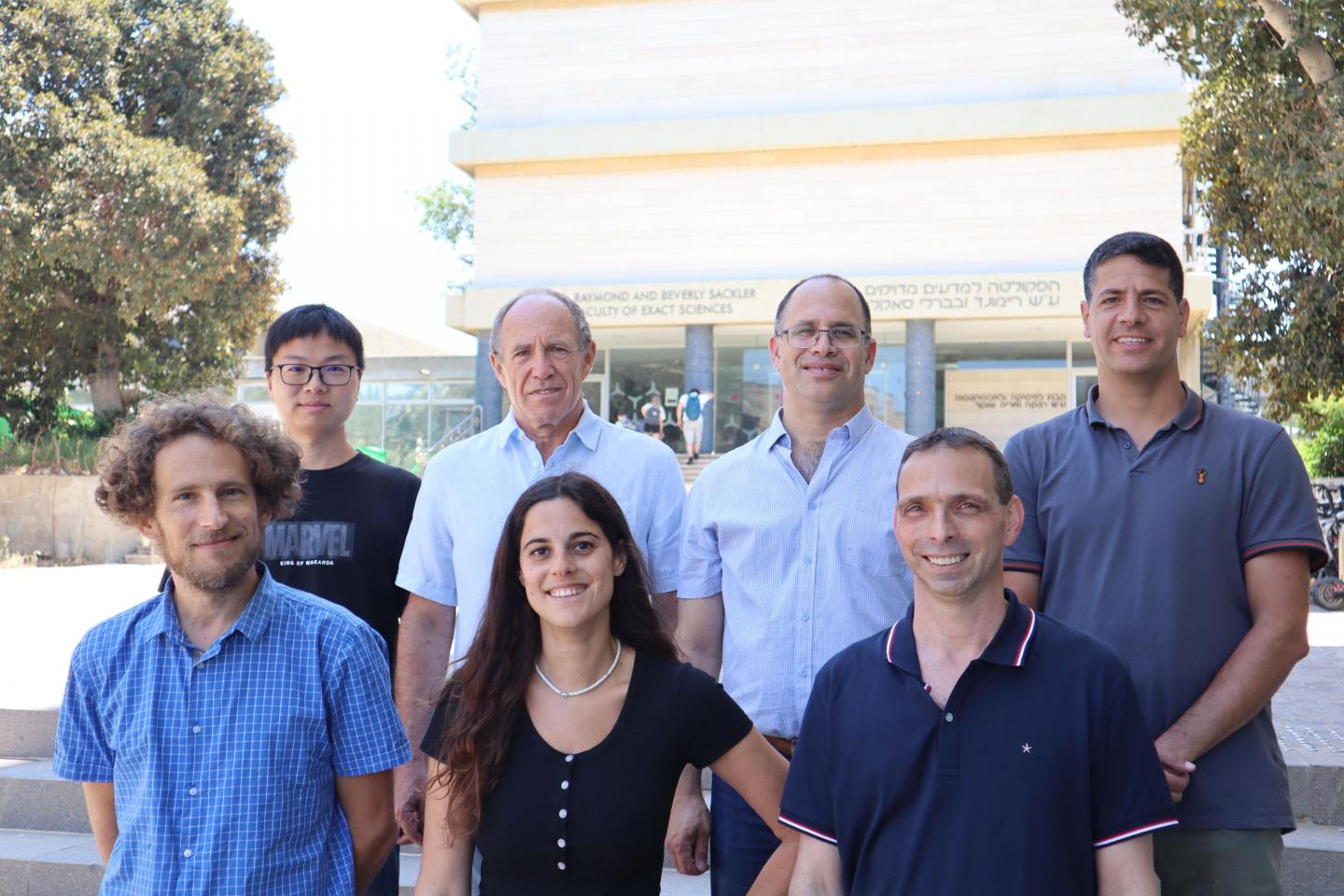
The research was performed by scientists from the Raymond and Beverly Sackler School of Physics and Astronomy and Raymond and Beverly Sackler School of Chemistry. The group includes Maayan Vizner Stern, Yuval Waschitz, Dr. Wei Cao, Dr. Iftach Nevo, Prof. Eran Sela, Prof. Michael Urbakh, Prof. Oded Hod, and Dr. Moshe Ben Shalom. The work is now published in Science magazine. web

"Our research stems from a curiosity about the behavior of atoms and electrons in solid materials, which has generated many of the technologies supporting our modern way of life," says Dr. Ben Shalom. "We (and many other scientists) try to understand, predict, and even control the fascinating properties of these particles as they condense into an ordered structure that we call a crystal. At the heart of the computer, for example, lies a tiny crystalline device designed to switch between two states indicating different responses - "yes" or "no", "up" or "down" etc. Without this dichotomy - it is not possible to encode and process information. The practical challenge is to find a mechanism that would enable switching in a small, fast, and inexpensive device.

Current state-of-the-art devices consist of tiny crystals that contain only about a million atoms (about a hundred atoms in height, width, and thickness) so that a million of these devices can be squeezed about a million times into the area of one coin, with each device switching at a speed of about a million times per second.

Following the technological breakthrough, the researchers were able, for the first time, to reduce the thickness of the crystalline devices to two atoms only. Dr. Ben Shalom emphasizes that such a thin structure enables memories based on the quantum ability of electrons to hop quickly and efficiently through barriers that are just several atoms thick. Thus, it may significantly improve electronic devices in terms of speed, density, and energy consumption. 

{media load=media,id=256,width=350,align=left,display=inline}

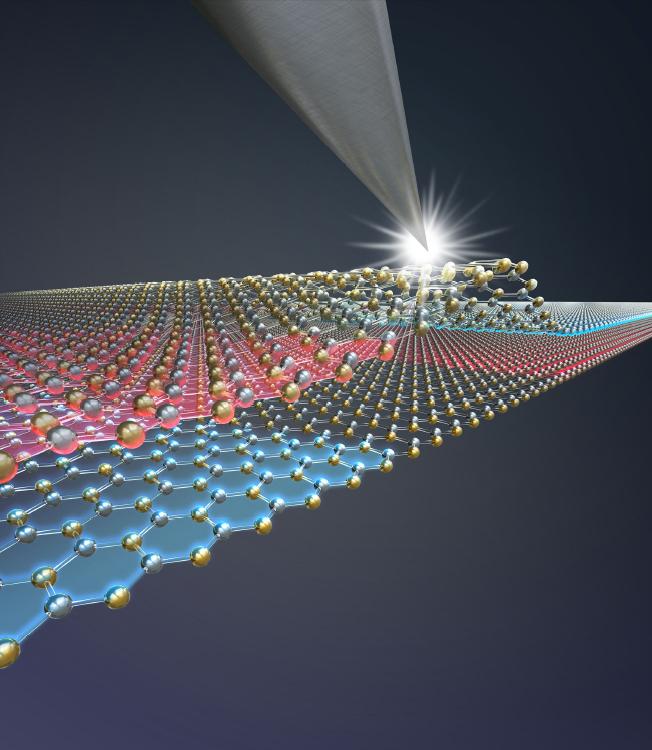
In the study, the researchers used a two-dimensional material: one-atom-thick layers of boron and nitrogen, arranged in a repetitive hexagonal structure. In their experiment, they were able to break the symmetry of this crystal by artificially assembling two such layers. "In its natural three-dimensional state, this material is made up of a large number of layers placed on top of each other, with each layer rotated 180 degrees relative to its neighbors (antiparallel configuration)" says Dr. Ben Shalom. "In the lab, we were able to artificially stack the layers in a parallel configuration with no rotation, which hypothetically places atoms of the same kind in perfect overlap despite the strong repulsive force between them (resulting from their identical charges). In actual fact, however, the crystal prefers to slide one layer slightly in relation to the other, so that only half of each layer's atoms are in perfect overlap, and those that do overlap are of opposite charges - while all others are located above or below an empty space - the center of the hexagon. In this artificial stacking configuration, the layers are quite distinct from one another. For example, if in the top layer only the boron atoms overlap, in the bottom layer it's the other way around."

Dr. Ben Shalom also highlights the work of the theory team, who conducted numerous supercomputer simulations "Together we established a deep understanding of why the system's electrons arrange themselves just as we had measured in the lab. Thanks to this fundamental understanding, we expect fascinating responses in other symmetry-broken layered systems as well," he says.

Maayan Wizner Stern, the Ph.D. student who led the study, explains: "The symmetry breaking we created in the laboratory, which does not exist in the natural crystal, forces the electric charge to reorganize itself between the layers and generate a tiny internal electrical polarization perpendicular to the layer plane. When we apply an external electric field in the opposite direction the system slides laterally to switch the polarization orientation. The switched polarization remains stable even when the external field is shut down. In this, the system is similar to thick three-dimensional ferroelectric systems, which are widely used in technology today." The research team.

"The ability to force a crystalline and electronic arrangement in such a thin system, with unique polarization and inversion properties resulting from the weak Van der Waals forces between the layers, is not limited to the boron and nitrogen crystal," adds Dr. Ben Shalom. "We expect the same behaviors in many-layered crystals with the right symmetry properties. The concept of interlayer sliding as an original and efficient way to control advanced electronic devices is very promising, and we have named it Slide-Tronics".

Maayan Vizner Stern concludes: "We are excited about discovering what can happen in other states we force upon nature and predict that other structures that couple additional degrees of freedom are possible. We hope that miniaturization and flipping through sliding will improve today's electronic devices, and moreover, allow other original ways of controlling information in future devices. In addition to computer devices, we expect that this technology will contribute to detectors, energy storage, and conversion, interaction with light, etc. Our challenge, as we see it, is to discover more crystals with new and slippery degrees of freedom."

  1. AmazonFACE supercomputing shows that rising levels of CO2 reduce rainfall in the Amazon more than deforestation
  2. Washington University in St. Louis prof finds a new piece of the quantum supercomputing puzzle

Page 5 of 16

  • 1
  • 2
  • 3
  • 4
  • 5
  • 6
  • 7
  • 8
  • 9
  • 10
POPULAR RIGHT NOW
  • Supercomputers uncover a new class of cosmic explosions hidden in plain sight
    Supercomputers uncover a new class of cosmic explosions hidden in plain sight
  • AI supercharges the hunt for stronger magnets: Iowa State researchers launch a new era of intelligent materials discovery
    AI supercharges the hunt for stronger magnets: Iowa State researchers launch a new era of intelligent materials discovery
  • IBM's Historic stock collapse raises questions for the future of enterprise supercomputing
    IBM's Historic stock collapse raises questions for the future of enterprise supercomputing
  • Could a novel dark matter theory simultaneously resolve multiple cosmic enigmas? Supercomputer simulations provide a compelling, albeit currently unverified, potential solution
    Could a novel dark matter theory simultaneously resolve multiple cosmic enigmas? Supercomputer simulations provide a compelling, albeit currently unverified, potential solution
  • Melting icebergs may be reshaping Earth’s greatest ocean current
    Melting icebergs may be reshaping Earth’s greatest ocean current
  • Supercomputers replace ‘bathtub’ flood maps with physics-based digital twins of Britain’s coastline
    Supercomputers replace ‘bathtub’ flood maps with physics-based digital twins of Britain’s coastline
  • Supercomputers push neural quantum simulation beyond previous limits
    Supercomputers push neural quantum simulation beyond previous limits
  • Intel’s AI supercomputing revival: Q2 financial surge signals new era for CPU-powered HPC infrastructure
    Intel’s AI supercomputing revival: Q2 financial surge signals new era for CPU-powered HPC infrastructure
  • AI infrastructure financing fears shake semiconductor sector
    AI infrastructure financing fears shake semiconductor sector
  • AWS supercomputing investment reaches historic scale as Amazon’s AI strategy powers record financial results
    AWS supercomputing investment reaches historic scale as Amazon’s AI strategy powers record financial results
THIS YEAR'S MOST READ
  • Wall Street wants to trade supercomputing power like oil
    Wall Street wants to trade supercomputing power like oil
  • Cosmic ambition at scale: UK’s supercomputer unlocks a 2.5 petabytes universe
    Cosmic ambition at scale: UK’s supercomputer unlocks a 2.5 petabytes universe
  • Hidden order, revealed at scale: Supercomputing, electron ptychography uncover the inner workings of relaxor ferroelectrics
    Hidden order, revealed at scale: Supercomputing, electron ptychography uncover the inner workings of relaxor ferroelectrics
  • Beamforming the future: BeammWave's 6G push signals the rise of orbital-terrestrial wireless networks
    Joakim Axmon
    Joakim Axmon
  • Intel's Q1 results signal supercomputing surge driving Xeon momentum
    Intel's Q1 results signal supercomputing surge driving Xeon momentum
  • When stars fall apart: Supercomputing reveals the hidden physics of black holes
    When stars fall apart: Supercomputing reveals the hidden physics of black holes
  • Multi-layer simulations reveal the hidden supply chain of solar prominences
    Multi-layer simulations reveal the hidden supply chain of solar prominences
  • Japanese scientists decode dolphin speed with supercomputing: Turbulence, vortices, and the hidden physics of propulsion
    Japanese scientists decode dolphin speed with supercomputing: Turbulence, vortices, and the hidden physics of propulsion
  • Cosmic feedback at scale: Supercomputing reveals how quasars regulate the early Universe
    Cosmic feedback at scale: Supercomputing reveals how quasars regulate the early Universe
  • Modeling life at the microscopic scale: A computational breakthrough in oxygen transport
    Modeling life at the microscopic scale: A computational breakthrough in oxygen transport
MOST READ OF ALL-TIME
  • Largest Computational Biology Simulation Mimics The Ribosome
    Details
    112107
    The amino acid (green) slithers into the chemical reaction center, moving through an evolutionarily ancient corridor of the ribosome (purple). The amino acid is delivered to the reaction core by the transfer RNA molecule (yellow).
    The amino acid (green) slithers into the chemical reaction center, moving through an evolutionarily ancient corridor of the ribosome (purple). The amino acid is delivered to the reaction core by the transfer RNA molecule (yellow).
  • Silicon 'neurons' may add a new dimension to chips
    Details
    80990
    Silicon 'neurons' may add a new dimension to chips
  • Linux Networx Accelerators Expected to Drive up to 4x Price/Performance
    Details
    75537
  • Complex Concepts That Really Add Up
    Details
    73635
    Complex Concepts That Really Add Up
  • Blue Sky Studios Donates Animation SuperComputer to Wesleyan
    Details
    68140
    Each rack holds 52 Angstrom Microsystem-brand “blades,” with a memory footprint of 12 or 24 gigabytes each. (Photos by Olivia Bartlett Drake)
    Each rack holds 52 Angstrom Microsystem-brand “blades,” with a memory footprint of 12 or 24 gigabytes each. (Photos by Olivia Bartlett Drake)
  • Humanities, HPC connect at NERSC
    Details
    57945
  • TeraGrid ’09 'Call for Participation'
    Details
    54951
  • Turbulence responsible for black holes' balancing act
    Details
    52310
  • Cray Wins $52 Million SuperComputer Contract
    Details
    50139
  • SDSC Researchers Accurately Predict Protein Docking
    Details
    46078
  • FRONTPAGE
  • LATEST
  • POPULAR
  • REGISTER
  • SOCIAL
  • VIDEO
  • SUBSCRIPTION
  • RSS
  • GUIDELINES
  • PRIVACY
  • TOS
  • ABOUT
  • +1 (816) 799-4488
  • editorial@supercomputingonline.com
© 2001 - 2026 SuperComputingOnline.com, LLC. All rights reserved. This material may not be published, broadcast, rewritten or redistributed without permission.
Sign In
  • FRONT PAGE
  • LATEST
    • MEDIA KIT
    • MOST READ
    • RSS FEED
    • ACADEMIA
    • AEROSPACE
    • APPLICATIONS
    • ASTRONOMY
    • AUTOMOTIVE
    • BIG DATA
    • BIOLOGY
    • CHEMISTRY
    • CLIENTS
    • CLOUD
    • DEFENSE
    • DEVELOPER TOOLS
    • EARTH SCIENCES
    • ECONOMICS
    • ENGINEERING
    • ENTERTAINMENT
    • HEALTH
    • INDUSTRY
    • INTERCONNECTS
    • GAMING
    • GOVERNMENT
    • MANUFACTURING
    • MIDDLEWARE
    • MOVIES
    • NETWORKS
    • OIL & GAS
    • PHYSICS
    • PROCESSORS
    • RETAIL
    • SCIENCE
    • STORAGE
    • SYSTEMS
    • VISUALIZATION
  • VIDEOS
    • ADD YOUR VIDEOS
    • MANAGE VIDEOS
  • COMMUNITY
    • TRADE SHOWS
    • SOCIAL NETWORK VIDEOS
    • SURVEYS
    • APPLICATIONS BROWSER
    • CONVERSATION INBOX
    • SOCIAL ADVERTISER
    • GROUPS
    • MARKETPLACE LISTINGS
    • PAGES
    • LEADERBOARD
    • POINTS LISTING
      • BADGES
    • PRIVACY CONFIRM REQUEST
    • PRIVACY CREATE REQUEST

Hey there! We noticed you’re using an ad blocker.