

SUPERCOMPUTING NEWS SUPERCOMPUTING NEWS
    • MEDIA KIT
    • MOST READ
    • RSS FEED
    • ACADEMIA
    • AEROSPACE
    • APPLICATIONS
    • ASTRONOMY
    • AUTOMOTIVE
    • BIG DATA
    • BIOLOGY
    • CHEMISTRY
    • CLIENTS
    • CLOUD
    • DEFENSE
    • DEVELOPER TOOLS
    • EARTH SCIENCES
    • ECONOMICS
    • ENGINEERING
    • ENTERTAINMENT
    • GAMING
    • GOVERNMENT
    • HEALTH
    • OIL & GAS
    • INDUSTRY
    • INTERCONNECTS
    • MANUFACTURING
    • MIDDLEWARE
    • MOVIES
    • NETWORKS
    • PHYSICS
    • PROCESSORS
    • RETAIL
    • SCIENCE
    • STORAGE
    • SYSTEMS
    • VISUALIZATION
    • AcyMailing subscription form

    • ADD YOUR VIDEOS
    • MANAGE VIDEOS
    • CONVERSATION INBOX
    • SOCIAL ADVERTISER
    • SOCIAL NETWORK VIDEOS
    • SURVEYS
    • GROUPS
    • PAGES
    • MARKETPLACE LISTINGS
    • APPLICATIONS BROWSER
    • PRIVACY CONFIRM REQUEST
    • PRIVACY CREATE REQUEST
    • LEADERBOARD
    • POINTS LISTING
      • BADGES
    • TRADE SHOWS
Sign In
Tyler O'Neal, Staff Editor ECONOMICS June 21, 2021, 8:00 am

Swiss scientist builds new model to simulate tsunami generation from iceberg calving

Johan Gaume, an EPFL expert in avalanches and geomechanics, has turned his attention to ice. His goal is to better understand the correlation between the size of an iceberg and the amplitude of the tsunami that results from its calving. Gaume, along with a team of scientists from other research institutes, has just unveiled a new method for modeling these events. 

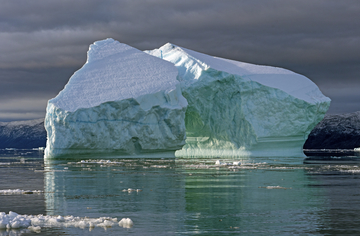
These scientists are the first to simulate both glacier fracture and wave formation phenomena when the iceberg falls into the water. “Our goal was to model the explicit interaction between water and ice – but that has a substantial cost in terms of computing time. We, therefore, decided to use a continuum model, which is very powerful numerically and which gives results that are both conclusive and consistent with much of the experimental data,” says Gaume, who heads EPFL’s Snow Avalanche Simulation Laboratory (SLAB) and is the study’s corresponding author. The other institutes involved in the study are the University of Pennsylvania, the University of Zurich, the University of Nottingham, and Switzerland’s WSL Institute for Snow and Avalanche Research. Eqip Sermia glacier and its icebergs. © iStock
Improving calving laws
The scientists’ method can also provide insight into the specific mechanisms involved in glacial rupture. “Researchers can use the results of our simulations to refine the calving laws incorporated into their large-scale models for predicting sea-level rises while providing detailed information about the size of icebergs, which represent a sizeable amount of mass loss,” says Gaume.

Calving occurs when chunks of ice on the edge of a glacier break off and fall into the sea. The mechanisms behind the rupture generally depend on how high the water is. If the water level is low, the iceberg breaks off from the top of the glacier. If the water level is high, the iceberg is longer and breaks off from the bottom, before eventually floating to the surface owing to buoyancy. These different mechanisms create icebergs of different sizes – and therefore waves of different amplitudes. “Another event that can trigger a tsunami is when an iceberg’s center of gravity changes, causing the iceberg itself to rotate,” says Gaume. “We were able to simulate all these processes.”

In Greenland, the scientists placed a series of sensors at Eqip Sermia, a 3-km-wide outlet glacier of the Greenland ice sheet that ends in a fjord with a 200 m ice cliff. Back in 2014, an iceberg measuring some 1 million m3 (the equivalent of 300 Olympic-sized swimming pools) broke off the front of the glacier and produced a 50 m-high tsunami; the wave was still 3 m high when it reached the first populated shoreline some 4 km away. The scientists tested their modeling method on large-scale field datasets from Eqip Sermia as well as with empirical data on tsunami waves obtained in a laboratory basin at the Deltares Institute in the Netherlands.

Projects in the pipeline
Glacier melting has become a major focus area of research today as a result of global warming. One of the University of Zurich scientists involved in the study kicked off a new research project this year with funding from the Swiss National Science Foundation. This project will investigate the dynamics of Greenland's fastest-moving glacier, Jakobshavn Isbrae, by combining data from individual field experiments in Greenland with the results of simulations run using the SLAB model. “Our method will also be used to model chains of complex processes triggered by gravitational mass movements, such as the interaction between a rock avalanche and a mountain lake,” says Gaume.

Intel's chip sales plunge 20 percent in Q1

Tyler O'Neal, Staff Editor ECONOMICS April 22, 2021, 6:00 pm

Intel has reported a huge drop in data center chip sales and a steep decline in gross profit margin, a sign it’s losing market share to rivals and customers who are designing their components. Intel shares were down 3% in after-hours trading after the results.

The company’s Data Center Group (DCG) has generated first-quarter 2021 sales of $5.6 billion, down 20% from a year earlier and below Wall Street estimates. This is one of Intel’s most profitable businesses, so the lower revenue hurt the overall margins.

In the fourth quarter of 2020, Intel's DCG revenue amounted to approximately $6.09 billion, a decrease of 15% from the figure reported for the same quarter of 2019.

Intel said sales of chips to cloud computing service providers fell 29% from the same period a year earlier. That big drop, according to Intel, was caused by “digestion” customers pausing orders while they work through unused stockpiles of chips.

Demand for cloud computing services from data centers has surged during the pandemic as many businesses shifted to working from home.

“This is a pivotal year for Intel. We are setting our strategic foundation and investing to accelerate our trajectory and capitalize on the explosive growth in semiconductors that power our increasingly digital world,” said Pat Gelsinger, Intel CEO.
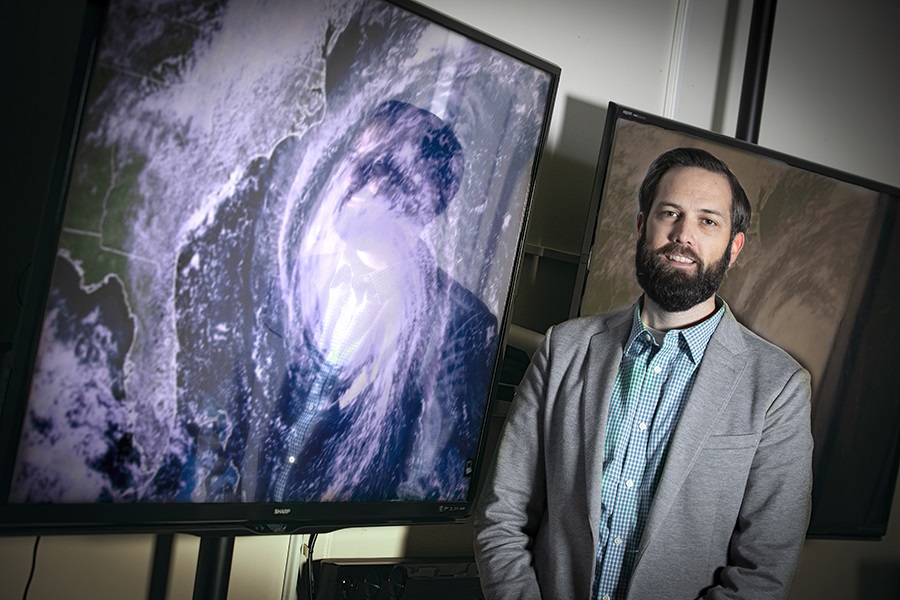
SUNY Stony Brook's Reed forecasts attribution of the human influence on Hurricane Florence

Tyler O'Neal, Staff Editor ECONOMICS January 2, 2020, 10:20 pm

A study led by Kevin Reed, Ph.D., Assistant Professor in the School of Marine and Atmospheric Sciences (SoMAS) at Stony Brook University, and published in Science Advances, found that Hurricane Florence produced more extreme rainfall and was spatially larger due to human-induced climate change.

Previous research has suggested that human influences such as emission of greenhouse gasses that alter climate do affect precipitation in extreme storms. The research in this study, however, is a first to use a “forecast attribution” framework that enables scientists to investigate the effect of climate change on individual storm events days in advance. Kevin Reed, PhD{module INSIDE STORY}

In 2018, prior to the landfall of Hurricane Florence, Reed and colleagues made predictions based on simulations of the storm given climate change models. They predicted Hurricane Florence would be slightly more intense for a longer portion of the forecast period, rainfall amounts over the Carolinas would be increased by 50 percent due to climate change and warmer water temperatures, and the hurricane would be approximately 80 kilometers larger due to the effect of climate change on the large-scale environment around the storm.

“With our ability for additional ‘hindsight’ numerical modeling of the storm around climate change factors, we found predictions about increases in storm size and increased storm rainfall in certain areas to be accurate, even if the numbers and proportions are not exact,” explains Reed. “More importantly, this post-storm modeling around climate change illustrates that the impact of climate change on storms is here now and is not something only projected for our future.” 

Reed explains the future tools of storm modeling including the approach by his team in this brief video.  

{media id=235,layout=solo}

He said that while the post-storm analysis did show that the storm was slightly more intense during the forecast period due to climate change – as they predicted – as measured by minimum surface pressure and near-surface winds, the finding remains the most uncertain from the hindsight model.

One key finding of the post-storm model showed that Hurricane Florence was about nine kilometers larger in mean maximum diameter due to climate change. Additionally, rainfall amounts over large ranges were significantly increased. Mean total overland rainfall amounts associated with the forecasted storm’s core were increased by 4.9 ± 4.6% with local maximum amounts experiencing increases of 3.8 ± 5.7% due to climate change.

Reed emphasizes that by attributing climate change effects to individual storms, as his team did with Hurricane Florence, scientists are better able to communicate the direct impacts of climate change on extreme weather to the public.

  1. CenturyLink accelerates ongoing Board refreshment process to improve corporate governance
  2. Maxar Technologies sells MDA to Northern Private Capital for CAD$1B

Page 12 of 16

  • 7
  • 8
  • 9
  • 10
  • 11
  • 12
  • 13
  • 14
  • 15
  • 16
POPULAR RIGHT NOW
  • Supercomputers uncover a new class of cosmic explosions hidden in plain sight
    Supercomputers uncover a new class of cosmic explosions hidden in plain sight
  • AI supercharges the hunt for stronger magnets: Iowa State researchers launch a new era of intelligent materials discovery
    AI supercharges the hunt for stronger magnets: Iowa State researchers launch a new era of intelligent materials discovery
  • IBM's Historic stock collapse raises questions for the future of enterprise supercomputing
    IBM's Historic stock collapse raises questions for the future of enterprise supercomputing
  • Could a novel dark matter theory simultaneously resolve multiple cosmic enigmas? Supercomputer simulations provide a compelling, albeit currently unverified, potential solution
    Could a novel dark matter theory simultaneously resolve multiple cosmic enigmas? Supercomputer simulations provide a compelling, albeit currently unverified, potential solution
  • Melting icebergs may be reshaping Earth’s greatest ocean current
    Melting icebergs may be reshaping Earth’s greatest ocean current
  • Supercomputers replace ‘bathtub’ flood maps with physics-based digital twins of Britain’s coastline
    Supercomputers replace ‘bathtub’ flood maps with physics-based digital twins of Britain’s coastline
  • Supercomputers push neural quantum simulation beyond previous limits
    Supercomputers push neural quantum simulation beyond previous limits
  • Intel’s AI supercomputing revival: Q2 financial surge signals new era for CPU-powered HPC infrastructure
    Intel’s AI supercomputing revival: Q2 financial surge signals new era for CPU-powered HPC infrastructure
  • AI infrastructure financing fears shake semiconductor sector
    AI infrastructure financing fears shake semiconductor sector
  • AWS supercomputing investment reaches historic scale as Amazon’s AI strategy powers record financial results
    AWS supercomputing investment reaches historic scale as Amazon’s AI strategy powers record financial results
THIS YEAR'S MOST READ
  • Wall Street wants to trade supercomputing power like oil
    Wall Street wants to trade supercomputing power like oil
  • Cosmic ambition at scale: UK’s supercomputer unlocks a 2.5 petabytes universe
    Cosmic ambition at scale: UK’s supercomputer unlocks a 2.5 petabytes universe
  • Hidden order, revealed at scale: Supercomputing, electron ptychography uncover the inner workings of relaxor ferroelectrics
    Hidden order, revealed at scale: Supercomputing, electron ptychography uncover the inner workings of relaxor ferroelectrics
  • Beamforming the future: BeammWave's 6G push signals the rise of orbital-terrestrial wireless networks
    Joakim Axmon
    Joakim Axmon
  • Intel's Q1 results signal supercomputing surge driving Xeon momentum
    Intel's Q1 results signal supercomputing surge driving Xeon momentum
  • When stars fall apart: Supercomputing reveals the hidden physics of black holes
    When stars fall apart: Supercomputing reveals the hidden physics of black holes
  • Multi-layer simulations reveal the hidden supply chain of solar prominences
    Multi-layer simulations reveal the hidden supply chain of solar prominences
  • Japanese scientists decode dolphin speed with supercomputing: Turbulence, vortices, and the hidden physics of propulsion
    Japanese scientists decode dolphin speed with supercomputing: Turbulence, vortices, and the hidden physics of propulsion
  • Cosmic feedback at scale: Supercomputing reveals how quasars regulate the early Universe
    Cosmic feedback at scale: Supercomputing reveals how quasars regulate the early Universe
  • Modeling life at the microscopic scale: A computational breakthrough in oxygen transport
    Modeling life at the microscopic scale: A computational breakthrough in oxygen transport
MOST READ OF ALL-TIME
  • Largest Computational Biology Simulation Mimics The Ribosome
    Details
    112107
    The amino acid (green) slithers into the chemical reaction center, moving through an evolutionarily ancient corridor of the ribosome (purple). The amino acid is delivered to the reaction core by the transfer RNA molecule (yellow).
    The amino acid (green) slithers into the chemical reaction center, moving through an evolutionarily ancient corridor of the ribosome (purple). The amino acid is delivered to the reaction core by the transfer RNA molecule (yellow).
  • Silicon 'neurons' may add a new dimension to chips
    Details
    80990
    Silicon 'neurons' may add a new dimension to chips
  • Linux Networx Accelerators Expected to Drive up to 4x Price/Performance
    Details
    75537
  • Complex Concepts That Really Add Up
    Details
    73635
    Complex Concepts That Really Add Up
  • Blue Sky Studios Donates Animation SuperComputer to Wesleyan
    Details
    68140
    Each rack holds 52 Angstrom Microsystem-brand “blades,” with a memory footprint of 12 or 24 gigabytes each. (Photos by Olivia Bartlett Drake)
    Each rack holds 52 Angstrom Microsystem-brand “blades,” with a memory footprint of 12 or 24 gigabytes each. (Photos by Olivia Bartlett Drake)
  • Humanities, HPC connect at NERSC
    Details
    57946
  • TeraGrid ’09 'Call for Participation'
    Details
    54951
  • Turbulence responsible for black holes' balancing act
    Details
    52310
  • Cray Wins $52 Million SuperComputer Contract
    Details
    50139
  • SDSC Researchers Accurately Predict Protein Docking
    Details
    46078
  • FRONTPAGE
  • LATEST
  • POPULAR
  • REGISTER
  • SOCIAL
  • VIDEO
  • SUBSCRIPTION
  • RSS
  • GUIDELINES
  • PRIVACY
  • TOS
  • ABOUT
  • +1 (816) 799-4488
  • editorial@supercomputingonline.com
© 2001 - 2026 SuperComputingOnline.com, LLC. All rights reserved. This material may not be published, broadcast, rewritten or redistributed without permission.
Sign In
  • FRONT PAGE
  • LATEST
    • MEDIA KIT
    • MOST READ
    • RSS FEED
    • ACADEMIA
    • AEROSPACE
    • APPLICATIONS
    • ASTRONOMY
    • AUTOMOTIVE
    • BIG DATA
    • BIOLOGY
    • CHEMISTRY
    • CLIENTS
    • CLOUD
    • DEFENSE
    • DEVELOPER TOOLS
    • EARTH SCIENCES
    • ECONOMICS
    • ENGINEERING
    • ENTERTAINMENT
    • HEALTH
    • INDUSTRY
    • INTERCONNECTS
    • GAMING
    • GOVERNMENT
    • MANUFACTURING
    • MIDDLEWARE
    • MOVIES
    • NETWORKS
    • OIL & GAS
    • PHYSICS
    • PROCESSORS
    • RETAIL
    • SCIENCE
    • STORAGE
    • SYSTEMS
    • VISUALIZATION
  • VIDEOS
    • ADD YOUR VIDEOS
    • MANAGE VIDEOS
  • COMMUNITY
    • TRADE SHOWS
    • SOCIAL NETWORK VIDEOS
    • SURVEYS
    • APPLICATIONS BROWSER
    • CONVERSATION INBOX
    • SOCIAL ADVERTISER
    • GROUPS
    • MARKETPLACE LISTINGS
    • PAGES
    • LEADERBOARD
    • POINTS LISTING
      • BADGES
    • PRIVACY CONFIRM REQUEST
    • PRIVACY CREATE REQUEST

Hey there! We noticed you’re using an ad blocker.