SUPERCOMPUTING NEWS SUPERCOMPUTING NEWS
    • MEDIA KIT
    • MOST READ
    • RSS FEED
    • ACADEMIA
    • AEROSPACE
    • APPLICATIONS
    • ASTRONOMY
    • AUTOMOTIVE
    • BIG DATA
    • BIOLOGY
    • CHEMISTRY
    • CLIENTS
    • CLOUD
    • DEFENSE
    • DEVELOPER TOOLS
    • EARTH SCIENCES
    • ECONOMICS
    • ENGINEERING
    • ENTERTAINMENT
    • GAMING
    • GOVERNMENT
    • HEALTH
    • OIL & GAS
    • INDUSTRY
    • INTERCONNECTS
    • MANUFACTURING
    • MIDDLEWARE
    • MOVIES
    • NETWORKS
    • PHYSICS
    • PROCESSORS
    • RETAIL
    • SCIENCE
    • STORAGE
    • SYSTEMS
    • VISUALIZATION
    • AcyMailing subscription form

    • ADD YOUR VIDEOS
    • MANAGE VIDEOS
    • CONVERSATION INBOX
    • SOCIAL ADVERTISER
    • SOCIAL NETWORK VIDEOS
    • SURVEYS
    • GROUPS
    • PAGES
    • MARKETPLACE LISTINGS
    • APPLICATIONS BROWSER
    • PRIVACY CONFIRM REQUEST
    • PRIVACY CREATE REQUEST
    • LEADERBOARD
    • POINTS LISTING
      • BADGES
    • TRADE SHOWS
Sign In
Tyler O'Neal, Staff Editor May 22, 2020, 9:56 am

Chinese clinical decision support system helps predict individual trauma patient outcome

Chinese researchers from The Trauma Center of Peking University People's Hospital and National Institute of Health Data Science at Peking University are using big data to help identify trauma patients who could experience potential adverse health events in the emergency department through the aid of a clinical decision support system. It was developed using a novel real-world evidence mining and evidence-based inference method, driven by an improved information storage and electronic medical records.

The researchers published their results online on February 7 in IEEE Transactions on Systems, Man, and Cybernetics: Systems, a journal of the Institute of Electrical and Electronics Engineers. This is the first clinical decision support systems developed using evidential reasoning in an emergency department setting.

"Appropriate use of information technologies, particularly clinical decision support systems, may aid clinicians to make better clinical decisions and reduce the rate of medical errors," said the corresponding author Prof. Baoguo Jiang, Director of The Trauma Center of Peking University People's Hospital and China's National Center for Trauma Medicine. "By inputting clinical data of a patient, combined with available historical data, our proposed clinical decision support system outputs a predicted belief degree of severe trauma, including ICU admission and in-hospital death." {module INSIDE STORY}

"The clinical variable signs and symptoms may be interrelated and lead to a clinical outcome. For example, a patient may have a low level of consciousness because of the location of the injury, or it might be related to the high body temperature". In developing their clinical decision support system, the researchers used a trauma dataset from the emergency department at Kailuan Hospital in China, a hospital that has a close research collaboration with The Trauma Center of Peking University People's Hospital. Through the dataset, the researchers obtained the data of 1,299 trauma patients. The degree of interdependence between clinical signs and symptoms can be calculated from historical patient data. In the proposed clinical decision support system, the emergency room physician supplies information about the patient, including blood pressure, pulse rate, respiration rate, consciousness level, body temperature, age, comorbidities, mechanism and location of the injury. These clinical signs and symptoms are then processed using an evidential reasoning rule, which compares each piece against the evidence mined from real-world data to predict the probability of adverse events and to optimally manage trauma patients and help them achieve ideal outcomes, trauma patients with a high probability of being admitted to the intensive care unit or dying in a hospital need to be identified quickly and accurately upon their arrival at a hospital.

The team found that not only did their model prove especially useful in cases without prior expert knowledge or clinical experiences but that the clinical decision support system also allowed for more accurate identification of trauma patients with adverse events compared to other systems with traditional machine learning models. Furthermore, the clinical decision support system works in a real-time fashion. From a physician's input of a patient's data to generating appropriate advice, the system works almost without any delay, which in turn helps buy trauma patients valuable time.

Next, the researchers plan to finetune their system and to generalize it for use in other clinical areas and non-emergent department settings.
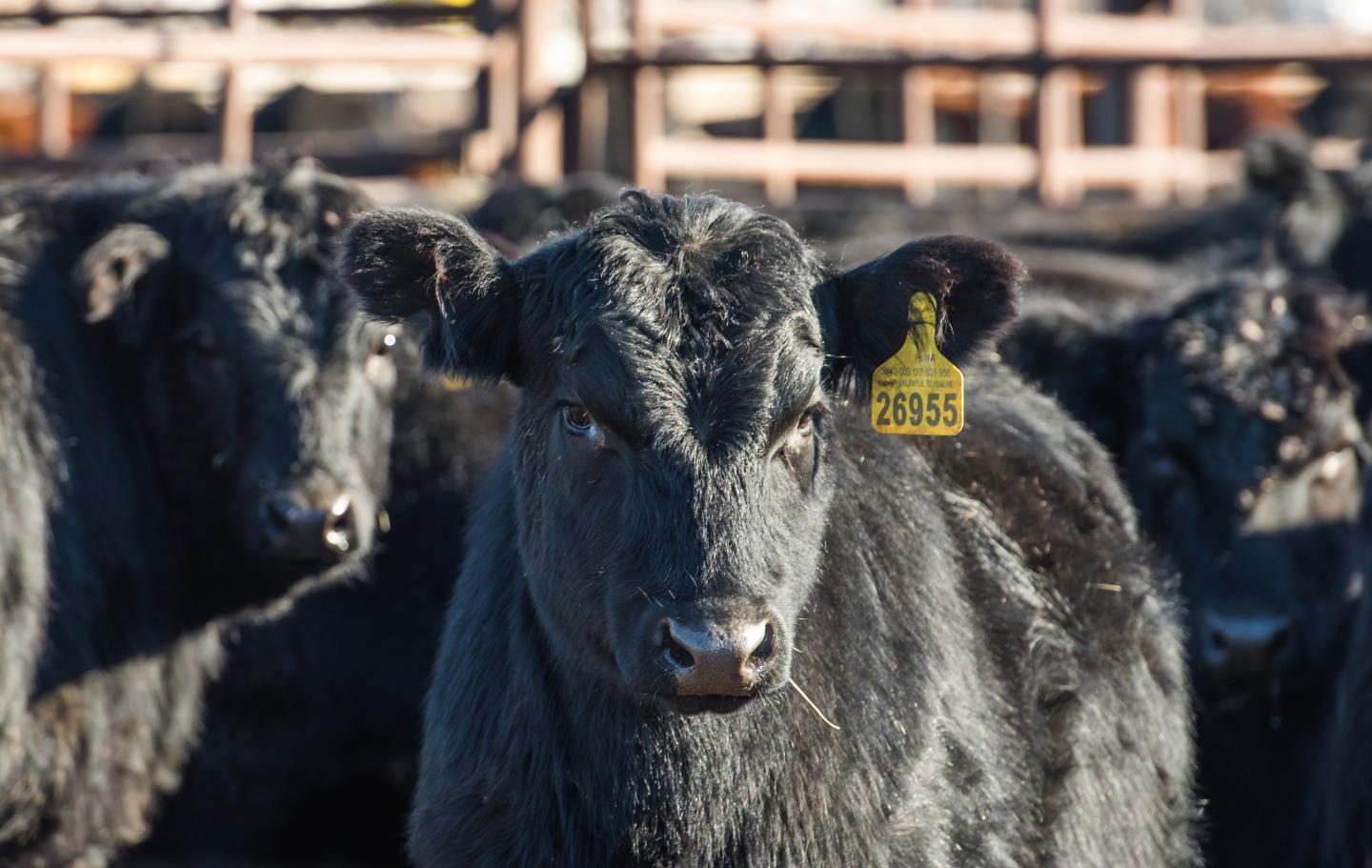
K-State's model of critical infrastructures reveals vulnerabilities

Tyler O'Neal, Staff Editor May 16, 2020, 6:38 am

An interdisciplinary team of Kansas State University researchers developed a supercomputer simulation that revealed beef supply chain vulnerabilities that need safeguarding -- a realistic concern during the COVID-19 pandemic.

Caterina Scoglio, professor, and Qihui Yang, doctoral student, both in electrical and computer engineering, recently published "Developing an agent-based model to simulate the beef cattle production and transportation in southwest Kansas" in Physica A, an Elsevier journal publication. The beef supply chain and transportation industries are interdependent critical infrastructures and need safeguarding according to a supercomputer simulation model developed by Kansas State University researchers.{module INSIDE STORY}

The paper describes a model of the beef production system and the transportation industry, which are interdependent critical infrastructures -- similar to the electrical grid and computer technology. According to the model, disruptions in the cattle industry -- especially in the beef packing plants -- will affect the transportation industry and together cause great economic harm. The disruptions modeled in the simulation share similarities with how the packing plants have been affected during the COVID-19 pandemic.

"When we first started working on this project, there was a lot of emphasis on studying critical infrastructures; especially ones that are interdependent, meaning that they need to work together with other critical infrastructures," Scoglio said. "The idea is if there is a failure in one of the systems, it can propagate to the other system, increasing the catastrophic effects."

The study included a variety of viewpoints to create a realistic and integrated model of both systems. Co-authors on the paper include Don Gruenbacher, associate professor and department head of electrical and computer engineering; Jessica Heier Stamm, associate professor of industrial and manufacturing systems engineering; Gary Brase, professor of psychological sciences; Scott DeLoach, professor and department head of computer science; and David Amrine, research director of the Beef Cattle Institute.

The researchers used the model to evaluate which supply chain components were more robust and which were not. They determined that packing plants are the most vulnerable. Scoglio said that recent events in the middle of the COVID-19 pandemic raise important issues about how to safeguard the system.

"An important message is that after understanding the critical role of these packers, we need to decide how we could protect both them and the people who work there," Scoglio said. "While the plants are a critical infrastructure and need to be protected, taking care of the health of the workers is very important. How can we design a production process that can be flexible and adaptable in an epidemic?"

According to the paper, the beef cattle industry contributes approximately $8.9 billion to the Kansas economy and employs more than 42,000 people in the state. Since trucks are needed to move cattle, any disruption in either cattle production or transportation almost certainly would harm the regional economy, Scoglio said.

"Packers need to be considered as a critical point of a much longer supply chain, which needs specific attention to make sure it will not fail and can continue working," Scoglio said. "Beef packers are a critical infrastructure in the United States."

The project was supported by the National Science Foundation and focused on southwest Kansas, but the researchers acknowledge that cattle come from outside the region and interruptions may have larger national effects.

FSU researchers discover even small disturbances can trigger catastrophic storms

Tyler O'Neal, Staff Editor May 14, 2020, 11:04 pm

You've probably seen the satellite images that show a hurricane developing: thick white clouds clumping together, arms spinning around a central eye as it heads for the coast.

After decades of research, meteorologists still have questions about how hurricanes develop. Now, Florida State University researchers have found that even the smallest changes in atmospheric conditions could trigger a hurricane, information that will help scientists understand the processes that lead to these devastating storms.

"The whole motivation for this paper was that we still don't have that universal theoretical understanding of exactly how tropical cyclones form, and to really be able to forecast that storm-by-storm, it would help us to have that more solidly taken care of," said Jacob Carstens, a doctoral student in the Department of Earth, Ocean, and Atmospheric Science.

The research by Carstens and Assistant Professor Allison Wing has been published in the Journal of Advances in Modeling Earth Systems. This is Jacob Carstens, a doctoral student in the Department of Earth, Ocean and Atmospheric Science.

Current theories on the formation of hurricanes agree that some sort of disturbance must exist to start the process that leads to a hurricane. Carstens used numerical models that started with simple conditions to better understand exactly how those disturbances arise.

"We're trying to go as bare-bones as possible, looking at just how exactly clouds want to organize themselves without any of these external factors playing into it to form a tropical cyclone more efficiently," he said. "It's a way we can further round out our broader understanding and look more purely at the actual tropical cyclones themselves rather than the surrounding environment's impact on it."

The simulations started with mostly uniform conditions spread across the imaginary box where the model played out. Then, researchers added a tiny amount of random temperature fluctuations to kickstart the model and observed how the simulated clouds evolved. {module INSIDE STORY}

Despite the random start to the simulation, the clouds didn't stay randomly arranged. They formed into clusters as the water vapor, thermal radiation and other factors interacted. As the clusters circulated through the simulated atmosphere, the researchers tracked when they formed hurricanes. They repeated the model at simulated latitudes between 0.1 degrees and 20 degrees north, representative of areas such as parts of western Africa, northern South America, and the Caribbean. That range includes the latitudes where tropical cyclones typically form, along with latitudes very close to the equator where their formation is rare and less studied.

The scientists found that every simulation in latitudes between 10 and 20 degrees produced a major hurricane, even from the stable conditions under which they began the simulation. These came a few days after a vortex first emerged well above the surface and affected its surrounding environment.

They also showed the possibility of cloud interaction contributing to the development of a tropical cyclone very close to the equator, which rarely occurs in nature but has still been observed as close as 1.4 degrees north away.

Hurricanes are dangerous weather events. Forecasting can help prevent deaths, but a big storm can still cause billions of dollars in damage. A better theoretical understanding of their formation will help meteorologists predict and prepare for these storms, both in short-term forecasts and long-term climate projections and communicate their understanding to the public.

"It's becoming ever more important in our field that we connect with emergency managers, the general population and other local officials to advise them on what they can expect, how they should prepare and what sorts of impacts are going to be heading their way," Carstens said. "A more robust understanding of how tropical cyclones form can help us to better forecast their location, their track, and their intensity. It really goes down the line and helps us to communicate sooner as well as more efficiently and eloquently to the public that really needs it."

  1. Russian supercomputer modeling reveals behavior of individual lipid molecules
  2. Where, when will oil spills reach the beach?

Page 6 of 7

  • 1
  • 2
  • 3
  • 4
  • 5
  • 6
  • 7
POPULAR RIGHT NOW
  • Supercomputers uncover a new class of cosmic explosions hidden in plain sight
    Supercomputers uncover a new class of cosmic explosions hidden in plain sight
  • AI supercharges the hunt for stronger magnets: Iowa State researchers launch a new era of intelligent materials discovery
    AI supercharges the hunt for stronger magnets: Iowa State researchers launch a new era of intelligent materials discovery
  • IBM's Historic stock collapse raises questions for the future of enterprise supercomputing
    IBM's Historic stock collapse raises questions for the future of enterprise supercomputing
  • Could a novel dark matter theory simultaneously resolve multiple cosmic enigmas? Supercomputer simulations provide a compelling, albeit currently unverified, potential solution
    Could a novel dark matter theory simultaneously resolve multiple cosmic enigmas? Supercomputer simulations provide a compelling, albeit currently unverified, potential solution
  • Melting icebergs may be reshaping Earth’s greatest ocean current
    Melting icebergs may be reshaping Earth’s greatest ocean current
  • Supercomputers replace ‘bathtub’ flood maps with physics-based digital twins of Britain’s coastline
    Supercomputers replace ‘bathtub’ flood maps with physics-based digital twins of Britain’s coastline
  • Supercomputers push neural quantum simulation beyond previous limits
    Supercomputers push neural quantum simulation beyond previous limits
  • Intel’s AI supercomputing revival: Q2 financial surge signals new era for CPU-powered HPC infrastructure
    Intel’s AI supercomputing revival: Q2 financial surge signals new era for CPU-powered HPC infrastructure
  • AI infrastructure financing fears shake semiconductor sector
    AI infrastructure financing fears shake semiconductor sector
  • AWS supercomputing investment reaches historic scale as Amazon’s AI strategy powers record financial results
    AWS supercomputing investment reaches historic scale as Amazon’s AI strategy powers record financial results
THIS YEAR'S MOST READ
  • Wall Street wants to trade supercomputing power like oil
    Wall Street wants to trade supercomputing power like oil
  • Cosmic ambition at scale: UK’s supercomputer unlocks a 2.5 petabytes universe
    Cosmic ambition at scale: UK’s supercomputer unlocks a 2.5 petabytes universe
  • Hidden order, revealed at scale: Supercomputing, electron ptychography uncover the inner workings of relaxor ferroelectrics
    Hidden order, revealed at scale: Supercomputing, electron ptychography uncover the inner workings of relaxor ferroelectrics
  • Beamforming the future: BeammWave's 6G push signals the rise of orbital-terrestrial wireless networks
    Joakim Axmon
    Joakim Axmon
  • Intel's Q1 results signal supercomputing surge driving Xeon momentum
    Intel's Q1 results signal supercomputing surge driving Xeon momentum
  • When stars fall apart: Supercomputing reveals the hidden physics of black holes
    When stars fall apart: Supercomputing reveals the hidden physics of black holes
  • Multi-layer simulations reveal the hidden supply chain of solar prominences
    Multi-layer simulations reveal the hidden supply chain of solar prominences
  • Japanese scientists decode dolphin speed with supercomputing: Turbulence, vortices, and the hidden physics of propulsion
    Japanese scientists decode dolphin speed with supercomputing: Turbulence, vortices, and the hidden physics of propulsion
  • Cosmic feedback at scale: Supercomputing reveals how quasars regulate the early Universe
    Cosmic feedback at scale: Supercomputing reveals how quasars regulate the early Universe
  • Modeling life at the microscopic scale: A computational breakthrough in oxygen transport
    Modeling life at the microscopic scale: A computational breakthrough in oxygen transport
MOST READ OF ALL-TIME
  • Largest Computational Biology Simulation Mimics The Ribosome
    Details
    112107
    The amino acid (green) slithers into the chemical reaction center, moving through an evolutionarily ancient corridor of the ribosome (purple). The amino acid is delivered to the reaction core by the transfer RNA molecule (yellow).
    The amino acid (green) slithers into the chemical reaction center, moving through an evolutionarily ancient corridor of the ribosome (purple). The amino acid is delivered to the reaction core by the transfer RNA molecule (yellow).
  • Silicon 'neurons' may add a new dimension to chips
    Details
    80990
    Silicon 'neurons' may add a new dimension to chips
  • Linux Networx Accelerators Expected to Drive up to 4x Price/Performance
    Details
    75537
  • Complex Concepts That Really Add Up
    Details
    73635
    Complex Concepts That Really Add Up
  • Blue Sky Studios Donates Animation SuperComputer to Wesleyan
    Details
    68140
    Each rack holds 52 Angstrom Microsystem-brand “blades,” with a memory footprint of 12 or 24 gigabytes each. (Photos by Olivia Bartlett Drake)
    Each rack holds 52 Angstrom Microsystem-brand “blades,” with a memory footprint of 12 or 24 gigabytes each. (Photos by Olivia Bartlett Drake)
  • Humanities, HPC connect at NERSC
    Details
    57945
  • TeraGrid ’09 'Call for Participation'
    Details
    54951
  • Turbulence responsible for black holes' balancing act
    Details
    52310
  • Cray Wins $52 Million SuperComputer Contract
    Details
    50139
  • SDSC Researchers Accurately Predict Protein Docking
    Details
    46078
  • FRONTPAGE
  • LATEST
  • POPULAR
  • REGISTER
  • SOCIAL
  • VIDEO
  • SUBSCRIPTION
  • RSS
  • GUIDELINES
  • PRIVACY
  • TOS
  • ABOUT
  • +1 (816) 799-4488
  • editorial@supercomputingonline.com
© 2001 - 2026 SuperComputingOnline.com, LLC. All rights reserved. This material may not be published, broadcast, rewritten or redistributed without permission.
Sign In
  • FRONT PAGE
  • LATEST
    • MEDIA KIT
    • MOST READ
    • RSS FEED
    • ACADEMIA
    • AEROSPACE
    • APPLICATIONS
    • ASTRONOMY
    • AUTOMOTIVE
    • BIG DATA
    • BIOLOGY
    • CHEMISTRY
    • CLIENTS
    • CLOUD
    • DEFENSE
    • DEVELOPER TOOLS
    • EARTH SCIENCES
    • ECONOMICS
    • ENGINEERING
    • ENTERTAINMENT
    • HEALTH
    • INDUSTRY
    • INTERCONNECTS
    • GAMING
    • GOVERNMENT
    • MANUFACTURING
    • MIDDLEWARE
    • MOVIES
    • NETWORKS
    • OIL & GAS
    • PHYSICS
    • PROCESSORS
    • RETAIL
    • SCIENCE
    • STORAGE
    • SYSTEMS
    • VISUALIZATION
  • VIDEOS
    • ADD YOUR VIDEOS
    • MANAGE VIDEOS
  • COMMUNITY
    • TRADE SHOWS
    • SOCIAL NETWORK VIDEOS
    • SURVEYS
    • APPLICATIONS BROWSER
    • CONVERSATION INBOX
    • SOCIAL ADVERTISER
    • GROUPS
    • MARKETPLACE LISTINGS
    • PAGES
    • LEADERBOARD
    • POINTS LISTING
      • BADGES
    • PRIVACY CONFIRM REQUEST
    • PRIVACY CREATE REQUEST

Hey there! We noticed you’re using an ad blocker.