


SUPERCOMPUTING NEWS SUPERCOMPUTING NEWS
    • MEDIA KIT
    • MOST READ
    • RSS FEED
    • ACADEMIA
    • AEROSPACE
    • APPLICATIONS
    • ASTRONOMY
    • AUTOMOTIVE
    • BIG DATA
    • BIOLOGY
    • CHEMISTRY
    • CLIENTS
    • CLOUD
    • DEFENSE
    • DEVELOPER TOOLS
    • EARTH SCIENCES
    • ECONOMICS
    • ENGINEERING
    • ENTERTAINMENT
    • GAMING
    • GOVERNMENT
    • HEALTH
    • OIL & GAS
    • INDUSTRY
    • INTERCONNECTS
    • MANUFACTURING
    • MIDDLEWARE
    • MOVIES
    • NETWORKS
    • PHYSICS
    • PROCESSORS
    • RETAIL
    • SCIENCE
    • STORAGE
    • SYSTEMS
    • VISUALIZATION
    • AcyMailing subscription form

    • ADD YOUR VIDEOS
    • MANAGE VIDEOS
    • CONVERSATION INBOX
    • SOCIAL ADVERTISER
    • SOCIAL NETWORK VIDEOS
    • SURVEYS
    • GROUPS
    • PAGES
    • MARKETPLACE LISTINGS
    • APPLICATIONS BROWSER
    • PRIVACY CONFIRM REQUEST
    • PRIVACY CREATE REQUEST
    • LEADERBOARD
    • POINTS LISTING
      • BADGES
    • TRADE SHOWS
Sign In
Toyoda Gosei achieves a breakthrough at the International Symposium on Integral Car Safety Systems
2024-12-05 08:59:11 SYSTEMS December 5, 2024, 8:59 am

Toyoda Gosei achieves a breakthrough at the International Symposium on Integral Car Safety Systems

In a leading showcase of cutting-edge advancements in automotive safety technology, Toyoda Gosei Co., Ltd. has unveiled its latest breakthroughs in computer-aided engineering (CAE) at the prestigious Airbag 2024 – 16th International Symposium on Integral Car Safety Systems, held in Germany from November 25 to 27.

The Kiyosu-based company's unwavering commitment to utilizing CAE to enhance airbag protection performance has garnered attention from industry insiders and experts alike. Using advanced simulations, Toyoda Gosei's CAE expertise has enabled precise modeling of human body movements and injuries during traffic accidents. This revolutionary achievement is set to transform the landscape of car safety systems.

During the symposium, the company presented findings highlighting the use of human body models that accurately replicate human movements and injuries. This milestone follows over two decades of dedicated research and analysis of car safety using virtual models alongside traditional crash test dummies. Notably, Toyoda Gosei's research has expanded beyond fundamental impact analysis to include predictions regarding the risk of bone fractures in elderly individuals and assessments of potential organ damage during accidents, which has implications for collaboration between medical and engineering fields.

"We're on a mission to propel car safety into a new era," emphasized Hiroshi Yasuda, Executive Vice President of Toyoda Gosei. "Our deep dive into CAE has enabled us to dissect the factors contributing to chest and abdominal injuries while unveiling the transformative potential of the front center airbag, a groundbreaking innovation designed for side collisions."

This thought-provoking showcase sparked engaging discussions with industry leaders, including Director and Professor Andre Seeck, a prominent board member of Euro NCAP. This underscored the company's commitment to advancing the global automotive safety agenda.

Looking ahead, Toyoda Gosei is poised to leverage its CAE expertise to develop products tailored to vehicle occupants of diverse body types, intricate impact scenarios, and vehicles of varying shapes. Through collaborative research and development initiatives with esteemed institutions such as Shiga University of Medical Science, Coventry University, Wayne State University, and the Medical College of Wisconsin, the company is set to explore new frontiers in safety innovation.

Stay tuned as Toyoda Gosei continues its mission to push the boundaries of car safety and ensure safer mobility for all.
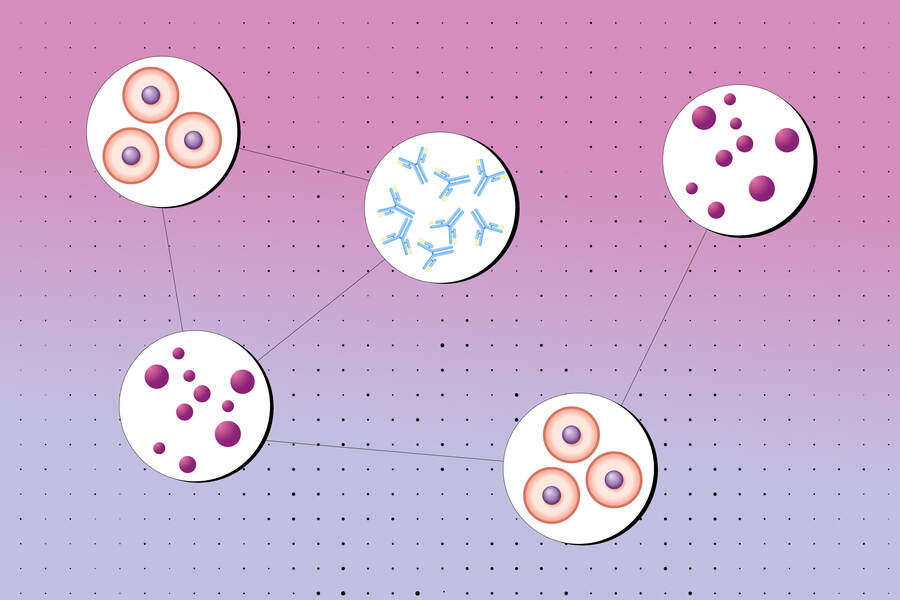
A new method for modeling complex biological systems: Is it a real breakthrough or hype?

A new method for modeling complex biological systems: Is it a real breakthrough or hype?

Tyler O'Neal, Staff Editor SYSTEMS November 5, 2024, 3:00 pm

A recent announcement by MIT engineers regarding their new model for analyzing complex biological systems has stirred interest within the scientific community. Their claim of deriving valuable insights from genomic data and other massive datasets using probabilistic graphical networks has attracted attention, though it has also faced skepticism about the method's effectiveness and practical applications.

The approach, explained by MIT biological engineers, aims to decipher intricate interactions within biological systems, such as the immune response to vaccinations. This method, highlighted in a study published in Cell Systems, is regarded as a potential game-changer for vaccine developers and researchers dealing with complex biological processes.

However, the model's effectiveness in translating extensive data into actionable knowledge is approached with cautious scrutiny. Critics argue that while machine learning and AI-based methods offer advantages in predicting outcomes based on input data, understanding the underlying mechanisms of biological processes remains a significant challenge.

Professor Douglas Lauffenburger, a key figure in the research, emphasizes the importance of identifying the pathways connecting inputs to outputs in biological systems. Unraveling the mechanisms driving outcomes sets the stage for a deeper exploration of the model's capabilities and limitations.

The study's application to the immune response triggered by tuberculosis vaccination highlights its potential to reveal critical insights. By analyzing data from BCG vaccination studies, the model reportedly identified the essential steps leading to a robust immune response. Nonetheless, questions persist regarding the model's adaptability to various biological contexts and the validity of its predictions in real-world scenarios.

The research team's ambitious goal of predicting the impact of immune system disruptions on vaccine responses raises concerns among experts. Although the ability to forecast the consequences of such disruptions is appealing to vaccine developers, skepticism remains about the model's robustness and generalizability beyond the specific scenarios tested.

Interestingly, the study's reliance on probabilistic graphical networks—primarily used in non-biological fields—adds an unconventional twist to the research landscape. This novel application of the method to decode biological complexities provides a unique perspective that requires further exploration and validation.

As the scientific community investigates the implications of MIT's new modeling approach, various opinions emerge regarding its potential to enhance our understanding of complex biological systems. While some praise the innovation and its promise in illuminating intricate biological processes, others caution against premature enthusiasm until thorough testing and validation are conducted.

The introduction of this new modeling strategy by MIT engineers marks a significant moment in computational biology. It offers a glimpse into a future where data-driven insights could transform our understanding of biological phenomena—if the promises are realized.

CACI wins contract to continue its support of spaceflight systems, simulation, software for JSC

Tyler O'Neal, Staff Editor SYSTEMS October 24, 2023, 4:16 pm

CACI has recently received a contract from NASA for Human Spaceflight Systems, Simulation, and Software Technology III. As per the contract terms, CACI will provide technical services and support to aid NASA in its space exploration mission. This contract will also help CACI enhance its proficiency in the space exploration industry.

CACI has been awarded a four-year single-award, indefinite delivery indefinite quantity expertise contract worth up to $150 million to continue its support of spaceflight systems, simulation, and software for NASA Johnson Space Center (JSC). The program aims to provide advanced aerospace engineering for crewed spacecraft systems, development of simulation and Virtual Reality (VR) applications, and software in support of human space flight. The contract builds on more than three decades of CACI’s dedicated support for JSC’s mission.

According to John Mengucci, CACI President and Chief Executive Officer, "This award demonstrates CACI’s proven expertise in supporting advanced systems for human spaceflight and space vehicles. We look forward to continuing this work and offering full-spectrum engineering and software solutions as NASA’s trusted provider.”

CACI will perform the work on this contract in the Houston area with JSC’s Engineering Directorate, primarily the Software, Robotics, and Simulation Division. The company will provide aerospace systems engineering and analysis support across a range of spacecraft systems including robotics and dynamics, guidance, navigation, and control, avionics, and power. Support will include developing software applications for in-flight systems, high-fidelity modeling and simulation, and VR graphics used to model spacecraft and the space environment for engineering analyses and astronaut extravehicular activity training.

  1. How can the new model developed by Japanese scientists help improve tsunami warning systems?
  2. Università di Trento prof Passerini wins €8M grant for the revolution of human-centric AI systems

Page 1 of 31

  • 1
  • 2
  • 3
  • 4
  • 5
  • 6
  • 7
  • 8
  • 9
  • 10
POPULAR RIGHT NOW
  • Meta’s next frontier may not be social media; it may be supercomputing
    Meta’s next frontier may not be social media; it may be supercomputing
  • The future of cancer research runs on supercomputers
    Jill Mesirov, PhD
    Jill Mesirov, PhD
  • Rebuilding a lost continent: Supercomputers reveal Antarctica before the ice
    Antarctic ice meets the rocky coastline. Researchers traced landscape features from the two-kilometre-high coastal escarpment of Dronning Maud Land to the subglacial Gamburtsev Mountains, buried beneath 1–3 km of ice  Credit Matt Palmer
    Antarctic ice meets the rocky coastline. Researchers traced landscape features from the two-kilometre-high coastal escarpment of Dronning Maud Land to the subglacial Gamburtsev Mountains, buried beneath 1–3 km of ice Credit Matt Palmer
  • Supercomputers uncover a new class of cosmic explosions hidden in plain sight
    Supercomputers uncover a new class of cosmic explosions hidden in plain sight
  • AI supercharges the hunt for stronger magnets: Iowa State researchers launch a new era of intelligent materials discovery
    AI supercharges the hunt for stronger magnets: Iowa State researchers launch a new era of intelligent materials discovery
  • IBM's Historic stock collapse raises questions for the future of enterprise supercomputing
    IBM's Historic stock collapse raises questions for the future of enterprise supercomputing
  • Could a novel dark matter theory simultaneously resolve multiple cosmic enigmas? Supercomputer simulations provide a compelling, albeit currently unverified, potential solution
    Could a novel dark matter theory simultaneously resolve multiple cosmic enigmas? Supercomputer simulations provide a compelling, albeit currently unverified, potential solution
  • Melting icebergs may be reshaping Earth’s greatest ocean current
    Melting icebergs may be reshaping Earth’s greatest ocean current
  • Supercomputers replace ‘bathtub’ flood maps with physics-based digital twins of Britain’s coastline
    Supercomputers replace ‘bathtub’ flood maps with physics-based digital twins of Britain’s coastline
  • Supercomputers push neural quantum simulation beyond previous limits
    Supercomputers push neural quantum simulation beyond previous limits
MOST READ THIS YEAR
  • Cosmic ambition at scale: UK’s supercomputer unlocks a 2.5 petabytes universe
    Cosmic ambition at scale: UK’s supercomputer unlocks a 2.5 petabytes universe
  • Intel's Q1 results signal supercomputing surge driving Xeon momentum
    Intel's Q1 results signal supercomputing surge driving Xeon momentum
  • When stars fall apart: Supercomputing reveals the hidden physics of black holes
    When stars fall apart: Supercomputing reveals the hidden physics of black holes
  • FRONTPAGE
  • LATEST
  • POPULAR
  • REGISTER
  • SOCIAL
  • VIDEO
  • SUBSCRIPTION
  • RSS
  • GUIDELINES
  • PRIVACY
  • TOS
  • ABOUT
  • +1 (816) 799-4488
  • editorial@supercomputingonline.com
© 2001 - 2026 SuperComputingOnline.com, LLC. All rights reserved. This material may not be published, broadcast, rewritten or redistributed without permission.
Sign In
  • FRONT PAGE
  • LATEST
    • MEDIA KIT
    • MOST READ
    • RSS FEED
    • ACADEMIA
    • AEROSPACE
    • APPLICATIONS
    • ASTRONOMY
    • AUTOMOTIVE
    • BIG DATA
    • BIOLOGY
    • CHEMISTRY
    • CLIENTS
    • CLOUD
    • DEFENSE
    • DEVELOPER TOOLS
    • EARTH SCIENCES
    • ECONOMICS
    • ENGINEERING
    • ENTERTAINMENT
    • HEALTH
    • INDUSTRY
    • INTERCONNECTS
    • GAMING
    • GOVERNMENT
    • MANUFACTURING
    • MIDDLEWARE
    • MOVIES
    • NETWORKS
    • OIL & GAS
    • PHYSICS
    • PROCESSORS
    • RETAIL
    • SCIENCE
    • STORAGE
    • SYSTEMS
    • VISUALIZATION
  • VIDEOS
    • ADD YOUR VIDEOS
    • MANAGE VIDEOS
  • COMMUNITY
    • TRADE SHOWS
    • SOCIAL NETWORK VIDEOS
    • SURVEYS
    • APPLICATIONS BROWSER
    • CONVERSATION INBOX
    • SOCIAL ADVERTISER
    • GROUPS
    • MARKETPLACE LISTINGS
    • PAGES
    • LEADERBOARD
    • POINTS LISTING
      • BADGES
    • PRIVACY CONFIRM REQUEST
    • PRIVACY CREATE REQUEST

Hey there! We noticed you’re using an ad blocker.