USC shows a more accurate picture of brain aging

In a groundbreaking development, researchers at the USC Leonard Davis School of Gerontology have unveiled an innovative artificial intelligence model designed to measure the rate at which our brains age. This cutting-edge tool estimates an individual's brain age and provides profound insights into neurocognitive changes, potentially revolutionizing our understanding of neurological health.

The model utilizes deep learning techniques to analyze neuroimaging data, accurately predicting brain age by identifying patterns associated with aging. Such precise estimations are invaluable, as discrepancies between chronological and brain age can indicate accelerated aging or neurological disorders.

A comprehensive review titled "Deep Learning for Brain Age Estimation: A Systematic Review" highlights the significance of these AI-driven approaches. The study emphasizes that machine learning models have been successfully employed to predict brain age, with deviations from typical aging patterns linked to brain abnormalities. The review also underscores the importance of accurate diagnostic techniques for reliable brain age estimations.

However, this journey does not end here. The field is rapidly evolving, with researchers continually refining AI models to enhance their accuracy and applicability across diverse populations. The ultimate goal is to integrate these tools into clinical settings, providing personalized assessments and interventions to maintain cognitive health throughout aging.

As we stand on the cusp of this exciting frontier, the fusion of artificial intelligence and neuroscience promises to unlock more profound mysteries of the human brain, paving the way for a future where cognitive decline is not an inevitable part of aging but a challenge we are equipped to understand and address.

The red crosshairs show an asteroid photographed by a telescope at the University of Würzburg. The blurred oval spots are stars, as the telescope tracked the asteroid's movement. (Image: Tobias Neumann / University of Würzburg)

Germans use AI algorithms to teach telescopes to predict objects' trajectories for tracking

German researchers at the University of Würzburg have developed an advanced AI-driven system to improve the tracking of asteroids and other celestial bodies. This initiative, led by the Professorship for Space Technology in collaboration with the student association WüSpace, utilizes a state-of-the-art telescope with artificial intelligence algorithms to monitor and analyze near-Earth objects with unprecedented speed and accuracy.

The telescope, located atop the geography building on the Hubland Campus, has been operational since early 2024. It was acquired through the KI-SENS project to enhance aerospace education and research. A key feature of this telescope is its integration with AI algorithms developed by aerospace computer science students from WüSpace. These algorithms enable the telescope to autonomously detect small moving objects in the sky, predict their trajectories, and maintain continuous tracking. This capability significantly improves the accuracy of monitoring asteroids and other space objects, contributing to better satellite collision avoidance strategies and deepening our understanding of the solar system.

The telescope's data is transmitted to the Minor Planet Center (MPC) in Cambridge, Massachusetts, the global hub for observations of small celestial bodies. Remarkably, just four days after starting observations, the MPC assigned the Würzburg telescope the observatory code D69, acknowledging the high quality of its data. The team has reported 257 measurements from 34 distinct asteroids, demonstrating the system's effectiveness.

In a notable demonstration of its capabilities, the Würzburg telescope recently tracked the James Webb Space Telescope (JWST). Despite the JWST being approximately 1.4 million kilometers away—about 3.6 times the distance to the Moon—the AI-enhanced system successfully tracked this distant object, showcasing its exceptional precision and potential for future astronomical research.

This AI-driven approach advances the field of asteroid tracking and exemplifies the transformative impact of integrating artificial intelligence in astronomical observations.

Marsha Berger wins 2025 SIAM John von Neumann Prize

In PHILADELPHIA, PA, Marsha Berger, affiliated with New York University and the Flatiron Institute, has been awarded the prestigious 2025 John von Neumann Prize by the Society for Industrial and Applied Mathematics (SIAM). This honor recognizes her significant contributions to developing adaptive mesh refinement and embedded boundary methods for partial differential equations (PDEs).

Berger's influential research in adaptive mesh refinement and embedded boundary methods has been crucial across various scientific and engineering fields, including aerodynamics, astrophysics, cosmology, plasma physics, subsurface flow, engine design, and tsunami modeling. Her work has advanced method development and theoretical stability, creating efficient software for serial and parallel supercomputing systems.

As part of the award, Berger will deliver the flagship lecture at the upcoming SIAM/CAIMS Annual Meetings 2025 (AN25), scheduled for July 28 to August 1, 2025, in Montréal, Québec, Canada. This esteemed prize is awarded annually to an individual who has made outstanding contributions to applied mathematics and successfully communicated these ideas to the scientific community.

In expressing her gratitude for this prestigious recognition, Berger emphasized the importance of her work being instrumental and beneficial to others. She earned her Ph.D. from Stanford University in 1982 and has had a distinguished career as a computer science and mathematics professor at New York University's Courant Institute of Mathematical Sciences. After retiring from NYU in 2022, she became a senior research scientist at the Center for Computational Mathematics at the Flatiron Institute.

Berger's impactful research extends beyond academia, with practical applications in weather prediction, aircraft design, and tsunami simulations for disaster management in earthquake-prone regions. Her commitment to advancing computational fluid dynamics, mainly through adaptive mesh refinement techniques, highlights the essential role of numerical tools in addressing societal challenges.

For over four decades, Berger has been an active member of SIAM, contributing significantly through her involvement in various committees and editorial boards. Her dedication to bridging the fields of computer science and mathematics has been instrumental in shaping the intersection of these disciplines and facilitating innovative advancements in computational mathematics.

Established in 1959, the John von Neumann Prize honors the legacy of John von Neumann, a prominent mathematician, physicist, and computer scientist whose pioneering work laid the foundation for modern computing. Berger's receipt of this esteemed award further solidifies her status as a leading figure in applied mathematics and computational science.

In acknowledging Berger's groundbreaking contributions, the scientific community celebrates her personal achievements and the substantial impact of her research in enhancing the understanding and application of computational methods across diverse fields. This recognition emphasizes the critical role of mathematics in addressing complex challenges in our increasingly interconnected world.

New supercomputer models show intensifying wildfires in a warming world

Recent research from the Institute for Basic Science in Korea has utilized advanced supercomputer simulations to investigate the impact of climate change on global wildfire patterns. The simulations reveal that rising temperatures and changes in vegetation and humidity are driving an increase in wildfire intensity worldwide. Interestingly, the role of lightning as an ignition source is minimal compared to these environmental changes. This breakthrough enhances our understanding of future wildfire risks, aiding in better prediction and management strategies.

The study's findings indicate a concerning scenario where increasing greenhouse gas emissions are projected to increase global lightning frequency by approximately 1.6% for each degree Celsius of global warming. This increase in lightning activity could heighten wildfire occurrences in regions such as the eastern United States, Kenya, Uganda, and Argentina. However, while lightning contributes to wildfire ignition, the primary factors driving the expanding area burned each year are shifts in global humidity and accelerated vegetation growth, fueling wildfires.

Dr. Vincent Verjans, the study's lead author, warns that global warming has significant effects on ecosystems, infrastructure, and human health. Each degree of warming is estimated to increase the global mean area burned by wildfires annually by 14%. The study identifies regions such as southern and central equatorial Africa, Madagascar, Australia, and parts of the Mediterranean and western North America as the most vulnerable to intensified fires due to climate change.

 20250212 171859026 77259

Furthermore, the study highlights the cascading effects of increased wildfires on air pollution and sunlight penetration. As smoke plumes from wildfires grow, they contribute to regional temperature changes. The authors note that while the new supercomputer model simulations account for the direct aerosol effects of wildfires, further research is needed to fully understand how fires may impact cloud formation and subsequent surface temperatures.

While this study provides crucial insights into the complex interactions between climate change, lightning, and wildfires, it also emphasizes the urgency of addressing key aspects that require deeper examination. For instance, the researchers express concerns about the potential underestimation of future Arctic wildfire risks in current climate models and the implications for aerosol release and air quality.

The study calls for action to confront the growing threat of intensifying wildfires in a warming world and emphasizes the need for comprehensive earth system models to understand better and mitigate the far-reaching impacts of wildfires on our planet.

Glowing spinning neutron star.

Spinning neutron stars and the birth of enormous magnetic fields

UK scientists unravel the mystery behind low-field magnetars

A groundbreaking study led by an international team of researchers has revealed the long-sought mechanism behind the formation of low-field magnetars—neutron stars with incredibly powerful yet comparatively weaker magnetic fields than their highly magnetized counterparts.

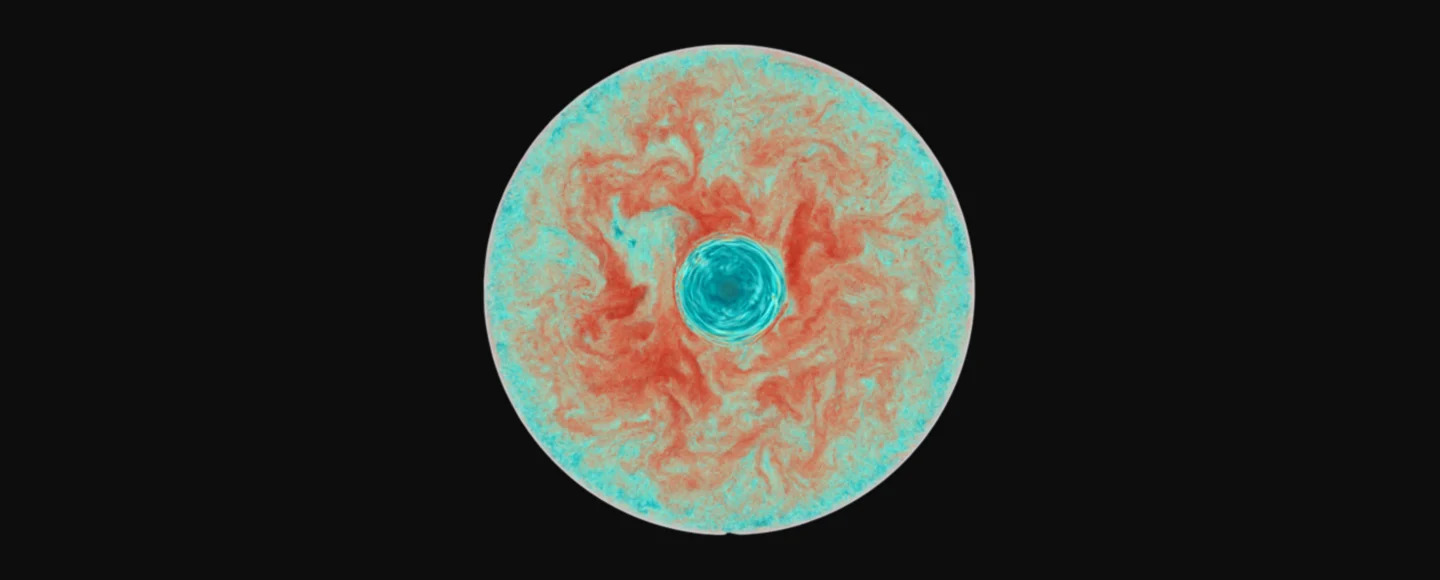
The team modeled the magneto-thermal evolution of neutron stars using advanced numerical simulations. Their findings highlight the Tayler-Spruit dynamo, triggered by the fallback of supernova material, as a crucial factor in the development of these magnetic fields. This discovery resolves a decade-old puzzle that has intrigued astrophysicists since identifying low-field magnetars in 2010.

Decoding the magnetic marvels of the Universe

Dr. Andrei Igoshev, the lead author and a research fellow at Newcastle University's School of Mathematics, Statistics, and Physics, emphasized the significance of this discovery:

"Neutron stars are born from supernova explosions. While most of the outer layers of a massive star are expelled during the explosion, some material falls back onto the newly formed neutron star, causing it to spin faster. Our study demonstrates that this process is fundamental in generating magnetic fields through the Tayler-Spruit dynamo mechanism. Although this mechanism was theorized nearly 25 years ago, we have only now been able to reproduce it using computer simulations. The magnetic field generated this way is incredibly complex, with an internal field much stronger than we observe externally."

Magnetars are known for their astonishingly strong magnetic fields, which can be hundreds of trillions more potent than Earth's. These intense fields make magnetars some of the brightest and most variable X-ray radiation sources in the Universe. Surprisingly, some neutron stars with significantly weaker magnetic fields exhibit similar X-ray emissions, classifying them as low-field magnetars. This study provides the most apparent evidence that a dynamo process—where the movement of plasma generates magnetic fields—can explain their formation.

Supercomputer simulations and the future of neutron star research

This discovery not only answers a long-standing question in astrophysics but also paves the way for future research into the intricate nature of neutron star magnetism. Dr. Igoshev is leading the establishment of a new research group at Newcastle University dedicated to further exploring these fascinating cosmic objects. By harnessing the power of supercomputer simulations, his team aims to investigate the hidden mechanisms that govern the life cycles of neutron stars.

"The universe is full of mysteries waiting to be unraveled," Dr. Igoshev noted. "With advanced simulations and innovative research, we are one step closer to understanding the incredible forces shaping the cosmos."

This breakthrough highlights the power of collaboration and cutting-edge technology in unveiling the secrets of the Universe, inspiring the next generation of scientists to push the boundaries of astrophysical exploration.