

SUPERCOMPUTING NEWS SUPERCOMPUTING NEWS
    • MEDIA KIT
    • MOST READ
    • RSS FEED
    • ACADEMIA
    • AEROSPACE
    • APPLICATIONS
    • ASTRONOMY
    • AUTOMOTIVE
    • BIG DATA
    • BIOLOGY
    • CHEMISTRY
    • CLIENTS
    • CLOUD
    • DEFENSE
    • DEVELOPER TOOLS
    • EARTH SCIENCES
    • ECONOMICS
    • ENGINEERING
    • ENTERTAINMENT
    • GAMING
    • GOVERNMENT
    • HEALTH
    • OIL & GAS
    • INDUSTRY
    • INTERCONNECTS
    • MANUFACTURING
    • MIDDLEWARE
    • MOVIES
    • NETWORKS
    • PHYSICS
    • PROCESSORS
    • RETAIL
    • SCIENCE
    • STORAGE
    • SYSTEMS
    • VISUALIZATION
    • AcyMailing subscription form

    • ADD YOUR VIDEOS
    • MANAGE VIDEOS
    • CONVERSATION INBOX
    • SOCIAL ADVERTISER
    • SOCIAL NETWORK VIDEOS
    • SURVEYS
    • GROUPS
    • PAGES
    • MARKETPLACE LISTINGS
    • APPLICATIONS BROWSER
    • PRIVACY CONFIRM REQUEST
    • PRIVACY CREATE REQUEST
    • LEADERBOARD
    • POINTS LISTING
      • BADGES
    • TRADE SHOWS
Sign In
Darkening oceans: New study reveals alarming decline in marine light zones
Tyler O'Neal, Staff Editor LATEST May 27, 2025, 7:00 am

Darkening oceans: New study reveals alarming decline in marine light zones

A groundbreaking study by researchers at the University of Plymouth and Plymouth Marine Laboratory in the UK has used supercomputing to unveil a significant and concerning trend: over the past two decades, more than 21% of the global ocean has experienced a reduction in the depth of its photic zones—the sunlit upper layers crucial for marine life.

Shrinking Sunlit Habitats

The photic zone, where sunlight penetrates the ocean, supports approximately 90% of marine life by enabling photosynthesis in organisms like phytoplankton. These microscopic plants form the base of the aquatic food web and are vital for carbon cycling and oxygen production. The study found that in some regions, the depth of the photic zone has decreased by over 50 meters, with 2.6% of the ocean experiencing reductions exceeding 100 meters.

Causes of Ocean Darkening

The research attributes this darkening to several factors:

- Coastal Runoff: Increased agricultural runoff and rainfall wash nutrients and sediments into the ocean, promoting algal blooms that reduce water clarity.

- Climate Change: Changes in sea surface temperatures and ocean currents affect the distribution and composition of phytoplankton, impacting light penetration.

- Sediment Loading: Increased sediment influx from rivers and coastal erosion contributes to murkier waters.

Implications for Marine Ecosystems

Dr. Thomas Davies, Associate Professor of Marine Conservation at the University of Plymouth, emphasized the ecological implications: "If the photic zone is reduced by around 50 meters in large areas of the ocean, animals that require light will be forced closer to the surface, where they will have to compete for food and other necessary resources. This could bring about fundamental changes in the entire marine ecosystem."

Global Patterns and Regional Variations

While the overall trend indicates a darkening ocean, the study also observed that approximately 10% of the ocean has become lighter over the same period. Notably, areas such as the top of the Gulf Stream and regions around the Arctic and Antarctic—zones experiencing significant climate-induced changes—show prominent reductions in photic zone depth.

Call to Action

These findings underscore the need for increased attention to oceanic changes in climate models and conservation strategies. Protecting the integrity of photic zones is essential not only for marine biodiversity but also for the services oceans provide to humanity, including oxygen production, climate regulation, and food resources.

As the oceans continue to evolve under the pressures of human activity and climate change, understanding and mitigating the impacts of diminishing light zones will be critical for sustaining marine ecosystems and the benefits they offer.
Black hole scattering study raises eyebrows

Black hole scattering study raises eyebrows

Tyler O'Neal, Staff Editor LATEST May 15, 2025, 8:26 am

A recent study from Queen Mary University of London claims to offer insights into black hole scattering and gravitational waves. The research suggests that complex mathematical structures, known as Calabi–Yau manifolds, emerge in high-precision calculations of black hole interactions. While the study has garnered attention, some experts urge caution, questioning the practical implications of these findings.

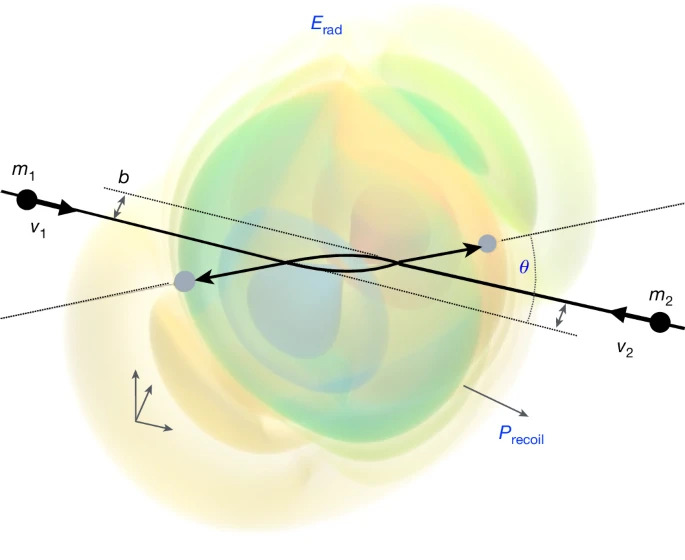
The researchers employed advanced supercomputing techniques, adapting methods from particle physics to model gravitational interactions between massive celestial bodies. Their calculations, reaching the fifth order in Newton's gravitational coupling, revealed unexpected mathematical patterns. Specifically, functions related to Calabi–Yau manifolds appeared in the solutions for radiated energy during black hole scatterings. These manifolds, often associated with string theory, are intricate, multi-dimensional shapes that have been used to describe the compactified dimensions of the universe.

While the study's mathematical elegance is undeniable, its physical relevance remains uncertain. Dr. Tessa Baker, a cosmologist at Queen Mary University who was not involved in the study, commented, "The appearance of Calabi–Yau structures in these calculations is intriguing, but we must be careful not to overinterpret their significance without empirical evidence."

Critics also point out that the study's reliance on high-order perturbative methods may limit its applicability to real-world astrophysical scenarios. Dr. Alan Thompson, an astrophysicist at the University of Cambridge, noted, "These calculations are performed under idealized conditions that may not accurately reflect the complexities of actual black hole interactions."

Furthermore, the practical detection of gravitational waves resulting from such scattering events poses significant challenges. Current detectors like LIGO and Virgo are primarily tuned to observe waves from binary mergers, not the subtler signals predicted by this study. While future observatories, such as the Laser Interferometer Space Antenna (LISA), aim to broaden detection capabilities, observing these phenomena remains speculative.

In conclusion, while the study presents mathematically sophisticated models that contribute to our theoretical understanding of gravitational interactions, the lack of empirical validation and practical detection methods warrants a cautious interpretation of its findings. As with many theoretical advancements, the true test will lie in their alignment with observational data, which remains to be seen.

New study tracks pollution worldwide

New study tracks pollution worldwide

Tyler O'Neal, Staff Editor LATEST May 8, 2025, 9:00 am

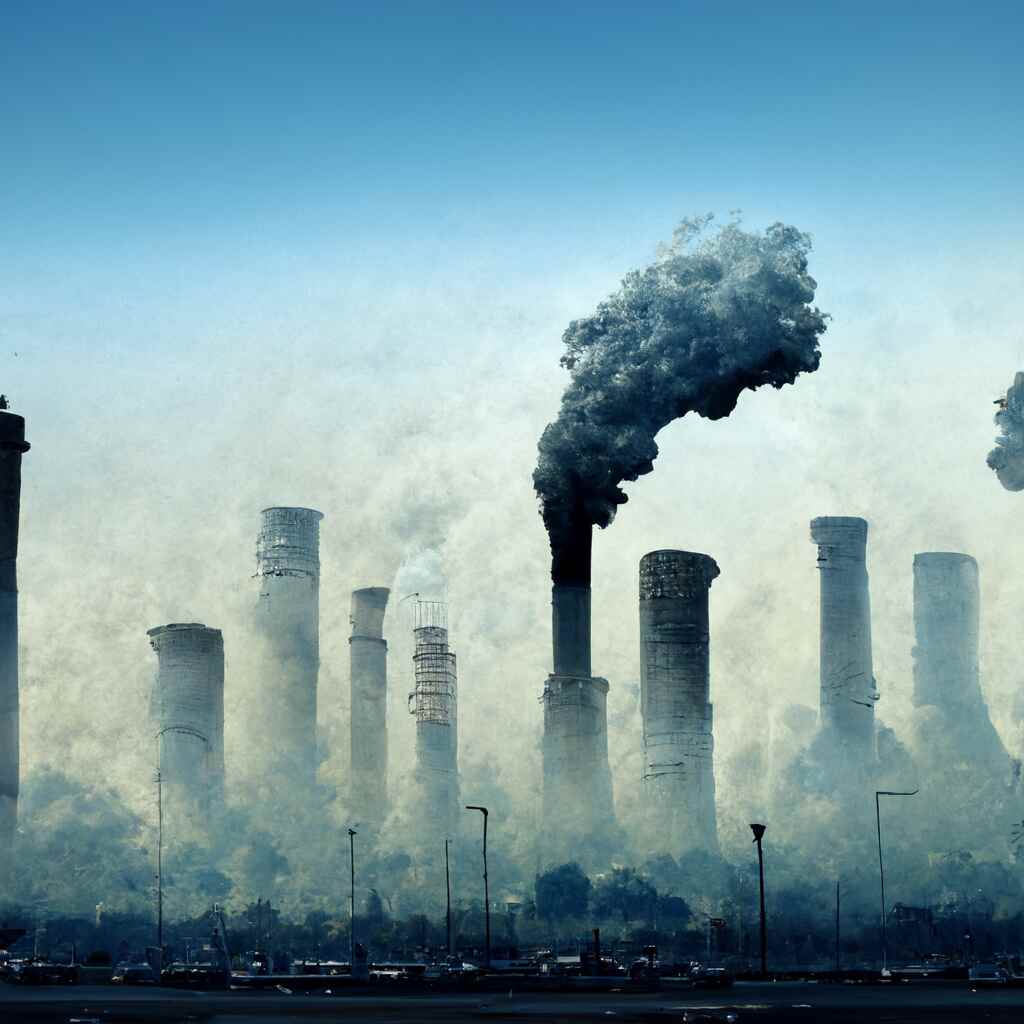
A groundbreaking study has revealed a concerning picture of urban air quality and carbon emissions in 13,189 cities around the world. Using advanced supercomputing and geospatial modeling, researchers have carefully mapped the concentrations of fine particulate matter (PM₂.₅), nitrogen dioxide (NO₂), ozone (O₃), and fossil-fuel CO₂ emissions from 2005 to 2019. The findings are alarming: although some high-income countries have made modest reductions, the global trend shows a troubling increase of 6% in ozone levels and a 4% rise in CO₂ emissions. PM₂.₅ levels have stagnated, and NO₂ has seen only a negligible decrease of 1%.

This comprehensive analysis, led by researchers from the George Washington University, highlights the persistent nature of urban pollution. Despite some localized improvements, over half of the surveyed cities showed positive correlations among all pollutants, indicating a widespread failure to separate economic growth from environmental degradation. The study emphasizes that urban areas, which account for over 70% of global greenhouse gas emissions, are central to the climate crisis. unnam22222ed

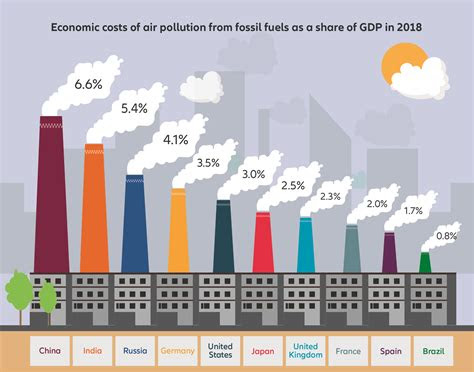
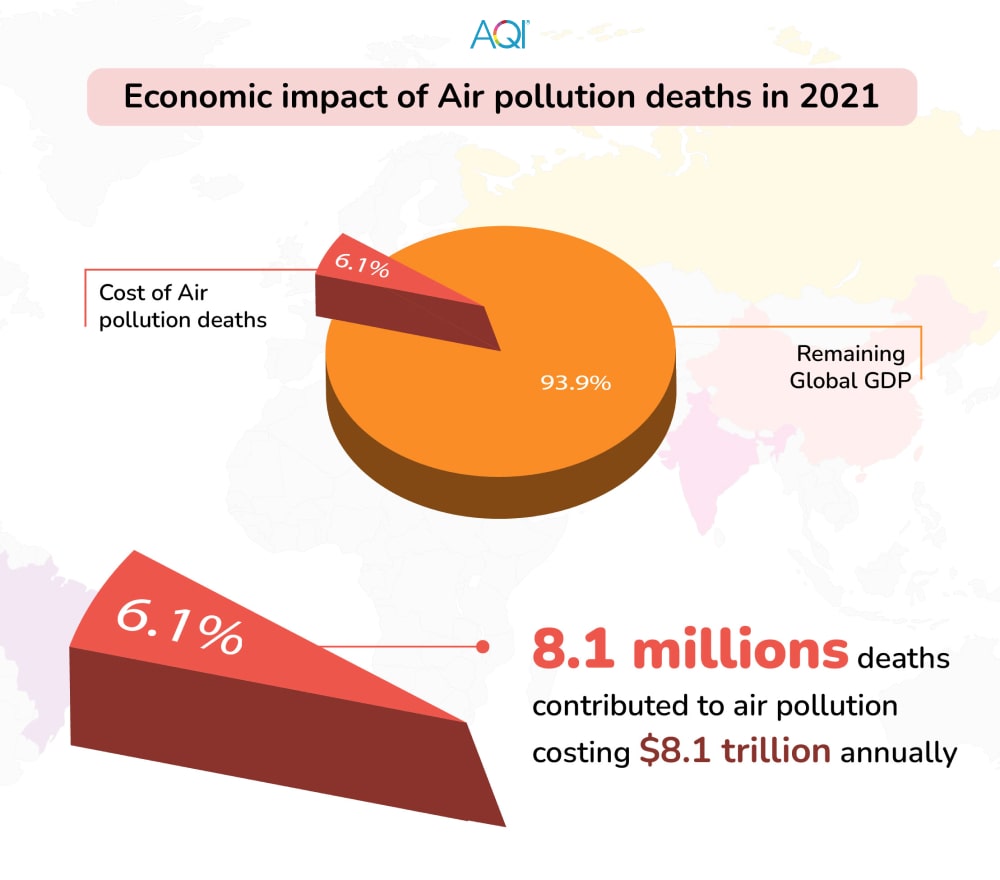
The economic consequences are equally alarming. Air pollution imposes a significant burden on global economies, with the World Bank estimating costs exceeding $8 trillion annually, over 6% of global GDP. These expenses arise from healthcare costs, reduced labor productivity, and lower agricultural yields. In the United States alone, air pollution-related damages were estimated at $790 billion in 2014, representing about 5% of the nation’s GDP. Air pollution cost in Global GDP 1

Furthermore, the health impacts are severe. Air pollution contributes to approximately 7 million premature deaths each year, making it the second leading risk factor for death globally after high blood pressure. The study's findings indicate that without aggressive and immediate policy interventions, these numbers are likely to rise, worsening public health crises and economic instability.

While supercomputing has offered an unprecedented view of the scale of urban pollution, the data suggests a bleak future. The study serves as a call to action for policymakers and global leaders to implement stringent environmental regulations and invest in sustainable urban planning. Without decisive action, the intertwined challenges of air pollution and climate change will continue to threaten planetary and human health.

  1. Intel's recent developments highlight the company's ongoing struggles amid leadership changes, financial difficulties
  2. AI meets DNA: Scientists create custom gene editors with machine learning
  3. German-built simulations offer hope for honeybee conservation
  4. NASA shows how advanced algorithms transform raw data into meaningful models
  5. AI-generated 'synthetic scarred hearts' revolutionize atrial fibrillation treatment
  6. Tulane researchers use AI to improve diagnosis of drug-resistant infections
  7. Unraveling the mystery of intermediate-mass black holes: A Chinese perspective

Page 76 of 80

  • 71
  • 72
  • 73
  • 74
  • 75
  • 76
  • 77
  • 78
  • 79
  • 80
POPULAR RIGHT NOW
  • Intel’s data center revenue jumps 78% as Xeon demand returns, but the recovery still needs proof
    Intel’s data center revenue jumps 78% as Xeon demand returns, but the recovery still needs proof
  • 1.19 million Blackwell GPUs, 946 megawatts: Colossus 2 exposes the power gap in the AI supercomputing race
    1.19 million Blackwell GPUs, 946 megawatts: Colossus 2 exposes the power gap in the AI supercomputing race
  • AWS surges 39%, but Amazon’s $220 billion AI spending plan puts returns under the microscope
    AWS surges 39%, but Amazon’s $220 billion AI spending plan puts returns under the microscope
  • Anthropic’s $63 billion compute deal raises a harder question: Who carries the risk?
    Anthropic’s $63 billion compute deal raises a harder question: Who carries the risk?
  • Kazakhstan wants to turn energy into intelligence: NVIDIA’s 45,000 GPU bet faces a power test
    Kazakhstan wants to turn energy into intelligence: NVIDIA’s 45,000 GPU bet faces a power test
  • Microsoft's Texas AI supercomputing retreat raises questions about Nscale's $103 billion infrastructure backlog
    Microsoft's Texas AI supercomputing retreat raises questions about Nscale's $103 billion infrastructure backlog
  • Thwaites Glacier: Why better physics matters more than finer meshes in supercomputing
    Thwaites Glacier: Why better physics matters more than finer meshes in supercomputing
  • A billion years beneath our feet: Supercomputer simulations point to a deep Earth origin for the Great Unconformity
    A billion years beneath our feet: Supercomputer simulations point to a deep Earth origin for the Great Unconformity
  • AI supercomputers are hitting a networking wall. Marvell's $115 billion bet on light could change everything.
    AI supercomputers are hitting a networking wall. Marvell's $115 billion bet on light could change everything.
  • Google's $17 billion Cheyenne AI campus: A supercomputing power strategy built on fuel cells, natural gas, unanswered questions
    Google's $17 billion Cheyenne AI campus: A supercomputing power strategy built on fuel cells, natural gas, unanswered questions
THIS YEAR'S MOST READ
  • Wall Street wants to trade supercomputing power like oil
    Wall Street wants to trade supercomputing power like oil
  • Beamforming the future: BeammWave's 6G push signals the rise of orbital-terrestrial wireless networks
    Joakim Axmon
    Joakim Axmon
  • Silicon spintronics brings the P-computer closer to reality
    Microscope image of a semiconductor-integrated spintronic test chip developed by researchers at Tohoku University and NIST. The device demonstrates the first silicon-integrated probabilistic bit (p-bit), a key building block for future large-scale probabilistic computers designed for AI and optimization workloads.
    Microscope image of a semiconductor-integrated spintronic test chip developed by researchers at Tohoku University and NIST. The device demonstrates the first silicon-integrated probabilistic bit (p-bit), a key building block for future large-scale probabilistic computers designed for AI and optimization workloads.
  • AI breaks conservation barriers: Australia’s Wildlife Observatory leverages supercomputing to protect biodiversity
    AI breaks conservation barriers: Australia’s Wildlife Observatory leverages supercomputing to protect biodiversity
  • Hidden order, revealed at scale: Supercomputing, electron ptychography uncover the inner workings of relaxor ferroelectrics
    Hidden order, revealed at scale: Supercomputing, electron ptychography uncover the inner workings of relaxor ferroelectrics
  • Physics-trained ‘Digital Super Brain’ learns from supercomputers to accelerate discovery
    Physics-trained ‘Digital Super Brain’ learns from supercomputers to accelerate discovery
  • Cosmic ambition at scale: UK’s supercomputer unlocks a 2.5 petabytes universe
    Cosmic ambition at scale: UK’s supercomputer unlocks a 2.5 petabytes universe
  • Memory has become the new compute: Why Micron, SK Hynix crossing $1 trillion matters to supercomputing
    Memory has become the new compute: Why Micron, SK Hynix crossing $1 trillion matters to supercomputing
  • Huawei’s Tau Scaling ambition tests the limits of post-Moore semiconductor reality
    He Tingbo from HUAWEI delivered a keynote speech titled "New Semiconductor Path in Practice"
    He Tingbo from HUAWEI delivered a keynote speech titled "New Semiconductor Path in Practice"
  • Intel's Q1 results signal supercomputing surge driving Xeon momentum
    Intel's Q1 results signal supercomputing surge driving Xeon momentum
MOST READ OF ALL-TIME
  • Largest Computational Biology Simulation Mimics The Ribosome
    Details
    113412
    The amino acid (green) slithers into the chemical reaction center, moving through an evolutionarily ancient corridor of the ribosome (purple). The amino acid is delivered to the reaction core by the transfer RNA molecule (yellow).
    The amino acid (green) slithers into the chemical reaction center, moving through an evolutionarily ancient corridor of the ribosome (purple). The amino acid is delivered to the reaction core by the transfer RNA molecule (yellow).
  • Silicon 'neurons' may add a new dimension to chips
    Details
    83286
    Silicon 'neurons' may add a new dimension to chips
  • Linux Networx Accelerators Expected to Drive up to 4x Price/Performance
    Details
    76862
  • Complex Concepts That Really Add Up
    Details
    75840
    Complex Concepts That Really Add Up
  • Blue Sky Studios Donates Animation SuperComputer to Wesleyan
    Details
    69496
    Each rack holds 52 Angstrom Microsystem-brand “blades,” with a memory footprint of 12 or 24 gigabytes each. (Photos by Olivia Bartlett Drake)
    Each rack holds 52 Angstrom Microsystem-brand “blades,” with a memory footprint of 12 or 24 gigabytes each. (Photos by Olivia Bartlett Drake)
  • Humanities, HPC connect at NERSC
    Details
    59343
  • TeraGrid ’09 'Call for Participation'
    Details
    56269
  • Turbulence responsible for black holes' balancing act
    Details
    53776
  • Cray Wins $52 Million SuperComputer Contract
    Details
    51395
  • SDSC Researchers Accurately Predict Protein Docking
    Details
    47798
  • FRONTPAGE
  • LATEST
  • POPULAR
  • REGISTER
  • SOCIAL
  • VIDEO
  • SUBSCRIPTION
  • RSS
  • GUIDELINES
  • PRIVACY
  • TOS
  • ABOUT
  • +1 (816) 799-4488
  • editorial@supercomputingonline.com
© 2001 - 2026 SuperComputingOnline.com, LLC. All rights reserved. This material may not be published, broadcast, rewritten or redistributed without permission.
Sign In
  • FRONT PAGE
  • LATEST
    • MEDIA KIT
    • MOST READ
    • RSS FEED
    • ACADEMIA
    • AEROSPACE
    • APPLICATIONS
    • ASTRONOMY
    • AUTOMOTIVE
    • BIG DATA
    • BIOLOGY
    • CHEMISTRY
    • CLIENTS
    • CLOUD
    • DEFENSE
    • DEVELOPER TOOLS
    • EARTH SCIENCES
    • ECONOMICS
    • ENGINEERING
    • ENTERTAINMENT
    • HEALTH
    • INDUSTRY
    • INTERCONNECTS
    • GAMING
    • GOVERNMENT
    • MANUFACTURING
    • MIDDLEWARE
    • MOVIES
    • NETWORKS
    • OIL & GAS
    • PHYSICS
    • PROCESSORS
    • RETAIL
    • SCIENCE
    • STORAGE
    • SYSTEMS
    • VISUALIZATION
  • VIDEOS
    • ADD YOUR VIDEOS
    • MANAGE VIDEOS
  • COMMUNITY
    • TRADE SHOWS
    • SOCIAL NETWORK VIDEOS
    • SURVEYS
    • APPLICATIONS BROWSER
    • CONVERSATION INBOX
    • SOCIAL ADVERTISER
    • GROUPS
    • MARKETPLACE LISTINGS
    • PAGES
    • LEADERBOARD
    • POINTS LISTING
      • BADGES
    • PRIVACY CONFIRM REQUEST
    • PRIVACY CREATE REQUEST

Hey there! We noticed you’re using an ad blocker.