SUPERCOMPUTING NEWS SUPERCOMPUTING NEWS
    • MEDIA KIT
    • MOST READ
    • RSS FEED
    • ACADEMIA
    • AEROSPACE
    • APPLICATIONS
    • ASTRONOMY
    • AUTOMOTIVE
    • BIG DATA
    • BIOLOGY
    • CHEMISTRY
    • CLIENTS
    • CLOUD
    • DEFENSE
    • DEVELOPER TOOLS
    • EARTH SCIENCES
    • ECONOMICS
    • ENGINEERING
    • ENTERTAINMENT
    • GAMING
    • GOVERNMENT
    • HEALTH
    • OIL & GAS
    • INDUSTRY
    • INTERCONNECTS
    • MANUFACTURING
    • MIDDLEWARE
    • MOVIES
    • NETWORKS
    • PHYSICS
    • PROCESSORS
    • RETAIL
    • SCIENCE
    • STORAGE
    • SYSTEMS
    • VISUALIZATION
    • AcyMailing subscription form

    • ADD YOUR VIDEOS
    • MANAGE VIDEOS
    • CONVERSATION INBOX
    • SOCIAL ADVERTISER
    • SOCIAL NETWORK VIDEOS
    • SURVEYS
    • GROUPS
    • PAGES
    • MARKETPLACE LISTINGS
    • APPLICATIONS BROWSER
    • PRIVACY CONFIRM REQUEST
    • PRIVACY CREATE REQUEST
    • LEADERBOARD
    • POINTS LISTING
      • BADGES
    • TRADE SHOWS
Sign In
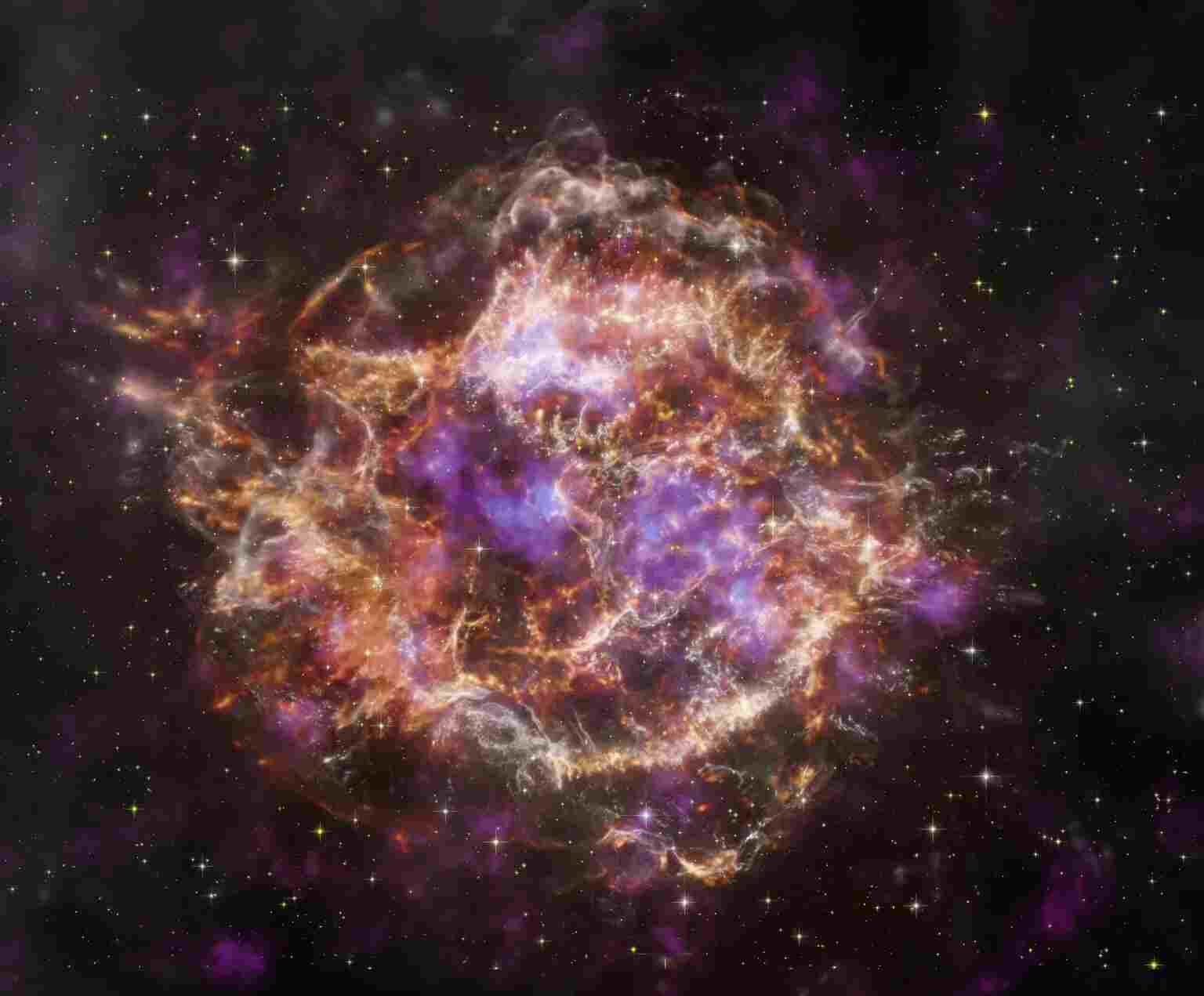
Cassiopeia A (Cas A)
Tyler O'Neal, Staff Editor LATEST April 17, 2025, 10:00 am

NASA shows how advanced algorithms transform raw data into meaningful models

NASA’s Chandra X-ray Observatory has introduced new three-dimensional (3D) models of cosmic objects, providing valuable insights into the universe's mysteries. These models, created with advanced theoretical frameworks and computational algorithms, allow scientists and the public to explore stellar remnants and young stars in detail. 

The project focuses on four celestial objects: the supernova remnants Cassiopeia A (Cas A), G292.0+1.8, the Cygnus Loop, and the young star BP Tau. By integrating data from space-based telescopes like Chandra, researchers have produced accurate 3D representations that illustrate these objects' complex structures and evolution.

Central to this initiative are computational algorithms that analyze X-ray emissions and other spectral data, modeling elements and energy distribution within these cosmic bodies. This includes insights into the "Green Monster" in Cas A, an oxygen-rich region with more straightforward origins.

Beyond visualization, these models are valuable research tools, enabling simulations and hypothesis testing about stellar evolution. They are also available for 3D printing, allowing educators and enthusiasts to engage with these celestial representations.

This project highlights the collaboration between observational astronomy and computational science, showcasing how advanced algorithms can transform raw data into meaningful interactive models. Such interdisciplinary approaches will be crucial for understanding the cosmos as technology progresses.

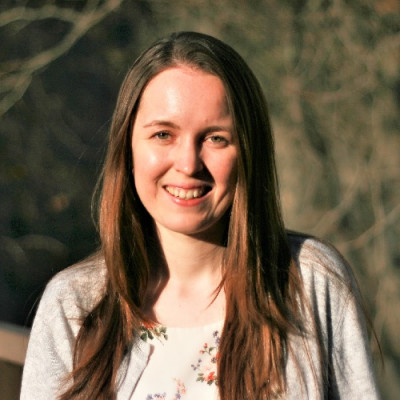
Dr Caroline Roney
Dr Caroline Roney

AI-generated 'synthetic scarred hearts' revolutionize atrial fibrillation treatment

Tyler O'Neal, Staff Editor LATEST April 16, 2025, 8:00 am

In a groundbreaking development, researchers at Queen Mary University of London have unveiled an artificial intelligence (AI) tool capable of generating synthetic yet medically accurate models of fibrotic heart tissue. This innovation promises to enhance treatment planning for atrial fibrillation (AF), a common heart rhythm disorder affecting approximately 1.4 million individuals in the UK.

AF is characterized by irregular heartbeats caused by scarring (fibrosis) in the heart tissue, which disrupts electrical signals. Traditionally, the extent and pattern of this scarring are evaluated using specialized MRI scans known as Late Gadolinium Enhancement MRI (LGE-MRI). However, the limited availability of high-quality imaging data has presented challenges in developing predictive models for treatment outcomes.

The research team trained their AI model using 100 real LGE-MRI scans from AF patients to address this issue. The AI then generated 100 synthetic fibrosis patterns that closely mimic heart scarring. These virtual models were incorporated into 3D heart simulations to assess the effectiveness of various ablation strategies—a standard treatment that involves creating small scars to block erratic electrical signals.

The results were promising. Predictions based on the AI-generated models proved nearly as reliable as those using actual patient data. This approach preserves patient privacy and allows for exploring a wider range of cardiac scenarios, facilitating more personalized treatment plans.

Dr. Alexander Zolotarev, the study's first author, emphasized AI's supportive role in clinical settings: "This isn't about replacing doctors' judgment. It's about providing clinicians with a sophisticated simulator to test different treatment approaches on a digital model of each patient's unique heart structure before conducting the procedure." b8b43306ccbc25c8f77ce162f0256321

This initiative is part of Dr. Caroline Roney's UKRI Future Leaders Fellowship project, which aims to develop personalized 'digital twin' heart models for AF patients. Dr. Roney highlighted the significance of this research: "We're very excited about this work as it addresses the challenge of limited clinical data for cardiac digital twin models. Our key development enables large-scale in-silico trials and patient-specific modeling to create more personalized treatments for atrial fibrillation patients."

Given that ablation procedures fail in about half of AF cases, this technology has the potential to significantly reduce repeat interventions, ultimately improving patient outcomes and optimizing healthcare resources.

Tulane researchers use AI to improve diagnosis of drug-resistant infections

Tulane researchers use AI to improve diagnosis of drug-resistant infections

Tyler O'Neal, Staff Editor LATEST April 12, 2025, 4:00 am

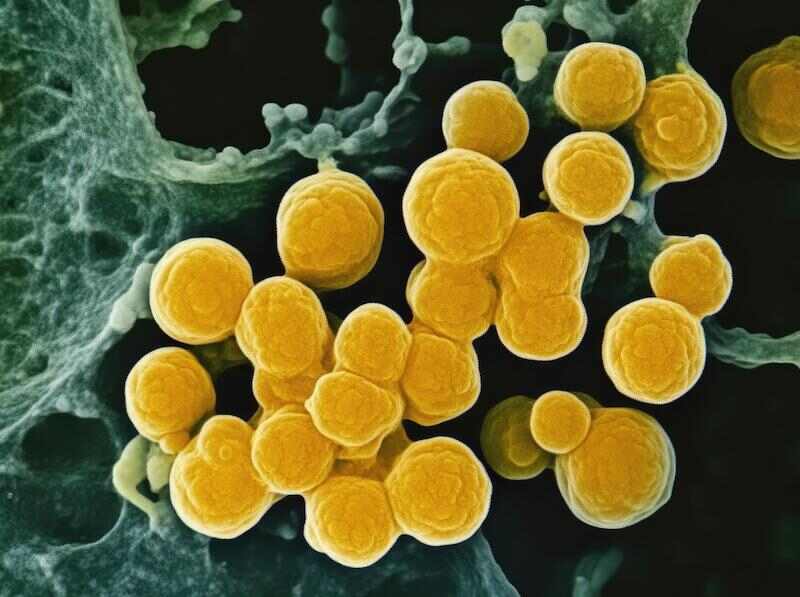
In a time when drug-resistant infections pose a significant threat to global health, the need for innovative solutions has never been more critical. Recent advancements in technology have provided a glimmer of hope, as researchers at Tulane University have introduced a groundbreaking artificial intelligence (AI)-based approach aimed at revolutionizing the diagnosis and treatment of these challenging infections.

The problem of drug-resistant infections, primarily driven by pathogens like tuberculosis and staphylococcus, continues to worsen, resulting in a serious healthcare crisis. The complexities involved—such as rising treatment costs and higher mortality rates—highlight the urgent need for advanced diagnostic tools. According to the World Health Organization, there were approximately 450,000 cases of multidrug-resistant tuberculosis in 2021, with success rates for treatment plummeting to just 57%.

To address this pressing issue, Tulane University scientists have developed an innovative AI-driven method designed to identify genetic markers of antibiotic resistance in notorious pathogens like Mycobacterium tuberculosis and Staphylococcus aureus. This cutting-edge approach introduces the Group Association Model (GAM)—a novel computational model enhanced by machine learning algorithms.

Unlike traditional diagnostic tools that often struggle to accurately determine resistance mechanisms, GAM represents a paradigm shift by analyzing the complete genetic profile of bacteria to identify the genetic mutations responsible for antibiotic resistance. Dr. Tony Hu, the Weatherhead Presidential Chair in Biotechnology Innovation and the director of the Tulane Center for Cellular & Molecular Diagnostics, describes this methodology as a way to uncover bacteria's resistance patterns without relying on preconceived notions.

The strength of GAM lies in its comprehensive analysis of whole genome sequences, allowing scientists to compare bacterial strains with varying resistance profiles. By identifying genetic changes that indicate resistance to specific drugs, this innovative model not only improves diagnostic accuracy but also reduces the occurrence of false positives, which can lead to inappropriate treatment decisions.

Additionally, GAM's integration with machine learning enhances its predictive capabilities, especially when dealing with limited or incomplete data. Validation studies conducted on clinical samples from China have shown that this advanced model significantly outperforms existing methods based on WHO guidelines in predicting resistance to critical front-line antibiotics.

Beyond its immediate applications in healthcare, the implications of this AI-powered diagnostic tool extend beyond medical laboratories. The potential to apply this methodology to other bacterial strains or even to agricultural contexts—where antibiotic resistance is increasingly problematic—underscores the versatility and impact of Tulane's pioneering research.

As lead author Julian Saliba aptly notes, combating drug-resistant infections requires a proactive approach. This innovative tool serves as a vital ally in this ongoing battle. By deepening our understanding of resistance mechanisms and facilitating early intervention, Tulane's novel AI-based method paves the way for personalized treatment regimens and heralds a new era in the fight against drug-resistant infections.


  1. Unraveling the mystery of intermediate-mass black holes: A Chinese perspective
  2. Woolpert, Teren leverage geospatial tech for global energy solutions
  3. AI model predicts multi-resistance in bacteria: Unveiling the power of big data
  4. Nvidia sales grow 78% on AI demand

Page 78 of 80

  • 71
  • 72
  • 73
  • 74
  • 75
  • 76
  • 77
  • 78
  • 79
  • 80
POPULAR RIGHT NOW
  • Intel’s data center revenue jumps 78% as Xeon demand returns, but the recovery still needs proof
    Intel’s data center revenue jumps 78% as Xeon demand returns, but the recovery still needs proof
  • 1.19 million Blackwell GPUs, 946 megawatts: Colossus 2 exposes the power gap in the AI supercomputing race
    1.19 million Blackwell GPUs, 946 megawatts: Colossus 2 exposes the power gap in the AI supercomputing race
  • AWS surges 39%, but Amazon’s $220 billion AI spending plan puts returns under the microscope
    AWS surges 39%, but Amazon’s $220 billion AI spending plan puts returns under the microscope
  • Anthropic’s $63 billion compute deal raises a harder question: Who carries the risk?
    Anthropic’s $63 billion compute deal raises a harder question: Who carries the risk?
  • Kazakhstan wants to turn energy into intelligence: NVIDIA’s 45,000 GPU bet faces a power test
    Kazakhstan wants to turn energy into intelligence: NVIDIA’s 45,000 GPU bet faces a power test
  • Microsoft's Texas AI supercomputing retreat raises questions about Nscale's $103 billion infrastructure backlog
    Microsoft's Texas AI supercomputing retreat raises questions about Nscale's $103 billion infrastructure backlog
  • Thwaites Glacier: Why better physics matters more than finer meshes in supercomputing
    Thwaites Glacier: Why better physics matters more than finer meshes in supercomputing
  • A billion years beneath our feet: Supercomputer simulations point to a deep Earth origin for the Great Unconformity
    A billion years beneath our feet: Supercomputer simulations point to a deep Earth origin for the Great Unconformity
  • AI supercomputers are hitting a networking wall. Marvell's $115 billion bet on light could change everything.
    AI supercomputers are hitting a networking wall. Marvell's $115 billion bet on light could change everything.
  • Google's $17 billion Cheyenne AI campus: A supercomputing power strategy built on fuel cells, natural gas, unanswered questions
    Google's $17 billion Cheyenne AI campus: A supercomputing power strategy built on fuel cells, natural gas, unanswered questions
THIS YEAR'S MOST READ
  • Wall Street wants to trade supercomputing power like oil
    Wall Street wants to trade supercomputing power like oil
  • Beamforming the future: BeammWave's 6G push signals the rise of orbital-terrestrial wireless networks
    Joakim Axmon
    Joakim Axmon
  • Silicon spintronics brings the P-computer closer to reality
    Microscope image of a semiconductor-integrated spintronic test chip developed by researchers at Tohoku University and NIST. The device demonstrates the first silicon-integrated probabilistic bit (p-bit), a key building block for future large-scale probabilistic computers designed for AI and optimization workloads.
    Microscope image of a semiconductor-integrated spintronic test chip developed by researchers at Tohoku University and NIST. The device demonstrates the first silicon-integrated probabilistic bit (p-bit), a key building block for future large-scale probabilistic computers designed for AI and optimization workloads.
  • AI breaks conservation barriers: Australia’s Wildlife Observatory leverages supercomputing to protect biodiversity
    AI breaks conservation barriers: Australia’s Wildlife Observatory leverages supercomputing to protect biodiversity
  • Hidden order, revealed at scale: Supercomputing, electron ptychography uncover the inner workings of relaxor ferroelectrics
    Hidden order, revealed at scale: Supercomputing, electron ptychography uncover the inner workings of relaxor ferroelectrics
  • Physics-trained ‘Digital Super Brain’ learns from supercomputers to accelerate discovery
    Physics-trained ‘Digital Super Brain’ learns from supercomputers to accelerate discovery
  • Cosmic ambition at scale: UK’s supercomputer unlocks a 2.5 petabytes universe
    Cosmic ambition at scale: UK’s supercomputer unlocks a 2.5 petabytes universe
  • Memory has become the new compute: Why Micron, SK Hynix crossing $1 trillion matters to supercomputing
    Memory has become the new compute: Why Micron, SK Hynix crossing $1 trillion matters to supercomputing
  • Huawei’s Tau Scaling ambition tests the limits of post-Moore semiconductor reality
    He Tingbo from HUAWEI delivered a keynote speech titled "New Semiconductor Path in Practice"
    He Tingbo from HUAWEI delivered a keynote speech titled "New Semiconductor Path in Practice"
  • Intel's Q1 results signal supercomputing surge driving Xeon momentum
    Intel's Q1 results signal supercomputing surge driving Xeon momentum
MOST READ OF ALL-TIME
  • Largest Computational Biology Simulation Mimics The Ribosome
    Details
    113412
    The amino acid (green) slithers into the chemical reaction center, moving through an evolutionarily ancient corridor of the ribosome (purple). The amino acid is delivered to the reaction core by the transfer RNA molecule (yellow).
    The amino acid (green) slithers into the chemical reaction center, moving through an evolutionarily ancient corridor of the ribosome (purple). The amino acid is delivered to the reaction core by the transfer RNA molecule (yellow).
  • Silicon 'neurons' may add a new dimension to chips
    Details
    83286
    Silicon 'neurons' may add a new dimension to chips
  • Linux Networx Accelerators Expected to Drive up to 4x Price/Performance
    Details
    76862
  • Complex Concepts That Really Add Up
    Details
    75840
    Complex Concepts That Really Add Up
  • Blue Sky Studios Donates Animation SuperComputer to Wesleyan
    Details
    69496
    Each rack holds 52 Angstrom Microsystem-brand “blades,” with a memory footprint of 12 or 24 gigabytes each. (Photos by Olivia Bartlett Drake)
    Each rack holds 52 Angstrom Microsystem-brand “blades,” with a memory footprint of 12 or 24 gigabytes each. (Photos by Olivia Bartlett Drake)
  • Humanities, HPC connect at NERSC
    Details
    59343
  • TeraGrid ’09 'Call for Participation'
    Details
    56269
  • Turbulence responsible for black holes' balancing act
    Details
    53776
  • Cray Wins $52 Million SuperComputer Contract
    Details
    51395
  • SDSC Researchers Accurately Predict Protein Docking
    Details
    47798
  • FRONTPAGE
  • LATEST
  • POPULAR
  • REGISTER
  • SOCIAL
  • VIDEO
  • SUBSCRIPTION
  • RSS
  • GUIDELINES
  • PRIVACY
  • TOS
  • ABOUT
  • +1 (816) 799-4488
  • editorial@supercomputingonline.com
© 2001 - 2026 SuperComputingOnline.com, LLC. All rights reserved. This material may not be published, broadcast, rewritten or redistributed without permission.
Sign In
  • FRONT PAGE
  • LATEST
    • MEDIA KIT
    • MOST READ
    • RSS FEED
    • ACADEMIA
    • AEROSPACE
    • APPLICATIONS
    • ASTRONOMY
    • AUTOMOTIVE
    • BIG DATA
    • BIOLOGY
    • CHEMISTRY
    • CLIENTS
    • CLOUD
    • DEFENSE
    • DEVELOPER TOOLS
    • EARTH SCIENCES
    • ECONOMICS
    • ENGINEERING
    • ENTERTAINMENT
    • HEALTH
    • INDUSTRY
    • INTERCONNECTS
    • GAMING
    • GOVERNMENT
    • MANUFACTURING
    • MIDDLEWARE
    • MOVIES
    • NETWORKS
    • OIL & GAS
    • PHYSICS
    • PROCESSORS
    • RETAIL
    • SCIENCE
    • STORAGE
    • SYSTEMS
    • VISUALIZATION
  • VIDEOS
    • ADD YOUR VIDEOS
    • MANAGE VIDEOS
  • COMMUNITY
    • TRADE SHOWS
    • SOCIAL NETWORK VIDEOS
    • SURVEYS
    • APPLICATIONS BROWSER
    • CONVERSATION INBOX
    • SOCIAL ADVERTISER
    • GROUPS
    • MARKETPLACE LISTINGS
    • PAGES
    • LEADERBOARD
    • POINTS LISTING
      • BADGES
    • PRIVACY CONFIRM REQUEST
    • PRIVACY CREATE REQUEST

Hey there! We noticed you’re using an ad blocker.