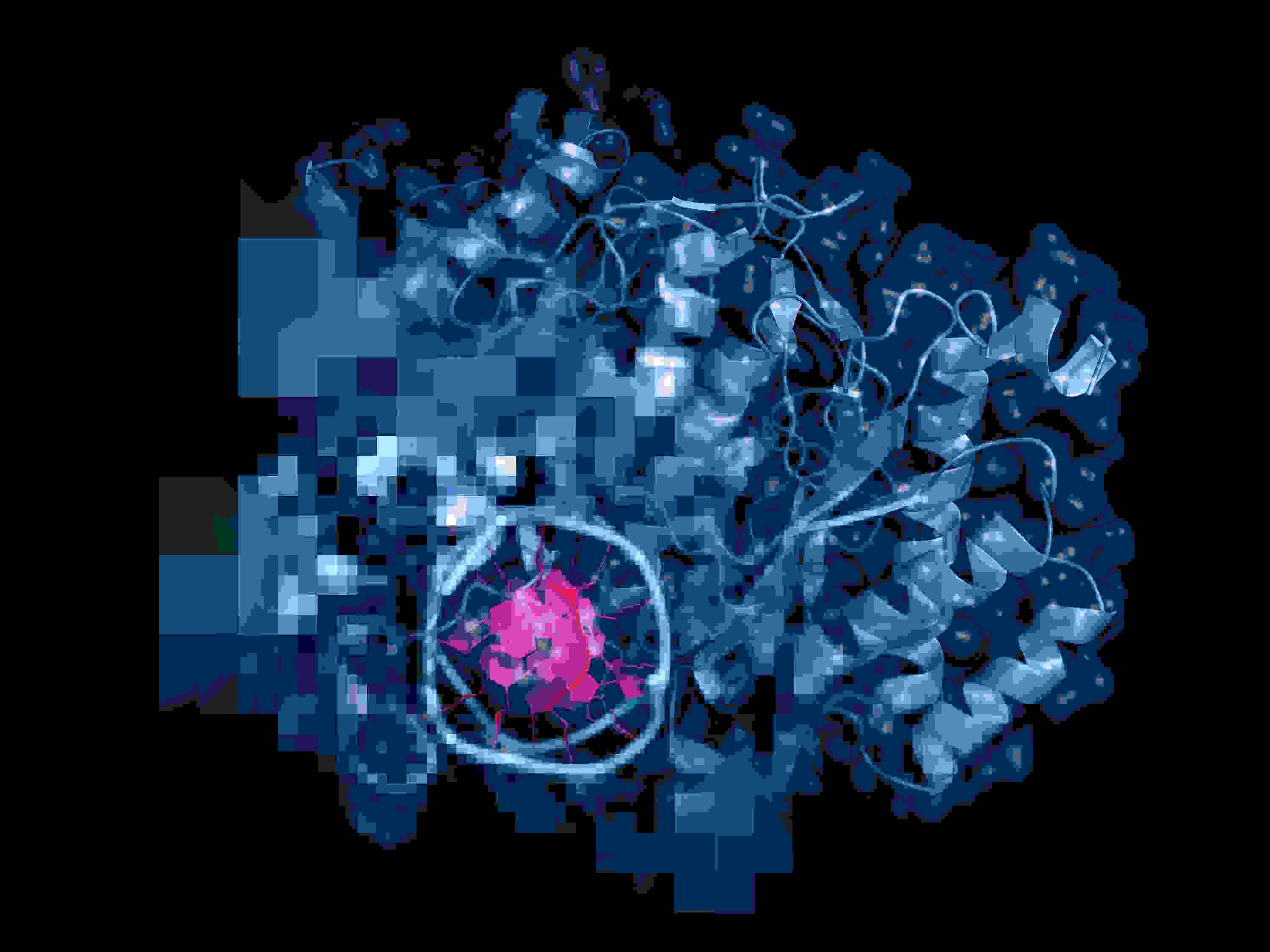
Assembly of the 3D model of the Commander Complex

The Commander Complex is a 16-subunit bundle of proteins that act as ‘postal workers’ in cells, transporting and sorting proteins. This protein transport system is implicated in many diseases including heart disease, Alzheimer’s disease, and infections.

Read more

Rensselaer prof Rhone uses AI to identify two-dimensional van der Waals magnets

A team of researchers led by Rensselaer Polytechnic Institute’s Trevor David Rhone, assistant professor in the Department of Physics, Applied Physics, and Astronomy, has identified novel van der Waals (vdW) magnets using cutting-edge tools in artificial intelligence (AI). In particular, the team identified transition metal halide vdW materials with large magnetic moments that are predicted to be chemically stable using semi-supervised learning. These two-dimensional (2D) vdW magnets have potential applications in data storage, spintronics, and even quantum supercomputing. 

Rhone specializes in harnessing materials informatics to discover new materials with unexpected properties that advance science and technology. Materials informatics is an emerging field of study at the intersection of AI and materials science. His team’s latest research was recently featured on the cover of Advanced Theory and Simulations.

2D materials, which can be as thin as a single atom, were only discovered in 2004 and have been the subject of great scientific curiosity because of their unexpected properties. 2D magnets are significant because their long-range magnetic ordering persists when they are thinned down to one or a few layers. This is due to magnetic anisotropy. The interplay with this magnetic anisotropy and low dimensionality could give rise to exotic spin degrees of freedom, such as spin textures that can be used in the development of quantum computing architectures. 2D magnets also span the full range of electronic properties and can be used in high-performance and energy-efficient devices.

Rhone and team combined high-throughput density functional theory (DFT) calculations, to determine the vdW materials’ properties, with AI to implement a form of machine learning called semi-supervised learning. Semi-supervised learning uses a combination of labeled and unlabeled data to identify patterns in data and make predictions. Semi-supervised learning mitigates a major challenge in machine learning – the scarcity of labeled data.

“Using AI saves time and money,” said Rhone. “The typical materials discovery process requires expensive simulations on a supercomputer that can take months. Lab experiments can take even longer and can be more expensive. An AI approach has the potential to speed up the materials discovery process.”

Using an initial subset of 700 DFT calculations on a supercomputer, an AI model was trained that could predict the properties of many thousands of material candidates in milliseconds on a laptop. The team then identified promising candidate vdW materials with large magnetic moments and low formation energy. Low formation energy is an indicator of chemical stability, which is an important requirement for synthesizing the material in a laboratory and subsequent industrial applications.

“Our framework can easily be applied to explore materials with different crystal structures, as well,” said Rhone. “Mixed crystal structure prototypes, such as a data set of both transition metal halides and transition metal trichalcogenides, can also be explored with this framework.”

“Dr. Rhone’s application of AI to the field of materials science continues to produce exciting results,” said Curt Breneman, dean of Rensselaer’s School of Science. “He has not only accelerated our understanding of 2D materials that have novel properties but his findings and methods are likely to contribute to new quantum computing technologies.”

Rhone was joined in the research by Romakanta Bhattarai and Haralambos Gavras of Rensselaer; Bethany Lusch and Misha Salim of Argonne National Laboratory; Marios Mattheakis, Daniel T. Larson, and Efthimios Kaxiras of Harvard University; and Yoshiharu Krockenberger of NTT Basic Research Laboratories.

A team overseen by MSK researchers Dana Pe'er and Scott Lowe combined sophisticated genetically engineered mouse models and advanced computational methods to map the earliest cell states leading to pancreatic ductal adenocarcinoma (PDAC), the most common type of pancreatic cancer.

MSK research team discovers the expansion of cell-to-cell communication drives the early development of pancreatic cancer

Discussions of cancer often stress the genetic mutations that drive disease by altering the normal function of cellular proteins. KRAS, for example, normally acts as an on/off switch for cellular proliferation, but mutations to the gene — common in lung cancer, colorectal cancer, and pancreatic cancer — cause that switch to stay on. 

Yet mutations are only half of the story.

Interactions between these genetic mutations and external factors, such as tissue injury that leads to inflammation, reshape both cells’ identities and their local environment in ways that foster cancer’s emergence and runaway growth.

In pancreatic cancer, these changes start to happen fast — within 24 to 48 hours after tissue damage. They happen predictably. And they greatly expand some cells’ ability to communicate and interact with nearby cells.

Those were the findings from a new study published May 11 in Science by an international research team led by investigators at Sloan Kettering Institute at Memorial Sloan Kettering Cancer Center (MSK) and IRB Barcelona. The research combined sophisticated genetically engineered mouse models and advanced computational methods to map the earliest cell states leading to pancreatic ductal adenocarcinoma (PDAC), the most common type of pancreatic cancer.

While the five-year survival rate for pancreatic cancer has been inching upward in recent years, it remains quite low — just 12%, according to the Pancreatic Cancer Action Network. The disease is usually not caught until the cancer is in advanced stages and, thanks in part to advances in treating other types of cancer, pancreatic cancer is the third-leading cause of cancer-related death.

The research aimed not only to shed light on the difficult-to-study early cellular events that give rise to pancreatic cancer but also to find potential opportunities for medical intervention at earlier stages of the disease.

How Plasticity Drives Cancer

The ability for cells to shed their original identity and adapt is called plasticity. And this plasticity is enhanced by inflammation, the researchers found.

“These precancerous cells gain the ability to send and receive far more signals than a normal cell,” says computational biologist Dana Pe’er, Ph.D., one of the paper’s two senior authors. “And we saw that this isn’t random — it’s structured. You see the same patterns emerge over and over when you run the experiments in different mice.”

The study was led by co-first authors Cassandra Burdziak, a doctoral student in the Pe’er Lab, and Direna Alonso-Curbelo, PhD., a former member of the lab of co-senior author Scott Lowe, Ph.D., who now leads her lab at IRB Barcelona.

To study the origins and impacts of plasticity on cells expressing a mutated version of KRAS, the scientists performed single-cell analyses on normal, inflamed, premalignant, and malignant tissues using a genetically engineered mouse model designed to accurately recreate many aspects of pancreatic cancer in humans — from its earliest beginnings to metastasis.

“These models allowed us to capture the earliest changes in pancreatic epithelial cells as they progressed from a healthy state toward a malignant state,” says Dr. Lowe, a Howard Hughes Medical Institute Investigator and Chair of the Cancer Biology and Genetics Program at the Sloan Kettering Institute. The single-cell analyses allowed researchers to tease apart the characteristics of sub-populations of individual cells within the pancreas at each stage of progression and how their interactions further drive the progression.

“This project required a significant amount of computational innovation, most of it led by Cassandra,” notes Pe’er, who is also a Howard Hughes Medical Institute Investigator and who heads the Computational and Systems Biology Program at the Sloan Kettering Institute. “We had to invent several new methods to answer questions that aren’t typically asked about plasticity, cell-to-cell communication, and tumor progression.”

For example, the team invented a new classification score to measure the plasticity of a cell.

The team also found that increased plasticity led to the enhancement of genes related to cell-to-cell communication: like those that encode ligands and receptors.

“Basically, these are genes that enable cells to send and receive signals from its environment and with other cells,” Pe’er says. “This gives the cell the ability to respond to signals that a normal cell wouldn’t be able to. They also have an enhanced ability to communicate with immune cells, and, as a result, the immune system around these cells starts to change.”

Additionally, the researchers were able to determine that a few sub-populations of cells, some of them quite rare, transform into major hubs of communication, driving a feedback loop that leads to the development and progression of pancreatic cancer.

The study represents the culmination of research initiated by Dr. Alonso-Curbelo, who has a long-standing interest in detailing the molecular mechanism by which inflammation promotes cancer initiation.

“This work was a true partnership between experimental science and computational science,” Dr. Alonso-Curbelo says. Cassandra Burdziak

Computational models were validated with follow-up experiments. “For example, imaging showed us that the populations of cells that computational methods said were talking to each other were significantly closer to each other in the tissue,” Burdziak says.

Through further experiments, the team was able to demonstrate that these conversations drive cancer development.

“We developed new mouse models to specifically block cell-to-cell signaling associated with neoplastic plasticity,” Dr. Alonso-Curbelo says. “These analyses showed that these expansive communication networks direct pancreatic tumor formation in the mice.“

Toward Clinical Applications

As a whole, the research provides a new, detailed understanding of how cells carrying a mutated copy of the KRAS gene gain plasticity and drive the progression of cancer when subjected to inflammation.

“This provides a roadmap that can help develop strategies to detect or possibly even prevent pancreatic tumors before they reach an incurable stage,” Dr. Lowe says. “And understanding how cell-to-cell communication networks drive the initiation of pancreatic cancer holds promise for the development of therapeutics to block or slow early cancer progression, and even potentially more advanced disease.”

conceptual image/Getty Images

UCR prof Cheng requires antiferromagnetic spintronics to overcome the heat generated in future semiconductors

As our computers and other electronic devices become faster and more powerful, they are coming closer to an undeniable physical limitation: heat generated by the electrons that carry information as they move through semiconductors.

“Making heat is a fundamental limit that will prevent the further development of electronic devices. So, we are basically hitting a bottleneck because our computers are way faster than they used to be two decades ago,” said Ran Cheng, an assistant professor of electrical and computer engineering with UCR’s Bourns College of Engineering. Ran Cheng

Workarounds – such as the energy- and water-consuming cooling systems at the warehouse-sized data centers operated by Google and other big tech companies -- can go only so far as artificial intelligence, machine learning, video streaming, and other applications demand faster and faster computer processing and memory retrievals. 

Yet, Cheng envisions a much cooler future. 

In a recent paper, entitled “Coherent Antiferromagnetic Spintronics”, Cheng and his collaborators at Tohoku University in Sendai, Japan, and the Massachusetts Institute of Technology, detail a decade of research advancements in the emerging field of antiferromagnetic spintronics that holds the promise of moving beyond today’s world of electrons moving through semiconductors. 

In this future, information will instead travel without generating significant heat in the form of magnons, which are fundamental quantum units of spinning magnetic moments. Since magnetic moments can spin in different directions along anchored axes, their quantum excitations – magnons – could be used to encode and transfer information in the binary language that sets up the basis of today’s computing. But that’s just a start.

“For binary operation, we just encode zeroes and ones in the counterclockwise and clockwise rotations of the magnetic moments,” Cheng said. “But the exciting thing is that with using the antiferromagnetic insulators, we can also possibly move and process quantum information, which goes beyond simply zeroes and ones.”

Besides energy saving and quantum operation, antiferromagnetic spintronics also offers a great speed advantage over semiconductor electronics. The technology could allow computer processing or memory saving and retrievals to be done at speeds a hundred times faster than electrons moving through semiconductors. If electrons achieve the same level of performance by traveling extremely fast through semiconductors, the enormous amount of heat generated would make your cellphone, laptop, or desktop computer would simply melt, Cheng said.

Cheng’s paper describes a series of crucial findings in coherent antiferromagnetic spintronics, including spin generation and transport, electrically driven spin rotation, and related ultrafast spintronic effects. The paper further outlines areas in immediate attention for the technology to have practical applications. This includes finding ways to interface the fast transfer of information to other components of devices, the visualization of magnetic switching processes, and the exploration of novel quantum effects of magnons.

“When we try to integrate the magnons with other integrated circuits, we are going to have to make the interface perfect,” Cheng said.  “So, I think that there's still a lot of practical problems that we need to solve in the near future.”

BMJ Global Health article calls for a halt to AI R&D until it’s regulated

Certain types and applications pose an “existential threat to humanity,” healthcare professionals warn

An international group of doctors and public health experts have joined the clamor for a moratorium on AI research until the development and use of the technology are properly regulated. 

Despite its transformative potential for society, including in medicine and public health, certain types and applications of AI, including self-improving general purpose AI (AGI), pose an “existential threat to humanity,” they warn in the open-access journal BMJ Global Health.

They highlight 3 sets of threats associated with the misuse of AI and the ongoing failure to anticipate, adapt to, and regulate the transformational impacts of the technology on society.

The first of these comes from the ability of AI to rapidly clean, organize, and analyze massive data sets consisting of personal data, including images.

This can be used to manipulate behavior and subvert democracy, they explain, citing its role in the subversion of the 2013 and 2017 Kenyan elections, the 2016 US presidential election, and the 2017 French presidential election.

“When combined with the rapidly improving ability to distort or misrepresent reality with deep fakes, AI-driven information systems may further undermine democracy by causing a general breakdown in trust or by driving social division and conflict, with ensuing public health impacts,” they contend.

AI-driven surveillance may also be used by governments and other powerful actors to control and oppress people more directly, an example of which is China’s Social Credit System, they point out. 

This system combines facial recognition software and analysis of ‘big data’ repositories of people’s financial transactions, movements, police records, and social relationships.

But China isn’t the only country developing AI surveillance: at least 75 others, “ranging from liberal democracies to military regimes, have been expanding such systems,” they highlight.

The second set of threats concerns the development of Lethal Autonomous Weapon Systems (LAWS)---capable of locating, selecting, and engaging human targets without the need for human supervision.

LAWS can be attached to small mobile devices, such as drones, and could be cheaply mass-produced and easily set up to kill “at an industrial scale,” warn the authors. 

The third set of threats arises from the loss of jobs that will accompany the widespread deployment of AI technology, with estimates ranging from tens to hundreds of millions over the coming decade.

“While there would be many benefits from ending work that is repetitive, dangerous, and unpleasant, we already know that unemployment is strongly associated with adverse health outcomes and behavior,” they point out.

To date, increasing automation has tended only to shift income and wealth from labor to the owners of capital, so helping to contribute to inequitable wealth distribution across the globe, they note.

“Furthermore, we do not know how society will respond psychologically and emotionally to a world where work is unavailable or unnecessary, nor are we thinking much about the policies and strategies that would be needed to break the association between unemployment and ill health,” they highlight.

But the threat posed by self-improving AGI, which, theoretically, could learn and perform the full range of human tasks, is all-encompassing, they suggest. 

“We are now seeking to create machines that are vastly more intelligent and powerful than ourselves. The potential for such machines to apply this intelligence and power—whether deliberately or not—in ways that could harm or subjugate humans—is real and has to be considered. 

“If realized, the connection of AGI to the internet and the real world, including via vehicles, robots, weapons and all the digital systems that increasingly run our societies, could well represent the ‘biggest event in human history’,” they write.

“With exponential growth in AI research and development, the window of opportunity to avoid serious and potentially existential harms is closing. The future outcomes of the development of AI and AGI will depend on policy decisions taken now and on the effectiveness of regulatory institutions that we design to minimize risk and harm and maximize benefit,” they emphasize. 

International agreement and cooperation will be needed, as well as the avoidance of a mutually destructive AI ‘arms race’, they insist. And healthcare professionals have a key role in raising awareness and sounding the alarm on the risks and threats posed by AI.

“If AI is to ever fulfill its promise to benefit humanity and society, we must protect democracy, strengthen our public-interest institutions, and dilute power so that there are effective checks and balances. 

“This includes ensuring transparency and accountability of the parts of the military–corporate industrial complex driving AI developments and the social media companies that are enabling AI-driven, targeted misinformation to undermine our democratic institutions and rights to privacy,” they conclude.