UniSQ water engineer improves herbicide modeling to help turn the tide on reef damage

As one of Australia’s great natural wonders, the Great Barrier Reef supports both ecosystems and a multitude of industries.

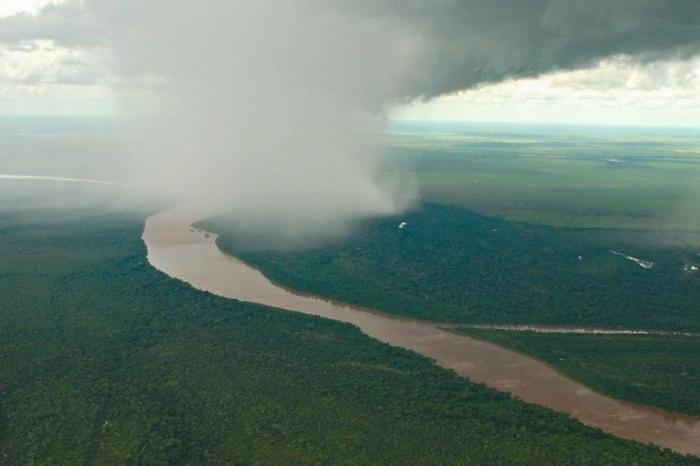
However, this habitat has long been under threat, with global warming, poor water quality, and increased coastal construction some of the factors contributing to its decline. reef news image 17530

Also on the list are herbicides – and it is this factor that a team of the University of Southern Queensland scientists have delved into.

Led by UniSQ water engineer Dr. Kamrun Nahar, the team compiled a review paper on the different herbicides and their impact on the Great Barrier Reef, identifying several parameters which affect the fate and transport of these chemicals.

These parameters can now be incorporated into supercomputer simulations to more accurately model the distribution and movement of herbicides.

“The parameters are grouped into six different categories based on the type of crop: crop residues, herbicide application, herbicide properties, environmental data, and soil properties,” Dr. Nahar said.

“There are many variables at play – we have to consider the breakdown of the product, how long it takes for it to be transported and mixed into the groundwater, and then the precipitation of that region, because that accelerates transport.

“While many of these factors have been recognized previously, they are often thought to play a minor role and discounted from modeling calculations.

“However, we must take into account the complex interactions between these factors to improve the reliability of our modeling methods.”

Dr. Nahar said this project feeds into the body of work supporting the Australian Government’s Reef 2050 Sustainability Plan, which aims to improve water quality, boost biodiversity and limit developmental impacts on the reef.

“The more accurate these models are, the better our predictions on the quality of water are,” Dr Nahar said.

“Thanks to the 2050 long-term sustainability plan, there is long-term research happening, and we have already seen that changing some parameters have led to improvements on the reef.

“We hope that the information collected here will assist in developing a framework for future numerical modeling research on herbicide fate and transport and will contribute to changes in weed management practices.”

Office of Naval Research grant will help UTA explore conditions that lead to brain injuries

A University of Texas at Arlington engineering researcher who studies traumatic brain injuries has received funding to use computer motion simulation that replicates the movements of a person performing activities that could lead to injury. ashfaq adnan

The project, funded by a nearly $1 million grant from the Office of Naval Research Defense University Research Instrumentation Program (DURIP), will use real-time data of phantom head and phantom body reactions to ascertain what physical injuries could come from those motions.

Ashfaq Adnan, a UT Arlington professor in the Department of Mechanical and Aerospace Engineering, is leading the project, called “System for Remote Mapping of Motion Data and Real-Time Damage Risk Analysis of Biologically Relevant Materials Using Digital Engineering.” For its current phase, he is building a system that will enable him to replicate the motion of a moving object, be it a moving vehicle or a person.

“Imagine you’re on a speed boat in the Pacific Ocean and there’s a lot of shaking and vibrating going on,” Adnan said. “Through the use of sensors and what they record, you’re then able to create the same motions in the lab and analyze them to find what could lead to injury.”

He believes this project will greatly improve upon current sensor data because of its precision, speed, and ability to generate both effects of the motion and risk analysis. An integrated system could perform injury risk analysis in seconds compared to conventional systems, where data has to be downloaded, taken to a lab, and compiled before a supercomputer system produces recommendations.

“It’s called digital engineering, which is a new field to computationally replicate a real-life environment in 3-dimensional space,” Adnan said. “It builds a model of motion and impact on the computer given the person’s size. Then we test that in real-time.

“We could potentially track your accident experience, create a digital twin of you in our lab and analyze if you are at immediate injury risk. We could use that digital twin of you and put it through certain actions to measure the impact of those actions on your life.”

The battlefield and the football field are obvious theaters in which head or body trauma might happen, and for which current technology aimed at preventing or reducing injuries often takes a one-size-fits-all approach. Adnan said his new system could also lead to wearable sensors for older adults that alert caregivers or healthcare providers to extreme motions, such as falls.

Erian Armanios, chair of the Department of Mechanical and Aerospace Engineering, said Adnan’s project is bound to better the lives of many.

“Dr. Adnan’s research in traumatic brain injuries continues to push the boundaries of knowledge and bring us closer to understanding how best to detect and treat these injuries,” Armanios said. “The addition of this equipment sets UTA apart and improves the quality of life for post-traumatic injuries.”

DURIP grants support university research infrastructure essential to high-quality Navy-relevant research. The grant is used to acquire research instrumentation that is necessary to carry out such cutting-edge work.

An illustration of the hybrid crystalline-liquid atomic structure in the superionic phase of Ag8SnSe6 — a material that shows great promise for allowing commercial solid-state batteries. The tube-like filaments show the liquid-like distribution of silver ions flowing through the crystalline scaffold of tin and selenium atoms (blue and orange).

Duke built ML opens insights into an entire class of materials being pursued for solid-state batteries

A team of researchers at Duke University and their collaborators have uncovered the atomic mechanisms that make a class of compounds called argyrodites attractive candidates for both solid-state battery electrolytes and thermoelectric energy converters.

The discoveries — and the machine learning approach used to make them — could help usher in a new era of energy storage for applications such as household battery walls and fast-charging electric vehicles.

“This is a puzzle that has not been cracked before because of how big and complex each building block of the material is,” said Olivier Delaire, associate professor of mechanical engineering and materials science at Duke. “We’ve teased out the mechanisms at the atomic level that is causing this entire class of materials to be a hot topic in the field of solid-state battery innovation.”

As the world moves toward a future built on renewable energy, researchers must develop new technologies for storing and distributing energy to homes and electric vehicles. While the standard bearer to this point has been the lithium-ion battery containing liquid electrolytes, it is far from an ideal solution given its relatively low efficiency and the liquid electrolyte’s affinity for occasionally catching fire and exploding.

These limitations stem primarily from the chemically reactive liquid electrolytes inside Li-ion batteries that allow lithium ions to move relatively unencumbered between electrodes. While great for moving electric charges, the liquid component makes them sensitive to high temperatures that can cause degradation and, eventually, a runaway thermal catastrophe. 

Many public and private research labs are spending a lot of time and money to develop alternative solid-state batteries out of a variety of materials. If engineered correctly, this approach offers a much safer and more stable device with a higher energy density — at least in theory.

While nobody has yet discovered a commercially viable approach to solid-state batteries, one of the leading contenders relies on a class of compounds called argyrodites, named after a silver-containing mineral. These compounds are built from specific, stable crystalline frameworks made of two elements with a third free to move about the chemical structure. While some recipes such as silver, germanium, and sulfur are naturally occurring, the general framework is flexible enough for researchers to create a wide array of combinations.

“Every electric vehicle manufacturer is trying to move to new solid-state battery designs, but none of them are disclosing which compositions they’re betting on,” Delaire said. “Winning that race would be a game changer because cars could charge faster, last longer, and be safer all at once.”

In the new paper, Delaire and his colleagues look at one promising candidate made of silver, tin, and selenium (Ag8SnSe6). Using a combination of neutrons and x-rays, the researchers bounced these extremely fast-moving particles off atoms within samples of Ag8SnSe6 to reveal its molecular behavior in real-time. Team member Mayanak Gupta, a former postdoc in Delaire’s lab who is now a researcher at the Bhabha Atomic Research Center in India, also developed a machine-learning approach to make sense of the data and created a computational model to match the observations using first-principles quantum mechanical simulations.

The results showed that while the tin and selenium atoms created a relatively stable scaffolding, it was far from static. The crystalline structure constantly flexes to create windows and channels for the charged silver ions to move freely through the material. The system, Delaire said, is like the tin and selenium lattices remain solid while the silver is in an almost liquid-like state.

“It’s sort of like the silver atoms are marbles rattling around about the bottom of a very shallow well, moving about like the crystalline scaffold isn’t solid,” Delaire said. “That duality of a material living between both a liquid and solid state is what I found most surprising.”

The results and, perhaps more importantly, the approach combining advanced experimental spectroscopy with machine learning, should help researchers make faster progress toward replacing lithium-ion batteries in many crucial applications. According to Delaire, this study is just one of a suite of projects aimed at a variety of promising argyrodite compounds comprising different recipes. One combination that replaces silver with lithium is of particular interest to the group, given its potential for EV batteries.

“Many of these materials offer very fast conduction for batteries while being good heat insulators for thermoelectric converters, so we’re systematically looking at the entire family of compounds,” Delaire said. “This study serves to benchmark our machine learning approach that has enabled tremendous advances in our ability to simulate these materials in only a couple of years. I believe this will allow us to quickly simulate new compounds virtually to find the best recipes these compounds have to offer.”

Also of importance to Delaire is just how “family-oriented” this ongoing project has been, as it includes many of his current and former laboratory teammates considered part of his “academic family.”

Besides the previously mentioned Gupta, who was once a postdoc in Delaire’s lab, Jie Ma, the last corresponding author on the paper, was Delaire’s first postdoc when he was a scientist at Oak Ridge National Laboratory. Ma has been very successful and moved on to become a professor of physics at Shanghai Jiao Tong University in China. And Jingxuan Ding, a former Ph.D. student of Delaire’s who graduated last summer, is now a postdoc at Harvard University and also supported the analysis and modeling.

This work was supported by the Guangdong Basic and Applied Basic Research Foundation (2021B1515140014), the National Natural Science Foundation of China (52101236, U1732154, T2125008, 52272006), the Institute of High Energy Physics, Chinese Academy of Science (E15154U110), the Open project of Key Laboratory of Artificial Structures and Quantum Control (2021-05), the U.S. National Science Foundation (DMR-2119273), the “Shuguang Program” from the Shanghai Education Development Foundation and Shanghai Municipal Education Commission, the Australia Research Council (DP210101436).

AI helps categorize, triage primary care patients with respiratory symptoms

Researchers from Iceland trained a machine learning model with artificial intelligence to triage patients with respiratory symptoms before the patients visit a primary care clinic. To train the machine learning model, the researchers used only questions that a patient might be asked before a clinic visit. Information was extracted from 1,500 clinical text notes that included a physician's interpretation of the patient's symptoms and signs, as well as reasons for clinical decisions made during the consultation, such as imaging referrals and prescriptions. Patients were categorized into one of five diagnostic categories based on information in clinical notes. Patients from all primary care clinics in the capital area of Iceland were included. The model scored each patient in two extrinsic datasets and divided patients into 10 risk groups. The researchers then analyzed selected outcomes in each group.

Patients in risk groups 1-5 were younger, had lower rates of lung inflammation, were less likely to be re-evaluated in primary and emergency care, and were less likely to receive antibiotic prescriptions or chest X-ray referrals, as compared to higher risk groups 6-10. The lowest five groups contained no chest X-rays with signs of pneumonia or a pneumonia diagnosis by a physician. Researchers concluded that the model can reduce the number of chest X-ray referrals by eliminating them in risk groups 1-5.

What We Know: Respiratory symptoms are common reasons people visit primary care clinicians. However, many of their symptoms are self-resolving. Researchers argue that triaging patients before physician consultations may reduce unnecessary diagnostic testing; health care costs; and overprescription of antibiotics, which can lead to greater bacterial resistance.

What This Study Adds: Researchers found that a machine learning model can effectively categorize patients among 10 risk groups, allowing clinicians to communicate with lower-risk patients in ways that don’t add to their heavy work schedule and can allow for them to care for higher-risk patients and those with severe respiratory symptoms. The team asserts that the machine learning model could reduce costs for patients, the health care system, and society.

The researcher who carried out the study

Spanish researcher Fereres develops simulations of alfalfa in AquaCrop forecasting tool

The Department of Agronomy at the UCO improves, together with the IAS - CSIC, the AquaCrop model by introducing the option of simulating alfalfa yield with precision

AquaCrop is the crop growth simulation model created by the UN’s Food and Agriculture Organization (FAO). Playing an essential role in its development was Elías Fereres, a Professor Emeritus in the María de Maeztu Unit of Excellence at the University of Cordoba’s Department of Agronomy (DAUCO). This model, which after almost 20 years of life is the second most used in the world in research, allows simulating the response of crop yields according to climate, soil, and irrigation management, something very important in areas where water is a limiting factor in production.

Until now, this model only allowed users the ability to simulate the yield of annual crops (herbaceous crops with annual cycles), but not perennial crops. This has changed thanks to new work by the DAUCO and IAS-CSIC, which includes the simulation of alfalfa in AquaCrop, offering valid crop yield predictions for different climates and zones.

Alfalfa is a perennial forage crop that lasts 3 to 5 years in Mediterranean climates and is cut several times each year, as it resprouts again (4 to 8 cuts per year). To model the life cycle of this crop and to be able to predict harvests "there were two main challenges in the simulation, which were these periodic cuttings and resprouting during the same season, and the fact that alfalfa, as a perennial crop, stores reserves in autumn and uses them in spring to grow, so growth in spring is not only determined by photosynthesis but also by these reserves that the plant stores," explained Professor Fereres.

Therefore, it was necessary to include in the model a routine describing both the transfer of photoassimilates between the aerial part and the underground storage organs and the plant's use of these assimilates for growth.

Yield data collected in Belgium, Turkey, and Canada for different alfalfa cultivars, various years, and different field and irrigation management strategies, was used to calibrate the model. 81 yield data points across different climates, varieties, zones, and irrigation schedules were used to verify this model, which constitutes a robust tool for predicting alfalfa production in different environments.

"The results were very good after this verification. We were able to simulate the performance with very good correlations between the simulated and the real data obtained," Fereresreported, since no systematic overestimation or underestimation was detected by the model.
AquaCrop's future challenges

By introducing the variables of crop, climate, soil, and irrigation management (whether there is water or not and, if there is, how irrigation is distributed) it is possible to simulate the maximum yield that might be obtained in each case. In this way, irrigation can be adapted to optimize management for greater production.

"After 20 years of use it is a very well-optimized application, which has been tested on many crops, and in many environments, and the evidence supports that it works well and is getting better," says Fereres about the application, whose 7th version has just been released, now including the option of modeling alfalfa yield.

In the future the application could be adapted to include woody crops; a challenge, according to Fereres, "since simulating the production of trees is very difficult due to the phenomenon of alternation (trees produce more one year and less the following), and because tree production is determined by the growth and development of previous years."