SUPERCOMPUTING NEWS SUPERCOMPUTING NEWS
    • MEDIA KIT
    • MOST READ
    • RSS FEED
    • ACADEMIA
    • AEROSPACE
    • APPLICATIONS
    • ASTRONOMY
    • AUTOMOTIVE
    • BIG DATA
    • BIOLOGY
    • CHEMISTRY
    • CLIENTS
    • CLOUD
    • DEFENSE
    • DEVELOPER TOOLS
    • EARTH SCIENCES
    • ECONOMICS
    • ENGINEERING
    • ENTERTAINMENT
    • GAMING
    • GOVERNMENT
    • HEALTH
    • OIL & GAS
    • INDUSTRY
    • INTERCONNECTS
    • MANUFACTURING
    • MIDDLEWARE
    • MOVIES
    • NETWORKS
    • PHYSICS
    • PROCESSORS
    • RETAIL
    • SCIENCE
    • STORAGE
    • SYSTEMS
    • VISUALIZATION
    • AcyMailing subscription form

    • ADD YOUR VIDEOS
    • MANAGE VIDEOS
    • CONVERSATION INBOX
    • SOCIAL ADVERTISER
    • SOCIAL NETWORK VIDEOS
    • SURVEYS
    • GROUPS
    • PAGES
    • MARKETPLACE LISTINGS
    • APPLICATIONS BROWSER
    • PRIVACY CONFIRM REQUEST
    • PRIVACY CREATE REQUEST
    • LEADERBOARD
    • POINTS LISTING
      • BADGES
    • TRADE SHOWS
Sign In
Riding invisible waves: How open-source code transforms space weather science
O'NEAL LATEST April 16, 2026, 1:00 pm

Riding invisible waves: How open-source code transforms space weather science

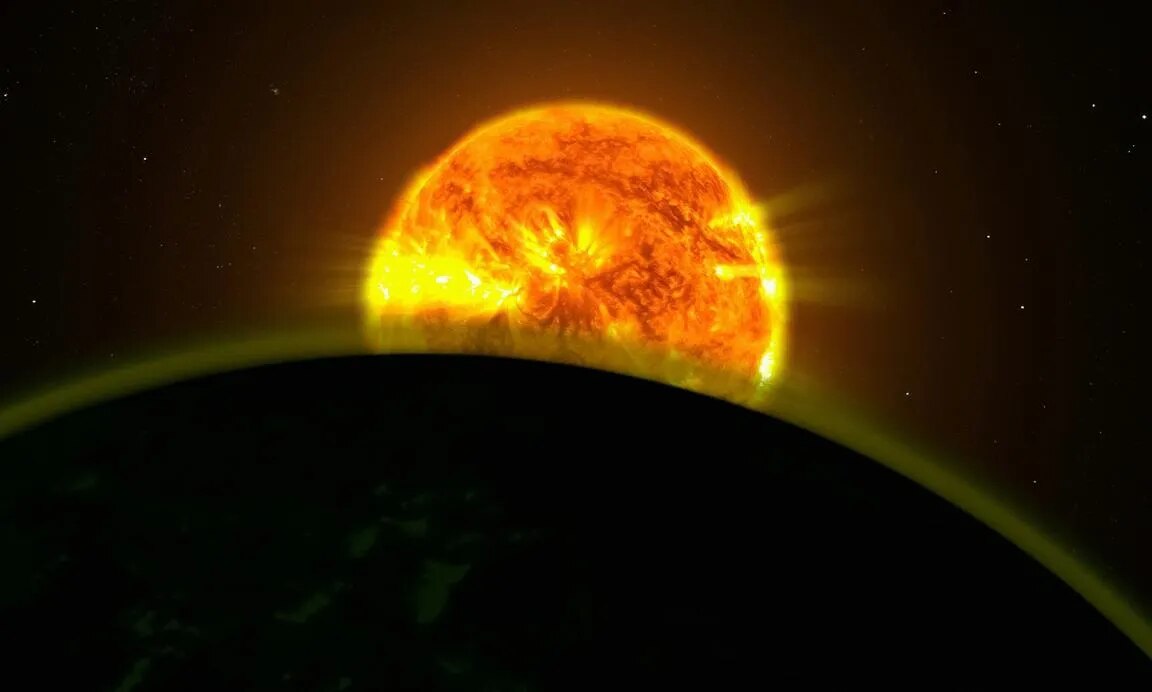
Far above Earth, a hidden storm perpetually swirls.
 
Charged particles spiral along magnetic field lines while electromagnetic waves ripple through the vastness of space. Energetic electrons accelerate, scatter, and occasionally dive into Earth’s atmosphere, disrupting satellites, communications, and navigation systems.
 
We call it space weather. But understanding it has never been simple.
 
Now, a new generation of open-source tools is beginning to change that, turning one of the most complex environments in physics into something scientists can explore, test, and even predict.

A problem hidden in equations

At the center of this transformation is a deceptively difficult challenge: modeling how waves and particles interact in space.
 
The research published in Earth and Space Science introduces a Python-based software package designed to calculate diffusion coefficients, a key ingredient in understanding how energetic particles evolve in near-Earth space.
 
These coefficients describe how particles scatter in both energy and direction as they resonate with electromagnetic waves. It is a process that determines whether particles remain trapped in Earth’s radiation belts or cascade into the atmosphere.
 
But calculating these interactions is notoriously complex.
 
It requires solving competing theoretical models, integrating across multiple dimensions, and handling subtle physical effects that can dramatically change outcomes. Historically, this complexity has made such calculations difficult, time-consuming, and inaccessible to many researchers.
 
The new software, known as PIRAN, changes that by packaging these calculations into an open, extensible Python framework, allowing scientists to compute both local and bounce-averaged diffusion using multiple established formalisms.
 
It is, in essence, a toolkit for exploring how space itself behaves under stress.

From code to community

What makes this development especially intriguing is not just the physics but the philosophy behind it.
 
PIRAN is open-source.
 
That means researchers anywhere can access, modify, and extend it. It includes documented modules, reproducible workflows, and built-in flexibility for testing different theoretical approaches.
This openness is becoming an increasingly defining feature of modern computational science.
 
This is echoed in parallel efforts, such as a newly announced Python-based space weather modeling tool from the University of Birmingham, designed to simplify the simulation of how electromagnetic waves influence high-energy particles in space.
 
That software emphasizes accessibility and collaboration, lowering the barrier to entry so more scientists can contribute to modeling efforts that were once the domain of specialized teams.
 
Together, these tools signal a shift: from isolated models to shared platforms, from closed systems to open ecosystems.

Where supercomputing comes in

But open-source alone is not enough.
 
The physics of space weather operates across enormous scales, from microscopic particle interactions to planetary magnetic fields. To simulate these systems accurately, researchers must run vast numbers of calculations, often exploring multiple scenarios and parameter spaces.
 
This is where supercomputing becomes essential.
 
High-performance computing systems allow scientists to:
  • Run large ensembles of simulations.
  • Compare competing theoretical models at scale.
  • Resolve fine-grained particle dynamics over long timescales.
Even with efficient Python-based tools, the underlying calculations, especially diffusion modeling, can be computationally intensive. Scaling them up requires parallel processing, distributed systems, and optimized workflows.
 
In short, open-source software provides access.
 
Supercomputing provides the power.

A more curious kind of forecasting

What emerges from this convergence is a new kind of scientific process, one that feels less like prediction and more like exploration.
 
Instead of relying on a single model, researchers can now test multiple physical assumptions side by side. They can tweak parameters, swap theoretical frameworks, and observe how outcomes diverge.
 
Why do two models produce different diffusion rates?
 
What happens when wave properties shift slightly?
 
How sensitive are predictions to initial conditions?
 
These are not just technical questions. They are invitations to curiosity.
 
And increasingly, they are answered not in isolation, but through shared codebases running on powerful machines.

Toward a more resilient future

The stakes are not purely academic.
 
Space weather affects real-world systems, GPS navigation, satellite operations, aviation, and even power grids. Better models mean better forecasts. And better forecasts mean more resilient infrastructure.
 
Tools like PIRAN and the Birmingham modeling suite represent steps toward that goal, enabling scientists to move from reactive analysis to proactive understanding.
 
They also hint at something larger.

The quiet revolution in computational science

There is a quiet revolution underway in how science is done.
 
It is happening in GitHub repositories, in Python scripts, and in the vast architectures of supercomputers. It is driven not just by faster processors, but by a commitment to openness, collaboration, and curiosity.
 
In this new landscape:
  • Code becomes a shared language.
  • Models become living systems.
  • And supercomputers become engines of collective discovery.
Space weather, once an opaque and unpredictable force, is gradually becoming something we can map, simulate, and understand.
 
Not perfectly. Not completely.
 
But enough to ask better questions.
 
And sometimes, that is where the real breakthroughs begin.
Tiny whirlpools, massive potential: How skyrmions could reshape supercomputing memory

Tiny whirlpools, massive potential: How skyrmions could reshape supercomputing memory

Tyler O'Neal, Staff Editor LATEST April 14, 2026, 8:00 am
What if the future of supercomputing didn’t depend on building bigger machines, but on discovering smaller, stranger building blocks?
 
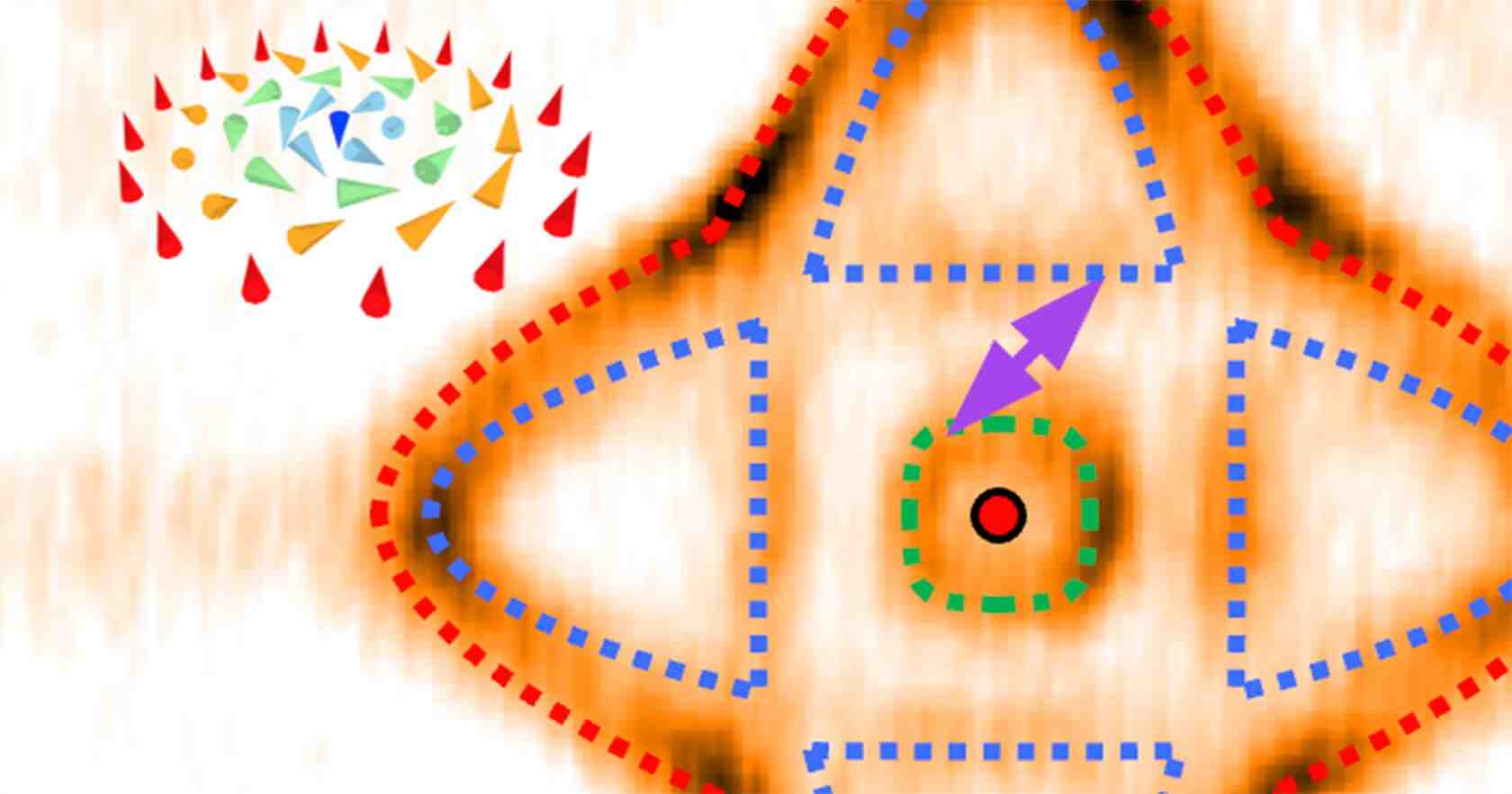
Deep inside exotic materials, researchers have uncovered something that looks almost imaginary: tiny magnetic whirlpools just 2 nanometers wide, thousands of times smaller than a human hair.
 
These structures, known as skyrmions, were once purely theoretical.
 
Now, they may hold the key to the next revolution in computing.

A particle that isn’t a particle

Skyrmions are not particles in the traditional sense. They are swirling patterns of magnetism, vortex-like arrangements of atomic spins that behave as if they are stable, self-contained objects.
 
For years, scientists suspected they could exist. But understanding how they form and how to control them remained elusive.
 
That is beginning to change.
 
Researchers at Tohoku University in Japan have now identified critical mechanisms behind skyrmion formation, revealing that these structures can exist in materials previously thought impossible.
 
Even more surprisingly, their behavior appears to follow a kind of hidden blueprint encoded in the material’s electronic structure.

The Blueprint Beneath the Surface

At the heart of the discovery is a phenomenon called a Lifshitz transition, a sudden shift in a material’s electronic state.
 
When this shift occurs, it reshapes the material’s “Fermi surface,” creating overlapping patterns that act like a structural template for skyrmions.
 
Researchers describe this as a kind of design rule: a way to predict not just whether skyrmions will form, but their size, arrangement, and behavior.
 
Even the force that stabilizes them turned out to be unexpected.
 
For years, scientists believed skyrmions were governed by one type of magnetic interaction. Instead, the new study shows they are driven by the RKKY interaction, a subtle effect mediated by electrons moving through the material.
 
It is a reminder that in physics, even well-established assumptions can quietly unravel.

Why supercomputing cares

At first glance, these nanoscale whirlpools might seem far removed from the world of high-performance computing.
 
But they address one of its biggest challenges: memory.
 
Modern supercomputers, and especially AI-driven data centers, are increasingly limited not by processing power, but by how fast and efficiently they can store and move data. Energy consumption has become a defining constraint.
 
This is where skyrmions become intriguing.
 
They are:
  • Extremely stable (resistant to disruption)
  • Tiny (enabling ultra-high-density storage)
  • Energy-efficient (movable with minimal electrical current)
In practical terms, this means future memory devices could store vastly more data while consuming far less power, a combination that could redefine the architecture of supercomputing systems.

Memory that moves like a fluid

One of the most curious aspects of skyrmions is how they behave.
 
Unlike traditional bits stored in fixed locations, skyrmions can move, gliding through materials like microscopic beads on a track. This opens the door to entirely new types of memory, where data is not just stored, but dynamically transported.
 
It’s a concept that feels almost biological, less like rigid hardware, more like a flowing system.
 
And it raises new questions:
  • Could memory become something that evolves in real time?
  • Could computing architectures shift from static layouts to dynamic ones?
  • Could supercomputers become not just faster, but fundamentally different?

From theory to technology

There is still a long road ahead.
 
One major challenge is temperature: many skyrmion systems currently require conditions that are impractical for everyday devices. Researchers are now working to design materials that function reliably at higher, more accessible temperatures.
 
But the path forward is clearer than before.
 
By linking electronic structure to magnetic behavior, scientists are moving from trial-and-error experimentation to intentional design, engineering materials with properties tailored for computation.

A curious future, computed at the nanoscale

What makes this discovery so compelling is not just its potential, but its strangeness.
 
A swirling pattern of spins, once a mathematical curiosity, now sits at the center of a possible technological shift.
 
And like many breakthroughs in modern science, it exists at the intersection of disciplines:
  • quantum physics
  • materials science
  • nanotechnology
  • and, increasingly, supercomputing
Understanding, simulating, and ultimately harnessing skyrmions requires immense computational power. Their behavior emerges from complex interactions that only advanced modeling and high-performance computing can fully capture.

The smallest frontier

In the race toward more powerful supercomputers, it’s tempting to think in terms of scale, more cores, more data, more energy.
 
But skyrmions suggest a different path.
 
One where progress comes not from building bigger systems, but from discovering smaller, smarter ones.
 
Where the future of computation may hinge on structures so small they were once invisible to science, and so elegant they almost feel like nature’s own code.
 
And where curiosity, once again, leads the way.
When stars fall apart: Supercomputing reveals the hidden physics of black holes

When stars fall apart: Supercomputing reveals the hidden physics of black holes

Deck LATEST April 13, 2026, 8:00 am
Amid the infinite darkness of space, a silent catastrophe unfolds.
 
A star wanders perilously close to a supermassive black hole. Gravitational forces stretch and tear it apart, transforming the star into a radiant stream of stellar debris that spirals into oblivion. For a fleeting instant, the cosmos ignites, producing a phenomenon known as a tidal disruption event (TDE).
 
These violent encounters are among the most powerful probes of black holes. But until now, scientists may have been misunderstanding what actually happens in those crucial first moments after destruction.
 
It took supercomputing at an unprecedented scale to see the truth.

Simulating a cosmic catastrophe

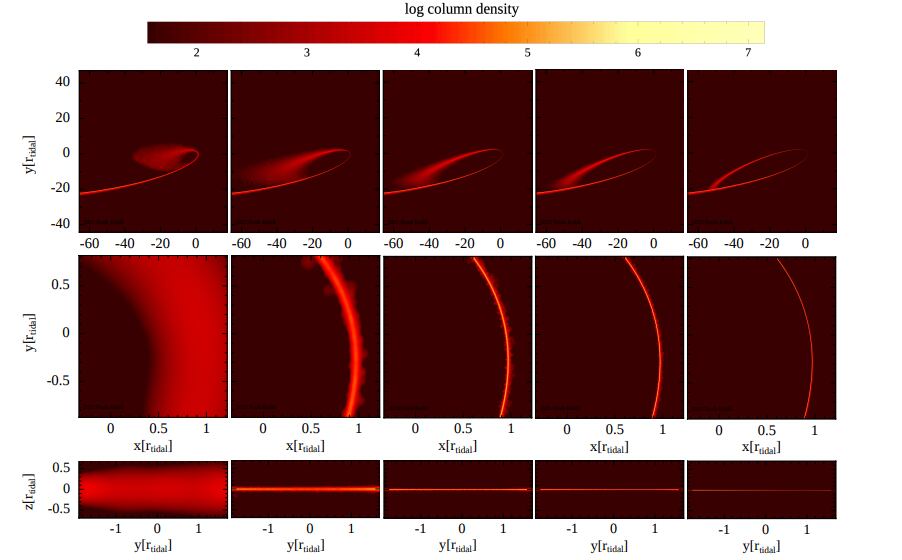
In a new study published in The Astrophysical Journal Letters, researchers have used cutting-edge simulations to recreate the fate of a Sun-like star destroyed by a black hole one million times more massive than our Sun.
 
But this was no ordinary simulation.
 
Using a GPU-powered code known as SPH-EXA and running on the ALPS supercomputer, the team modeled the event with up to 10 billion particles, orders of magnitude beyond previous efforts.
 
This level of detail matters. In TDEs, the physics spans extremes: from the size of a star to orbits stretching tens of thousands of stellar radii, and from minutes-long stellar collapse to debris returning weeks later.
 
Capturing all of it requires immense computational precision.
 
Supercomputers, in this case, are not just tools; they are the only way to observe the unobservable.

A long-standing theory falls apart

For years, scientists believed that as the shredded stellar material swings back toward the black hole, it undergoes intense compression near its closest approach, creating powerful “nozzle shocks” that rapidly heat and spread the debris.
 
This process was thought to play a key role in forming the bright, glowing disk of material that ultimately feeds the black hole.
 
But the new simulations tell a different story.
 
As the resolution increased, a key finding emerged: the dramatic spreading of the debris disappeared, and at the highest resolution, the returning stream stayed narrow and largely undisturbed.
 
Even more striking, the simulations showed that the amount of energy lost to shocks dropped to almost nothing, just one hundred-thousandth of the material’s kinetic energy. This finding directly challenges previous ideas about how the debris behavior was understood.
 
What once appeared to be a fundamental physical process now looks, in part, like a numerical illusion.

The power, responsibility of supercomputing

This revelation underscores a deeper truth about modern science: resolution is not just a technical detail. It can fundamentally change our understanding of reality.
 
Lower-resolution simulations had suggested a universe where stellar debris violently disperses near the black hole. Higher-resolution, supercomputer-driven models reveal a more delicate picture, one where the debris remains coherent, awaiting a different mechanism to evolve.
 
That mechanism, the study suggests, is likely stream to stream collision: where incoming and outgoing flows of stellar material intersect and dissipate energy more gradually.
 
It is a subtle shift, but one with major implications for how we interpret cosmic observations.

Reading the light of shredded stars

These insights arrive at a critical moment.
 
Astronomers are increasingly using tidal disruption events as tools to study otherwise invisible black holes. Each flare carries information about the black hole’s mass, spin, and environment.
 
But decoding those signals depends on understanding the physics behind them.
 
If the early stages of these events are governed not by violent shocks but by more structured, collision-driven processes, then the light we observe may tell a more nuanced story, one shaped by geometry, orbital dynamics, and relativistic effects.
 
In other words, every shredded star becomes a kind of message.
 
And supercomputing helps us learn how to read it.

Toward a new era of precision astrophysics

What makes this work inspiring is not just its findings, but its method.
 
By pushing simulations to billions of particles and leveraging advanced GPU architectures, researchers are entering a new regime of precision astrophysics, where numerical artifacts give way to physical truth.
 
It is a reminder that the universe does not yield its secrets easily. Sometimes, the difference between misconception and discovery is measured not in theory, but in computational power.

A universe reconstructed in code

We may never witness a star being torn apart up close.
 
But through supercomputing, we can reconstruct the event in astonishing detail, following every fragment, every orbit, every interaction as gravity does its work.
 
And in doing so, we move closer to answering one of the most profound questions in astrophysics:
 
What really happens when matter meets the edge of a black hole?
 
Thanks to the growing power of supercomputing, the answer is no longer beyond our reach.
  1. Intel, Google's latest AI pact: A boost for supercomputing, or a strategic rebrand?
  2. How supercomputing is transforming our understanding of the Antarctic Circumpolar flow
  3. Russian scientists make multimodal AI breakthrough in protein interaction prediction
  4. How HPC is revealing alien matter deep inside ice giants
  5. Forecasting the invisible: How supercomputing safeguards humanity’s return to the Moon
  6. Supercomputing chases quantum dreams, but how close are we, really?
  7. Supercomputers reveal a lopsided giant: Reimagining Saturn’s magnetic world

Page 24 of 62

  • 19
  • 20
  • 21
  • 22
  • 23
  • 24
  • 25
  • 26
  • 27
  • 28
POPULAR RIGHT NOW
  • Supercomputers replace ‘bathtub’ flood maps with physics-based digital twins of Britain’s coastline
    Supercomputers replace ‘bathtub’ flood maps with physics-based digital twins of Britain’s coastline
  • Supercomputers push neural quantum simulation beyond previous limits
    Supercomputers push neural quantum simulation beyond previous limits
  • Intel’s AI supercomputing revival: Q2 financial surge signals new era for CPU-powered HPC infrastructure
    Intel’s AI supercomputing revival: Q2 financial surge signals new era for CPU-powered HPC infrastructure
  • AI infrastructure financing fears shake semiconductor sector
    AI infrastructure financing fears shake semiconductor sector
  • AWS supercomputing investment reaches historic scale as Amazon’s AI strategy powers record financial results
    AWS supercomputing investment reaches historic scale as Amazon’s AI strategy powers record financial results
  • Catching the wave of the future: Supercomputers unlock the hidden dynamics of Venus
    Catching the wave of the future: Supercomputers unlock the hidden dynamics of Venus
  • NCAR supercomputers run planet scale climate experiments impossible in the real world
    NCAR supercomputers run planet scale climate experiments impossible in the real world
  • AI hunts the cosmos: Machine learning helps astronomers discover the first ‘Wandering’ supermassive black hole caught destroying a star
    AI hunts the cosmos: Machine learning helps astronomers discover the first ‘Wandering’ supermassive black hole caught destroying a star
  • Supercomputing for the masses: Meta's vision of a personal superintelligence for everyone
    Supercomputing for the masses: Meta's vision of a personal superintelligence for everyone
  • NVIDIA helps turn AI compute into a new asset class as Wall Street mobilizes $500 billion
    NVIDIA helps turn AI compute into a new asset class as Wall Street mobilizes $500 billion
THIS YEAR'S MOST READ
  • Beamforming the future: BeammWave's 6G push signals the rise of orbital-terrestrial wireless networks
    Joakim Axmon
    Joakim Axmon
  • Wall Street wants to trade supercomputing power like oil
    Wall Street wants to trade supercomputing power like oil
  • Cosmic ambition at scale: UK’s supercomputer unlocks a 2.5 petabytes universe
    Cosmic ambition at scale: UK’s supercomputer unlocks a 2.5 petabytes universe
  • Hidden order, revealed at scale: Supercomputing, electron ptychography uncover the inner workings of relaxor ferroelectrics
    Hidden order, revealed at scale: Supercomputing, electron ptychography uncover the inner workings of relaxor ferroelectrics
  • Intel's Q1 results signal supercomputing surge driving Xeon momentum
    Intel's Q1 results signal supercomputing surge driving Xeon momentum
  • Huawei’s Tau Scaling ambition tests the limits of post-Moore semiconductor reality
    He Tingbo from HUAWEI delivered a keynote speech titled "New Semiconductor Path in Practice"
    He Tingbo from HUAWEI delivered a keynote speech titled "New Semiconductor Path in Practice"
  • When stars fall apart: Supercomputing reveals the hidden physics of black holes
    When stars fall apart: Supercomputing reveals the hidden physics of black holes
  • MIT develops computational framework to probe dark matter via gravitational waves
    MIT develops computational framework to probe dark matter via gravitational waves
  • Memory has become the new compute: Why Micron, SK Hynix crossing $1 trillion matters to supercomputing
    Memory has become the new compute: Why Micron, SK Hynix crossing $1 trillion matters to supercomputing
  • AI breaks conservation barriers: Australia’s Wildlife Observatory leverages supercomputing to protect biodiversity
    AI breaks conservation barriers: Australia’s Wildlife Observatory leverages supercomputing to protect biodiversity
  • FRONTPAGE
  • LATEST
  • POPULAR
  • REGISTER
  • SOCIAL
  • VIDEO
  • SUBSCRIPTION
  • RSS
  • GUIDELINES
  • PRIVACY
  • TOS
  • ABOUT
  • +1 (816) 799-4488
  • editorial@supercomputingonline.com
© 2001 - 2026 SuperComputingOnline.com, LLC. All rights reserved. This material may not be published, broadcast, rewritten or redistributed without permission.
Sign In
  • FRONT PAGE
  • LATEST
    • MEDIA KIT
    • MOST READ
    • RSS FEED
    • ACADEMIA
    • AEROSPACE
    • APPLICATIONS
    • ASTRONOMY
    • AUTOMOTIVE
    • BIG DATA
    • BIOLOGY
    • CHEMISTRY
    • CLIENTS
    • CLOUD
    • DEFENSE
    • DEVELOPER TOOLS
    • EARTH SCIENCES
    • ECONOMICS
    • ENGINEERING
    • ENTERTAINMENT
    • HEALTH
    • INDUSTRY
    • INTERCONNECTS
    • GAMING
    • GOVERNMENT
    • MANUFACTURING
    • MIDDLEWARE
    • MOVIES
    • NETWORKS
    • OIL & GAS
    • PHYSICS
    • PROCESSORS
    • RETAIL
    • SCIENCE
    • STORAGE
    • SYSTEMS
    • VISUALIZATION
  • VIDEOS
    • ADD YOUR VIDEOS
    • MANAGE VIDEOS
  • COMMUNITY
    • TRADE SHOWS
    • SOCIAL NETWORK VIDEOS
    • SURVEYS
    • APPLICATIONS BROWSER
    • CONVERSATION INBOX
    • SOCIAL ADVERTISER
    • GROUPS
    • MARKETPLACE LISTINGS
    • PAGES
    • LEADERBOARD
    • POINTS LISTING
      • BADGES
    • PRIVACY CONFIRM REQUEST
    • PRIVACY CREATE REQUEST

Hey there! We noticed you’re using an ad blocker.