SUPERCOMPUTING NEWS SUPERCOMPUTING NEWS
    • MEDIA KIT
    • MOST READ
    • RSS FEED
    • ACADEMIA
    • AEROSPACE
    • APPLICATIONS
    • ASTRONOMY
    • AUTOMOTIVE
    • BIG DATA
    • BIOLOGY
    • CHEMISTRY
    • CLIENTS
    • CLOUD
    • DEFENSE
    • DEVELOPER TOOLS
    • EARTH SCIENCES
    • ECONOMICS
    • ENGINEERING
    • ENTERTAINMENT
    • GAMING
    • GOVERNMENT
    • HEALTH
    • OIL & GAS
    • INDUSTRY
    • INTERCONNECTS
    • MANUFACTURING
    • MIDDLEWARE
    • MOVIES
    • NETWORKS
    • PHYSICS
    • PROCESSORS
    • RETAIL
    • SCIENCE
    • STORAGE
    • SYSTEMS
    • VISUALIZATION
    • AcyMailing subscription form

    • ADD YOUR VIDEOS
    • MANAGE VIDEOS
    • CONVERSATION INBOX
    • SOCIAL ADVERTISER
    • SOCIAL NETWORK VIDEOS
    • SURVEYS
    • GROUPS
    • PAGES
    • MARKETPLACE LISTINGS
    • APPLICATIONS BROWSER
    • PRIVACY CONFIRM REQUEST
    • PRIVACY CREATE REQUEST
    • LEADERBOARD
    • POINTS LISTING
      • BADGES
    • TRADE SHOWS
Sign In
Tyler O'Neal, Staff Editor BIOLOGY September 29, 2021, 12:00 pm

Cambridge takes it back to basics to unravel a new phase of matter

A new phase of matter, thought to be understandable only using quantum physics, can be studied with far simpler classical methods.

Researchers from the University of Cambridge used supercomputer modeling to study potential new phases of matter known as prethermal discrete time crystals (DTCs). It was thought that the properties of prethermal DTCs were reliant on quantum physics: the strange laws ruling particles at the subatomic scale. However, the researchers found that a simpler approach, based on classical physics, can be used to understand these mysterious phenomena.

Understanding these new phases of matter is a step forward towards the control of complex many-body systems, a long-standing goal with various potential applications, such as simulations of complex quantum networks. The results are reported in two joint papers in Physical Review Letters and Physical Review B (Links: here and here). michael dziedzic nbw kaz2ble unsplash 9669c

When we discover something new, whether it’s a planet, an animal, or a disease, we can learn more about it by looking at it more and more closely. Simpler theories are tried first, and if they don’t work, more complicated theories or methods are attempted.  

“This was what we thought was the case with prethermal DTCs,” said Andrea Pizzi, a Ph.D. candidate in Cambridge’s Cavendish Laboratory, first author on both papers. “We thought they were fundamentally quantum phenomena, but it turns out a simpler classical approach let us learn more about them.”

DTCs are highly complex physical systems, and there is still much to learn about their unusual properties. Like how a standard space crystal breaks space-translational symmetry because its structure isn’t the same everywhere in space, DTCs break a distinct time-translational symmetry because, when ‘shaken’ periodically, their structure changes at every ‘push’.

“You can think of it like a parent pushing a child on a swing on a playground,” said Pizzi. “Normally, the parent pushes the child, the child will swing back, and the parent then pushes them again. In physics, this is a rather simple system. But if multiple swings were on that same playground, and if children on them were holding hands with one another, then the system would become much more complex, and far more interesting and less obvious behaviors could emerge. A prethermal DTC is one such behavior, in which the atoms, acting sort of like swings, only ‘come back every second or third push, for example.”

First predicted in 2012, DTCs have opened a new field of research, and have been studied in various types, including in experiments. Among these, prethermal DTCs are relatively simple-to-realize systems that don’t heat quickly as would normally be expected, but instead exhibit time-crystalline behavior for a very long time: the quicker they are shaken, the longer they survive. However, it was thought that they rely on quantum phenomena.

“Developing quantum theories is complicated, and even when you manage it, your simulation capabilities are usually very limited, because the required computational power is incredibly large,” said Pizzi.

Now, Pizzi and his co-authors have found that for prethermal DTCs they can avoid using overly complicated quantum approaches and use much more affordable classical ones instead. This way, the researchers can simulate these phenomena in a much more comprehensive way. For instance, they can now simulate many more elementary constituents, getting access to the scenarios that are the most relevant to experiments, such as in two and three dimensions.

Using a supercomputer simulation, the researchers studied many interacting spins – like the children on the swings – under the action of a periodic magnetic field – like the parent pushing the swing - using classical Hamiltonian dynamics. The resulting dynamics showed in a neat and clear way the properties of prethermal DTCs: for a long time, the magnetization of the system oscillates with a period larger than that of the drive.

“It’s surprising how clean this method is,” said Pizzi. “Because it allows us to look at larger systems, it makes very clear what’s going on. Unlike when we’re using quantum methods, we don’t have to fight with this system to study it. We hope this research will establish classical Hamiltonian dynamics as a suitable approach to large-scale simulations of complex many-body systems and open new avenues in the study of nonequilibrium phenomena, of which prethermal DTCs are just one example.”

Pizzi’s co-authors on the two papers, who were both recently based at Cambridge, are Dr. Andreas Nunnenkamp, now at the University of Vienna, and Dr. Johannes Knolle, now at the Technical University of Munich.

Meanwhile, at UC Berkeley, Norman Yao’s group has also been using classical methods to study prethermal DTCs. Remarkably, the Berkeley and Cambridge teams have simultaneously addressed the same question. Yao’s group will be publishing their results shortly.

Bristol's photonic chip is the key to nurturing quantum supercomputers

Tyler O'Neal, Staff Editor BIOLOGY September 29, 2021, 8:00 am

A team of researchers from Bristol’s Quantum Engineering and Technology Labs (QETLabs) has shown how to protect qubits from errors using photons in a silicon chip.

Quantum computers are gaining pace. They promise to provide exponentially more computing power for certain very tricky problems. They do this by exploiting the peculiar behavior of quantum particles, such as photons of light. 

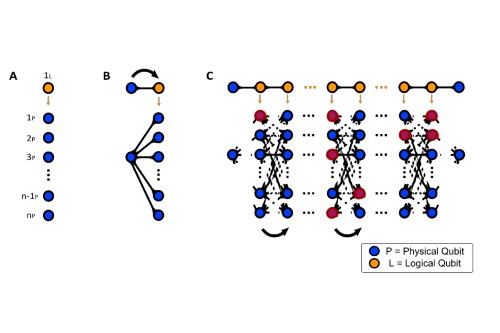
However, the quantum states of particles are very fragile. The quantum bits, or qubits, that underpin quantum supercomputing picks up errors very easily and are damaged by the environment of the everyday world. Fortunately, we know in principle how to correct these errors. The photonic chip generates and entangles ensembles of photons. It can implement a range of quantum error correcting codes.

Quantum error-correcting codes are a method to protect or to nurture, qubits, by embedding them in a more robust entangled state of many particles. Now a team led by researchers at Bristol's Quantum Engineering and Technology Laboratories (QETLabs) has demonstrated this using a quantum photonic chip.

The team showed how large states of entangled photons can contain individual logical qubits and protect them from the harmful effects of the classical world. The Bristol-led team included researchers from DTU in Copenhagen who fabricated the chip. 

Dr. Caterina Vigliar, who leads the work, said: “The chip is really versatile. It can be programmed to deliver different kinds of entangled states called graphs. Each graph protects logical quantum bits of information from different environmental effects.” Physical qubits like photons, can be entangled to contain and protect logical qubits of information from environmental errors (red swirls).

Anthony Laing, co-Director of QETLabs, and an author of the work said: “Finding ways to efficiently deliver large numbers of error-protected qubits is key to one day delivering quantum computers.”

UK built AI may predict the next virus to jump from animals to humans

Tyler O'Neal, Staff Editor BIOLOGY September 28, 2021, 6:00 pm

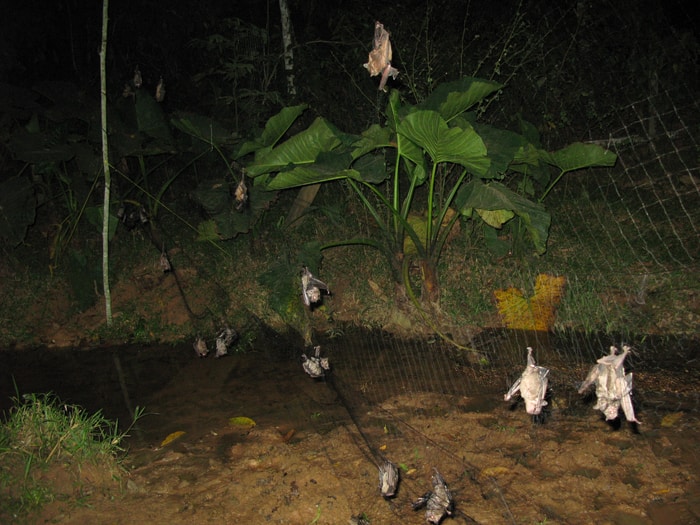
Most emerging infectious diseases of humans (like COVID-19) are zoonotic – caused by viruses originating from other animal species. Identifying high-risk viruses earlier can improve research and surveillance priorities. A study publishing in PLOS Biology on September 28th by Nardus Mollentze, Simon Babayan, and Daniel Streicker at the University of Glasgow, United Kingdom suggests that machine learning (a type of artificial intelligence) using viral genomes may predict the likelihood that any animal-infecting virus will infect humans, given biologically relevant exposure. Bats caught during zoonotic virus surveillance efforts (Madre de Dios, Peru)  CREDIT Daniel Streicker, Mollentze N, et al., PLOS Biology, CC-BY 4.0

Identifying zoonotic diseases prior to emergence is a major challenge because only a small minority of the estimated 1.67 million animal viruses are able to infect humans. To develop machine learning models using viral genome sequences, the researchers first compiled a dataset of 861 virus species from 36 families. They then built machine learning models, which assigned a probability of human infection based on patterns in virus genomes. The authors then applied the best-performing model to analyze patterns in the predicted zoonotic potential of additional virus genomes sampled from a range of species.

The researchers found that viral genomes may have generalizable features that are independent of virus taxonomic relationships and may preadapt viruses to infect humans. They were able to develop machine learning models capable of identifying candidate zoonoses using viral genomes. These models have limitations, as computer models are only a preliminary step of identifying zoonotic viruses with the potential to infect humans. Viruses flagged by the models will require confirmatory laboratory testing before pursuing major additional research investments. Further, while these models predict whether viruses might be able to infect humans, the ability to infect is just one part of the broader zoonotic risk, which is also influenced by the virus’ virulence in humans, ability to transmit between humans, and the ecological conditions at the time of human exposure.

According to the authors, “Our findings show that the zoonotic potential of viruses can be inferred to a surprisingly large extent from their genome sequence. By highlighting viruses with the greatest potential to become zoonotic, genome-based ranking allows further ecological and virological characterization to be targeted more effectively.”

“These findings add a crucial piece to the already surprising amount of information that we can extract from the genetic sequence of viruses using AI techniques,” Babayan adds. “A genomic sequence is typically the first, and often only, the information we have on newly-discovered viruses, and the more information we can extract from it, the sooner we might identify the virus’ origins and the zoonotic risk it may pose. As more viruses are characterized, the more effective our machine learning models will become at identifying the rare viruses that ought to be closely monitored and prioritized for preemptive vaccine development.”

  1. MU researchers identify mutations of Delta, Delta Plus variants
  2. UK researchers discover superconducting single-crystal flake devices that outperform components in quantum supercomputers

Page 6 of 17

  • 1
  • 2
  • 3
  • 4
  • 5
  • 6
  • 7
  • 8
  • 9
  • 10
POPULAR RIGHT NOW
  • AI supercharges the hunt for stronger magnets: Iowa State researchers launch a new era of intelligent materials discovery
    AI supercharges the hunt for stronger magnets: Iowa State researchers launch a new era of intelligent materials discovery
  • IBM's Historic stock collapse raises questions for the future of enterprise supercomputing
    IBM's Historic stock collapse raises questions for the future of enterprise supercomputing
  • Could a novel dark matter theory simultaneously resolve multiple cosmic enigmas? Supercomputer simulations provide a compelling, albeit currently unverified, potential solution
    Could a novel dark matter theory simultaneously resolve multiple cosmic enigmas? Supercomputer simulations provide a compelling, albeit currently unverified, potential solution
  • Melting icebergs may be reshaping Earth’s greatest ocean current
    Melting icebergs may be reshaping Earth’s greatest ocean current
  • Supercomputers replace ‘bathtub’ flood maps with physics-based digital twins of Britain’s coastline
    Supercomputers replace ‘bathtub’ flood maps with physics-based digital twins of Britain’s coastline
  • Supercomputers push neural quantum simulation beyond previous limits
    Supercomputers push neural quantum simulation beyond previous limits
  • Intel’s AI supercomputing revival: Q2 financial surge signals new era for CPU-powered HPC infrastructure
    Intel’s AI supercomputing revival: Q2 financial surge signals new era for CPU-powered HPC infrastructure
  • AI infrastructure financing fears shake semiconductor sector
    AI infrastructure financing fears shake semiconductor sector
  • AWS supercomputing investment reaches historic scale as Amazon’s AI strategy powers record financial results
    AWS supercomputing investment reaches historic scale as Amazon’s AI strategy powers record financial results
  • Catching the wave of the future: Supercomputers unlock the hidden dynamics of Venus
    Catching the wave of the future: Supercomputers unlock the hidden dynamics of Venus
THIS YEAR'S MOST READ
  • Wall Street wants to trade supercomputing power like oil
    Wall Street wants to trade supercomputing power like oil
  • Beamforming the future: BeammWave's 6G push signals the rise of orbital-terrestrial wireless networks
    Joakim Axmon
    Joakim Axmon
  • Cosmic ambition at scale: UK’s supercomputer unlocks a 2.5 petabytes universe
    Cosmic ambition at scale: UK’s supercomputer unlocks a 2.5 petabytes universe
  • Hidden order, revealed at scale: Supercomputing, electron ptychography uncover the inner workings of relaxor ferroelectrics
    Hidden order, revealed at scale: Supercomputing, electron ptychography uncover the inner workings of relaxor ferroelectrics
  • Intel's Q1 results signal supercomputing surge driving Xeon momentum
    Intel's Q1 results signal supercomputing surge driving Xeon momentum
  • When stars fall apart: Supercomputing reveals the hidden physics of black holes
    When stars fall apart: Supercomputing reveals the hidden physics of black holes
  • Multi-layer simulations reveal the hidden supply chain of solar prominences
    Multi-layer simulations reveal the hidden supply chain of solar prominences
  • Japanese scientists decode dolphin speed with supercomputing: Turbulence, vortices, and the hidden physics of propulsion
    Japanese scientists decode dolphin speed with supercomputing: Turbulence, vortices, and the hidden physics of propulsion
  • Cosmic feedback at scale: Supercomputing reveals how quasars regulate the early Universe
    Cosmic feedback at scale: Supercomputing reveals how quasars regulate the early Universe
  • Modeling life at the microscopic scale: A computational breakthrough in oxygen transport
    Modeling life at the microscopic scale: A computational breakthrough in oxygen transport
MOST READ OF ALL-TIME
  • Largest Computational Biology Simulation Mimics The Ribosome
    Details
    112127
    The amino acid (green) slithers into the chemical reaction center, moving through an evolutionarily ancient corridor of the ribosome (purple). The amino acid is delivered to the reaction core by the transfer RNA molecule (yellow).
    The amino acid (green) slithers into the chemical reaction center, moving through an evolutionarily ancient corridor of the ribosome (purple). The amino acid is delivered to the reaction core by the transfer RNA molecule (yellow).
  • Silicon 'neurons' may add a new dimension to chips
    Details
    81040
    Silicon 'neurons' may add a new dimension to chips
  • Linux Networx Accelerators Expected to Drive up to 4x Price/Performance
    Details
    75563
  • Complex Concepts That Really Add Up
    Details
    73693
    Complex Concepts That Really Add Up
  • Blue Sky Studios Donates Animation SuperComputer to Wesleyan
    Details
    68166
    Each rack holds 52 Angstrom Microsystem-brand “blades,” with a memory footprint of 12 or 24 gigabytes each. (Photos by Olivia Bartlett Drake)
    Each rack holds 52 Angstrom Microsystem-brand “blades,” with a memory footprint of 12 or 24 gigabytes each. (Photos by Olivia Bartlett Drake)
  • Humanities, HPC connect at NERSC
    Details
    57973
  • TeraGrid ’09 'Call for Participation'
    Details
    54976
  • Turbulence responsible for black holes' balancing act
    Details
    52339
  • Cray Wins $52 Million SuperComputer Contract
    Details
    50162
  • SDSC Researchers Accurately Predict Protein Docking
    Details
    46115
  • FRONTPAGE
  • LATEST
  • POPULAR
  • REGISTER
  • SOCIAL
  • VIDEO
  • SUBSCRIPTION
  • RSS
  • GUIDELINES
  • PRIVACY
  • TOS
  • ABOUT
  • +1 (816) 799-4488
  • editorial@supercomputingonline.com
© 2001 - 2026 SuperComputingOnline.com, LLC. All rights reserved. This material may not be published, broadcast, rewritten or redistributed without permission.
Sign In
  • FRONT PAGE
  • LATEST
    • MEDIA KIT
    • MOST READ
    • RSS FEED
    • ACADEMIA
    • AEROSPACE
    • APPLICATIONS
    • ASTRONOMY
    • AUTOMOTIVE
    • BIG DATA
    • BIOLOGY
    • CHEMISTRY
    • CLIENTS
    • CLOUD
    • DEFENSE
    • DEVELOPER TOOLS
    • EARTH SCIENCES
    • ECONOMICS
    • ENGINEERING
    • ENTERTAINMENT
    • HEALTH
    • INDUSTRY
    • INTERCONNECTS
    • GAMING
    • GOVERNMENT
    • MANUFACTURING
    • MIDDLEWARE
    • MOVIES
    • NETWORKS
    • OIL & GAS
    • PHYSICS
    • PROCESSORS
    • RETAIL
    • SCIENCE
    • STORAGE
    • SYSTEMS
    • VISUALIZATION
  • VIDEOS
    • ADD YOUR VIDEOS
    • MANAGE VIDEOS
  • COMMUNITY
    • TRADE SHOWS
    • SOCIAL NETWORK VIDEOS
    • SURVEYS
    • APPLICATIONS BROWSER
    • CONVERSATION INBOX
    • SOCIAL ADVERTISER
    • GROUPS
    • MARKETPLACE LISTINGS
    • PAGES
    • LEADERBOARD
    • POINTS LISTING
      • BADGES
    • PRIVACY CONFIRM REQUEST
    • PRIVACY CREATE REQUEST

Hey there! We noticed you’re using an ad blocker.