

SUPERCOMPUTING NEWS SUPERCOMPUTING NEWS
    • MEDIA KIT
    • MOST READ
    • RSS FEED
    • ACADEMIA
    • AEROSPACE
    • APPLICATIONS
    • ASTRONOMY
    • AUTOMOTIVE
    • BIG DATA
    • BIOLOGY
    • CHEMISTRY
    • CLIENTS
    • CLOUD
    • DEFENSE
    • DEVELOPER TOOLS
    • EARTH SCIENCES
    • ECONOMICS
    • ENGINEERING
    • ENTERTAINMENT
    • GAMING
    • GOVERNMENT
    • HEALTH
    • OIL & GAS
    • INDUSTRY
    • INTERCONNECTS
    • MANUFACTURING
    • MIDDLEWARE
    • MOVIES
    • NETWORKS
    • PHYSICS
    • PROCESSORS
    • RETAIL
    • SCIENCE
    • STORAGE
    • SYSTEMS
    • VISUALIZATION
    • AcyMailing subscription form

    • ADD YOUR VIDEOS
    • MANAGE VIDEOS
    • CONVERSATION INBOX
    • SOCIAL ADVERTISER
    • SOCIAL NETWORK VIDEOS
    • SURVEYS
    • GROUPS
    • PAGES
    • MARKETPLACE LISTINGS
    • APPLICATIONS BROWSER
    • PRIVACY CONFIRM REQUEST
    • PRIVACY CREATE REQUEST
    • LEADERBOARD
    • POINTS LISTING
      • BADGES
    • TRADE SHOWS
Sign In
Tyler O'Neal, Staff Editor BIOLOGY September 16, 2022, 12:00 pm

Norwegian university uses super computational biology to reveal universal rules shaping cells' power stations

Mitochondria are compartments – so-called “organelles” -- in our cells that provide the chemical energy supply we need to move, think, and live. Chloroplasts are organelles in plants and algae that capture sunlight and perform photosynthesis. At a first glance, they might look worlds apart. But an international team of researchers, led by the University of Bergen in Norway, has used data science and computational biology to show that the same “rules” have shaped how both organelles – and more – have evolved throughout life’s history.Painted in the same style: scientists have shown that the same principles shape the evolution of chloroplasts (top), mitochondria (bottom), and other symbionts across life.  CREDIT Iain Johnston and Sigrid Johnston-Røyrvik

Both types of organelle were once independent organisms, with their full genomes. Billions of years ago, those organisms were captured and imprisoned by other cells – the ancestors of modern species. Since then, the organelles have lost most of their genomes, with only a handful of genes remaining in modern-day mitochondrial and chloroplast DNA. These remaining genes are essential for life and important in many devastating diseases, but why they stay in organelle DNA – when so many others have been lost -- has been debated for decades.

For a fresh perspective on this question, the scientists took a data-driven approach. They gathered data on all the organelle DNA that has been sequenced across life. They then used modeling, biochemistry, and structural biology to represent a wide range of different hypotheses about gene retention as a set of numbers associated with each gene. Using tools from data science and statistics, they asked which ideas could best explain the patterns of retained genes in the data they had compiled – testing the results with unseen data to check their power.

“Some clear patterns emerged from the modeling,” explains Kostas Giannakis, a postdoctoral researcher at Bergen and joint first author of the paper. “Lots of these genes encode subunits of larger cellular machines, which are assembled like a jigsaw. Genes for the pieces in the middle of the jigsaw are most likely to stay in organelle DNA.”

The team believes that this is because keeping local control over the production of such central subunits helps the organelle quickly respond to change – a version of the so-called “CoRR” model. They also found support for other existing, debated, and new ideas. For example, if a gene product is hydrophobic – and hard to import to the organelle from outside – the data shows that it is often retained there. Genes that are themselves encoded using stronger-binding chemical groups are also more often retained – perhaps because they are more robust in the harsh environment of the organelle.

“These different hypotheses have usually been thought of as competing in the past,” says Iain Johnston, a professor at Bergen and leader of the team. “But actually no single mechanism can explain all the observations – it takes a combination. A strength of this unbiased, data-driven approach is that it can show that lots of ideas are partly right, but none exclusively so – perhaps explaining the long debate on these topics.”

To their surprise, the team also found that their models trained to describe mitochondrial genes also predicted the retention of chloroplast genes and vice versa. They also found that the same genetic features shaping mitochondrial and chloroplast DNA also appear to play a role in the evolution of other endosymbionts – organisms that have been more recently captured by other hosts, from algae to insects.

“That was a wow moment,” says Johnston. “We – and others – have had this idea that similar pressures might apply to the evolution of different organelles. But to see this universal, quantitative link – data from one organelle precisely predicting patterns in another, and in more recent endosymbionts – was really striking.”

The research is part of a broader project funded by the European Research Council, and the team is now working on a parallel question – how different organisms maintain the organelle genes that they do retain. Mutations in mitochondrial DNA can cause devastating inherited diseases; the team is using modeling, statistics, and experiments to explore how these mutations are dealt with in humans, plants, and more.
New Technion research integrating biology, computer science sheds light on the process of protein folding

Tyler O'Neal, Staff Editor BIOLOGY June 8, 2022, 11:56 am

A study integrating biological ideas and new computer science tools has uncovered novel associations between genetic coding and protein structure, which could potentially change the way we think about protein production in the ribosome – the cell’s “protein assembly line.” The research was composed by Professor Alex Bronstein, Dr. Ailie Marx, and Ph.D. student Aviv Rosenberg at the Technion – Israel Institute of Technology.
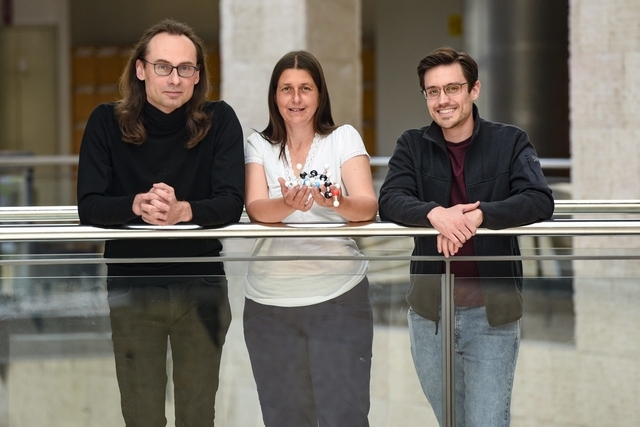
L-R: Prof. Alex Bronstein, Dr. Ailie Marx, PhD student Aviv Rosenberg

Proteins, the complex molecules that play critical roles in virtually every biological mechanism, are produced by ribosomes in a process called translation. The ribosome decodes incoming “genetic instructions” to synthesize chains of amino acids – the building blocks of proteins. When amino acids are sequentially bound together into a long chain, they fold into a unique three-dimensional structure that grants the protein its biological properties and functionality. Translation errors can lead to misfolding and subsequently physiological disorders, both mild and major.

Protein production instructions are delivered to the ribosome as codons, sequences of three “letters” from the genetic nucleotide code, which specifies the identity and order of amino acids to be added by the ribosome to the protein chain. For example, the codon UUU signals for the addition of the amino acid phenylalanine, whereas codon UAC instructs for the addition of tyrosine. In this way, the codon sequence encodes for the unique sequence of amino acids characteristic of each protein. This mapping of genetic codons to amino acids used in translation is common to all living creatures on the planet and is considered a primeval mechanism.

As if all of this were not complicated enough, it is important to point out that 61 codons are decoded into just 20 amino acids. In other words, all but two amino acids are encoded by multiple codons.

This is where the present research comes into the picture. Based on experiments carried out in the 1960s and 1970s, the accepted dogma states that proteins carry no “memory” of the specific codon from which each amino acid was translated as long as the amino acid identity remains unchanged. These early experiments into protein folding used chemical denaturants to unfold fully formed proteins and then demonstrated that upon removal of these chemicals the protein chain could refold spontaneously to regain its original structure and function. These experiments suggested that only the amino acid sequence, and not the specific codon sequence, determine a protein’s structure. Given this dogma, mutations that change the genetic coding without changing the amino acid are widely termed as “silent” and considered inconsequential for protein structure and function.

The Technion research team has uncovered an association between the identity of the codon and the local structure of the translated protein, which suggests that this may not be the general case and that proteins may indeed “remember” the specific instructions from which they were synthesized. The research team analyzed thousands of three-dimensional protein structures using dedicated tools they developed, which integrate advanced computer science methods, machine learning, and statistics. In this way, they accurately compared the distributions of angles formed in these structures under different synonymous genetic codes. Their findings show that for certain codons, there is a significant statistical dependence between the identity of the codon and the local structure of the protein at the position of the amino acid encoded by that codon.

The researchers emphasize that the findings are still unable to shed light on the direction of the causal relationship, meaning that it is not yet possible to say whether a change in genetic coding can cause a change in the local protein structure or whether structural changes may cause different coding, for example through evolutionary processes. This question is the foundation for a subsequent research study now being carried out by the group. According to Dr. Marx, a biologist by training and education, “If we find in subsequent research that the codon indeed has a causal effect on protein folding, this is likely to have a huge impact on our understanding of protein folding, as well as on future applications, such as engineering new proteins.”

Dr. Marx emphasizes that the discovery presented in the article would not have been possible without Prof. Bronstein’s computer and analysis skills. “This research is truly interdisciplinary, because biology alone cannot cope with such vast quantities of data without the help of data science, and computer scientists cannot themselves perform research of this kind since they lack familiarity with the complex biological processes being probed. Therefore, our research highlights the huge advantage of interdisciplinary research that integrates skills from different fields to create a whole that is greater than the sum of its parts.”

Damon Runyon Cancer Research Foundation awards Quantitative Biology Fellowships to three cutting-edge scientists

Tyler O'Neal, Staff Editor BIOLOGY April 18, 2022, 5:08 pm

Damon Runyon has announced its newest cohort of Quantitative Biology Fellows, three exceptional early-career scientists who are applying the tools of computational science to generate and interpret cancer research data at extraordinary scale and resolution. Whether measuring cell-to-cell genetic variability within a tumor or developing algorithms that can predict if therapy will be effective, their projects extend the boundaries of what is possible in cancer research, allowing them to tackle fundamental biological and clinical questions. 

Each postdoctoral scientist selected for this unique three-year award will receive independent funding ($240,000 total) to train under the joint mentorship of an established computational scientist and a cancer biologist. The grant was created to encourage quantitative scientists (from fields such as mathematics, physics, computer science, and engineering) to pursue careers in cancer research. By investing in the intersection of “wet” and “dry” labs, Damon Runyon aims to highlight the importance of these specially trained scientists in the quest for new cancer treatments. The awardees were selected by a distinguished committee of experts in the field. 

“We’re entering a golden era for cancer research, and a huge component of the big breakthroughs are coming at this intersection of cancer biology, medicine, and computational science. If you believe that the role of computational science is going to be integral to the future of cancer discoveries, then we need to worry about whether we have enough leaders in this field. We should be investing in a new generation of leaders, and that’s the intent of this award,” said Todd R. Golub, MD, Damon Runyon Board Member and Chair of Damon Runyon Quantitative Biology Fellowship Award Selection Committee.  

2022 Quantitative Biology Fellows

Cong Ma, Ph.D., with mentors Benjamin Raphael, Ph.D., and Li Ding, Ph.D. (Washington University), at Princeton University, Princeton

Patients with the same cancer diagnosis may experience very distinct disease progressions and treatment responses. These differences between patients have been associated with their degree of intra-tumor heterogeneity—the genetic, epigenetic, spatial, and environmental differences between the tumor cells. Characterizing the genetic and epigenetic states of different tumor cells is key to understanding how intra-tumor heterogeneity influences tumor progression, expansion, metastasis, and treatment response. Recent advances in single-cell RNA sequencing and spatial transcriptomics (which shows the spatial distribution of RNA molecules within a tissue sample) provide new opportunities to study intra-tumor heterogeneity in higher resolution. Dr. Ma’s research aims to characterize intra-tumor heterogeneity in terms of specific genetic and epigenetic measures, and eventually develop 3D tumor models that capture this heterogeneity across multiple cancer types. Dr. Ma received her BS from Zhejiang University and her Ph.D. in computational biology from Carnegie Mellon University.

Sukrit Singh, Ph.D., with mentors John D. Chodera, Ph.D., and Markus A. Seeliger, Ph.D. (Stony Brook University), at Memorial Sloan Kettering Cancer Center, New York

Kinase proteins, which regulate the activity of other proteins, are a major class of cancer therapy targets, with over 65 FDA-approved drugs targeted against them. However, tumors can evolve resistance to kinase-targeting therapies, and it remains difficult to predict whether a specific tumor will resist a particular kinase-targeting drug. Dr. Singh will use protein structural models and biophysical predictions to analyze how kinase mutations cause cancers to resist therapy. As these computationally intensive calculations could require decades on a single desktop computer, he will use a supercomputing platform called Folding@home, which harnesses idle computer time donated by citizen scientists around the world to run the calculations. By developing new algorithms to predict whether a known mutation will resist a kinase-targeting drug, Dr. Singh hopes to advance precision oncology to allow clinicians to predict a treatment’s chance of success given a patient’s tumor profile. While his work primarily focuses on resistance to the drug crizotinib, used to treat non-small-cell lung carcinomas, his approaches can be extrapolated to other tumors and cancer targets. Dr. Singh received his BA and his Ph.D. in computational and molecular biophysics from Washington University in St. Louis.  

Yapeng Su, Ph.D., with mentors Philip D. Greenberg, MD, and Raphael Gottardo, Ph.D., at Fred Hutchinson Cancer Research Center, Seattle

One in 64 people in the U.S. develops pancreatic cancer in their lifetime and only 9% will survive 5 years. This rate has barely changed in the last 40 years; better innovative treatments are urgently needed. Among the most promising immunotherapies is adoptive T cell therapy (ACT), which involves infusion of the patients’ own immune T cells that have been engineered outside of their body to make them selectively kill cancer cells. ACT has been effective against certain blood cancers but has had limited success against solid tumors, including pancreatic cancers. Dr. Su will quantitatively assess the mechanisms that contribute to the decreased effectiveness of ACT against pancreatic cancer. He will use specimens obtained from mouse models and pancreatic cancer patients receiving ACT to develop computational frameworks that can be applied to single-cell sequencing data and other large datasets. His findings should inform the design of next-generation ACT against pancreatic cancer and potentially other solid tumors. Dr. Su received his BS from Tianjin University and his Ph.D. in engineering/systems biology from the California Institute of Technology.

  1. Cincinnati researchers propose the evolution of chips could inform the future of synthetic biology
  2. Amazonian river winds unraveled by air pollution observations

Page 2 of 17

  • 1
  • 2
  • 3
  • 4
  • 5
  • 6
  • 7
  • 8
  • 9
  • 10
POPULAR RIGHT NOW
  • AI supercharges the hunt for stronger magnets: Iowa State researchers launch a new era of intelligent materials discovery
    AI supercharges the hunt for stronger magnets: Iowa State researchers launch a new era of intelligent materials discovery
  • IBM's Historic stock collapse raises questions for the future of enterprise supercomputing
    IBM's Historic stock collapse raises questions for the future of enterprise supercomputing
  • Could a novel dark matter theory simultaneously resolve multiple cosmic enigmas? Supercomputer simulations provide a compelling, albeit currently unverified, potential solution
    Could a novel dark matter theory simultaneously resolve multiple cosmic enigmas? Supercomputer simulations provide a compelling, albeit currently unverified, potential solution
  • Melting icebergs may be reshaping Earth’s greatest ocean current
    Melting icebergs may be reshaping Earth’s greatest ocean current
  • Supercomputers replace ‘bathtub’ flood maps with physics-based digital twins of Britain’s coastline
    Supercomputers replace ‘bathtub’ flood maps with physics-based digital twins of Britain’s coastline
  • Supercomputers push neural quantum simulation beyond previous limits
    Supercomputers push neural quantum simulation beyond previous limits
  • Intel’s AI supercomputing revival: Q2 financial surge signals new era for CPU-powered HPC infrastructure
    Intel’s AI supercomputing revival: Q2 financial surge signals new era for CPU-powered HPC infrastructure
  • AI infrastructure financing fears shake semiconductor sector
    AI infrastructure financing fears shake semiconductor sector
  • AWS supercomputing investment reaches historic scale as Amazon’s AI strategy powers record financial results
    AWS supercomputing investment reaches historic scale as Amazon’s AI strategy powers record financial results
  • Catching the wave of the future: Supercomputers unlock the hidden dynamics of Venus
    Catching the wave of the future: Supercomputers unlock the hidden dynamics of Venus
THIS YEAR'S MOST READ
  • Wall Street wants to trade supercomputing power like oil
    Wall Street wants to trade supercomputing power like oil
  • Beamforming the future: BeammWave's 6G push signals the rise of orbital-terrestrial wireless networks
    Joakim Axmon
    Joakim Axmon
  • Cosmic ambition at scale: UK’s supercomputer unlocks a 2.5 petabytes universe
    Cosmic ambition at scale: UK’s supercomputer unlocks a 2.5 petabytes universe
  • Hidden order, revealed at scale: Supercomputing, electron ptychography uncover the inner workings of relaxor ferroelectrics
    Hidden order, revealed at scale: Supercomputing, electron ptychography uncover the inner workings of relaxor ferroelectrics
  • Intel's Q1 results signal supercomputing surge driving Xeon momentum
    Intel's Q1 results signal supercomputing surge driving Xeon momentum
  • When stars fall apart: Supercomputing reveals the hidden physics of black holes
    When stars fall apart: Supercomputing reveals the hidden physics of black holes
  • Multi-layer simulations reveal the hidden supply chain of solar prominences
    Multi-layer simulations reveal the hidden supply chain of solar prominences
  • Japanese scientists decode dolphin speed with supercomputing: Turbulence, vortices, and the hidden physics of propulsion
    Japanese scientists decode dolphin speed with supercomputing: Turbulence, vortices, and the hidden physics of propulsion
  • Cosmic feedback at scale: Supercomputing reveals how quasars regulate the early Universe
    Cosmic feedback at scale: Supercomputing reveals how quasars regulate the early Universe
  • Modeling life at the microscopic scale: A computational breakthrough in oxygen transport
    Modeling life at the microscopic scale: A computational breakthrough in oxygen transport
MOST READ OF ALL-TIME
  • Largest Computational Biology Simulation Mimics The Ribosome
    Details
    112127
    The amino acid (green) slithers into the chemical reaction center, moving through an evolutionarily ancient corridor of the ribosome (purple). The amino acid is delivered to the reaction core by the transfer RNA molecule (yellow).
    The amino acid (green) slithers into the chemical reaction center, moving through an evolutionarily ancient corridor of the ribosome (purple). The amino acid is delivered to the reaction core by the transfer RNA molecule (yellow).
  • Silicon 'neurons' may add a new dimension to chips
    Details
    81040
    Silicon 'neurons' may add a new dimension to chips
  • Linux Networx Accelerators Expected to Drive up to 4x Price/Performance
    Details
    75563
  • Complex Concepts That Really Add Up
    Details
    73693
    Complex Concepts That Really Add Up
  • Blue Sky Studios Donates Animation SuperComputer to Wesleyan
    Details
    68166
    Each rack holds 52 Angstrom Microsystem-brand “blades,” with a memory footprint of 12 or 24 gigabytes each. (Photos by Olivia Bartlett Drake)
    Each rack holds 52 Angstrom Microsystem-brand “blades,” with a memory footprint of 12 or 24 gigabytes each. (Photos by Olivia Bartlett Drake)
  • Humanities, HPC connect at NERSC
    Details
    57973
  • TeraGrid ’09 'Call for Participation'
    Details
    54976
  • Turbulence responsible for black holes' balancing act
    Details
    52339
  • Cray Wins $52 Million SuperComputer Contract
    Details
    50162
  • SDSC Researchers Accurately Predict Protein Docking
    Details
    46115
  • FRONTPAGE
  • LATEST
  • POPULAR
  • REGISTER
  • SOCIAL
  • VIDEO
  • SUBSCRIPTION
  • RSS
  • GUIDELINES
  • PRIVACY
  • TOS
  • ABOUT
  • +1 (816) 799-4488
  • editorial@supercomputingonline.com
© 2001 - 2026 SuperComputingOnline.com, LLC. All rights reserved. This material may not be published, broadcast, rewritten or redistributed without permission.
Sign In
  • FRONT PAGE
  • LATEST
    • MEDIA KIT
    • MOST READ
    • RSS FEED
    • ACADEMIA
    • AEROSPACE
    • APPLICATIONS
    • ASTRONOMY
    • AUTOMOTIVE
    • BIG DATA
    • BIOLOGY
    • CHEMISTRY
    • CLIENTS
    • CLOUD
    • DEFENSE
    • DEVELOPER TOOLS
    • EARTH SCIENCES
    • ECONOMICS
    • ENGINEERING
    • ENTERTAINMENT
    • HEALTH
    • INDUSTRY
    • INTERCONNECTS
    • GAMING
    • GOVERNMENT
    • MANUFACTURING
    • MIDDLEWARE
    • MOVIES
    • NETWORKS
    • OIL & GAS
    • PHYSICS
    • PROCESSORS
    • RETAIL
    • SCIENCE
    • STORAGE
    • SYSTEMS
    • VISUALIZATION
  • VIDEOS
    • ADD YOUR VIDEOS
    • MANAGE VIDEOS
  • COMMUNITY
    • TRADE SHOWS
    • SOCIAL NETWORK VIDEOS
    • SURVEYS
    • APPLICATIONS BROWSER
    • CONVERSATION INBOX
    • SOCIAL ADVERTISER
    • GROUPS
    • MARKETPLACE LISTINGS
    • PAGES
    • LEADERBOARD
    • POINTS LISTING
      • BADGES
    • PRIVACY CONFIRM REQUEST
    • PRIVACY CREATE REQUEST

Hey there! We noticed you’re using an ad blocker.