

SUPERCOMPUTING NEWS SUPERCOMPUTING NEWS
    • MEDIA KIT
    • MOST READ
    • RSS FEED
    • ACADEMIA
    • AEROSPACE
    • APPLICATIONS
    • ASTRONOMY
    • AUTOMOTIVE
    • BIG DATA
    • BIOLOGY
    • CHEMISTRY
    • CLIENTS
    • CLOUD
    • DEFENSE
    • DEVELOPER TOOLS
    • EARTH SCIENCES
    • ECONOMICS
    • ENGINEERING
    • ENTERTAINMENT
    • GAMING
    • GOVERNMENT
    • HEALTH
    • OIL & GAS
    • INDUSTRY
    • INTERCONNECTS
    • MANUFACTURING
    • MIDDLEWARE
    • MOVIES
    • NETWORKS
    • PHYSICS
    • PROCESSORS
    • RETAIL
    • SCIENCE
    • STORAGE
    • SYSTEMS
    • VISUALIZATION
    • AcyMailing subscription form

    • ADD YOUR VIDEOS
    • MANAGE VIDEOS
    • CONVERSATION INBOX
    • SOCIAL ADVERTISER
    • SOCIAL NETWORK VIDEOS
    • SURVEYS
    • GROUPS
    • PAGES
    • MARKETPLACE LISTINGS
    • APPLICATIONS BROWSER
    • PRIVACY CONFIRM REQUEST
    • PRIVACY CREATE REQUEST
    • LEADERBOARD
    • POINTS LISTING
      • BADGES
    • TRADE SHOWS
Sign In
Tyler O'Neal, Staff Editor DEVELOPER TOOLS April 28, 2022, 10:40 am

UK ecologists develop modeling tools to predict the distributions of species

In one of the first studies of its kind, scientists from Newcastle University used Community Distribution Models (CDMs) to predict upland vegetation communities from published data on a national scale.

Lead author Dr. Liam Butler developed novel approaches to mapping upland vegetation via CDMs in the UK, using publicly available and open-access NVC records and environmental data. Rainfall and temperature were key predictor variables, with models based on random forests (a type of machine learning classifier) being the most accurate.

Publishing their findings in the Journal of Applied Ecology, the team has shown that this technique could be used in any country where maps of vegetation communities have been created.

Dr. Butler conducted the study as a Ph.D. student under the supervision of Dr. Roy Sanderson at Newcastle University’s School of Natural and Environmental Sciences.

He said: “One advantage of the CDM approach is that it is generalizable and can easily be adapted for other countries that have their vegetation community classifications. Another is that it can aid field ecologists in conducting targeted surveys for endangered species. For example, in the UK the distribution of the English sundew, Drosera anglicans, has greatly declined in the last 100 years due to drainage and eutrophication and is now on the British Red Data List of endangered species. It has been recorded in over 20% of surveyed quadrats for the M17 Scirpus cespitosus-Eriophorum vaginatum blanket mire NVC community, whose distribution was predicted accurately via the new CDM methods. Thus, M17 hotspots could indicate areas where D. anglicans are more likely to occur, and where CS surveys and potential conservation efforts should be focussed.”

Study co-author, Dr. Roy Sanderson, Senior Lecturer in Biological Modelling at Newcastle University’s School of Natural and Environmental Sciences, added: “These models can also take advantage of a large number of publicly available-species records from, for example, historical collections, or more recently citizen science (CS) surveys.

“In most habitats, a plant species does not grow in isolation, but instead co-occurs with other plants to form a characteristic assemblage or “community”, and Community Distribution Models provide a method to create predictive maps of these assemblages, and hence their constituent individual plant species, across wide areas.

“There have, however, been few attempts to map vegetation communities, i.e. groups of plant species that often co-occur under certain environmental conditions, to create characteristic assemblages. Many countries have developed standardized methods to survey and record the occurrence of vegetation communities, for example, the National Vegetation Classification (NVC) in the United Kingdom, which could be used to build such maps.
Tropical cyclones could double globally by 2050

Tyler O'Neal, Staff Editor DEVELOPER TOOLS April 28, 2022, 5:00 am

Human-caused climate change will make strong tropical cyclones twice as frequent by the middle of the century, putting large parts of the world at risk, according to a new study published in Scientific Advances. The analysis also projects that maximum wind speeds associated with these cyclones could increase by around 20%.

Despite being amongst the world’s most destructive extreme weather events, tropical cyclones are relatively rare. In a given year, only around 80-100 tropical cyclones form globally, most of which never make landfall. In addition, accurate global historical records are scarce, making it hard to predict where they will occur and what actions Governments should take to prepare.

To overcome this limitation, an international group of scientists involving Ivan Haigh from the University of Southampton developed a new approach that combined historical data with global climate models to generate hundreds of thousands of “synthetic tropical cyclones”.

Dr. Nadia Bloemendaal  from the Institute for Environmental Studies, Vrije Universiteit Amsterdam, who led the study, said:

“Our results can help identify the locations prone to the largest increase in tropical cyclone risk. Local governments can then take measures to reduce risk in their region so that damage and fatalities can be reduced”

“With our publicly available data, we can now analyze tropical cyclone risk more accurately for every individual coastal city or region”

By creating a very large dataset with these supercomputer-generated cyclones, which have similar features to natural cyclones, the researchers were able to much more accurately project the occurrence and behavior of tropical cyclones around the world over the next decades in the face of climate change, even in regions where tropical cyclones hardly ever occur today.

The team’s analysis found that the frequency of the most intense cyclones, those from Category 3 or higher, will double globally due to climate change, while weaker tropical cyclones and tropical storms will become less common in most of the world’s regions. The exception to this will be the Bay of Bengal, where the researchers found a decrease in the frequency of intense cyclones

Many of the most at-risk locations will be in low-income countries. Countries, where tropical cyclones are relatively rare today, will see an increased risk in the coming years, including Cambodia, Laos, Mozambique, and many Pacific Island Nations, such as the Solomon Islands and Tonga. Globally, Asia will see the largest increase in the number of people exposed to tropical cyclones, with additional millions exposed in China, Japan, South Korea, and Vietnam.

Dr. Ivan Haigh, Associate Professor at the University of Southampton, said:

“Of particular concern is that the results of our study highlight that some regions that don’t currently experience tropical cyclones are likely to in the near future with climate change”

“The new tropical cyclone dataset we have produced will greatly aid the mapping of changing flood risk in tropical cyclone regions”

The study could help governments and organizations better assess the risk from tropical cyclones, thereby supporting the development of risk mitigation strategies to minimize impacts and loss of life.

Japanese researchers demo quantum supercomputer memory resilient against errors

Tyler O'Neal, Staff Editor DEVELOPER TOOLS April 27, 2022, 2:23 pm

Quantum supercomputing holds the potential to be a game-changing future technology in fields ranging from chemistry to cryptography to finance to pharmaceuticals. Compared to conventional computers, scientists suggest that quantum computers could operate many thousand times faster. To harness this power, scientists today are looking at ways to construct quantum computer networks. Fault-tolerant quantum memory, which responds well when hardware or software malfunctions occur, will play an important role in these networks. A research team from Yokohama National University is exploring quantum memory that is resilient against operational or environmental errors.

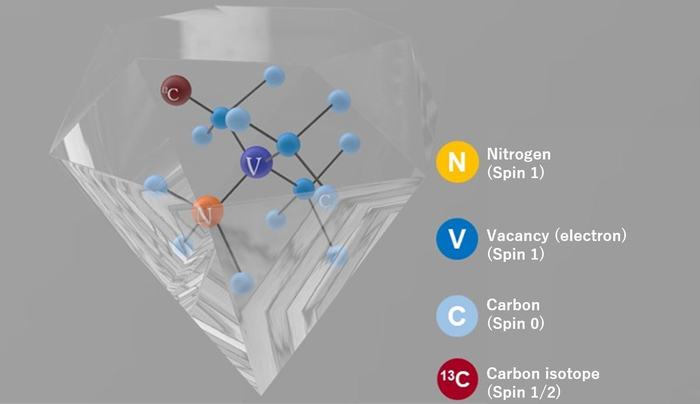
For quantum supercomputers to reach their full potential, scientists need to be able to construct quantum networks. In these networks, fault-tolerant quantum memory is essential. When scientists manipulate spin quantum memory, a magnetic field is required. The magnetic field hinders the integration with the superconducting quantum bits or qubits. The qubits in quantum computing are basic units of information, similar to the binary digits, or bits, in conventional computers. Nitrogen-vacancy (NV) center in diamond serves as quantum memories, which is error-correction coded to correct errors automatically.

To scale up a quantum supercomputer based on superconducting qubits, scientists need to operate under a zero magnetic field. In their search to further the technology toward a fault-tolerant quantum computer, the research team studied nitrogen-vacancy centers in diamonds. Nitrogen-vacancy centers hold promise in a range of applications including quantum supercomputing. Using a diamond nitrogen-vacancy center with two nuclear spins of the surrounding carbon isotopes, the team demonstrated quantum error correction in quantum memory. They tested a three-qubit quantum error correction against both a bit-flip and phase-flip error, under a zero magnetic field. The bit-flip or phase-flip errors can occur when there are changes in the magnetic field. To achieve a zero magnetic field, the team used a three-dimensional coil to cancel out the residual magnetic field including the geomagnetic field. This quantum memory is error-correction coded to correct errors automatically as they occur.

Previous research had demonstrated quantum error correction, but it was all carried out under relatively strong magnetic fields. The Yokohama National University research team is the first to demonstrate the quantum operation of the electron and nuclear spins in the absence of a magnetic field.

The team members are Takaya Nakazato, Raustin Reyes, Nobuaki Imaike, Kazuyasu Matsuda, Kazuya Tsurumoto, from the Department of Physics, Graduate School of Engineering Science, Yokohama National University in Yokohama, Japan; Yuhei Sekiguchi from the Institute of Advanced Science, Yokohama National University; and Hideo Kosaka, who works at both the Graduate School of Engineering Science and the Institute of Advanced Sciences, Yokohama National University.

“The quantum error correction makes quantum memory resilient against operational or environmental errors without the need for magnetic fields and opens a way toward distributed quantum computation and a quantum internet with memory-based quantum interfaces or quantum repeaters,” said Hideo Kosaka, a professor at Yokohama University and lead author on the study.

The team’s demonstration can be applied to the construction of a large-scale distributed quantum supercomputer and a long-haul quantum communication network by connecting quantum systems vulnerable to a magnetic field, such as superconducting qubits with spin-based quantum memories. Looking ahead, the research team has plans to take the technology a step further. “We want to develop a quantum interface between superconducting and photonic qubits to realize a fault-tolerant large-scale quantum computer,” said Kosaka.

  1. Rice's Yao wins CAREER Award to build tools to study DNA methylation
  2. Harvard Med's computational tools help scientists understand how the brain makes split-second decisions

Page 13 of 20

  • 8
  • 9
  • 10
  • 11
  • 12
  • 13
  • 14
  • 15
  • 16
  • 17
POPULAR RIGHT NOW
  • Supercomputers replace ‘bathtub’ flood maps with physics-based digital twins of Britain’s coastline
    Supercomputers replace ‘bathtub’ flood maps with physics-based digital twins of Britain’s coastline
  • Supercomputers push neural quantum simulation beyond previous limits
    Supercomputers push neural quantum simulation beyond previous limits
  • Intel’s AI supercomputing revival: Q2 financial surge signals new era for CPU-powered HPC infrastructure
    Intel’s AI supercomputing revival: Q2 financial surge signals new era for CPU-powered HPC infrastructure
  • AWS supercomputing investment reaches historic scale as Amazon’s AI strategy powers record financial results
    AWS supercomputing investment reaches historic scale as Amazon’s AI strategy powers record financial results
  • AI infrastructure financing fears shake semiconductor sector
    AI infrastructure financing fears shake semiconductor sector
  • Catching the wave of the future: Supercomputers unlock the hidden dynamics of Venus
    Catching the wave of the future: Supercomputers unlock the hidden dynamics of Venus
  • NCAR supercomputers run planet scale climate experiments impossible in the real world
    NCAR supercomputers run planet scale climate experiments impossible in the real world
  • AI hunts the cosmos: Machine learning helps astronomers discover the first ‘Wandering’ supermassive black hole caught destroying a star
    AI hunts the cosmos: Machine learning helps astronomers discover the first ‘Wandering’ supermassive black hole caught destroying a star
  • Supercomputing for the masses: Meta's vision of a personal superintelligence for everyone
    Supercomputing for the masses: Meta's vision of a personal superintelligence for everyone
  • NVIDIA helps turn AI compute into a new asset class as Wall Street mobilizes $500 billion
    NVIDIA helps turn AI compute into a new asset class as Wall Street mobilizes $500 billion
THIS YEAR'S MOST READ
  • Wall Street wants to trade supercomputing power like oil
    Wall Street wants to trade supercomputing power like oil
  • Beamforming the future: BeammWave's 6G push signals the rise of orbital-terrestrial wireless networks
    Joakim Axmon
    Joakim Axmon
  • Cosmic ambition at scale: UK’s supercomputer unlocks a 2.5 petabytes universe
    Cosmic ambition at scale: UK’s supercomputer unlocks a 2.5 petabytes universe
  • Hidden order, revealed at scale: Supercomputing, electron ptychography uncover the inner workings of relaxor ferroelectrics
    Hidden order, revealed at scale: Supercomputing, electron ptychography uncover the inner workings of relaxor ferroelectrics
  • Intel's Q1 results signal supercomputing surge driving Xeon momentum
    Intel's Q1 results signal supercomputing surge driving Xeon momentum
  • When stars fall apart: Supercomputing reveals the hidden physics of black holes
    When stars fall apart: Supercomputing reveals the hidden physics of black holes
  • MIT develops computational framework to probe dark matter via gravitational waves
    MIT develops computational framework to probe dark matter via gravitational waves
  • Explainable AI moves into the watershed: FAMU-FSU engineers build predictive framework for real-time E. coli forecasting
    FAMU-FSU College of Engineering Assistant Professor Nasrin Alamdari. (Scott Holstein/FAMU-FSU College of Engineering)
    FAMU-FSU College of Engineering Assistant Professor Nasrin Alamdari. (Scott Holstein/FAMU-FSU College of Engineering)
  • Multi-layer simulations reveal the hidden supply chain of solar prominences
    Multi-layer simulations reveal the hidden supply chain of solar prominences
  • Japanese scientists decode dolphin speed with supercomputing: Turbulence, vortices, and the hidden physics of propulsion
    Japanese scientists decode dolphin speed with supercomputing: Turbulence, vortices, and the hidden physics of propulsion
  • FRONTPAGE
  • LATEST
  • POPULAR
  • REGISTER
  • SOCIAL
  • VIDEO
  • SUBSCRIPTION
  • RSS
  • GUIDELINES
  • PRIVACY
  • TOS
  • ABOUT
  • +1 (816) 799-4488
  • editorial@supercomputingonline.com
© 2001 - 2026 SuperComputingOnline.com, LLC. All rights reserved. This material may not be published, broadcast, rewritten or redistributed without permission.
Sign In
  • FRONT PAGE
  • LATEST
    • MEDIA KIT
    • MOST READ
    • RSS FEED
    • ACADEMIA
    • AEROSPACE
    • APPLICATIONS
    • ASTRONOMY
    • AUTOMOTIVE
    • BIG DATA
    • BIOLOGY
    • CHEMISTRY
    • CLIENTS
    • CLOUD
    • DEFENSE
    • DEVELOPER TOOLS
    • EARTH SCIENCES
    • ECONOMICS
    • ENGINEERING
    • ENTERTAINMENT
    • HEALTH
    • INDUSTRY
    • INTERCONNECTS
    • GAMING
    • GOVERNMENT
    • MANUFACTURING
    • MIDDLEWARE
    • MOVIES
    • NETWORKS
    • OIL & GAS
    • PHYSICS
    • PROCESSORS
    • RETAIL
    • SCIENCE
    • STORAGE
    • SYSTEMS
    • VISUALIZATION
  • VIDEOS
    • ADD YOUR VIDEOS
    • MANAGE VIDEOS
  • COMMUNITY
    • TRADE SHOWS
    • SOCIAL NETWORK VIDEOS
    • SURVEYS
    • APPLICATIONS BROWSER
    • CONVERSATION INBOX
    • SOCIAL ADVERTISER
    • GROUPS
    • MARKETPLACE LISTINGS
    • PAGES
    • LEADERBOARD
    • POINTS LISTING
      • BADGES
    • PRIVACY CONFIRM REQUEST
    • PRIVACY CREATE REQUEST

Hey there! We noticed you’re using an ad blocker.