SUPERCOMPUTING NEWS SUPERCOMPUTING NEWS
    • MEDIA KIT
    • MOST READ
    • RSS FEED
    • ACADEMIA
    • AEROSPACE
    • APPLICATIONS
    • ASTRONOMY
    • AUTOMOTIVE
    • BIG DATA
    • BIOLOGY
    • CHEMISTRY
    • CLIENTS
    • CLOUD
    • DEFENSE
    • DEVELOPER TOOLS
    • EARTH SCIENCES
    • ECONOMICS
    • ENGINEERING
    • ENTERTAINMENT
    • GAMING
    • GOVERNMENT
    • HEALTH
    • OIL & GAS
    • INDUSTRY
    • INTERCONNECTS
    • MANUFACTURING
    • MIDDLEWARE
    • MOVIES
    • NETWORKS
    • PHYSICS
    • PROCESSORS
    • RETAIL
    • SCIENCE
    • STORAGE
    • SYSTEMS
    • VISUALIZATION
    • AcyMailing subscription form

    • ADD YOUR VIDEOS
    • MANAGE VIDEOS
    • CONVERSATION INBOX
    • SOCIAL ADVERTISER
    • SOCIAL NETWORK VIDEOS
    • SURVEYS
    • GROUPS
    • PAGES
    • MARKETPLACE LISTINGS
    • APPLICATIONS BROWSER
    • PRIVACY CONFIRM REQUEST
    • PRIVACY CREATE REQUEST
    • LEADERBOARD
    • POINTS LISTING
      • BADGES
    • TRADE SHOWS
Sign In
Tyler O'Neal, Staff Editor DEVELOPER TOOLS June 7, 2022, 6:45 am

Waseda University researchers develop RaptGen computational model that can be used for novel aptamer generation

Oligonucleotides are short, single strands of synthetic DNA or RNA. Albeit small, these molecules play an important role in molecular and synthetic biology applications. One type of oligonucleotide—aptamers—can selectively bind to specific targets such as proteins, peptides, carbohydrates, viruses, toxins, metal ions, and even live cells. As they are similar to antibodies, they have a variety of uses in the fields of biosensors, therapeutics, and diagnostics. However, compared to antibodies, aptamers do not induce an immune reaction in our bodies and are easy to synthesize and modify. Moreover, an aptamer’s three-dimensional folding structure allows it to bind to a wider range of targets. Scientists at Waseda University develop a computational model that can generate novel aptamer sequences
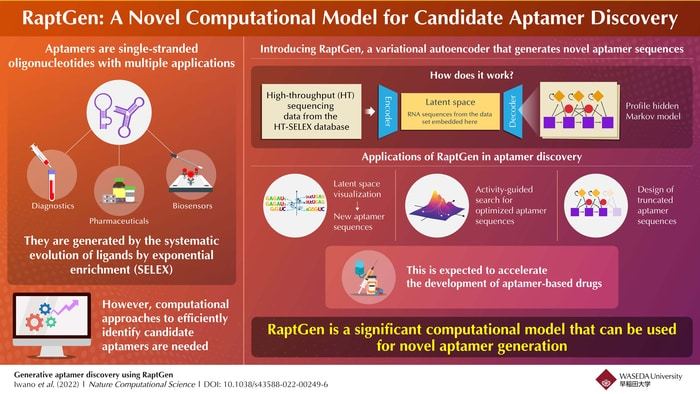
Aptamers are usually generated by an in vitro selection and amplification technology called systematic evolution of ligands by exponential enrichment, or SELEX. Briefly, SELEX is based on repeated cycles of binding, separation, and amplification of nucleotides. This process results in an enriched pool of nucleotide sequences that are then analyzed for candidate selection. High-throughput SELEX (HT-SELEX) can generate a vast number of aptamer candidates, but current practically-applicable sequencing only allows us to evaluate a limited number of these candidates (approximately 106). Therefore, computational processes are essential to optimize the discovery of new aptamers.

Variational autoencoder (VAE, a type of machine learning approach)-based compound designs have been reported to be beneficial in the discovery of other small molecules. Now, a team of researchers led by Professor Michiaki Hamada of the Graduate School of Advanced Science and Engineering in Waseda University, Japan, introduced RaptGen, a VAE that can be used for aptamer generation. In their paper, they describe how RaptGen uses a VAE with a profile hidden Markov Model decoder to create latent spaces in which sequences can form clusters. By using this latent representation, RaptGen was able to generate aptamers that were not included even in the original sequencing data or HT-SELEX dataset.

When asked how exactly RaptGen could boost aptamer discovery, Professor Hamada states, “RaptGen first visualizes a latent space with a sequence motif, then generates multiple new aptamer sequences via this latent space. For example, it searches for optimized aptamer sequences in the latent space by considering additional information after analyzing the activity of a subset of sequences. Additionally, RaptGen enables the design of shortened (or truncated) aptamer sequences.”

The team also successfully evaluated RaptGen’s performance using real-world data, by subjecting it to data from two independent HT-SELEX datasets. RaptGen could generate aptamer derivatives in an activity-guided manner and provide opportunities to optimize their activities. “This is important as it means that RaptGen can generate sequences having desired properties, such as the inhibition of certain enzymes or protein-protein interactions,” Professor Hamada explains. The application of these molecules could open many doors in the future.

Moving forward, the team plans to conduct extensive studies evaluating if alternative models can improve the performance of RaptGen and whether RaptGen could advance RNA aptamer generation by using RNA sequences. The only drawbacks of using RaptGen are the high computational cost and increased training time, both of which can be improved in further studies.

Professor Hamada summarizes by saying, “To the best of our knowledge, RaptGen is the only data-driven method that can design and optimize truncated aptamers directly from HT-SELEX data. We believe that in due time, RaptGen will be recognized as a key tool for efficient aptamer discovery.”

Here’s to their vision of a healthy and long-lived society with better therapeutics!
Japanese researchers discover a common vibrational mechanism in amorphous solids including glasses

Tyler O'Neal, Staff Editor DEVELOPER TOOLS June 6, 2022, 12:26 pm

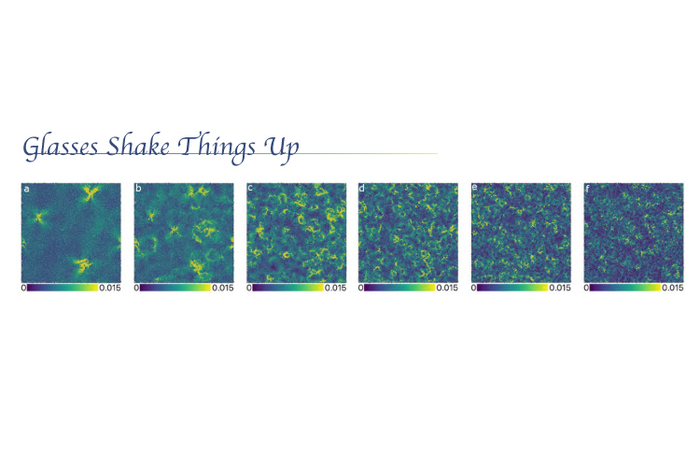
Scientists from the Institute of Industrial Science at The University of Tokyo have used molecular dynamics simulations to better understand the unusual properties of amorphous solids, such as glass. They found that certain dynamical defects help explain the allowed vibrational modes inside the material. This work may lead to controlling the properties of amorphous materials. Researchers at the Institute of Industrial Science, The University of Tokyo studied the anomalous properties of amorphous solids, including glasses, using computer simulations, and found a common vibrational mechanism underlying them, which may help control the glass properties

Sometimes the expensive glass is advertised as “crystal”, but to material scientists, this could not be further from the truth. Crystals are formed by atoms arranged in orderly, repeating patterns, while glass is a disordered, amorphous solid. Scientists know that, at low temperatures, many disordered materials have properties that are very similar to each other, including specific heat and thermal conductivity. Additionally, these properties differ significantly from those of materials made from ordered crystals. Furthermore, at a certain frequency range, glassy materials have a larger number of available vibration modes than crystals, known in the field as the “boson peak”. While various theories have been proposed, the underlying physical mechanisms for these observations have remained a question of active research.

Now, scientists from The University of Tokyo have used sophisticated molecular dynamics supercomputer simulations to numerically calculate the transverse and longitudinal dynamic structure factors of model glasses over a wide range of frequencies. They found that string-like vibrational motions, in which curved lines of particles packed into a “C” shape inside the material can move together, were found to be important drivers of the anomalous effects. “These dynamical defects provide a common explanation for the origin of the most fundamental dynamic modes of glassy systems,” first author Yuan-Chao Hu says. In addition to the boson peak, these string-like dynamic defects may commit the types of fast and slow relaxation observed in the particles making up the glass.

This research has many important implications for both basic science and industrial applications because the boson peak is found in many systems, not just glasses. “We show that the boson peak originates from quasi-localized vibrations of string-like dynamical defects,” senior author Hajime Tanaka says. Being about to explain this feature will shed light on many other types of disordered materials. It will also benefit the many users of smart devices because almost all smartphones, tablets, and touchscreen laptops rely on glass materials that the findings of this study may improve.

Japanese researchers create 'time machine' simulations for studying the lifecycle of ancestor galaxy cities

Tyler O'Neal, Staff Editor DEVELOPER TOOLS June 6, 2022, 11:00 am

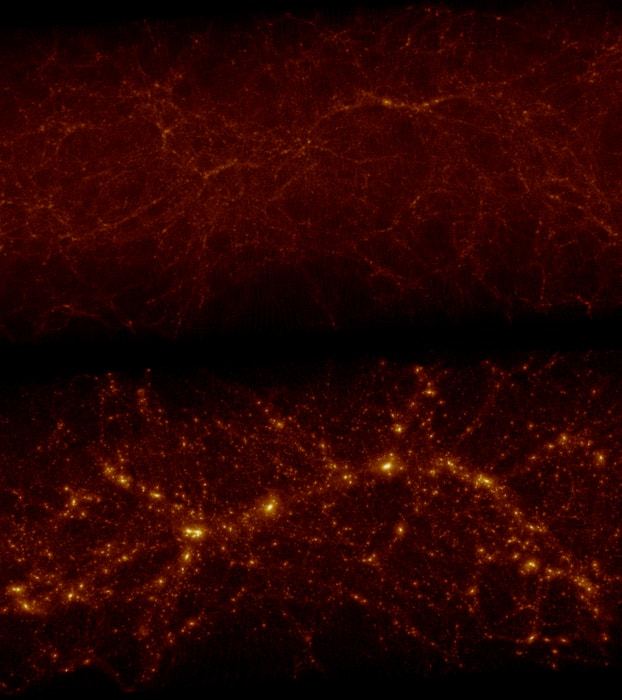
For the first time, researchers have created simulations that directly recreate the full life cycle of some of the largest collections of galaxies observed in the distant universe 11 billion years ago. Screenshots from the simulation show (top) the distribution of matter corresponding to the observed galaxy distribution at a light travel time of 11 billion years (when the Universe was only 2.76 billion years old or 20% its current age), and (bottom) the distribution of matter in the same region after 11 billion lights years or corresponding to our present time.  CREDIT Ata et al.

Cosmological simulations are crucial to studying how the universe became the shape it is today, but many do not typically match what astronomers observe through telescopes. Most are designed to match the real universe only in a statistical sense. Constrained cosmological simulations, on the other hand, are designed to directly reproduce the structures we observe in the universe. However, most existing simulations of this kind have been applied to our local universe, meaning close to Earth, but never for observations of the distant universe. 

A team of researchers, led by the Kavli Institute for the Physics and Mathematics of the Universe Project Researcher and Metin Ata and Project Assistant Professor Khee-Gan Lee, were interested in distant structures like massive galaxy protoclusters, which are ancestors of the present-day galaxy clusters before they could clump under their gravity. They found current studies of distant protoclusters were sometimes oversimplified, meaning they were done with simple models and not simulations. 

“We wanted to try developing a full simulation of the real distant universe to see how structures started out and how they ended,” said Ata. 

Their result was COSTCO (COnstrained Simulations of The COsmos Field).

Lee said developing the simulation was much like building a time machine. Because light from the distant universe is only reaching Earth now, the galaxies telescopes observe today are a snapshot of the past.

“It’s like finding an old black-and-white picture of your grandfather and creating a video of his life,” he said. 

In this sense, the researchers took snapshots of “young” grandparent galaxies in the universe and then fast-forwarded their age to study how clusters of galaxies would form. 

The light from galaxies the researchers used traveled a distance of 11 billion light-years to reach us.

What was most challenging was taking the large-scale environment into account.

“This is something that is very important for the fate of those structures whether they are isolated or associated with a bigger structure. If you don’t take the environment into account, then you get completely different answers. We were able to take the large scale environment into account consistently, because we have a full simulation, and that’s why our prediction is more stable,” said Ata.

Another important reason why the researchers created these simulations was to test the standard model of cosmology, that is used to describe the physics of the universe. By predicting the final mass and final distribution of structures in a given space, researchers could unveil previously undetected discrepancies in our current understanding of the universe.

Using their simulations, the researchers were able to find evidence of three already published galaxy protoclusters and disfavor one structure. On top of that, they were able to identify five more structures that consistently formed in their simulations. This includes the Hyperion proto-supercluster, the largest and earliest proto-supercluster known today that is 5000 times the mass of our Milky Way galaxy, which the researchers found out will collapse into a large 300 million light-year filament.

Their work is already being applied to other projects including those to study the cosmological environment of galaxies, and absorption lines of distant quasars to name a few.

  1. NC State researchers build model that finds best sites for electric vehicle charging stations
  2. Japan's NICT demos the World's first transmission of 1 petabit per second in a standard cladding diameter multi-core fiber

Page 9 of 20

  • 4
  • 5
  • 6
  • 7
  • 8
  • 9
  • 10
  • 11
  • 12
  • 13
POPULAR RIGHT NOW
  • Supercomputers replace ‘bathtub’ flood maps with physics-based digital twins of Britain’s coastline
    Supercomputers replace ‘bathtub’ flood maps with physics-based digital twins of Britain’s coastline
  • Supercomputers push neural quantum simulation beyond previous limits
    Supercomputers push neural quantum simulation beyond previous limits
  • Intel’s AI supercomputing revival: Q2 financial surge signals new era for CPU-powered HPC infrastructure
    Intel’s AI supercomputing revival: Q2 financial surge signals new era for CPU-powered HPC infrastructure
  • AWS supercomputing investment reaches historic scale as Amazon’s AI strategy powers record financial results
    AWS supercomputing investment reaches historic scale as Amazon’s AI strategy powers record financial results
  • AI infrastructure financing fears shake semiconductor sector
    AI infrastructure financing fears shake semiconductor sector
  • Catching the wave of the future: Supercomputers unlock the hidden dynamics of Venus
    Catching the wave of the future: Supercomputers unlock the hidden dynamics of Venus
  • NCAR supercomputers run planet scale climate experiments impossible in the real world
    NCAR supercomputers run planet scale climate experiments impossible in the real world
  • AI hunts the cosmos: Machine learning helps astronomers discover the first ‘Wandering’ supermassive black hole caught destroying a star
    AI hunts the cosmos: Machine learning helps astronomers discover the first ‘Wandering’ supermassive black hole caught destroying a star
  • Supercomputing for the masses: Meta's vision of a personal superintelligence for everyone
    Supercomputing for the masses: Meta's vision of a personal superintelligence for everyone
  • NVIDIA helps turn AI compute into a new asset class as Wall Street mobilizes $500 billion
    NVIDIA helps turn AI compute into a new asset class as Wall Street mobilizes $500 billion
THIS YEAR'S MOST READ
  • Wall Street wants to trade supercomputing power like oil
    Wall Street wants to trade supercomputing power like oil
  • Beamforming the future: BeammWave's 6G push signals the rise of orbital-terrestrial wireless networks
    Joakim Axmon
    Joakim Axmon
  • Cosmic ambition at scale: UK’s supercomputer unlocks a 2.5 petabytes universe
    Cosmic ambition at scale: UK’s supercomputer unlocks a 2.5 petabytes universe
  • Hidden order, revealed at scale: Supercomputing, electron ptychography uncover the inner workings of relaxor ferroelectrics
    Hidden order, revealed at scale: Supercomputing, electron ptychography uncover the inner workings of relaxor ferroelectrics
  • Intel's Q1 results signal supercomputing surge driving Xeon momentum
    Intel's Q1 results signal supercomputing surge driving Xeon momentum
  • When stars fall apart: Supercomputing reveals the hidden physics of black holes
    When stars fall apart: Supercomputing reveals the hidden physics of black holes
  • MIT develops computational framework to probe dark matter via gravitational waves
    MIT develops computational framework to probe dark matter via gravitational waves
  • Explainable AI moves into the watershed: FAMU-FSU engineers build predictive framework for real-time E. coli forecasting
    FAMU-FSU College of Engineering Assistant Professor Nasrin Alamdari. (Scott Holstein/FAMU-FSU College of Engineering)
    FAMU-FSU College of Engineering Assistant Professor Nasrin Alamdari. (Scott Holstein/FAMU-FSU College of Engineering)
  • Multi-layer simulations reveal the hidden supply chain of solar prominences
    Multi-layer simulations reveal the hidden supply chain of solar prominences
  • Japanese scientists decode dolphin speed with supercomputing: Turbulence, vortices, and the hidden physics of propulsion
    Japanese scientists decode dolphin speed with supercomputing: Turbulence, vortices, and the hidden physics of propulsion
  • FRONTPAGE
  • LATEST
  • POPULAR
  • REGISTER
  • SOCIAL
  • VIDEO
  • SUBSCRIPTION
  • RSS
  • GUIDELINES
  • PRIVACY
  • TOS
  • ABOUT
  • +1 (816) 799-4488
  • editorial@supercomputingonline.com
© 2001 - 2026 SuperComputingOnline.com, LLC. All rights reserved. This material may not be published, broadcast, rewritten or redistributed without permission.
Sign In
  • FRONT PAGE
  • LATEST
    • MEDIA KIT
    • MOST READ
    • RSS FEED
    • ACADEMIA
    • AEROSPACE
    • APPLICATIONS
    • ASTRONOMY
    • AUTOMOTIVE
    • BIG DATA
    • BIOLOGY
    • CHEMISTRY
    • CLIENTS
    • CLOUD
    • DEFENSE
    • DEVELOPER TOOLS
    • EARTH SCIENCES
    • ECONOMICS
    • ENGINEERING
    • ENTERTAINMENT
    • HEALTH
    • INDUSTRY
    • INTERCONNECTS
    • GAMING
    • GOVERNMENT
    • MANUFACTURING
    • MIDDLEWARE
    • MOVIES
    • NETWORKS
    • OIL & GAS
    • PHYSICS
    • PROCESSORS
    • RETAIL
    • SCIENCE
    • STORAGE
    • SYSTEMS
    • VISUALIZATION
  • VIDEOS
    • ADD YOUR VIDEOS
    • MANAGE VIDEOS
  • COMMUNITY
    • TRADE SHOWS
    • SOCIAL NETWORK VIDEOS
    • SURVEYS
    • APPLICATIONS BROWSER
    • CONVERSATION INBOX
    • SOCIAL ADVERTISER
    • GROUPS
    • MARKETPLACE LISTINGS
    • PAGES
    • LEADERBOARD
    • POINTS LISTING
      • BADGES
    • PRIVACY CONFIRM REQUEST
    • PRIVACY CREATE REQUEST

Hey there! We noticed you’re using an ad blocker.