SUPERCOMPUTING NEWS SUPERCOMPUTING NEWS
    • MEDIA KIT
    • MOST READ
    • RSS FEED
    • ACADEMIA
    • AEROSPACE
    • APPLICATIONS
    • ASTRONOMY
    • AUTOMOTIVE
    • BIG DATA
    • BIOLOGY
    • CHEMISTRY
    • CLIENTS
    • CLOUD
    • DEFENSE
    • DEVELOPER TOOLS
    • EARTH SCIENCES
    • ECONOMICS
    • ENGINEERING
    • ENTERTAINMENT
    • GAMING
    • GOVERNMENT
    • HEALTH
    • OIL & GAS
    • INDUSTRY
    • INTERCONNECTS
    • MANUFACTURING
    • MIDDLEWARE
    • MOVIES
    • NETWORKS
    • PHYSICS
    • PROCESSORS
    • RETAIL
    • SCIENCE
    • STORAGE
    • SYSTEMS
    • VISUALIZATION
    • AcyMailing subscription form

    • ADD YOUR VIDEOS
    • MANAGE VIDEOS
    • CONVERSATION INBOX
    • SOCIAL ADVERTISER
    • SOCIAL NETWORK VIDEOS
    • SURVEYS
    • GROUPS
    • PAGES
    • MARKETPLACE LISTINGS
    • APPLICATIONS BROWSER
    • PRIVACY CONFIRM REQUEST
    • PRIVACY CREATE REQUEST
    • LEADERBOARD
    • POINTS LISTING
      • BADGES
    • TRADE SHOWS
Sign In
Tyler O'Neal, Staff Editor DEVELOPER TOOLS May 2, 2022, 5:41 am

French scientists develop model that predicts forest tree growth in new environments

The acceleration of climate change has increased forest dieback in a wide range of tree species and environments. In response to this alarming situation, transplantation strategies adapted to evolutionary mechanisms are being studied, for example, the idea of transplanting trees to more compatible climates. A team of INRAE and CNRS scientists have developed models based on height growth in maritime pine to predict how trees respond in a given environment. Their results, published on April 29th in The American Naturalist, show that models which incorporate genomic and climatic data predict tree height growth better than pre-existing models based on climatic data alone. This research could rapidly lead to tangible applications in forest conservation and management, notably based on transplantation strategies.
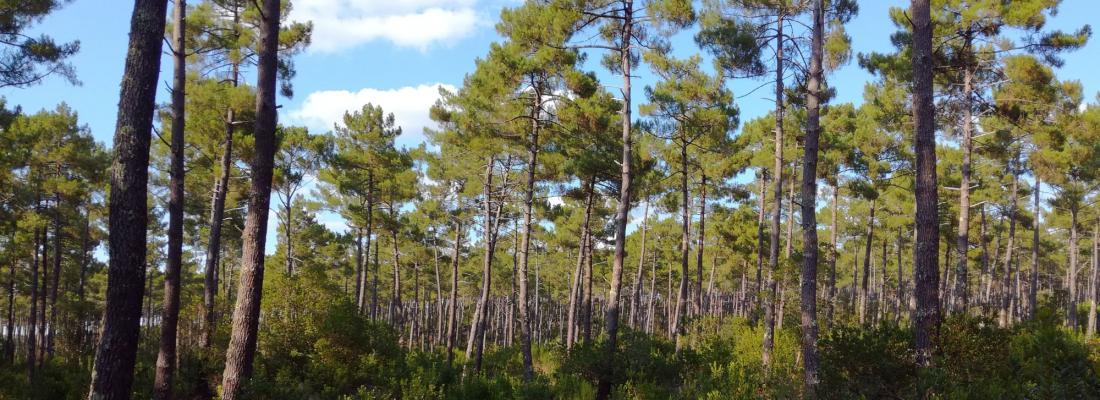
© Unité conservatoire génétique de Lacanau

Trees are an essential cornerstone in the functioning and survival of forest ecosystems. But as global change accelerates, certain tree populations, too slow to adapt, may experience population decline or even extinction. Conservation and forest management strategies can be implemented to avoid such scenarios, such as moving trees to more compatible climates, known as assisted gene flow, or to threatened populations that lack genetic diversity, known as an evolutionary rescue. Because such strategies commit forest management authorities for several years, it is important to anticipate how transplanted trees will respond to their new environment.

Until now, prediction models have been based mainly on the climate of origin of transplanted tree populations. However, genomic data provide valuable information on adaptive processes in trees, such as growth. With climatic and genomic information more and more accessible thanks to the continually decreasing cost of sequencing technology, the research team developed models combining these two types of data to improve the robustness and accuracy of predictions.

A model based on a large-scale experimental scheme of maritime pine in France, Spain, and Portugal

Researchers developed the models using maritime pine, an emblematic species of the Mediterranean basin. An experimental monitoring system was set up at five sites, in France (Cestas Pierroton), Spain (Asturias, Cáceres, and Madrid), and Portugal (Fundão), with trees from 34 maritime pine populations collected throughout the species' natural habitat. Scientists focused on predicting the height growth of trees, a critical factor in economic and ecological terms given that the fastest growing trees have a higher probability of survival and reproduction.

Results show that observed height variations in maritime pine are explained by the different gene pools from which they originate and by the different climates in which they’ve evolved. The incorporation of climatic and genomic data into the models improved predictions of population height growth by an average of 14–25% depending on the experimental site, compared to models based on climatic data alone.

The findings hold potential for the development of models to predict how transplanted tree populations adapt to a new environment in the context of forest conservation and management.

Georgetown shows how climate change could spark the next pandemic

Tyler O'Neal, Staff Editor DEVELOPER TOOLS April 29, 2022, 5:00 am

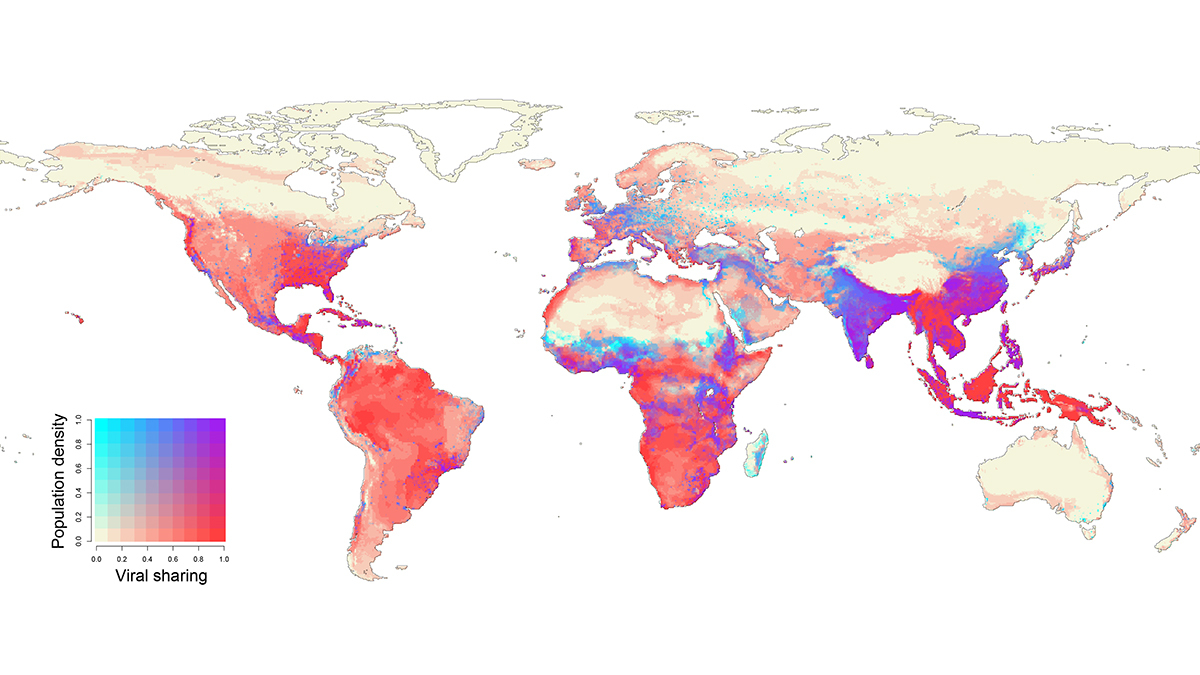
As the Earth’s climate continues to warm, researchers predict wild animals will be forced to relocate their habitats — likely to regions with large human populations — dramatically increasing the risk of a viral jump to humans that could lead to the next pandemic. Novel viral-sharing events coincide with human population centers. In 2070, human population centers in equatorial Africa, south China, India and Southeast Asia will overlap with projected hotspots of cross-species viral transmission in wildlife. (Image courtesy of Colin Carlson/GUMC)

This link between climate change and viral transmission is described by an international research team led by scientists at Georgetown University.

In their study, the scientists conducted the first comprehensive assessment of how climate change will restructure the global mammalian virome. The work focuses on geographic range shifts — the journeys that species will undertake as they follow their habitats into new areas. As they encounter other mammals for the first time, the study projects they will share thousands of viruses.

The scientists say these shifts bring greater opportunities for viruses like Ebola or coronaviruses to emerge in new areas, making them harder to track, and into new types of animals, making it easier for viruses to jump across a “stepping stone” species into humans.

“The closest analogy is actually the risks we see in the wildlife trade,” says the study’s lead author Colin Carlson, PhD, an assistant research professor at the Center for Global Health Science and Security at Georgetown University Medical Center. “We worry about markets because bringing unhealthy animals together in unnatural combinations creates opportunities for this stepwise process of emergence — like how SARS jumped from bats to civets, then civets to people. But markets aren’t special anymore; in a changing climate, that kind of process will be the reality in nature just about everywhere.”

Of concern is that animal habitats will move disproportionately in the same places as human settlements, creating new hotspots of spillover risk. Much of this process may already be underway in today’s 1.2 degrees warmer world, and efforts to reduce greenhouse gas emissions may not stop these events from unfolding.

An additional important finding is an impact rising temperatures will have on bats, which account for the majority of novel viral-sharing. Their ability to fly will allow them to travel long distances and share the most viruses. Because of their central role in viral emergence, the greatest impacts are projected in southeast Asia, a global hotspot of bat diversity.

“At every step,” said Carlson, “our simulations have taken us by surprise. We’ve spent years double-checking those results, with different data and different assumptions, but the models always lead us to these conclusions. It’s a really stunning example of just how well we can, actually, predict the future if we try.”

As viruses start to jump between host species at unprecedented rates, the authors say that the impacts on conservation and human health could be stunning.

“This mechanism adds yet another layer to how climate change will threaten human and animal health,” says the study’s co-lead author, Gregory Albery, PhD, a postdoctoral fellow in the Department of Biology in the Georgetown University College of Arts and Sciences.

“It’s unclear exactly how these new viruses might affect the species involved, but it’s likely that many of them will translate to new conservation risks and fuel the emergence of novel outbreaks in humans.”

Altogether, the study suggests that climate change will become the biggest upstream risk factor for disease emergence — exceeding higher-profile issues like deforestation, wildlife trade and industrial agriculture. The authors say the solution is to pair wildlife disease surveillance with real-time studies of environmental change.

“When a Brazilian free-tailed bat makes it all the way to Appalachia, we should be invested in knowing what viruses are tagging along,” says Carlson. “Trying to spot these host jumps in real-time is the only way we’ll be able to prevent this process from leading to more spillovers and more pandemics.”

“We’re closer to predicting and preventing the next pandemic than ever,” says Carlson. “This is a big step towards prediction — now we have to start working on the harder half of the problem.”

“The COVID-19 pandemic, and the previous spread of SARS, Ebola, and Zika, show how a virus jumping from animals to humans can have massive effects. To predict their jump to humans, we need to know about their spread among other animals,” said Sam Scheiner, a program director with the U.S. National Science Foundation (NSF), which funded the research. “This research shows how animal movements and interactions due to a warming climate might increase the number of viruses jumping between species.”

AI tech helps Johns Hopkins researchers peer into the brains of mice

Tyler O'Neal, Staff Editor DEVELOPER TOOLS April 28, 2022, 3:28 pm

Johns Hopkins biomedical engineers have developed an artificial intelligence (AI) training strategy to capture images of mouse brain cells in action. The researchers say the AI system, in concert with specialized ultra-small microscopes, makes it possible to find precisely where and when cells are activated during movement, learning, and memory. The data gathered with this technology could someday allow scientists to understand how the brain functions and is affected by the disease.  

“When a mouse’s head is restrained for imaging, its brain activity may not truly represent its neurological function,” says Xingde Li, Ph.D., professor of biomedical engineering at the Johns Hopkins University School of Medicine. “To map brain circuits that control daily functions in mammals, we need to see precisely what is happening among individual brain cells and their connections, while the animal is freely moving around, eating and socializing.” Photo credit: metamorworks/Getty Images

To gather this extremely detailed data, Li’s team developed ultra-small microscopes that the mice can wear on the top of their head. Measuring a couple of millimeter in diameter, the size of these microscopes limit the imaging technology they can carry onboard. In comparison to benchtop models, the frame rate on the miniature microscopes is low, which makes them susceptible to interference from motion. Disturbances such as the mouse’s breathing or heart rate would affect the accuracy of the data these microscopes can capture. Researchers estimate that Li’s miniature microscope would need to exceed 20 frames per second to eliminate all the disturbances from the motion of a freely moving mouse.

“There are two ways to increase frame rate,” says Li. “You can increase the scanning speed and you can decrease the number of points scanned.”

In previous research, Li’s engineering team quickly found they hit the physical limits of the scanner, reaching six frames per second, which maintained excellent image quality but was far below the required rate. So, the team moved on to the second strategy for increasing frame rate — decreasing the number of points scanned. However, similar to reducing the number of pixels in an image, this strategy would cause the microscope to capture lower-resolution data.

Li hypothesized that an AI program could be trained to recognize and restore the missing points, enhancing the images to a higher resolution. Such AI training protocols are used when it is impossible or time-consuming to create a computer program for a task, such as reliably recognizing a cluster of features as a human face. Instead, computer scientists use the approach of letting computers learn to program themselves through processing large sets of data.

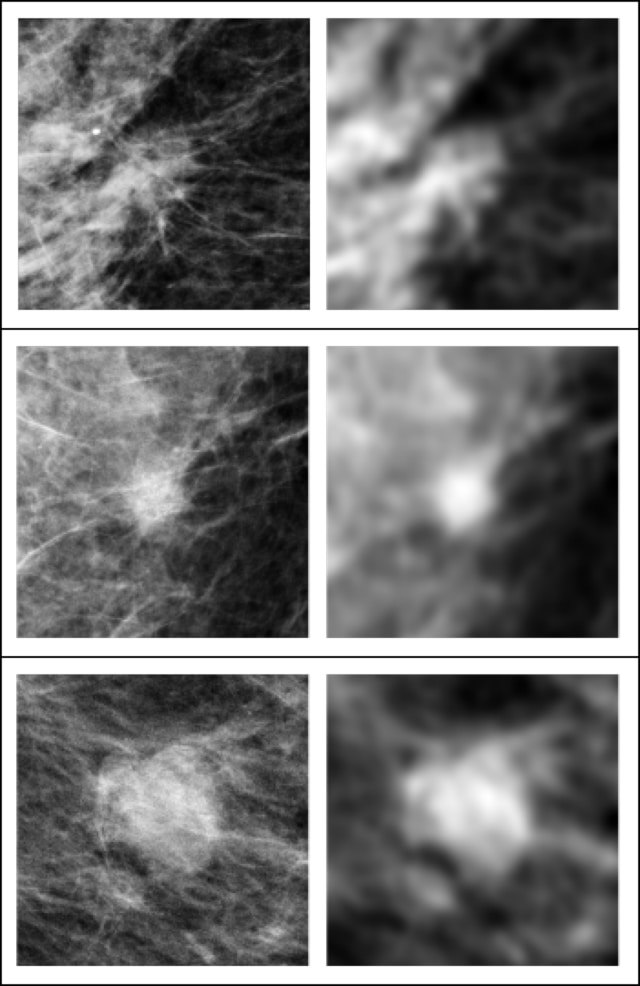
One significant challenge in the proposed AI approach was the lack of similar images of mouse brains to train the AI against. To overcome this gap, the team developed a two-stage training strategy. The researchers began training the AI to identify the building blocks of the brain from images of fixed samples of mouse brain tissue. They next trained the AI to recognize these building blocks in a head-restrained living mouse under their ultra-small microscope. This step trained the AI to recognize brain cells with natural structural variation and a small bit of motion caused by the movement of the mouse’s breathing and heartbeat. In these three examples of soft tissue lesions, the images are unperturbed on the left column and blurred on the right column. The AI system was sensitive to the blurring, while the radiologists were not. This showed that the AI system relies on details in soft tissue lesions that are considered irrelevant by the radiologists. Image courtesy of Taro Makino, NYU’s Center for Data Science

“The hope was that whenever we collect data from a moving mouse, it will still be similar enough for the AI network to recognize,” says Li.

Then, the researchers tested the AI program to see if it could accurately enhance mouse brain images by incrementally increasing the frame rate. Using a reference image, the researchers reduced the microscope scanning points by factors of 2, 4, 8, 16, and 32 and observed how accurately the AI could enhance the image and restore the image resolution.

The researchers found that the AI could adequately restore the image quality up to 26 frames per second. 

The team then tested how well the AI tool performed in combination with a mini microscope attached to the head of a moving mouse. With the combination of AI and microscope, the researchers were able to precisely see activity spikes of individual brain cells activated by the mouse walking, rotating, and generally exploring its environment.

“We could never have seen this information at such high resolution and frame rate before,” says Li. “This development could make it possible to gather more information on how the brain is dynamically connected to the action on a cellular level.”

The researchers say that with more training, the AI program may be able to accurately interpret images up to 52 or even 104 frames per second.

Other researchers involved in this study include Honghua Guan, Dawei Li, Hyeon-cheol Park, Ang Li, Yungtian Gau, and Dwight Bergles of the Johns Hopkins University School of Medicine; Yuanlei Yue and Hui Lu of George Washington University; and Ming-Jun Li from Corning Inc.

  1. UK ecologists develop modeling tools to predict the distributions of species
  2. Tropical cyclones could double globally by 2050

Page 12 of 20

  • 7
  • 8
  • 9
  • 10
  • 11
  • 12
  • 13
  • 14
  • 15
  • 16
POPULAR RIGHT NOW
  • Supercomputers replace ‘bathtub’ flood maps with physics-based digital twins of Britain’s coastline
    Supercomputers replace ‘bathtub’ flood maps with physics-based digital twins of Britain’s coastline
  • Supercomputers push neural quantum simulation beyond previous limits
    Supercomputers push neural quantum simulation beyond previous limits
  • Intel’s AI supercomputing revival: Q2 financial surge signals new era for CPU-powered HPC infrastructure
    Intel’s AI supercomputing revival: Q2 financial surge signals new era for CPU-powered HPC infrastructure
  • AWS supercomputing investment reaches historic scale as Amazon’s AI strategy powers record financial results
    AWS supercomputing investment reaches historic scale as Amazon’s AI strategy powers record financial results
  • AI infrastructure financing fears shake semiconductor sector
    AI infrastructure financing fears shake semiconductor sector
  • Catching the wave of the future: Supercomputers unlock the hidden dynamics of Venus
    Catching the wave of the future: Supercomputers unlock the hidden dynamics of Venus
  • NCAR supercomputers run planet scale climate experiments impossible in the real world
    NCAR supercomputers run planet scale climate experiments impossible in the real world
  • AI hunts the cosmos: Machine learning helps astronomers discover the first ‘Wandering’ supermassive black hole caught destroying a star
    AI hunts the cosmos: Machine learning helps astronomers discover the first ‘Wandering’ supermassive black hole caught destroying a star
  • Supercomputing for the masses: Meta's vision of a personal superintelligence for everyone
    Supercomputing for the masses: Meta's vision of a personal superintelligence for everyone
  • NVIDIA helps turn AI compute into a new asset class as Wall Street mobilizes $500 billion
    NVIDIA helps turn AI compute into a new asset class as Wall Street mobilizes $500 billion
THIS YEAR'S MOST READ
  • Wall Street wants to trade supercomputing power like oil
    Wall Street wants to trade supercomputing power like oil
  • Beamforming the future: BeammWave's 6G push signals the rise of orbital-terrestrial wireless networks
    Joakim Axmon
    Joakim Axmon
  • Cosmic ambition at scale: UK’s supercomputer unlocks a 2.5 petabytes universe
    Cosmic ambition at scale: UK’s supercomputer unlocks a 2.5 petabytes universe
  • Hidden order, revealed at scale: Supercomputing, electron ptychography uncover the inner workings of relaxor ferroelectrics
    Hidden order, revealed at scale: Supercomputing, electron ptychography uncover the inner workings of relaxor ferroelectrics
  • Intel's Q1 results signal supercomputing surge driving Xeon momentum
    Intel's Q1 results signal supercomputing surge driving Xeon momentum
  • When stars fall apart: Supercomputing reveals the hidden physics of black holes
    When stars fall apart: Supercomputing reveals the hidden physics of black holes
  • MIT develops computational framework to probe dark matter via gravitational waves
    MIT develops computational framework to probe dark matter via gravitational waves
  • Explainable AI moves into the watershed: FAMU-FSU engineers build predictive framework for real-time E. coli forecasting
    FAMU-FSU College of Engineering Assistant Professor Nasrin Alamdari. (Scott Holstein/FAMU-FSU College of Engineering)
    FAMU-FSU College of Engineering Assistant Professor Nasrin Alamdari. (Scott Holstein/FAMU-FSU College of Engineering)
  • Multi-layer simulations reveal the hidden supply chain of solar prominences
    Multi-layer simulations reveal the hidden supply chain of solar prominences
  • Japanese scientists decode dolphin speed with supercomputing: Turbulence, vortices, and the hidden physics of propulsion
    Japanese scientists decode dolphin speed with supercomputing: Turbulence, vortices, and the hidden physics of propulsion
  • FRONTPAGE
  • LATEST
  • POPULAR
  • REGISTER
  • SOCIAL
  • VIDEO
  • SUBSCRIPTION
  • RSS
  • GUIDELINES
  • PRIVACY
  • TOS
  • ABOUT
  • +1 (816) 799-4488
  • editorial@supercomputingonline.com
© 2001 - 2026 SuperComputingOnline.com, LLC. All rights reserved. This material may not be published, broadcast, rewritten or redistributed without permission.
Sign In
  • FRONT PAGE
  • LATEST
    • MEDIA KIT
    • MOST READ
    • RSS FEED
    • ACADEMIA
    • AEROSPACE
    • APPLICATIONS
    • ASTRONOMY
    • AUTOMOTIVE
    • BIG DATA
    • BIOLOGY
    • CHEMISTRY
    • CLIENTS
    • CLOUD
    • DEFENSE
    • DEVELOPER TOOLS
    • EARTH SCIENCES
    • ECONOMICS
    • ENGINEERING
    • ENTERTAINMENT
    • HEALTH
    • INDUSTRY
    • INTERCONNECTS
    • GAMING
    • GOVERNMENT
    • MANUFACTURING
    • MIDDLEWARE
    • MOVIES
    • NETWORKS
    • OIL & GAS
    • PHYSICS
    • PROCESSORS
    • RETAIL
    • SCIENCE
    • STORAGE
    • SYSTEMS
    • VISUALIZATION
  • VIDEOS
    • ADD YOUR VIDEOS
    • MANAGE VIDEOS
  • COMMUNITY
    • TRADE SHOWS
    • SOCIAL NETWORK VIDEOS
    • SURVEYS
    • APPLICATIONS BROWSER
    • CONVERSATION INBOX
    • SOCIAL ADVERTISER
    • GROUPS
    • MARKETPLACE LISTINGS
    • PAGES
    • LEADERBOARD
    • POINTS LISTING
      • BADGES
    • PRIVACY CONFIRM REQUEST
    • PRIVACY CREATE REQUEST

Hey there! We noticed you’re using an ad blocker.