

SUPERCOMPUTING NEWS SUPERCOMPUTING NEWS
    • MEDIA KIT
    • MOST READ
    • RSS FEED
    • ACADEMIA
    • AEROSPACE
    • APPLICATIONS
    • ASTRONOMY
    • AUTOMOTIVE
    • BIG DATA
    • BIOLOGY
    • CHEMISTRY
    • CLIENTS
    • CLOUD
    • DEFENSE
    • DEVELOPER TOOLS
    • EARTH SCIENCES
    • ECONOMICS
    • ENGINEERING
    • ENTERTAINMENT
    • GAMING
    • GOVERNMENT
    • HEALTH
    • OIL & GAS
    • INDUSTRY
    • INTERCONNECTS
    • MANUFACTURING
    • MIDDLEWARE
    • MOVIES
    • NETWORKS
    • PHYSICS
    • PROCESSORS
    • RETAIL
    • SCIENCE
    • STORAGE
    • SYSTEMS
    • VISUALIZATION
    • AcyMailing subscription form

    • ADD YOUR VIDEOS
    • MANAGE VIDEOS
    • CONVERSATION INBOX
    • SOCIAL ADVERTISER
    • SOCIAL NETWORK VIDEOS
    • SURVEYS
    • GROUPS
    • PAGES
    • MARKETPLACE LISTINGS
    • APPLICATIONS BROWSER
    • PRIVACY CONFIRM REQUEST
    • PRIVACY CREATE REQUEST
    • LEADERBOARD
    • POINTS LISTING
      • BADGES
    • TRADE SHOWS
Sign In
Groundbreaking software developed by a Spanish team set to revolutionize drug delivery design
Tyler O'Neal, Staff Editor ENGINEERING October 4, 2024, 9:00 am

Groundbreaking software developed by a Spanish team set to revolutionize drug delivery design

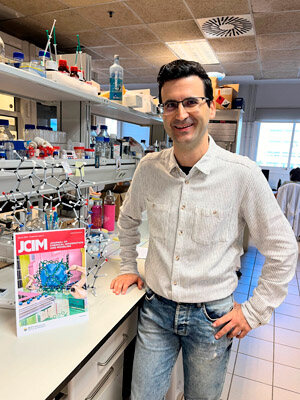
Researchers at the Universitat Politècnica de València (UPV) and the University of Oxford have collaborated on a transformative project, creating innovative software to revolutionize the design of molecular boxes for drug encapsulation and release.

The Institute for Molecular Recognition and Technological Development (IDM) team at UPV and their counterparts at the University of Oxford have introduced CageCavityCalc (C3) software. This groundbreaking tool facilitates the intricate process of designing molecular boxes for various applications.

Enhanced Drug Delivery

The newly developed software, CageCavityCalc (C3), utilizes a cutting-edge algorithm that allows for the automated calculation and visualization of the cavity size of molecular boxes. This advancement is crucial for applications such as drug encapsulation, particularly for administering anticancer drugs.

Lead researcher Vicente Martí Centelles highlights the significance of this software, explaining how it provides essential information to optimize the design of molecular boxes, ensuring the efficient release of drugs into the organism.

Simplified Design Process

In the past, designing molecular boxes with specific properties has been challenging, requiring the use of complex 'command-line' software. CageCavityCalc has simplified the process through a user-friendly graphical interface, enabling non-specialists to utilize the tool without needing advanced computer programming skills.

One of the key advantages of CageCavityCalc is its efficiency and simplicity, further enhanced by its free and open-source nature. This software streamlines cavity calculations, facilitating the development of new functional molecular boxes with tailored properties for diverse applications.

The transformative impact of CageCavityCalc in revolutionizing drug delivery design is captured in a research article published in the Journal of Chemical Information and Modeling titled "CageCavityCalc (C3): A Computational Tool for Calculating and Visualizing Cavities in Molecular Cages.

Inspiring Innovation at UPV

This pioneering development aligns with UPV's commitment to fostering innovation and technological advancement. The collaboration between UPV and the University of Oxford exemplifies the power of cross-disciplinary partnerships in driving groundbreaking research that has the potential to impact the pharmaceutical industry and beyond significantly.

Beyond this remarkable development, UPV continues to make strides in various fields, recently being recognized as the best polytechnic university in Spain by the Shanghai ranking for another consecutive year.

As we witness the unveiling of transformative technologies like CageCavityCalc, we are reminded of the profound impact that dedicated researchers and collaborative efforts can have on shaping a brighter, more innovative future.
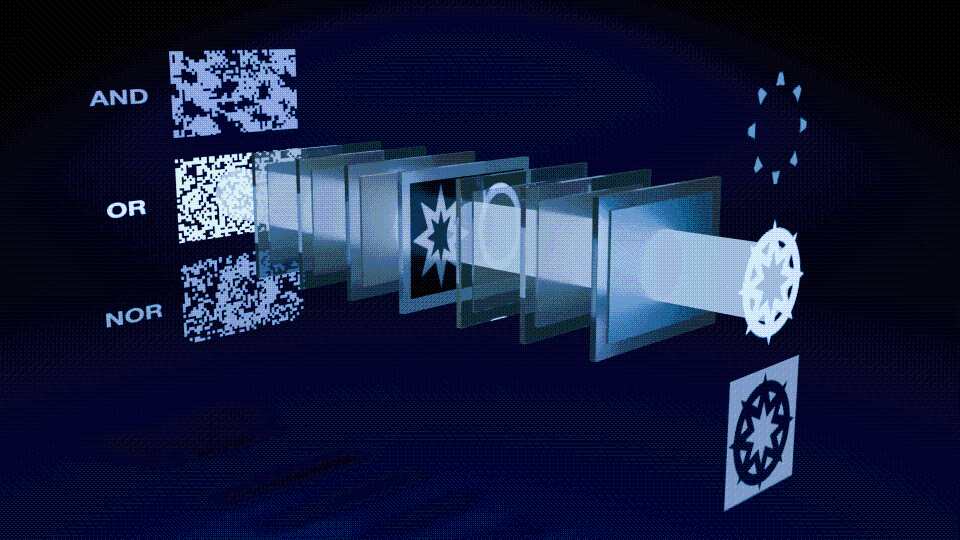

Diffraction casting: An overview of the proposed system displays an input image layer placed among other layers, which combine in various ways to execute logical operations when light passes through the stack. © 2024 Mashiko et al. CC-BY-ND

Japanese researchers introduce diffraction casting, optical-based parallel supercomputing

Tyler O'Neal, Staff Editor ENGINEERING October 3, 2024, 7:00 am

Oh, dear, let's see here. This fascinating thing called diffraction casting has something to do with logic and light. It's supposed to make computers faster and more efficient. Current supercomputers generate heat, you see, and that is not good. However, optical computing is like using light waves without creating heat. Sounds promising.

Back in the 1980s, Japanese innovators dabbled in optical computing using shadow casting, but the concept was a bit murky. Fast forward to today, and we have a clearer, more efficient iteration in the form of diffraction casting. This new approach leverages the properties of light waves to create more efficient optical elements. Their simulations with small images showed promising results, marking a significant step forward in the field.

The team behind diffraction casting envisions an all-optical system, where every process is executed optically until the final output, which is then converted to electronic format. It's akin to layering images in Photoshop, but with light waves. The lead author anticipates that this technology could be commercially viable in about a decade. They're also exploring the extension of this system to quantum computing, a prospect that adds a layer of complexity and excitement to the future of computing.

A paper by Ryosuke Mashiko, Makoto Naruse, and Ryoichi Horisaki, "Diffraction casting," discusses this. The graduate school's Information Science and Technology department has more information.

Now, let's delve deeper into these intriguing ideas and see where they might lead. By the way, if you want more detailed statistics, you can check out this link: Advanced Photonics Journal.

Retired U.S. Army Maj. Gen. Tom Tickner joins Woolpert to provide support for federal clients, projects

Retired U.S. Army Maj. Gen. Tom Tickner joins Woolpert to provide support for federal clients, projects

Tyler O'Neal, Staff Editor ENGINEERING October 2, 2024, 9:27 am

In a move that signifies dedication, expertise, and unwavering commitment to service, Woolpert proudly welcomes retired U.S. Army Major General Tom Tickner as the Managing Director of Federal Services. With a distinguished career spanning over 30 years in federal government roles, Tickner's appointment marks a significant leap in Woolpert's journey toward supporting federal clients and projects with unparalleled excellence, promising a transformative impact on the future of federal projects.

Tickner's illustrious background includes leadership roles with the U.S. Army Corps of Engineers, where he navigated complex challenges and spearheaded critical initiatives that shaped the nation's infrastructure landscape. His strategic acumen and proven track record in orchestrating high-stakes projects reflect an unwavering dedication to advancing national interests and security.

"I have seen firsthand the transformative impact of innovative solutions and strategic planning in addressing the diverse needs of federal agencies," Tickner shared. "Woolpert's unique blend of architecture, engineering, and geospatial expertise positions us to drive meaningful change in infrastructure development and national security initiatives."

Throughout his career, Tickner has exemplified a steadfast commitment to service, embodying the values of leadership, integrity, and excellence. Tickner earned a master's degree in civil engineering from the University of Colorado. His appointment at Woolpert heralds a new era of collaboration, innovation, and impactful solutions that will shape the future of federal projects across various domains.

Woolpert President Neil Churman expressed deep gratitude for Tickner's dedication to serving the country and highlighted the profound impact his leadership will have on Woolpert's federal clients. "Tom's exceptional experience and strategic vision will elevate our capabilities to new heights, as we remain committed to delivering cutting-edge solutions and ensuring the resilience of our nation's infrastructure," Churman remarked.

As Woolpert embarks on this transformative journey with Tickner at the helm, the stage is set for inspiring partnerships, groundbreaking projects, and a shared vision of serving the nation with unwavering dedication and passion. Together, they are poised to redefine standards of excellence, forge new frontiers in federal service, and leave an indelible mark on the landscape of national progress, uniting under a common goal.

In the able hands of Major General Tom Tickner, Woolpert stands prepared to embrace challenges, seize opportunities, and uphold the highest ideals of service and innovation as they pave the way for a brighter future for federal clients and projects, reaffirming our unwavering commitment to service and innovation.

  1. ESO's VISTA telescope captures unprecedented infrared map of the Milky Way
  2. IBS supercomputer Aleph shows abrupt intensification of northern wildfires due to future permafrost thawing

Page 10 of 78

  • 5
  • 6
  • 7
  • 8
  • 9
  • 10
  • 11
  • 12
  • 13
  • 14
POPULAR RIGHT NOW
  • Meta’s next frontier may not be social media; it may be supercomputing
    Meta’s next frontier may not be social media; it may be supercomputing
  • The future of cancer research runs on supercomputers
    Jill Mesirov, PhD
    Jill Mesirov, PhD
  • Rebuilding a lost continent: Supercomputers reveal Antarctica before the ice
    Antarctic ice meets the rocky coastline. Researchers traced landscape features from the two-kilometre-high coastal escarpment of Dronning Maud Land to the subglacial Gamburtsev Mountains, buried beneath 1–3 km of ice  Credit Matt Palmer
    Antarctic ice meets the rocky coastline. Researchers traced landscape features from the two-kilometre-high coastal escarpment of Dronning Maud Land to the subglacial Gamburtsev Mountains, buried beneath 1–3 km of ice Credit Matt Palmer
  • Supercomputers uncover a new class of cosmic explosions hidden in plain sight
    Supercomputers uncover a new class of cosmic explosions hidden in plain sight
  • AI supercharges the hunt for stronger magnets: Iowa State researchers launch a new era of intelligent materials discovery
    AI supercharges the hunt for stronger magnets: Iowa State researchers launch a new era of intelligent materials discovery
  • IBM's Historic stock collapse raises questions for the future of enterprise supercomputing
    IBM's Historic stock collapse raises questions for the future of enterprise supercomputing
  • Could a novel dark matter theory simultaneously resolve multiple cosmic enigmas? Supercomputer simulations provide a compelling, albeit currently unverified, potential solution
    Could a novel dark matter theory simultaneously resolve multiple cosmic enigmas? Supercomputer simulations provide a compelling, albeit currently unverified, potential solution
  • Melting icebergs may be reshaping Earth’s greatest ocean current
    Melting icebergs may be reshaping Earth’s greatest ocean current
  • Supercomputers replace ‘bathtub’ flood maps with physics-based digital twins of Britain’s coastline
    Supercomputers replace ‘bathtub’ flood maps with physics-based digital twins of Britain’s coastline
  • Supercomputers push neural quantum simulation beyond previous limits
    Supercomputers push neural quantum simulation beyond previous limits
MOST READ THIS YEAR
  • Cosmic ambition at scale: UK’s supercomputer unlocks a 2.5 petabytes universe
    Cosmic ambition at scale: UK’s supercomputer unlocks a 2.5 petabytes universe
  • Intel's Q1 results signal supercomputing surge driving Xeon momentum
    Intel's Q1 results signal supercomputing surge driving Xeon momentum
  • When stars fall apart: Supercomputing reveals the hidden physics of black holes
    When stars fall apart: Supercomputing reveals the hidden physics of black holes
  • FRONTPAGE
  • LATEST
  • POPULAR
  • REGISTER
  • SOCIAL
  • VIDEO
  • SUBSCRIPTION
  • RSS
  • GUIDELINES
  • PRIVACY
  • TOS
  • ABOUT
  • +1 (816) 799-4488
  • editorial@supercomputingonline.com
© 2001 - 2026 SuperComputingOnline.com, LLC. All rights reserved. This material may not be published, broadcast, rewritten or redistributed without permission.
Sign In
  • FRONT PAGE
  • LATEST
    • MEDIA KIT
    • MOST READ
    • RSS FEED
    • ACADEMIA
    • AEROSPACE
    • APPLICATIONS
    • ASTRONOMY
    • AUTOMOTIVE
    • BIG DATA
    • BIOLOGY
    • CHEMISTRY
    • CLIENTS
    • CLOUD
    • DEFENSE
    • DEVELOPER TOOLS
    • EARTH SCIENCES
    • ECONOMICS
    • ENGINEERING
    • ENTERTAINMENT
    • HEALTH
    • INDUSTRY
    • INTERCONNECTS
    • GAMING
    • GOVERNMENT
    • MANUFACTURING
    • MIDDLEWARE
    • MOVIES
    • NETWORKS
    • OIL & GAS
    • PHYSICS
    • PROCESSORS
    • RETAIL
    • SCIENCE
    • STORAGE
    • SYSTEMS
    • VISUALIZATION
  • VIDEOS
    • ADD YOUR VIDEOS
    • MANAGE VIDEOS
  • COMMUNITY
    • TRADE SHOWS
    • SOCIAL NETWORK VIDEOS
    • SURVEYS
    • APPLICATIONS BROWSER
    • CONVERSATION INBOX
    • SOCIAL ADVERTISER
    • GROUPS
    • MARKETPLACE LISTINGS
    • PAGES
    • LEADERBOARD
    • POINTS LISTING
      • BADGES
    • PRIVACY CONFIRM REQUEST
    • PRIVACY CREATE REQUEST

Hey there! We noticed you’re using an ad blocker.