SUPERCOMPUTING NEWS SUPERCOMPUTING NEWS
    • MEDIA KIT
    • MOST READ
    • RSS FEED
    • ACADEMIA
    • AEROSPACE
    • APPLICATIONS
    • ASTRONOMY
    • AUTOMOTIVE
    • BIG DATA
    • BIOLOGY
    • CHEMISTRY
    • CLIENTS
    • CLOUD
    • DEFENSE
    • DEVELOPER TOOLS
    • EARTH SCIENCES
    • ECONOMICS
    • ENGINEERING
    • ENTERTAINMENT
    • GAMING
    • GOVERNMENT
    • HEALTH
    • OIL & GAS
    • INDUSTRY
    • INTERCONNECTS
    • MANUFACTURING
    • MIDDLEWARE
    • MOVIES
    • NETWORKS
    • PHYSICS
    • PROCESSORS
    • RETAIL
    • SCIENCE
    • STORAGE
    • SYSTEMS
    • VISUALIZATION
    • AcyMailing subscription form

    • ADD YOUR VIDEOS
    • MANAGE VIDEOS
    • CONVERSATION INBOX
    • SOCIAL ADVERTISER
    • SOCIAL NETWORK VIDEOS
    • SURVEYS
    • GROUPS
    • PAGES
    • MARKETPLACE LISTINGS
    • APPLICATIONS BROWSER
    • PRIVACY CONFIRM REQUEST
    • PRIVACY CREATE REQUEST
    • LEADERBOARD
    • POINTS LISTING
      • BADGES
    • TRADE SHOWS
Sign In
Unraveling the mysteries of water's anomalous properties
Tyler O'Neal, Staff Editor ENGINEERING November 15, 2024, 5:00 am

Unraveling the mysteries of water's anomalous properties

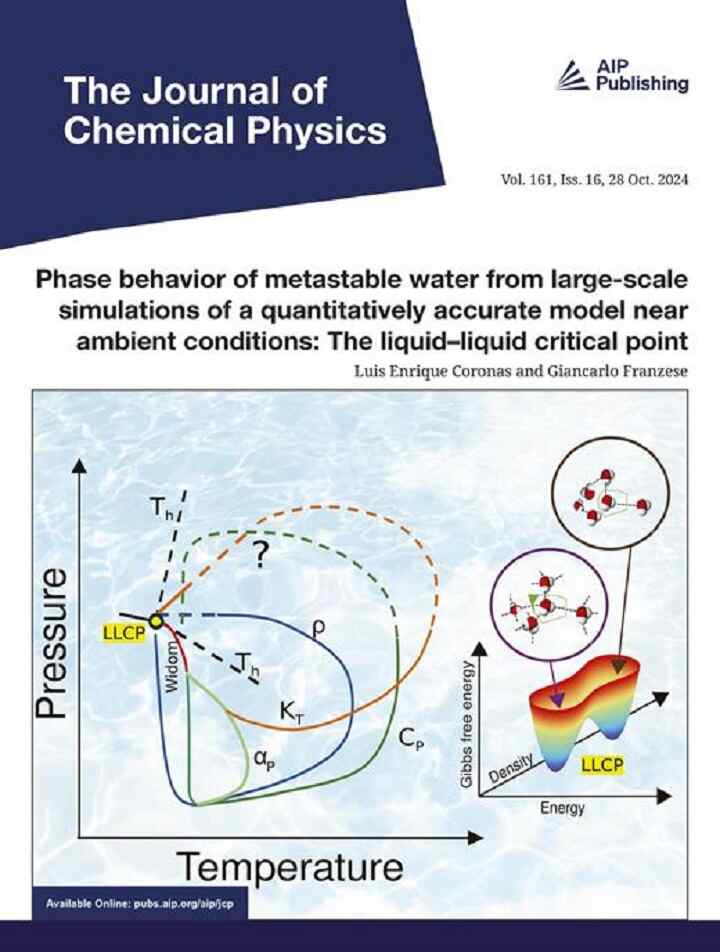
A recent breakthrough in studying water's unique behavior has shed light on an intriguing aspect of this essential molecule. The anomalies that characterize water's behavior continue to present a fascinating puzzle for the scientific community, prompting extensive research into the molecular mechanisms behind these distinct properties. A groundbreaking study led by Giancarlo Franzese and Luis Enrique Coronas from the University of Barcelona (UB) has introduced a new theoretical model that surpasses the limitations of previous methodologies, providing insights into how water behaves under extreme conditions.

Published in The Journal of Chemical Physics, this study not only significantly enhances our understanding of the physics of water but also has profound implications across various fields, including technology, biology, and biomedicine. The novel theoretical model, known as the CVF (named after the researchers Luis E. Coronas, Oriol Vilanova, and Giancarlo Franzese), effectively integrates ab initio quantum calculations, offering a more accurate representation of water's thermodynamic properties under diverse conditions.

One of the study's pivotal findings is the identification of a critical point between two liquid forms of water, which serves as the foundation of the anomalies that make water essential for life and crucial for many technological applications. Professor Giancarlo Franzese explains, "Although this conclusion has been reached in other water models, none possess the specific characteristics of the model we have developed in this study."

The CVF model's unique ability to accurately replicate thermodynamic properties such as compressibility and heat capacity distinguishes it from existing models. This achievement is due to incorporating quantum interactions between molecules, known as many-body problems extending beyond classical physics. Luis E. Coronas further clarifies, "Fluctuations in density, energy, and entropy in water are governed by these quantum interactions, with effects ranging from the nanometer scale to the macroscopic level."

The implications of this research extend far beyond theoretical physics, significantly impacting technology and biomedicine. The findings could spur the development of advanced biotechnologies and offer potential solutions for treating neurodegenerative diseases. Additionally, the CVF model can perform calculations in scenarios where other models falter, paving the way for biotechnological innovations.

As we continue to unravel the enigmatic properties of water, the importance of large-scale supercomputer simulations in understanding these anomalies cannot be overstated. This research spans technology and biomedicine, with potential applications including the creation of advanced biotechnologies and novel medical treatments. With this newfound understanding, we move closer to harnessing the unique characteristics of water to tackle pressing challenges across diverse fields.

The publication of this study marks a significant milestone in our quest to comprehend the inexplicable properties of water. As we delve deeper into the molecular intricacies of this vital molecule, the CVF model opens up a world of possibilities for scientific exploration and technological advancement, paving the way for innovative solutions to complex challenges.

Incredible findings from the James Webb Space Telescope reshape our understanding of how galaxies form

Incredible findings from the James Webb Space Telescope reshape our understanding of how galaxies form

Tyler O'Neal, Staff Editor ENGINEERING November 12, 2024, 8:00 am

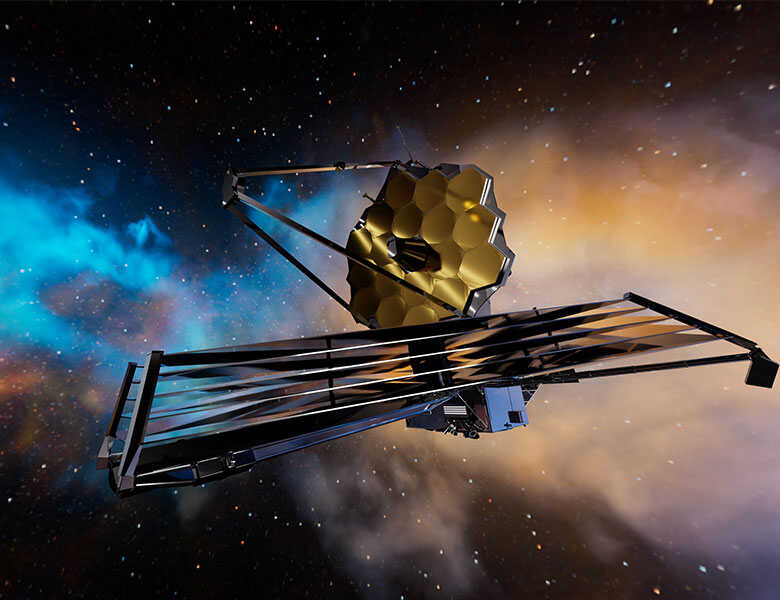
In a thrilling turn of events, the remarkable James Webb Space Telescope (JWST) has made discoveries that could revolutionize our understanding of the cosmos. Case Western Reserve University research challenges the conventional theory of galaxy formation, prompting astronomers to reconsider their fundamental views of the early universe.

The standard model of galaxy formation has long suggested that the JWST would detect faint signals from small, primitive galaxies, which were thought to have formed under the influence of invisible dark matter in the universe's infancy. However, the latest data contradicts these assumptions, presenting a picture that deviates from this widely accepted hypothesis.

Professor Stacy McGaugh, a distinguished astrophysicist at Case Western Reserve University and the lead author of the research published in *The Astrophysical Journal*, stated, "What the theory of dark matter predicted is not what we see." This revelation indicates a potential paradigm shift, suggesting that modified gravity, rather than dark matter, may have played a crucial role in shaping the early universe.

The concept of Modified Newtonian Dynamics (MOND), proposed over two decades ago, predicted a rapid process of structure formation in the early universe, contrasting sharply with the predictions made by the Cold Dark Matter model. As the JWST explores the deep reaches of the cosmos, it has uncovered galaxies that are large and bright and align closely with MOND's projections.

"Astronomers invented dark matter to explain how we transition from a very smooth early universe to the large galaxies with significant space that we observe today," explained McGaugh, summarizing the implications of these groundbreaking findings. The expected signs of small galaxy precursors are noticeably absent, defying the forecasts of the astronomical community. Stacy McGaugh

Realizing that the early universe may have evolved fundamentally different from previous assumptions fills us with wonder, urging us to reevaluate our understanding of the cosmic processes that gave rise to galaxies and stars. The discoveries made by the JWST serve as a powerful reminder of the countless mysteries still waiting to be unraveled within the vast expanse of space.

As we stand at the brink of unprecedented cosmic understanding, McGaugh's words resonate with profound significance: "The bottom line is, 'I told you so.' I was raised to think that saying this was rude, but that's the essence of the scientific method: Make predictions and then check which ones come true." Indeed, these revelations exemplify the incredible journey of scientific discovery and encourage us to approach the universe's enigmas with unyielding curiosity and determination.

KAIST proposes innovative AI training method to revolutionize quantum mechanics calculations

KAIST proposes innovative AI training method to revolutionize quantum mechanics calculations

Tyler O'Neal, Staff Editor ENGINEERING October 31, 2024, 4:00 pm

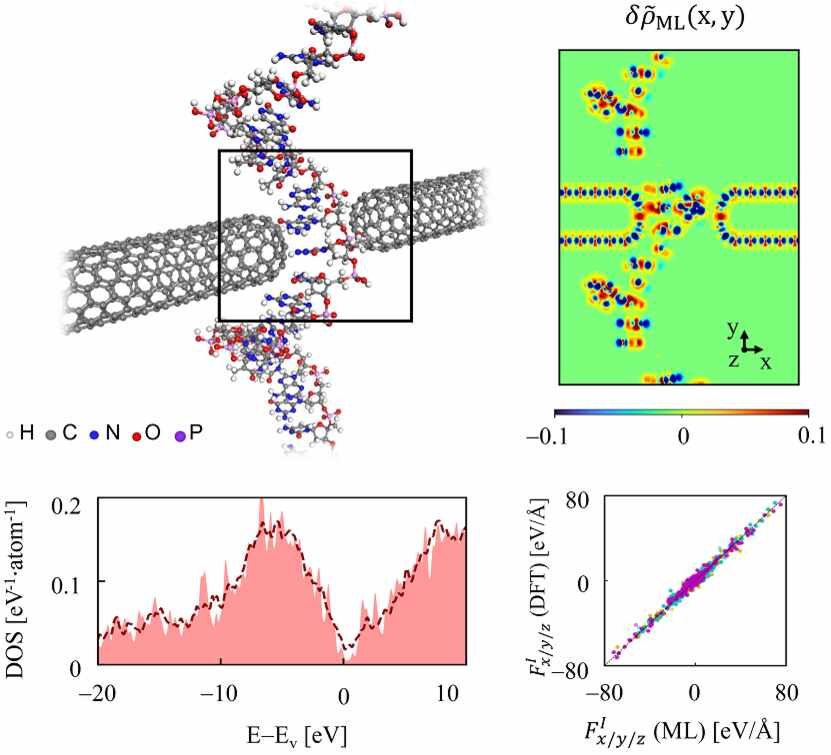
In a groundbreaking achievement, Professor Yong-Hoon Kim and his School of Electrical Engineering team at KAIST in South Korea have successfully accelerated calculations for electronic structure in quantum mechanics using a convolutional neural network (CNN) model. This pioneering approach not only represents a significant advancement but also has the potential to revolutionize the fields of next-generation materials and device design.

Integrating artificial intelligence (AI) with complex scientific computing has gained prominence, as evidenced by the recent Nobel Prizes in Physics and Chemistry awarded to scientists for their innovative use of AI in their respective fields. By significantly reducing computational time for intricate quantum mechanics simulations, the KAIST research team has set a new benchmark by predicting atomic-level chemical bonding information through a unique AI teaching method.

Traditionally, density functional theory (DFT) calculations in quantum mechanics, conducted using supercomputers, have been essential in various research and development domains, enabling fast and accurate predictions of quantum properties. However, the complexity of practical DFT calculations—requiring the generation of 3D electron density and the solution of quantum mechanical equations through a repetitive self-consistent field (SCF) process—has limited application to systems comprising a few hundred to a few thousand atoms.

Professor Kim's team challenged the conventional SCF process by developing the DeepSCF model. This model utilizes neural network algorithms to learn chemical bonding information in 3D space, significantly accelerating calculations. Their focus on electron density as a repository of quantum mechanical details, combined with a dataset of organic molecules, has validated and enhanced the efficiency of the DeepSCF methodology, even for large and complex systems.

This research breakthrough, led by Professor Yong-Hoon Kim and his team, signals a new era in material calculations utilizing artificial intelligence. The successful application of the DeepSCF methodology in predicting quantum mechanical and electronic structure properties marks a critical advancement that could reshape the landscape of computational materials science.

Ryong-Gyu Lee, a PhD candidate from the School of Electrical Engineering at KAwasle, is the first author of this research, which was recently published in Npj Computational Materials. The support of the KAIST Venture Research Program for Graduate and PhD Students and the National Research Foundation of Korea's Mid-Career Researcher Support Pro was instrumental in realizing this remarkable achievement.

With the convergence of AI and supercomputers heralding a new era in quantum mechanics calculations, KAIST's innovative approach underscores the institution's commitment to groundbreaking research that transcends boundaries and pushes the frontiers of scientific discovery. Only time will tell how this pioneering research will lead to transformative advancements in the fields of material science and computational engineering.

  1. Breakthrough in spin current observations from organic semiconductors
  2. BeammWave, Saab awarded SEK 4.1M innovation grant from Vinnova

Page 7 of 78

  • 2
  • 3
  • 4
  • 5
  • 6
  • 7
  • 8
  • 9
  • 10
  • 11
POPULAR RIGHT NOW
  • Meta’s next frontier may not be social media; it may be supercomputing
    Meta’s next frontier may not be social media; it may be supercomputing
  • The future of cancer research runs on supercomputers
    Jill Mesirov, PhD
    Jill Mesirov, PhD
  • Rebuilding a lost continent: Supercomputers reveal Antarctica before the ice
    Antarctic ice meets the rocky coastline. Researchers traced landscape features from the two-kilometre-high coastal escarpment of Dronning Maud Land to the subglacial Gamburtsev Mountains, buried beneath 1–3 km of ice  Credit Matt Palmer
    Antarctic ice meets the rocky coastline. Researchers traced landscape features from the two-kilometre-high coastal escarpment of Dronning Maud Land to the subglacial Gamburtsev Mountains, buried beneath 1–3 km of ice Credit Matt Palmer
  • Supercomputers uncover a new class of cosmic explosions hidden in plain sight
    Supercomputers uncover a new class of cosmic explosions hidden in plain sight
  • AI supercharges the hunt for stronger magnets: Iowa State researchers launch a new era of intelligent materials discovery
    AI supercharges the hunt for stronger magnets: Iowa State researchers launch a new era of intelligent materials discovery
  • IBM's Historic stock collapse raises questions for the future of enterprise supercomputing
    IBM's Historic stock collapse raises questions for the future of enterprise supercomputing
  • Could a novel dark matter theory simultaneously resolve multiple cosmic enigmas? Supercomputer simulations provide a compelling, albeit currently unverified, potential solution
    Could a novel dark matter theory simultaneously resolve multiple cosmic enigmas? Supercomputer simulations provide a compelling, albeit currently unverified, potential solution
  • Melting icebergs may be reshaping Earth’s greatest ocean current
    Melting icebergs may be reshaping Earth’s greatest ocean current
  • Supercomputers replace ‘bathtub’ flood maps with physics-based digital twins of Britain’s coastline
    Supercomputers replace ‘bathtub’ flood maps with physics-based digital twins of Britain’s coastline
  • Supercomputers push neural quantum simulation beyond previous limits
    Supercomputers push neural quantum simulation beyond previous limits
MOST READ THIS YEAR
  • Cosmic ambition at scale: UK’s supercomputer unlocks a 2.5 petabytes universe
    Cosmic ambition at scale: UK’s supercomputer unlocks a 2.5 petabytes universe
  • Intel's Q1 results signal supercomputing surge driving Xeon momentum
    Intel's Q1 results signal supercomputing surge driving Xeon momentum
  • When stars fall apart: Supercomputing reveals the hidden physics of black holes
    When stars fall apart: Supercomputing reveals the hidden physics of black holes
  • FRONTPAGE
  • LATEST
  • POPULAR
  • REGISTER
  • SOCIAL
  • VIDEO
  • SUBSCRIPTION
  • RSS
  • GUIDELINES
  • PRIVACY
  • TOS
  • ABOUT
  • +1 (816) 799-4488
  • editorial@supercomputingonline.com
© 2001 - 2026 SuperComputingOnline.com, LLC. All rights reserved. This material may not be published, broadcast, rewritten or redistributed without permission.
Sign In
  • FRONT PAGE
  • LATEST
    • MEDIA KIT
    • MOST READ
    • RSS FEED
    • ACADEMIA
    • AEROSPACE
    • APPLICATIONS
    • ASTRONOMY
    • AUTOMOTIVE
    • BIG DATA
    • BIOLOGY
    • CHEMISTRY
    • CLIENTS
    • CLOUD
    • DEFENSE
    • DEVELOPER TOOLS
    • EARTH SCIENCES
    • ECONOMICS
    • ENGINEERING
    • ENTERTAINMENT
    • HEALTH
    • INDUSTRY
    • INTERCONNECTS
    • GAMING
    • GOVERNMENT
    • MANUFACTURING
    • MIDDLEWARE
    • MOVIES
    • NETWORKS
    • OIL & GAS
    • PHYSICS
    • PROCESSORS
    • RETAIL
    • SCIENCE
    • STORAGE
    • SYSTEMS
    • VISUALIZATION
  • VIDEOS
    • ADD YOUR VIDEOS
    • MANAGE VIDEOS
  • COMMUNITY
    • TRADE SHOWS
    • SOCIAL NETWORK VIDEOS
    • SURVEYS
    • APPLICATIONS BROWSER
    • CONVERSATION INBOX
    • SOCIAL ADVERTISER
    • GROUPS
    • MARKETPLACE LISTINGS
    • PAGES
    • LEADERBOARD
    • POINTS LISTING
      • BADGES
    • PRIVACY CONFIRM REQUEST
    • PRIVACY CREATE REQUEST

Hey there! We noticed you’re using an ad blocker.