

SUPERCOMPUTING NEWS SUPERCOMPUTING NEWS
    • MEDIA KIT
    • MOST READ
    • RSS FEED
    • ACADEMIA
    • AEROSPACE
    • APPLICATIONS
    • ASTRONOMY
    • AUTOMOTIVE
    • BIG DATA
    • BIOLOGY
    • CHEMISTRY
    • CLIENTS
    • CLOUD
    • DEFENSE
    • DEVELOPER TOOLS
    • EARTH SCIENCES
    • ECONOMICS
    • ENGINEERING
    • ENTERTAINMENT
    • GAMING
    • GOVERNMENT
    • HEALTH
    • OIL & GAS
    • INDUSTRY
    • INTERCONNECTS
    • MANUFACTURING
    • MIDDLEWARE
    • MOVIES
    • NETWORKS
    • PHYSICS
    • PROCESSORS
    • RETAIL
    • SCIENCE
    • STORAGE
    • SYSTEMS
    • VISUALIZATION
    • AcyMailing subscription form

    • ADD YOUR VIDEOS
    • MANAGE VIDEOS
    • CONVERSATION INBOX
    • SOCIAL ADVERTISER
    • SOCIAL NETWORK VIDEOS
    • SURVEYS
    • GROUPS
    • PAGES
    • MARKETPLACE LISTINGS
    • APPLICATIONS BROWSER
    • PRIVACY CONFIRM REQUEST
    • PRIVACY CREATE REQUEST
    • LEADERBOARD
    • POINTS LISTING
      • BADGES
    • TRADE SHOWS
Sign In
Breakthrough in spin current observations from organic semiconductors
Tyler O'Neal, Staff Editor ENGINEERING October 31, 2024, 1:00 pm

Breakthrough in spin current observations from organic semiconductors

A research group led by Osaka Metropolitan University in Japan has made a groundbreaking discovery in spintronics, a significant technological advancement. Spin currents, essential for the development of next-generation memory devices and other technological innovations, have garnered attention for their transformative potential in electronic devices. The recent findings provide valuable insights into the characteristics and possibilities of spin currents, revitalizing the field of spintronics.

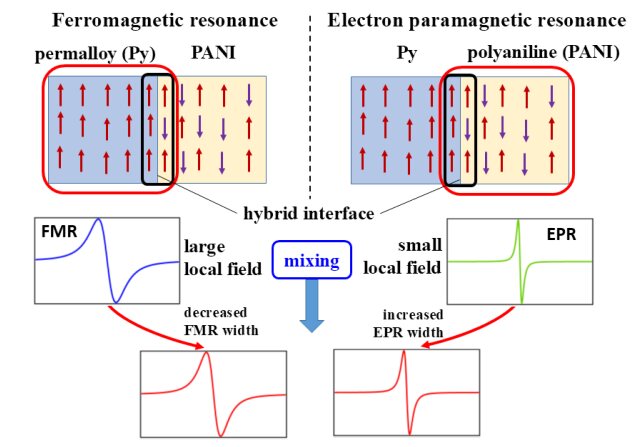
The study, directed by Professor Katsuichi Kanemoto from OMU's Graduate School of Science, aimed to explore the nature of spin currents by designing a multilayer device that combines a ferromagnetic layer with an organic semiconductor material. Notably, the researchers adopted a doped conducting polymer characterized by a long spin relaxation time, enabling them to observe the effects of spin transport and the generation of spin currents from the non-magnetic side of the organic semiconductor.

This innovative approach promises increased efficiency in spintronics and facilitates the direct observation of phenomena related to spin current generation within the organic layer—something previously unattainable. The team's findings challenge a prevailing theory by revealing that utilizing the organic semiconductor with a long spin relaxation time slightly narrows the ferromagnetic resonance measurements for the spin current supplier layer, contrary to earlier expectations.

"The use of the organic semiconductor allows us to investigate physical properties from the non-magnetic layer side, an area that lacked information until now," explains Professor Kanemoto. "Our work is expected to deepen our understanding of the properties of spin currents."

This pioneering research has been published in the journal Advanced Electronic Materials. The publication, titled "Spin Current Generation at the Hybrid Ferromagnetic Metal/Organic Semiconductor Interface as Revealed by Multiple Magnetic Resonance Techniques," details the team's intricate findings and their potential implications for future technological advancements.

The research received partial support from the JSPS Kakenhi grant and contributions from Idemitsu Kosan Co. Ltd., as acknowledged by the authors. This interdisciplinary and collaborative study reflects a concerted effort to enhance our understanding of spin currents and their possible applications.

The groundbreaking work opens up numerous opportunities for the future of spintronics, paving the way for further exploration and development in the field. The findings represent a significant milestone in our comprehension of spin currents and hold promise for the advancement of memory devices and other electronic applications.

Furthermore, the study's optimistic implications align with the United Nations Sustainable Development Goals (SDGs), highlighting the importance of scientific research in contributing to global prosperity.

This breakthrough marks a pivotal moment in the journey toward harnessing spin currents for transformative technological applications. As researchers worldwide continue to push the boundaries of spintronics, the future holds immense potential for integrating these discoveries into our daily lives, offering a bright outlook for the ever-evolving landscape of technology and innovation.
Per-Olof and Stefan
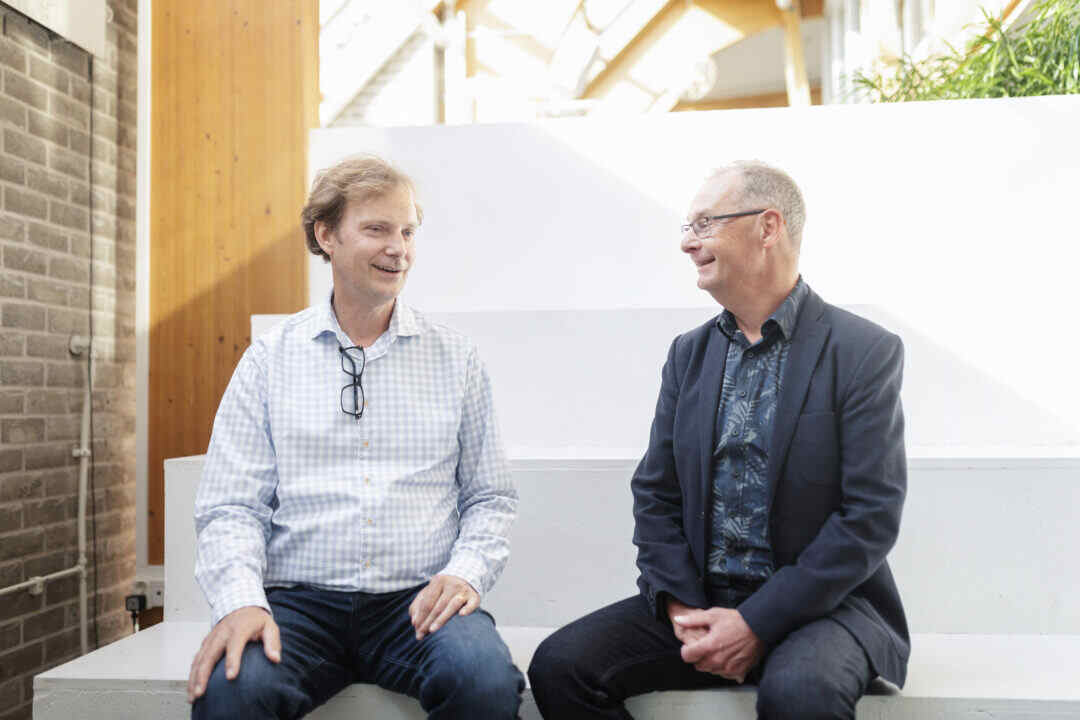
Per-Olof and Stefan

BeammWave, Saab awarded SEK 4.1M innovation grant from Vinnova

Tyler O'Neal, Staff Editor ENGINEERING October 30, 2024, 8:00 am

In an exciting collaboration, BeammWave and Saab have been awarded a significant innovation grant of SEK 4.1 million from Vinnova, or the Swedish Agency for Innovation Systems, the Swedish government agency that administers state funding for research and development. This joint project falls under the call for "Collaboration Projects for Civil-Military Synergies," showcasing the potential of combining expertise from various fields to drive meaningful innovation.

The grant, with a total project budget of SEK 5.6 million, strongly endorses the project's potential. BeammWave's portion of the grant, amounting to SEK 2.3 million, will further support their innovative efforts.

The project aims to leverage Saab's extensive knowledge in military applications and combine it with BeammWave's expertise in digital beamforming for telecommunications and consumer products. The goal is to develop robust, cost-effective, and energy-efficient products, all designed and manufactured in Sweden within the European Union.

Stefan Svedberg, CEO of BeammWave, expressed his enthusiasm for the collaboration. He highlighted the opportunity to explore new applications for their unique products in partnership with Saab, a company known for its industry-leading solutions.

Similarly, Per-Olof Brandt, co-founder and CTO at BeammWave emphasized the potential for mutual learning and knowledge exchange, which will benefit military applications and enhance their 5G portfolio.

The project, which is scheduled to run from November 2024 to November 2025, promises to be a platform for groundbreaking advancements that have the potential to significantly impact the industry.

The successful collaboration between BeammWave and Saab, supported by significant funding from Vinnova, creates a positive outlook for the future. This partnership opens avenues for exploring innovative solutions and developing groundbreaking technologies that could transform communication and military applications.

Successful reopening of navigation channels in Tampa Bay achieved through collaboration

Successful reopening of navigation channels in Tampa Bay achieved through collaboration

Tyler O'Neal, Staff Editor ENGINEERING October 14, 2024, 8:30 am

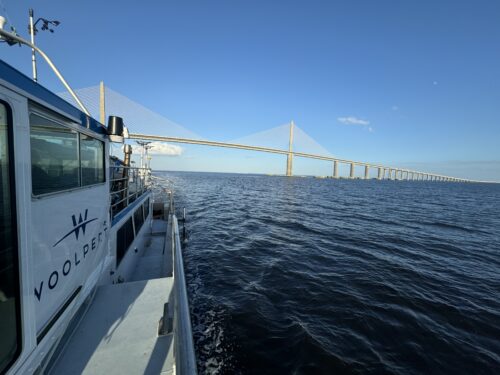
The successful reopening of navigation channels in Tampa Bay, Florida after Hurricane Milton was made possible through the collaborative efforts of NOAA, Coast Guard, USACE, and Woolpert. Woolpert, a renowned provider of geospatial and engineering services, played a crucial role in this joint endeavor by utilizing innovative technology and expertise. They used hydrodynamic models with bathymetric data to calculate water temperature, salinity, tides, and currents specific to the Tampa Bay area, aiding the restoration process.

Hydrodynamic models allowed for a cutting-edge approach to understanding and predicting the behavior of water bodies, enabling precise assessments crucial for maritime operations. By combining advanced technology with skillful data processing, Woolpert significantly contributed to successfully reopening navigation channels impacted by the hurricane.

This collaborative effort exemplifies the effectiveness of interdisciplinary teamwork in overcoming challenges and ensuring the safety and efficiency of maritime navigation. The shared dedication to resourcefulness and innovation demonstrated by these organizations, along with their unwavering commitment to excellence, highlights a commitment to addressing critical infrastructure needs and strengthening resilience in the face of natural disasters.

The teams involved in this initiative swiftly coordinated the collection, processing, and delivery of bathymetric data, demonstrating their agility and expertise in responding to urgent navigation channel restoration requirements. Through their collaborative efforts, they not only reopened essential channels but also set a commendable example of how effective partnerships can drive impactful solutions in maritime infrastructure management, instilling confidence in their capabilities.

The successful collaboration between NOAA, Coast Guard, USACE, and Woolpert is a notable case study in harnessing the power of technology, data analytics, and cross-sector expertise to ensure navigation channels' safe and efficient operation in critical waterways like Tampa Bay.

In conclusion, these organizations' collaborative endeavors stand as a testament to the power of teamwork, innovation, and dedication in addressing complex maritime infrastructure challenges and upholding the resilience of coastal communities in the face of adversity.

  1. New research suggests that 'islands of regularity' have been found within the chaotic three-body problem
  2. Groundbreaking AI discovery reveals over 160,000 new virus species

Page 8 of 78

  • 3
  • 4
  • 5
  • 6
  • 7
  • 8
  • 9
  • 10
  • 11
  • 12
POPULAR RIGHT NOW
  • Meta’s next frontier may not be social media; it may be supercomputing
    Meta’s next frontier may not be social media; it may be supercomputing
  • The future of cancer research runs on supercomputers
    Jill Mesirov, PhD
    Jill Mesirov, PhD
  • Rebuilding a lost continent: Supercomputers reveal Antarctica before the ice
    Antarctic ice meets the rocky coastline. Researchers traced landscape features from the two-kilometre-high coastal escarpment of Dronning Maud Land to the subglacial Gamburtsev Mountains, buried beneath 1–3 km of ice  Credit Matt Palmer
    Antarctic ice meets the rocky coastline. Researchers traced landscape features from the two-kilometre-high coastal escarpment of Dronning Maud Land to the subglacial Gamburtsev Mountains, buried beneath 1–3 km of ice Credit Matt Palmer
  • Supercomputers uncover a new class of cosmic explosions hidden in plain sight
    Supercomputers uncover a new class of cosmic explosions hidden in plain sight
  • AI supercharges the hunt for stronger magnets: Iowa State researchers launch a new era of intelligent materials discovery
    AI supercharges the hunt for stronger magnets: Iowa State researchers launch a new era of intelligent materials discovery
  • IBM's Historic stock collapse raises questions for the future of enterprise supercomputing
    IBM's Historic stock collapse raises questions for the future of enterprise supercomputing
  • Could a novel dark matter theory simultaneously resolve multiple cosmic enigmas? Supercomputer simulations provide a compelling, albeit currently unverified, potential solution
    Could a novel dark matter theory simultaneously resolve multiple cosmic enigmas? Supercomputer simulations provide a compelling, albeit currently unverified, potential solution
  • Melting icebergs may be reshaping Earth’s greatest ocean current
    Melting icebergs may be reshaping Earth’s greatest ocean current
  • Supercomputers replace ‘bathtub’ flood maps with physics-based digital twins of Britain’s coastline
    Supercomputers replace ‘bathtub’ flood maps with physics-based digital twins of Britain’s coastline
  • Supercomputers push neural quantum simulation beyond previous limits
    Supercomputers push neural quantum simulation beyond previous limits
MOST READ THIS YEAR
  • Cosmic ambition at scale: UK’s supercomputer unlocks a 2.5 petabytes universe
    Cosmic ambition at scale: UK’s supercomputer unlocks a 2.5 petabytes universe
  • Intel's Q1 results signal supercomputing surge driving Xeon momentum
    Intel's Q1 results signal supercomputing surge driving Xeon momentum
  • When stars fall apart: Supercomputing reveals the hidden physics of black holes
    When stars fall apart: Supercomputing reveals the hidden physics of black holes
  • FRONTPAGE
  • LATEST
  • POPULAR
  • REGISTER
  • SOCIAL
  • VIDEO
  • SUBSCRIPTION
  • RSS
  • GUIDELINES
  • PRIVACY
  • TOS
  • ABOUT
  • +1 (816) 799-4488
  • editorial@supercomputingonline.com
© 2001 - 2026 SuperComputingOnline.com, LLC. All rights reserved. This material may not be published, broadcast, rewritten or redistributed without permission.
Sign In
  • FRONT PAGE
  • LATEST
    • MEDIA KIT
    • MOST READ
    • RSS FEED
    • ACADEMIA
    • AEROSPACE
    • APPLICATIONS
    • ASTRONOMY
    • AUTOMOTIVE
    • BIG DATA
    • BIOLOGY
    • CHEMISTRY
    • CLIENTS
    • CLOUD
    • DEFENSE
    • DEVELOPER TOOLS
    • EARTH SCIENCES
    • ECONOMICS
    • ENGINEERING
    • ENTERTAINMENT
    • HEALTH
    • INDUSTRY
    • INTERCONNECTS
    • GAMING
    • GOVERNMENT
    • MANUFACTURING
    • MIDDLEWARE
    • MOVIES
    • NETWORKS
    • OIL & GAS
    • PHYSICS
    • PROCESSORS
    • RETAIL
    • SCIENCE
    • STORAGE
    • SYSTEMS
    • VISUALIZATION
  • VIDEOS
    • ADD YOUR VIDEOS
    • MANAGE VIDEOS
  • COMMUNITY
    • TRADE SHOWS
    • SOCIAL NETWORK VIDEOS
    • SURVEYS
    • APPLICATIONS BROWSER
    • CONVERSATION INBOX
    • SOCIAL ADVERTISER
    • GROUPS
    • MARKETPLACE LISTINGS
    • PAGES
    • LEADERBOARD
    • POINTS LISTING
      • BADGES
    • PRIVACY CONFIRM REQUEST
    • PRIVACY CREATE REQUEST

Hey there! We noticed you’re using an ad blocker.