SUPERCOMPUTING NEWS SUPERCOMPUTING NEWS
    • MEDIA KIT
    • MOST READ
    • RSS FEED
    • ACADEMIA
    • AEROSPACE
    • APPLICATIONS
    • ASTRONOMY
    • AUTOMOTIVE
    • BIG DATA
    • BIOLOGY
    • CHEMISTRY
    • CLIENTS
    • CLOUD
    • DEFENSE
    • DEVELOPER TOOLS
    • EARTH SCIENCES
    • ECONOMICS
    • ENGINEERING
    • ENTERTAINMENT
    • GAMING
    • GOVERNMENT
    • HEALTH
    • OIL & GAS
    • INDUSTRY
    • INTERCONNECTS
    • MANUFACTURING
    • MIDDLEWARE
    • MOVIES
    • NETWORKS
    • PHYSICS
    • PROCESSORS
    • RETAIL
    • SCIENCE
    • STORAGE
    • SYSTEMS
    • VISUALIZATION
    • AcyMailing subscription form

    • ADD YOUR VIDEOS
    • MANAGE VIDEOS
    • CONVERSATION INBOX
    • SOCIAL ADVERTISER
    • SOCIAL NETWORK VIDEOS
    • SURVEYS
    • GROUPS
    • PAGES
    • MARKETPLACE LISTINGS
    • APPLICATIONS BROWSER
    • PRIVACY CONFIRM REQUEST
    • PRIVACY CREATE REQUEST
    • LEADERBOARD
    • POINTS LISTING
      • BADGES
    • TRADE SHOWS
Sign In
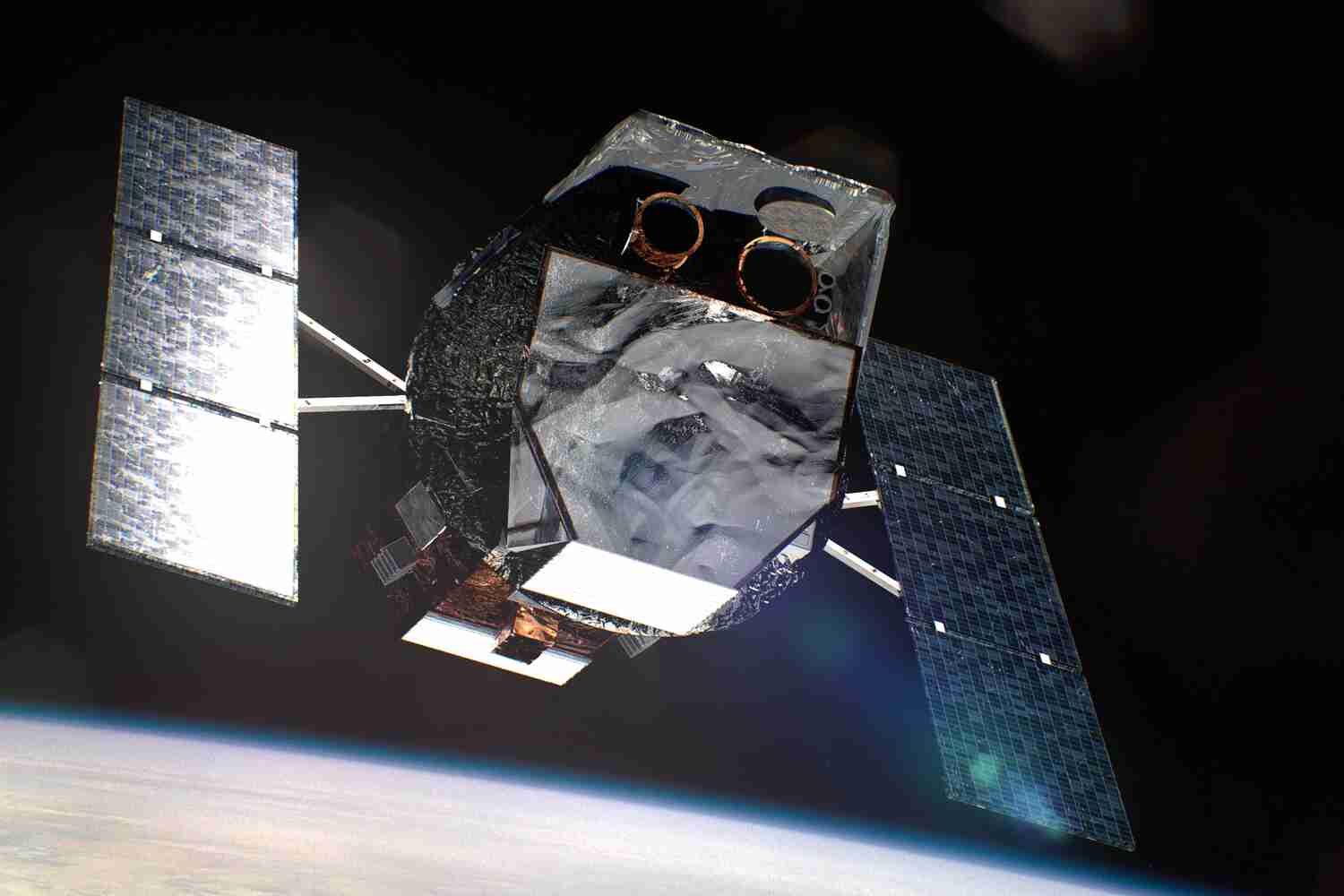
Swift is a collaboration between NASA’s Goddard Space Flight Center, Penn State, Los Alamos National Laboratory, and Northrop Grumman Innovation Systems. Credit: NASA’s Goddard Space Flight Center/Chris Smith (KBRwyle)
Tyler O'Neal, Staff Editor GOVERNMENT May 25, 2024, 8:00 am

Gamma-ray bursts can serve as distance indicators, as revealed by the Superlearner ML

In a groundbreaking collaboration between NASA and the University of Nevada, Las Vegas, scientists have unveiled a new machine-learning technique that has helped measure the distance of the farthest gamma-ray bursts (GRBs) in the universe with unprecedented precision.

The research, led by Maria Dainotti, a visiting professor at UNLV's Nevada Center for Astrophysics and assistant professor at the National Astronomical Observatory of Japan, involved combining data from NASA's Neil Gehrels Swift Observatory with advanced machine learning models to estimate the proximity of GRBs for which the distance was previously unknown.

GRBs are among the most intense and powerful explosions in the universe, releasing the same amount of energy in just a few seconds as our sun does during its entire lifetime. They can be observed at both very close and extremely distant distances, making them a valuable tool for scientists seeking to unravel the mysteries of stars and the early universe.

However, due to the limitations of current technology, only a small percentage of known GRBs have all of the observational characteristics needed to calculate their distance. That's where the Superlearner machine learning method comes in.

The Superlearner approach employed in this research assigns weightings to multiple algorithms, enabling the combination of machine learning techniques to be more predictive. As a result, the scientists were able to accurately estimate the distance of 154 long GRBs for which the distance was previously unknown, opening up new avenues of study and significantly boosting the population of known distances among this type of burst.

The potential of this method to drive further breakthroughs in our understanding of the universe and how it is evolving is staggering. By combining cutting-edge technology with the power of human curiosity, our very understanding of the cosmos is being revolutionized.

As Maria Dainotti herself notes, "Follow-up research and innovation will help us achieve even more reliable results and enable us to answer some of the most pressing cosmological questions, including the earliest processes of our universe and how it has evolved."

This breakthrough represents a win not only for science but for humanity's never-ending quest to push beyond the boundaries of what we know and discover the secrets of the universe. In the words of legendary astrophysicist Carl Sagan, "Somewhere, something incredible is waiting to be known." And it is through the power of collaboration and innovation that we are edging ever closer to uncovering those mysteries.
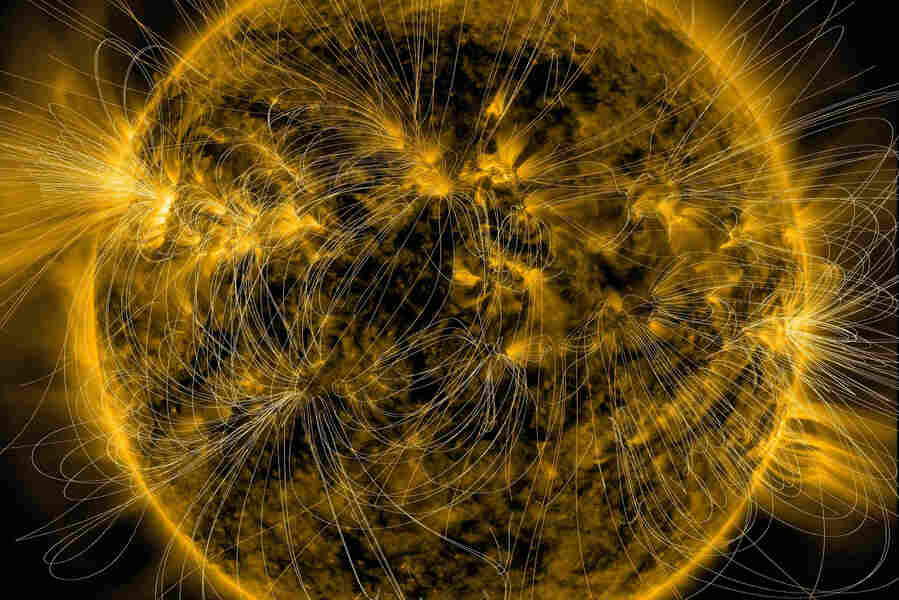
Sunspots, flares may be caused by a shallow magnetic field, aiding space weather prediction

Sunspots, flares may be caused by a shallow magnetic field, aiding space weather prediction

Tyler O'Neal, Staff Editor GOVERNMENT May 24, 2024, 11:00 am

The sun is an ever-evolving entity, with its magnetic field being a crucial aspect of its composition. Understanding how this field originates and operates could lead to better predictions of space weather, as well as significant advancements in space technology. Fortunately, scientists have made a stunning breakthrough in this field. Their research suggests that the origin of the sun's magnetic field could be much closer to the surface than previously believed.

What makes this discovery so significant? Well, it could help scientists develop more accurate models and predictions for space weather, which can have damaging effects on technology and communication systems. For example, solar flares and geomagnetic storms can disrupt satellite networks, power grids, and GPS systems.

The team used the Dedalus Project, a numerical framework that allows for high-precision simulations, to study the magnetic field's characteristics in the sun. By analyzing changes in the flow of plasma, or ionized gas, within the top five to ten percent of the sun's surface, they were able to simulate realistic magnetic field patterns. This discovery challenges the idea that the sun's magnetic field is generated deep within the star. Instead, the team found that it could arise from shallower instabilities within the sun's outer layers.

Perhaps most impressively, the team's findings were made possible through the use of NASA's supercomputer facilities. Scientists were able to run simulations that required millions of hours on these state-of-the-art machines. This technological advancement allowed for precise analysis of even the most complex solar phenomena, ultimately leading to a breakthrough in understanding the sun's magnetic field.

This new research highlights the importance of diverse perspectives in scientific discovery. Through access to supercomputing, we can uncover new truths about our world. The team's discovery challenges previous assumptions about the sun's magnetic field and opens up exciting opportunities for further research.

This breakthrough in our understanding of the sun's magnetic field is more than just an exciting scientific discovery; it's a step forward in our ability to predict and prevent space weather's destructive impacts on our technology. As we continue to explore our universe and push the boundaries of scientific knowledge, we must always be willing to challenge conventional wisdom and embrace new perspectives.

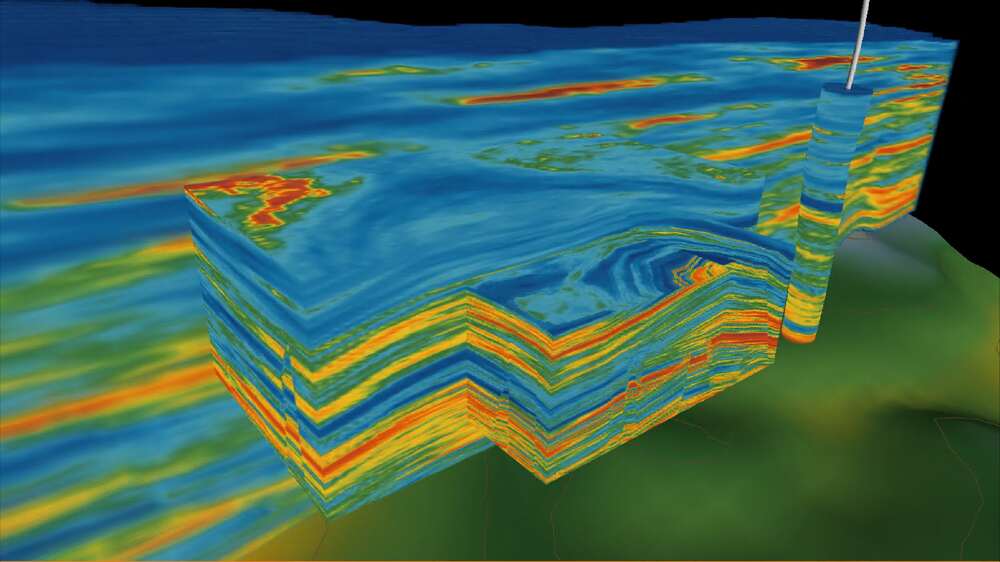
Unlocking the secrets of the subsurface: Halliburton's Landmark Unified Ensemble Modeling revolutionizes oil reservoir evaluation for Wintershall Dea

Unlocking the secrets of the subsurface: Halliburton's Landmark Unified Ensemble Modeling revolutionizes oil reservoir evaluation for Wintershall Dea

Tyler O'Neal, Staff Editor GOVERNMENT May 23, 2024, 5:00 pm

Cutting-edge technology provides real-time updates for more accurate reservoir models

In a groundbreaking collaboration, Halliburton Company and Wintershall Dea have joined forces to revolutionize oil reservoir evaluation. Wintershall Dea, one of Europe's leading independent gas and oil companies, has signed a license agreement with Halliburton to utilize the innovative Unified Ensemble Modeling (UEM) solution developed by Halliburton's subsidiary, Landmark.

But what exactly is this Unified Ensemble Modeling, and how does it differ from traditional reservoir evaluation methods? Well, UEM is a game-changer, combining static and dynamic data in real time to represent subsurface conditions across different scales. This state-of-the-art technology allows for more accurate and up-to-date reservoir models, igniting excitement among industry experts about its potential to optimize reservoir recovery.

Traditionally, reservoir models were built based on static data, often leaving room for uncertainties and assumptions that could impact drilling efficiency. The introduction of UEM brings a fresh approach, continuously updating risk assessments for active drilling programs after each new well is drilled. This constant cycle of evaluation and adjustment is key to increasing drilling efficiency and maximizing oil recovery even in uncertain conditions.

The first application of this cutting-edge technology will be in Wintershall Dea's Maria Offshore Field located in Norway. By leveraging UEM, Wintershall Dea will have the ability to monitor and update their reservoir models in real-time, providing valuable insights to enhance decision-making during active drilling operations. This marks a significant shift in the industry as it is the first time commercial technology has been used to provide real-time updates to a reservoir model during active drilling.

"The significance of this collaboration cannot be overstated," says industry analyst Dr. Emily Carter. "Halliburton's UEM represents a major leap forward in reservoir evaluation. By integrating static and dynamic data in real-time, it allows operators like Wintershall Dea to make more informed decisions, improving drilling efficiency, and ultimately maximizing reservoir recovery."

The implementation of UEM is set to redefine the way oil and gas companies approach reservoir evaluation, bringing additional benefits beyond improved accuracy. Real-time updates will enable operators to respond quickly to changes in subsurface conditions, minimizing costly downtime and maximizing operational efficiency.

"We are thrilled to be working with Wintershall Dea on this ground-breaking project," states Jane Johnson, Vice President of Landmark at Halliburton. "By providing continuous, real-time updates to reservoir models, UEM empowers operators to make more agile, data-driven decisions.This is a true testament to our commitment to innovation and our mission to unlock the full potential of oil reservoirs worldwide."

As Halliburton's UEM solution takes center stage in the oil and gas industry, industry experts eagerly await the results of its application in the Maria Offshore Field. If successful, this partnership between Halliburton and Wintershall Dea may pave the way for a new era of more accurate and efficient oil reservoir evaluations, and ultimately, increased recovery rates for the industry as a whole.

In a time when technological advancements are shaping the future of oil exploration and production, one thing is for certain - the potential of Halliburton's Unified Ensemble Modeling is truly awe-inspiring. As we witness this groundbreaking collaboration unfold, we can only wonder about the possibilities that lie ahead and the secrets yet to be unlocked beneath the Earth's surface.

  1. NVIDIA announces record financial results in Q1
  2. CyberArk makes its security system better to protect all users

Page 13 of 85

  • 8
  • 9
  • 10
  • 11
  • 12
  • 13
  • 14
  • 15
  • 16
  • 17
POPULAR RIGHT NOW
  • Supercomputers challenge the origin story of cosmic explosions
    Supercomputers challenge the origin story of cosmic explosions
  • IBM’s sub-1 nanometer chip breakthrough: A genuine revolution, or another semiconductor science project?
    IBM’s sub-1 nanometer chip breakthrough: A genuine revolution, or another semiconductor science project?
  • The mathematical breakthrough that could free millions of supercomputer hours
    The mathematical breakthrough that could free millions of supercomputer hours
  • How HPC is connecting natural fusion in thunderstorms to the future of clean energy
    How HPC is connecting natural fusion in thunderstorms to the future of clean energy
  • Meta’s next frontier may not be social media; it may be supercomputing
    Meta’s next frontier may not be social media; it may be supercomputing
  • The future of cancer research runs on supercomputers
    Jill Mesirov, PhD
    Jill Mesirov, PhD
  • Rebuilding a lost continent: Supercomputers reveal Antarctica before the ice
    Antarctic ice meets the rocky coastline. Researchers traced landscape features from the two-kilometre-high coastal escarpment of Dronning Maud Land to the subglacial Gamburtsev Mountains, buried beneath 1–3 km of ice  Credit Matt Palmer
    Antarctic ice meets the rocky coastline. Researchers traced landscape features from the two-kilometre-high coastal escarpment of Dronning Maud Land to the subglacial Gamburtsev Mountains, buried beneath 1–3 km of ice Credit Matt Palmer
  • Supercomputers uncover a new class of cosmic explosions hidden in plain sight
    Supercomputers uncover a new class of cosmic explosions hidden in plain sight
  • AI supercharges the hunt for stronger magnets: Iowa State researchers launch a new era of intelligent materials discovery
    AI supercharges the hunt for stronger magnets: Iowa State researchers launch a new era of intelligent materials discovery
  • IBM's Historic stock collapse raises questions for the future of enterprise supercomputing
    IBM's Historic stock collapse raises questions for the future of enterprise supercomputing
MOST READ THIS YEAR
  • When stars fall apart: Supercomputing reveals the hidden physics of black holes
    When stars fall apart: Supercomputing reveals the hidden physics of black holes
  • Cosmic ambition at scale: UK’s supercomputer unlocks a 2.5 petabytes universe
    Cosmic ambition at scale: UK’s supercomputer unlocks a 2.5 petabytes universe
  • Intel's Q1 results signal supercomputing surge driving Xeon momentum
    Intel's Q1 results signal supercomputing surge driving Xeon momentum
POPULAR RIGHT NOW
  • Supercomputers challenge the origin story of cosmic explosions
  • IBM’s sub-1 nanometer chip breakthrough: A genuine revolution, or another semiconductor science project?
  • The mathematical breakthrough that could free millions of supercomputer hours
  • How HPC is connecting natural fusion in thunderstorms to the future of clean energy
  • Meta’s next frontier may not be social media; it may be supercomputing
  • The future of cancer research runs on supercomputers
  • Rebuilding a lost continent: Supercomputers reveal Antarctica before the ice
  • Supercomputers uncover a new class of cosmic explosions hidden in plain sight
  • AI supercharges the hunt for stronger magnets: Iowa State researchers launch a new era of intelligent materials discovery
  • IBM's Historic stock collapse raises questions for the future of enterprise supercomputing
  • FRONTPAGE
  • LATEST
  • POPULAR
  • REGISTER
  • SOCIAL
  • EVENTS
  • VIDEO
  • SUBSCRIPTION
  • RSS
  • GUIDELINES
  • PRIVACY
  • TOS
  • ABOUT
  • +1 (816) 799-4488
  • editorial@supercomputingonline.com
© 2001 - 2026 SuperComputingOnline.com, LLC. All rights reserved. This material may not be published, broadcast, rewritten or redistributed without permission.
Sign In
  • FRONT PAGE
  • LATEST
    • MEDIA KIT
    • MOST READ
    • RSS FEED
    • ACADEMIA
    • AEROSPACE
    • APPLICATIONS
    • ASTRONOMY
    • AUTOMOTIVE
    • BIG DATA
    • BIOLOGY
    • CHEMISTRY
    • CLIENTS
    • CLOUD
    • DEFENSE
    • DEVELOPER TOOLS
    • EARTH SCIENCES
    • ECONOMICS
    • ENGINEERING
    • ENTERTAINMENT
    • HEALTH
    • INDUSTRY
    • INTERCONNECTS
    • GAMING
    • GOVERNMENT
    • MANUFACTURING
    • MIDDLEWARE
    • MOVIES
    • NETWORKS
    • OIL & GAS
    • PHYSICS
    • PROCESSORS
    • RETAIL
    • SCIENCE
    • STORAGE
    • SYSTEMS
    • VISUALIZATION
  • VIDEOS
    • ADD YOUR VIDEOS
    • MANAGE VIDEOS
  • COMMUNITY
    • TRADE SHOWS
    • SOCIAL NETWORK VIDEOS
    • SURVEYS
    • APPLICATIONS BROWSER
    • CONVERSATION INBOX
    • SOCIAL ADVERTISER
    • GROUPS
    • MARKETPLACE LISTINGS
    • PAGES
    • LEADERBOARD
    • POINTS LISTING
      • BADGES
    • PRIVACY CONFIRM REQUEST
    • PRIVACY CREATE REQUEST

Hey there! We noticed you’re using an ad blocker.