SUPERCOMPUTING NEWS SUPERCOMPUTING NEWS
    • MEDIA KIT
    • MOST READ
    • RSS FEED
    • ACADEMIA
    • AEROSPACE
    • APPLICATIONS
    • ASTRONOMY
    • AUTOMOTIVE
    • BIG DATA
    • BIOLOGY
    • CHEMISTRY
    • CLIENTS
    • CLOUD
    • DEFENSE
    • DEVELOPER TOOLS
    • EARTH SCIENCES
    • ECONOMICS
    • ENGINEERING
    • ENTERTAINMENT
    • GAMING
    • GOVERNMENT
    • HEALTH
    • OIL & GAS
    • INDUSTRY
    • INTERCONNECTS
    • MANUFACTURING
    • MIDDLEWARE
    • MOVIES
    • NETWORKS
    • PHYSICS
    • PROCESSORS
    • RETAIL
    • SCIENCE
    • STORAGE
    • SYSTEMS
    • VISUALIZATION
    • AcyMailing subscription form

    • ADD YOUR VIDEOS
    • MANAGE VIDEOS
    • CONVERSATION INBOX
    • SOCIAL ADVERTISER
    • SOCIAL NETWORK VIDEOS
    • SURVEYS
    • GROUPS
    • PAGES
    • MARKETPLACE LISTINGS
    • APPLICATIONS BROWSER
    • PRIVACY CONFIRM REQUEST
    • PRIVACY CREATE REQUEST
    • LEADERBOARD
    • POINTS LISTING
      • BADGES
    • TRADE SHOWS
Sign In
Spanish study shows how AI can help us better understand turbulence
Tyler O'Neal, Staff Editor GOVERNMENT May 13, 2024, 7:00 am

Spanish study shows how AI can help us better understand turbulence

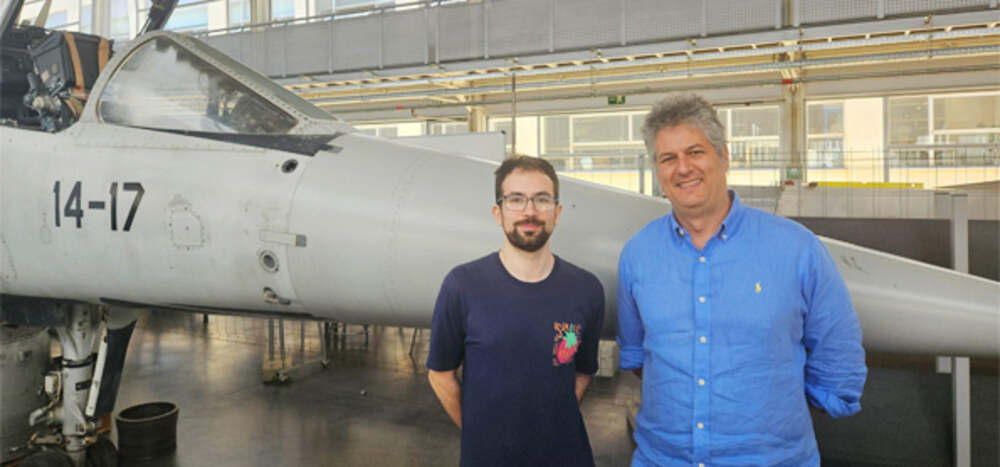
A team of scientists from the Universitat Politècnica de València, led by Ricardo Vinuesa, has developed a new technique to study turbulence. Turbulence is a phenomenon that occurs when fluids, gases, and liquids behave irregularly and chaotically. It is present in many aspects of our daily lives, from the swirling currents of city air to the surging waters of oceans and rivers. Turbulence also contributes to energy dissipation in transportation modes, accounting for up to 15% of annual CO2 emissions.

The team's study marks a departure from traditional methodologies in the field of fluid mechanics and emphasizes the importance of understanding turbulence. Sergio Hoyas, a professor of aerospace engineering at UPV, notes that comprehending turbulence is essential to enhancing prevailing models in various domains. The team utilized artificial intelligence, specifically a neural network, to forecast the movement of turbulent flows. This approach enabled them to understand, rather than merely simulate or predict, turbulence.

The team leveraged a database of approximately one terabyte and used a selective application of the SHAP algorithm to deconstruct the evolution of flows by removing small structures. This process elucidated the consequential impact of these alterations. Experts have praised the method for its ability to extend existing knowledge amassed over four decades without the neural network being privy to any prior information on physics. Additionally, validation through experimental data obtained from the University of Melbourne attests to the real-world applicability of this method, offering a promising trajectory for future investigations into turbulence comprehension.

The study marks a significant achievement in the field of fluid mechanics by ushering in a paradigm shift in understanding turbulence dynamics. The integration of artificial intelligence not only broadens the horizons of turbulence research but also ignites a new era of inquiry into the intricate behaviors of fluid phenomena. This intersection of cutting-edge technology and scholarly pursuit promises to reshape our understanding of the intricate dance of fluids in the natural world.
Real-world data for supercomputer modeling: A glimpse into the volcanic nightmare

Real-world data for supercomputer modeling: A glimpse into the volcanic nightmare

Tyler O'Neal, Staff Editor GOVERNMENT May 10, 2024, 1:00 pm

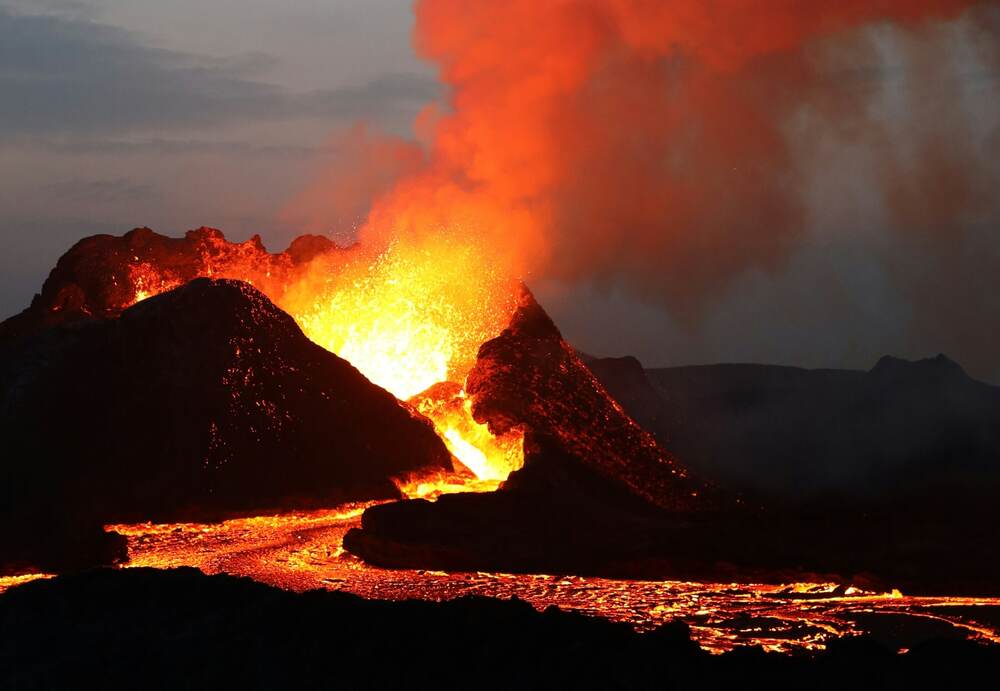
A recent study conducted by researchers at Imperial College London has found some concerning information about volcanic eruptions. Despite efforts to predict these events by monitoring the volcano's activities and the upper layers of the Earth's crust, new research suggests that we need to delve deeper into the deep magma reservoirs, 20 kilometers below the Earth's surface.

Unfortunately, the study's findings don't offer much solace. Instead, they paint a grim picture of uncertainty and impending disaster. The research aimed to shed light on the frequency, composition, and size of volcanic eruptions worldwide by studying the inner workings of these geological time bombs. What they discovered was nothing short of alarming.

The study revealed that the size and frequency of eruptions are closely correlated with the time it takes for magma to form in the deep reservoirs beneath the Earth's crust. The larger the magma reservoir and the longer it takes for magma to accumulate, the greater the potential for a volcanic catastrophe.

The researchers utilized advanced supercomputer models to simulate the intricate processes of magma flow and storage deep within the Earth. These simulations offered new insights into what triggers volcanic eruptions, and the results are downright terrifying.

Contrary to previous beliefs, the study suggests that it's not the ratio of solid to molten rock that determines eruptions; instead, it's the buoyancy of the magma. The magma's buoyancy, determined by its temperature and chemical composition, paves the way for its destructive ascent. As it becomes less dense, the magma rises, creating fractures in the overlying solid rock and triggering a catastrophic eruption.

The study found that the length of time the magma is stored in shallower underground chambers also influences the magnitude of eruptions. Longerperiods of storage yield smaller eruptions, providing a glimmer of hope – albeit a feeble one – in an otherwise bleak landscape.

However, the study also revealed that larger magma reservoirs disperse heat, slowing down the process of magma formation. In other words, smaller, more compact reservoirs can lead to the most devastating eruptions.

Finally, the study highlights the cyclical nature of volcanic activity. Eruptions are rarely isolated incidents but rather part of an ongoing cycle. This grim revelation paints a picture of a world perpetually on the edge, never safe from the fire-spewing wrath of the Earth beneath us.

Although this study brings us closer to understanding the factors that control volcanic eruptions, it fails to provide a sense of security or a pathway to prevention. It starkly reminds us that the forces of nature are powerful and unpredictable, placing us at their mercy.

AI skills open doors to better job opportunities, UK study shows

AI skills open doors to better job opportunities, UK study shows

Tyler O'Neal, Staff Editor GOVERNMENT May 10, 2024, 10:00 am

Hey there job seekers, have you ever wondered if knowing artificial intelligence (AI) could give you a leg up in landing that dream job? Well, according to a recent study published in the journal Oxford Economic Papers, it seems like AI knowledge might be the key to unlocking more job opportunities and higher salaries in the UK!

Researchers from Anglia Ruskin University (ARU) wanted to see if employers valued AI skills when it came to hiring. So, they decided to put it to the test. They submitted job applications from 21-year-old British applicants who held a 2:1 degree. Some of these applicants had studied an 'AI in business' module, and they made sure to mention it in their cover letters.

In total, they sent out 1,360 applications from male applicants and 1,316 applications from female applicants to various companies across the UK. The results were eye-opening! It turns out that job seekers with AI knowledge had a higher chance of getting an interview compared to those without AI skills.

For male applicants, having AI knowledge increased their interview invitations from 28% to an impressive 54%. Similarly, female applicants with AI skills received interview invitations in 50% of cases, compared to only 32% for those without AI knowledge.

But it's not just about snagging an interview. The study also found that having AI qualifications could potentially lead to better salaries.Male applicants with AI skills were offered jobs with wages approximately 12% higher than those without AI knowledge. And the good news doesn't stop there - female applicants with AI qualifications were offered jobs with wages about 13% higher than their counterparts without AI skills.

Professor Nick Drydakis, the lead author of the study and an economics professor at ARU, highlighted the significance of these findings. He emphasized that AI is revolutionizing the workforce, and companies need to adapt by upgrading their employees' AI skill levels. He pointed out that job applicants with AI knowledge possess valuable skills such as data analysis, data-driven decision-making, creativity, innovation, and effective communication. These skills can make businesses more efficient, increase productivity, and contribute to company success.

Interestingly, larger firms seemed to place even greater value on AI knowledge. Applicants with AI skills were 36 percentage points more likely to be invited for an interview in large firms compared to small or medium-sized companies. This could be because larger companies are more likely to undergo AI-based technological transformations and have a greater capacity for innovation.

So, if you're thinking about enhancing your job prospects, investing some time and effort in learning about AI could be a game-changer. Not only will it increase your chances of securing an interview, but it may also lead to better-paying job opportunities.

Remember, the job market is constantly evolving, and having a competitive edge is crucial. With the increasing influence of AI in various industries, having AI knowledge can open doors to exciting and well-paid roles. So, why not consider adding AI skills to your toolkit? It might just give you that foot in the door you've been looking for.

Get ready to embrace the future of work, equip yourself with AI knowledge, and watch those job offers roll in!

  1. Disheartening news from space: Webb Telescope likely fails to detect life on exoplanet
  2. Enhancing water supply predictions through improved AI processes

Page 16 of 85

  • 11
  • 12
  • 13
  • 14
  • 15
  • 16
  • 17
  • 18
  • 19
  • 20
POPULAR RIGHT NOW
  • Supercomputers challenge the origin story of cosmic explosions
    Supercomputers challenge the origin story of cosmic explosions
  • IBM’s sub-1 nanometer chip breakthrough: A genuine revolution, or another semiconductor science project?
    IBM’s sub-1 nanometer chip breakthrough: A genuine revolution, or another semiconductor science project?
  • The mathematical breakthrough that could free millions of supercomputer hours
    The mathematical breakthrough that could free millions of supercomputer hours
  • How HPC is connecting natural fusion in thunderstorms to the future of clean energy
    How HPC is connecting natural fusion in thunderstorms to the future of clean energy
  • Meta’s next frontier may not be social media; it may be supercomputing
    Meta’s next frontier may not be social media; it may be supercomputing
  • The future of cancer research runs on supercomputers
    Jill Mesirov, PhD
    Jill Mesirov, PhD
  • Rebuilding a lost continent: Supercomputers reveal Antarctica before the ice
    Antarctic ice meets the rocky coastline. Researchers traced landscape features from the two-kilometre-high coastal escarpment of Dronning Maud Land to the subglacial Gamburtsev Mountains, buried beneath 1–3 km of ice  Credit Matt Palmer
    Antarctic ice meets the rocky coastline. Researchers traced landscape features from the two-kilometre-high coastal escarpment of Dronning Maud Land to the subglacial Gamburtsev Mountains, buried beneath 1–3 km of ice Credit Matt Palmer
  • Supercomputers uncover a new class of cosmic explosions hidden in plain sight
    Supercomputers uncover a new class of cosmic explosions hidden in plain sight
  • AI supercharges the hunt for stronger magnets: Iowa State researchers launch a new era of intelligent materials discovery
    AI supercharges the hunt for stronger magnets: Iowa State researchers launch a new era of intelligent materials discovery
  • IBM's Historic stock collapse raises questions for the future of enterprise supercomputing
    IBM's Historic stock collapse raises questions for the future of enterprise supercomputing
MOST READ THIS YEAR
  • When stars fall apart: Supercomputing reveals the hidden physics of black holes
    When stars fall apart: Supercomputing reveals the hidden physics of black holes
  • Cosmic ambition at scale: UK’s supercomputer unlocks a 2.5 petabytes universe
    Cosmic ambition at scale: UK’s supercomputer unlocks a 2.5 petabytes universe
  • Intel's Q1 results signal supercomputing surge driving Xeon momentum
    Intel's Q1 results signal supercomputing surge driving Xeon momentum
POPULAR RIGHT NOW
  • Supercomputers challenge the origin story of cosmic explosions
  • IBM’s sub-1 nanometer chip breakthrough: A genuine revolution, or another semiconductor science project?
  • The mathematical breakthrough that could free millions of supercomputer hours
  • How HPC is connecting natural fusion in thunderstorms to the future of clean energy
  • Meta’s next frontier may not be social media; it may be supercomputing
  • The future of cancer research runs on supercomputers
  • Rebuilding a lost continent: Supercomputers reveal Antarctica before the ice
  • Supercomputers uncover a new class of cosmic explosions hidden in plain sight
  • AI supercharges the hunt for stronger magnets: Iowa State researchers launch a new era of intelligent materials discovery
  • IBM's Historic stock collapse raises questions for the future of enterprise supercomputing
  • FRONTPAGE
  • LATEST
  • POPULAR
  • REGISTER
  • SOCIAL
  • EVENTS
  • VIDEO
  • SUBSCRIPTION
  • RSS
  • GUIDELINES
  • PRIVACY
  • TOS
  • ABOUT
  • +1 (816) 799-4488
  • editorial@supercomputingonline.com
© 2001 - 2026 SuperComputingOnline.com, LLC. All rights reserved. This material may not be published, broadcast, rewritten or redistributed without permission.
Sign In
  • FRONT PAGE
  • LATEST
    • MEDIA KIT
    • MOST READ
    • RSS FEED
    • ACADEMIA
    • AEROSPACE
    • APPLICATIONS
    • ASTRONOMY
    • AUTOMOTIVE
    • BIG DATA
    • BIOLOGY
    • CHEMISTRY
    • CLIENTS
    • CLOUD
    • DEFENSE
    • DEVELOPER TOOLS
    • EARTH SCIENCES
    • ECONOMICS
    • ENGINEERING
    • ENTERTAINMENT
    • HEALTH
    • INDUSTRY
    • INTERCONNECTS
    • GAMING
    • GOVERNMENT
    • MANUFACTURING
    • MIDDLEWARE
    • MOVIES
    • NETWORKS
    • OIL & GAS
    • PHYSICS
    • PROCESSORS
    • RETAIL
    • SCIENCE
    • STORAGE
    • SYSTEMS
    • VISUALIZATION
  • VIDEOS
    • ADD YOUR VIDEOS
    • MANAGE VIDEOS
  • COMMUNITY
    • TRADE SHOWS
    • SOCIAL NETWORK VIDEOS
    • SURVEYS
    • APPLICATIONS BROWSER
    • CONVERSATION INBOX
    • SOCIAL ADVERTISER
    • GROUPS
    • MARKETPLACE LISTINGS
    • PAGES
    • LEADERBOARD
    • POINTS LISTING
      • BADGES
    • PRIVACY CONFIRM REQUEST
    • PRIVACY CREATE REQUEST

Hey there! We noticed you’re using an ad blocker.