SUPERCOMPUTING NEWS SUPERCOMPUTING NEWS
    • MEDIA KIT
    • MOST READ
    • RSS FEED
    • ACADEMIA
    • AEROSPACE
    • APPLICATIONS
    • ASTRONOMY
    • AUTOMOTIVE
    • BIG DATA
    • BIOLOGY
    • CHEMISTRY
    • CLIENTS
    • CLOUD
    • DEFENSE
    • DEVELOPER TOOLS
    • EARTH SCIENCES
    • ECONOMICS
    • ENGINEERING
    • ENTERTAINMENT
    • GAMING
    • GOVERNMENT
    • HEALTH
    • OIL & GAS
    • INDUSTRY
    • INTERCONNECTS
    • MANUFACTURING
    • MIDDLEWARE
    • MOVIES
    • NETWORKS
    • PHYSICS
    • PROCESSORS
    • RETAIL
    • SCIENCE
    • STORAGE
    • SYSTEMS
    • VISUALIZATION
    • AcyMailing subscription form

    • ADD YOUR VIDEOS
    • MANAGE VIDEOS
    • CONVERSATION INBOX
    • SOCIAL ADVERTISER
    • SOCIAL NETWORK VIDEOS
    • SURVEYS
    • GROUPS
    • PAGES
    • MARKETPLACE LISTINGS
    • APPLICATIONS BROWSER
    • PRIVACY CONFIRM REQUEST
    • PRIVACY CREATE REQUEST
    • LEADERBOARD
    • POINTS LISTING
      • BADGES
    • TRADE SHOWS
Sign In
Rendering of the likely view on a Hycean world. (AI generated by Shang-Min Tsai/UCR)
Tyler O'Neal, Staff Editor GOVERNMENT May 2, 2024, 11:00 am

Disheartening news from space: Webb Telescope likely fails to detect life on exoplanet

According to the latest reports from NASA's James Webb Space Telescope, the search for extraterrestrial life on a distant planet has hit a roadblock. The findings by the University of California, Riverside, have dampened hopes of a breakthrough in the quest for cosmic discoveries and cast a pessimistic cloud over the possibility of finding signs of life on planet K2-18b.The conclusion stems from supercomputer modeling and highlights the complexities, frustrations, and uncertainties that are inherent in the pursuit of otherworldly life.

The Elusive Search for Biosignatures

The speculation regarding the presence of biosignature gases on K2-18b began in 2023, as reports hinted at the possibility of identifying a biosignature gas in the planet's atmosphere. This sparked optimism, as initial characteristics of K2-18b seemed to align with the conditions necessary to support life. However, the latest study from UC Riverside refutes these optimistic assumptions, painting a sobering picture of the challenges inherent in discerning signs of life on distant exoplanets.

Unraveling the Enigmatic K2-18b

K2-18b is a planet that has the potential to be a "Hycean" world, but it is very different from Earth in terms of its atmosphere and composition. Although it receives a similar amount of solar radiation as Earth and maintains a temperature similar to our planet, its atmosphere is dominated by hydrogen instead of nitrogen like on Earth. Methane, carbon dioxide, and dimethyl sulfide (DMS) have been detected on K2-18b, leading to speculation about the possibility of life-sustaining elements. However, the detection tools and supercomputer models used to study this planet have limitations, making it difficult to come to a conclusive outcome.

Supercomputer Models Dim the Glimmer of Hope

Using advanced supercomputer models to simulate the potential accumulation of DMS in K2-18b's atmosphere, researchers found that the initial interpretation of the data as a potential hint at the presence of DMS is unlikely. The data, which initially indicated the possible presence of life-produced gas, is now believed to be a strong indicator of methane instead. The similarities between DMS and methane and the difficulties in separating the two have caused skepticism about the initial claims of possible biosignatures.

A Long and Uncertain Journey in the Search for Life

The quest for detecting traces of life on exoplanets emerges as a mentally taxing and technically daunting endeavor, amplified further by the vast distances that separate these celestial bodies from Earth. The meager and inconclusive findings from supercomputer models paint a troubling picture of the uncertainties and frustrations that plague the search for life outside our planet. The devastating implications of these recent findings underscore the arduous challenges and the seemingly insurmountable hurdles hindering the pursuit of extraterrestrial life.

Varied Perspectives on the Perseverance

Despite the pessimism surrounding the recent revelations, some perspectives remain optimistic about the future. The looming question of why the pursuit of life in the cosmos continues underscores the unwavering commitment to exploration and discovery. Adversities aside, the mission persists, likened to shining a light into the unknown, driven by the same instinct that compels astronomers and researchers to persevere in their relentless pursuit.

Conclusion: A Stark Reminder of the Struggles Ahead

The recent verdict from the UC Riverside study is a reminder of the difficulties, setbacks, and disappointments that come along with the search for life beyond our planet. The limitations exposed by the supercomputer modeling and the challenges presented by the vastness of space reveal the immense obstacles that obstruct the path to discovering extraterrestrial life. Despite the dimming of hope and the looming frustration, the journey to explore the stars perseveres, driven by an unyielding thirst for discovery and an indomitable will, even amidst the disheartening shadows cast by the cosmos. 
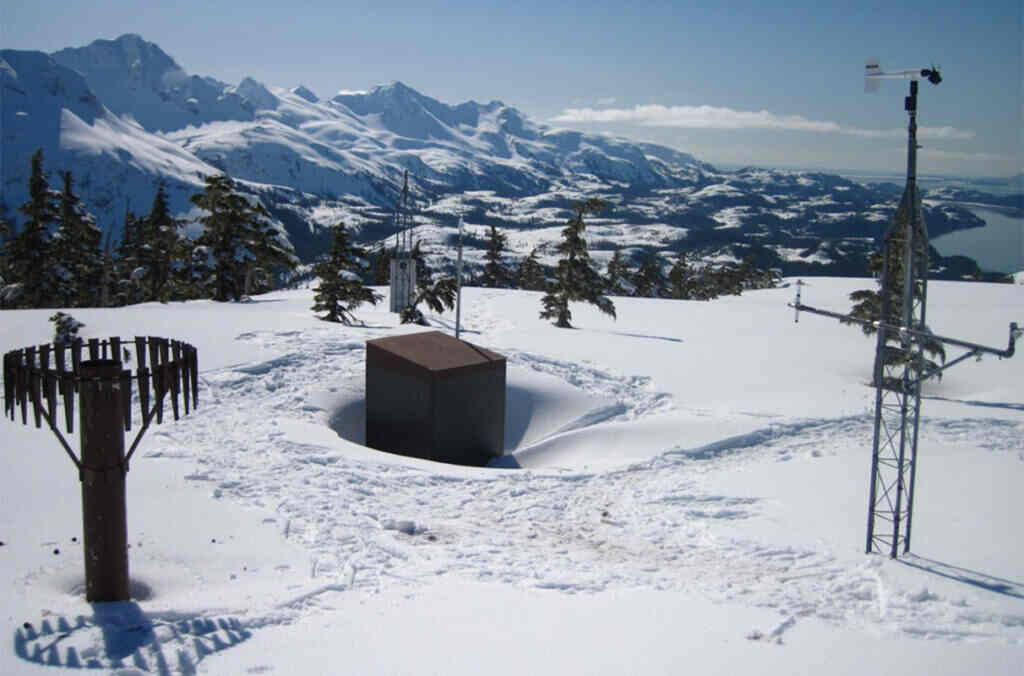
Mt. Eyak SNOTEL site, above the coastal town of Cordova, Alaska. Snow depth is about 10.5 feet, 45% density. Taken April 2012. Photo by Daniel Fisher of the USDA Natural Resources Conservation Service.

Enhancing water supply predictions through improved AI processes

Tyler O'Neal, Staff Editor GOVERNMENT May 1, 2024, 8:00 am

Introduction:

In a significant breakthrough, a team of interdisciplinary researchers from Washington State University (WSU) has developed a novel computer model that leverages advanced artificial intelligence (AI) techniques to more accurately measure snow and water availability across vast distances in the Western United States. This groundbreaking research holds the promise of better-predicting water availability for various stakeholders, including farmers and water management agencies. By incorporating both time and space considerations through machine learning models, the improved AI process surpasses previous models and exhibits the potential to revolutionize our understanding of water resources.

Enhancing Water Availability Predictions:

Published in the Proceedings of the AAAI Conference on Artificial Intelligence, the WSU research group demonstrates the effectiveness of using machine learning algorithms to forecast water availability in regions where snow measurements are not readily available. Traditional models focused solely on time-related measures, considering data from limited locations at different time points. In contrast, the improved AI model developed by the researchers factors in both time and space, leading to more precise predictions.

Optimizing Water Resource Management:

The accurate prediction of water availability is critical for effective water planning and management, given the diverse applications such as irrigation, hydropower, drinking water, and environmental needs. The scarcity of water resources necessitates careful allocation for various purposes. Hence, the WSU research holds particular significance for water planners throughout the West, who make decisions based on the amount of snowfall in the mountains.

Overcoming Data Limitations:

Existing snow measurement stations provide valuable information on snow-water equivalents (SWE) and related parameters such as snow depth, temperature, precipitation, and relative humidity. However, these stations are sparsely distributed, usually present only once every 1,500 square miles. As a result, the SWE can vary significantly even nearby due to topographical differences. This poses a challenge for decision-makers relying on a limited number of stations for predictions.

Utilizing Machine Learning Models:

The WSU team overcame these limitations by employing sophisticated machine-learning models capable of capturing information across space and time. Unlike previous models that focused solely on temporal variables, this new approach takes advantage of both temporal and spatial data. By predicting the daily SWE at any location, regardless of the presence of a station, the model enables a more comprehensive understanding of water availability throughout the region.

Transforming Data into Actionable Insights:

The innovative modeling framework developed by the researchers combines spatial and temporal models to generate accurate predictions. By leveraging machine learning techniques, their approach enhances the decision-making process by incorporating additional information. The aim is to convert the sparse network of existing stations into a dense network of data points, allowing predictions for locations where no stations are present.

Implications for the Future:

While this research is foundational and not yet directly applicable to real-time decision-making, it represents a significant step forward in water resource forecasting and the improvement of predictive models for stream flows. The WSU team plans to extend the model further, aiming to achieve complete spatial coverage and develop a practical forecasting tool. This work was conducted under the AI Institute for Transforming Workforce and Decision Support (AgAID Institute) and received support from the USDA's National Institute of Food and Agriculture.

Conclusion:

The WSU researchers' achievement in developing an improved AI process for predicting water supplies demonstrates the potential of machine learning models in addressing complex environmental challenges. Through the integration of spatial and temporal variables, this research paves the way for more accurate and comprehensive water availability predictions in regions where direct measurements are limited. By enhancing our understanding of water resources, this work can contribute to better decision-making, improved water allocation, and more sustainable management practices, ensuring a more resilient future.

Cyberattacks: The growing threat to governments in 2023

Cyberattacks: The growing threat to governments in 2023

Tyler O'Neal, Staff Editor GOVERNMENT August 28, 2023, 8:43 am

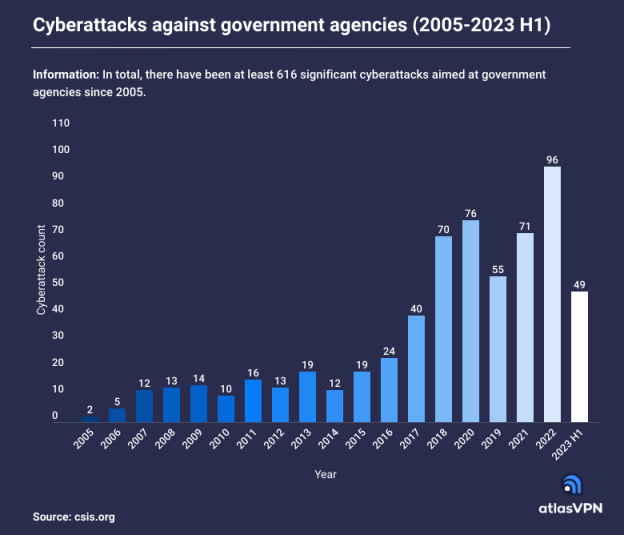
According to the data presented by the Atlas VPN team, in the first half of 2023, there were 49 significant cyber incidents concerning government agencies — a rise of 11% from the same time last year. The attacks affected government bodies in at least 27 countries across the world.

The analysis is based on the information by the Center for Strategic and International Studies, which keeps track of significant cyber incidents. We focused only on cases involving government agencies, their representatives, or contractors.

This year, government agencies in the United States encountered the greatest number of attacks, with 16% specifically aimed at the country. The extended conflict between Russia and Ukraine has also resulted in several cyber incidents against state government entities in the countries.

When it comes to potential perpetrators, Russian hackers are at the forefront, believed to be responsible for approximately 29% of these attacks. Following closely are cybercriminals associated with China, accounting for 18%, while Iran ranks third with 10%.

Government agencies accumulate and store a significant amount of sensitive data, such as personal information about individual citizens. This data can be sold on the dark web or held hostage until a ransom is paid, which makes these agencies an attractive target for cybercriminals.

Apart from monetary motives, roughly a quarter (12) of all cyberattacks targeting government agencies worldwide in 2023 can be attributed to state-linked threat actors engaged in cyberespionage campaigns. Additionally, hacktivist activity played a role, constituting approximately 10% of the recorded incidents within the government sector during the first half of 2023.

Since 2005, government agencies worldwide have experienced a total of 616 significant cyberattacks. More than half of these — 56% — occurred just in the last five years, including the first half of 2023.

In conclusion, it appears that cyberattacks against governments are on the rise in 2023 and will likely continue to increase in the years to come. This is concerning as governments are struggling to keep up with the ever-evolving technology and the sophistication of these attacks. Without a concerted effort to improve security measures, the situation is likely to worsen, leaving governments vulnerable to malicious actors and potentially devastating consequences.

The full report is available here: https://atlasvpn.com/blog/cyberattacks-against-governments-are-on-the-rise-in-2023

  1. OU’s climate researcher Christian projects cropland risk from flash droughts using global climate models
  2. Caltech physicists listen closely to black holes ring

Page 17 of 85

  • 12
  • 13
  • 14
  • 15
  • 16
  • 17
  • 18
  • 19
  • 20
  • 21
POPULAR RIGHT NOW
  • Supercomputers challenge the origin story of cosmic explosions
    Supercomputers challenge the origin story of cosmic explosions
  • IBM’s sub-1 nanometer chip breakthrough: A genuine revolution, or another semiconductor science project?
    IBM’s sub-1 nanometer chip breakthrough: A genuine revolution, or another semiconductor science project?
  • The mathematical breakthrough that could free millions of supercomputer hours
    The mathematical breakthrough that could free millions of supercomputer hours
  • How HPC is connecting natural fusion in thunderstorms to the future of clean energy
    How HPC is connecting natural fusion in thunderstorms to the future of clean energy
  • Meta’s next frontier may not be social media; it may be supercomputing
    Meta’s next frontier may not be social media; it may be supercomputing
  • The future of cancer research runs on supercomputers
    Jill Mesirov, PhD
    Jill Mesirov, PhD
  • Rebuilding a lost continent: Supercomputers reveal Antarctica before the ice
    Antarctic ice meets the rocky coastline. Researchers traced landscape features from the two-kilometre-high coastal escarpment of Dronning Maud Land to the subglacial Gamburtsev Mountains, buried beneath 1–3 km of ice  Credit Matt Palmer
    Antarctic ice meets the rocky coastline. Researchers traced landscape features from the two-kilometre-high coastal escarpment of Dronning Maud Land to the subglacial Gamburtsev Mountains, buried beneath 1–3 km of ice Credit Matt Palmer
  • Supercomputers uncover a new class of cosmic explosions hidden in plain sight
    Supercomputers uncover a new class of cosmic explosions hidden in plain sight
  • AI supercharges the hunt for stronger magnets: Iowa State researchers launch a new era of intelligent materials discovery
    AI supercharges the hunt for stronger magnets: Iowa State researchers launch a new era of intelligent materials discovery
  • IBM's Historic stock collapse raises questions for the future of enterprise supercomputing
    IBM's Historic stock collapse raises questions for the future of enterprise supercomputing
MOST READ THIS YEAR
  • When stars fall apart: Supercomputing reveals the hidden physics of black holes
    When stars fall apart: Supercomputing reveals the hidden physics of black holes
  • Cosmic ambition at scale: UK’s supercomputer unlocks a 2.5 petabytes universe
    Cosmic ambition at scale: UK’s supercomputer unlocks a 2.5 petabytes universe
  • Intel's Q1 results signal supercomputing surge driving Xeon momentum
    Intel's Q1 results signal supercomputing surge driving Xeon momentum
POPULAR RIGHT NOW
  • Supercomputers challenge the origin story of cosmic explosions
  • IBM’s sub-1 nanometer chip breakthrough: A genuine revolution, or another semiconductor science project?
  • The mathematical breakthrough that could free millions of supercomputer hours
  • How HPC is connecting natural fusion in thunderstorms to the future of clean energy
  • Meta’s next frontier may not be social media; it may be supercomputing
  • The future of cancer research runs on supercomputers
  • Rebuilding a lost continent: Supercomputers reveal Antarctica before the ice
  • Supercomputers uncover a new class of cosmic explosions hidden in plain sight
  • AI supercharges the hunt for stronger magnets: Iowa State researchers launch a new era of intelligent materials discovery
  • IBM's Historic stock collapse raises questions for the future of enterprise supercomputing
  • FRONTPAGE
  • LATEST
  • POPULAR
  • REGISTER
  • SOCIAL
  • EVENTS
  • VIDEO
  • SUBSCRIPTION
  • RSS
  • GUIDELINES
  • PRIVACY
  • TOS
  • ABOUT
  • +1 (816) 799-4488
  • editorial@supercomputingonline.com
© 2001 - 2026 SuperComputingOnline.com, LLC. All rights reserved. This material may not be published, broadcast, rewritten or redistributed without permission.
Sign In
  • FRONT PAGE
  • LATEST
    • MEDIA KIT
    • MOST READ
    • RSS FEED
    • ACADEMIA
    • AEROSPACE
    • APPLICATIONS
    • ASTRONOMY
    • AUTOMOTIVE
    • BIG DATA
    • BIOLOGY
    • CHEMISTRY
    • CLIENTS
    • CLOUD
    • DEFENSE
    • DEVELOPER TOOLS
    • EARTH SCIENCES
    • ECONOMICS
    • ENGINEERING
    • ENTERTAINMENT
    • HEALTH
    • INDUSTRY
    • INTERCONNECTS
    • GAMING
    • GOVERNMENT
    • MANUFACTURING
    • MIDDLEWARE
    • MOVIES
    • NETWORKS
    • OIL & GAS
    • PHYSICS
    • PROCESSORS
    • RETAIL
    • SCIENCE
    • STORAGE
    • SYSTEMS
    • VISUALIZATION
  • VIDEOS
    • ADD YOUR VIDEOS
    • MANAGE VIDEOS
  • COMMUNITY
    • TRADE SHOWS
    • SOCIAL NETWORK VIDEOS
    • SURVEYS
    • APPLICATIONS BROWSER
    • CONVERSATION INBOX
    • SOCIAL ADVERTISER
    • GROUPS
    • MARKETPLACE LISTINGS
    • PAGES
    • LEADERBOARD
    • POINTS LISTING
      • BADGES
    • PRIVACY CONFIRM REQUEST
    • PRIVACY CREATE REQUEST

Hey there! We noticed you’re using an ad blocker.