

SUPERCOMPUTING NEWS SUPERCOMPUTING NEWS
    • MEDIA KIT
    • MOST READ
    • RSS FEED
    • ACADEMIA
    • AEROSPACE
    • APPLICATIONS
    • ASTRONOMY
    • AUTOMOTIVE
    • BIG DATA
    • BIOLOGY
    • CHEMISTRY
    • CLIENTS
    • CLOUD
    • DEFENSE
    • DEVELOPER TOOLS
    • EARTH SCIENCES
    • ECONOMICS
    • ENGINEERING
    • ENTERTAINMENT
    • GAMING
    • GOVERNMENT
    • HEALTH
    • OIL & GAS
    • INDUSTRY
    • INTERCONNECTS
    • MANUFACTURING
    • MIDDLEWARE
    • MOVIES
    • NETWORKS
    • PHYSICS
    • PROCESSORS
    • RETAIL
    • SCIENCE
    • STORAGE
    • SYSTEMS
    • VISUALIZATION
    • AcyMailing subscription form

    • ADD YOUR VIDEOS
    • MANAGE VIDEOS
    • CONVERSATION INBOX
    • SOCIAL ADVERTISER
    • SOCIAL NETWORK VIDEOS
    • SURVEYS
    • GROUPS
    • PAGES
    • MARKETPLACE LISTINGS
    • APPLICATIONS BROWSER
    • PRIVACY CONFIRM REQUEST
    • PRIVACY CREATE REQUEST
    • LEADERBOARD
    • POINTS LISTING
      • BADGES
    • TRADE SHOWS
Sign In
A new explanation for X-ray emission from black holes met with skepticism
Tyler O'Neal, Staff Editor SCIENCE August 20, 2024, 1:39 pm

A new explanation for X-ray emission from black holes met with skepticism

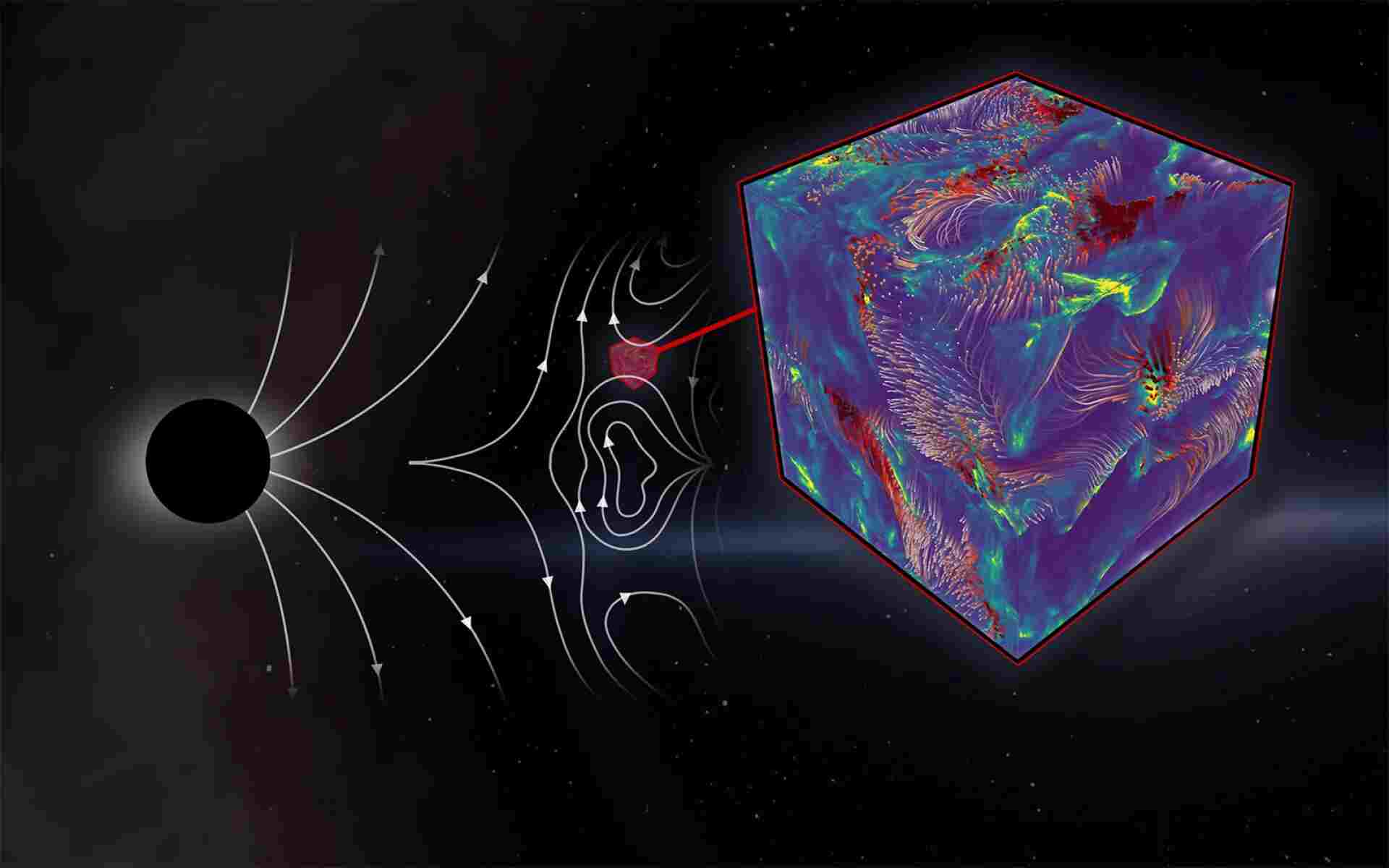
The University of Helsinki recently claimed to discover an explanation for X-ray radiation from black holes. The claim is based on supercomputer simulations and has sparked skepticism and raised questions among the scientific community.

The announcement from the University of Helsinki is brief and lacks the detailed scientific evidence usually expected for such a significant assertion. The absence of comprehensive empirical evidence is a glaring omission, considering the monumental implications of solving the mystery of X-ray radiation from black holes.

Furthermore, using supercomputer simulations as the primary method for understanding black holes and their X-ray emissions has raised concerns among astrophysicists and researchers. Skeptics argue that while simulated models are valuable for testing hypotheses, they should not be seen as infallible sources of truth in such a complex field as the behavior of black holes.

The lack of supporting observational evidence or experimental validation further amplifies the skepticism surrounding this purported breakthrough. Without tangible data or empirical measurements to support the findings, the supposed explanation for X-ray radiation from black holes remains theoretical and subject to rigorous scrutiny and skepticism, which are integral to the scientific method.

As a result, the prevailing skepticism within the scientific community serves as a reminder of the necessity for empirical support, particularly when making claims of this nature. While it is tempting to unravel the mysteries of black holes and their enigmatic emissions, the quest for understanding in astrophysics requires a steadfast commitment to empirical rigor and evidence-based explanation.

As the scientific debate continues, the validity of the purported explanation for X-ray radiation from black holes will ultimately depend on the strength of its empirical foundations, a fundamental aspect of scientific progress and discovery.
Advances in computational methodology are transforming predictions of nanostructures

Advances in computational methodology are transforming predictions of nanostructures

Tyler O'Neal, Staff Editor SCIENCE August 20, 2024, 7:00 am

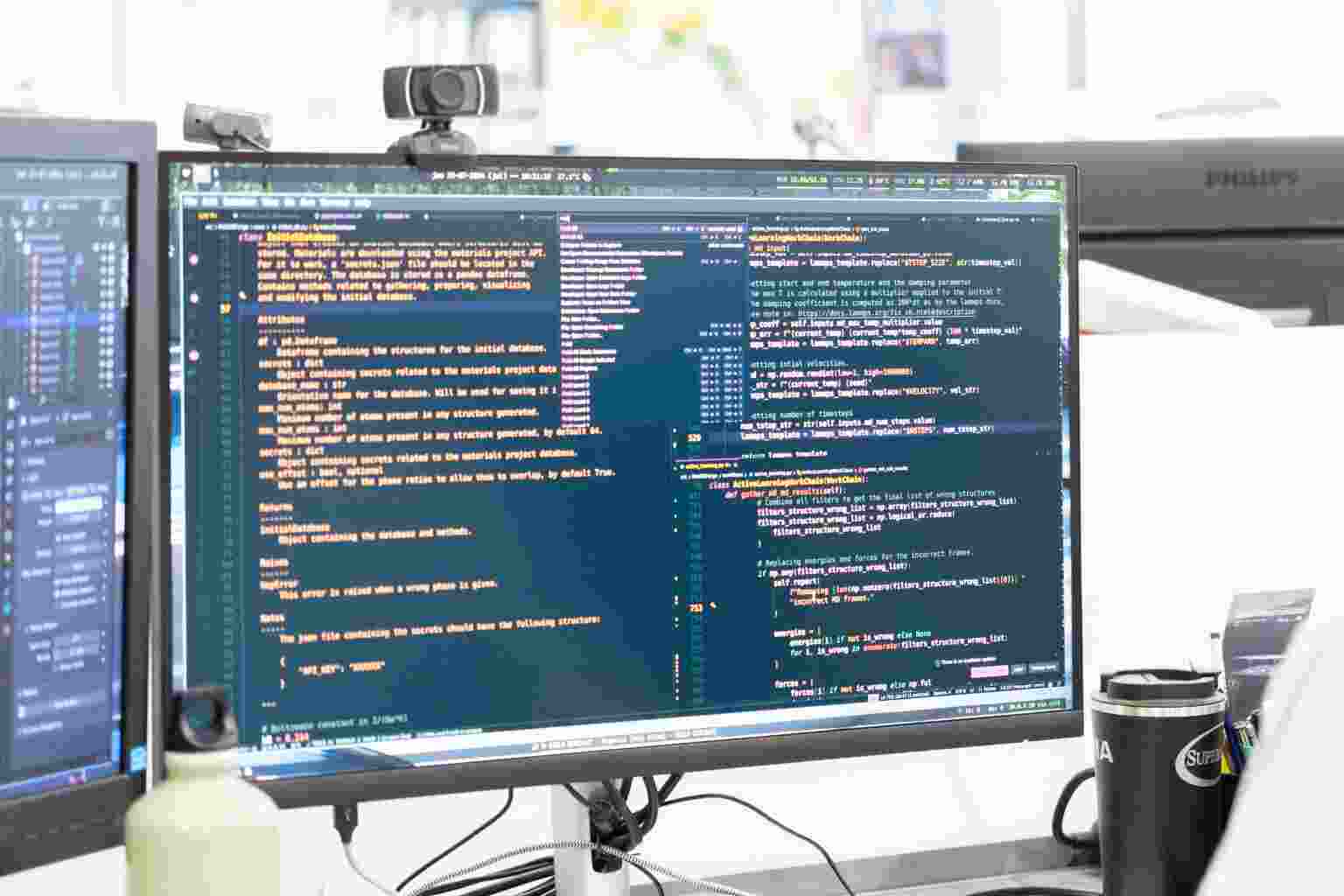
In a remarkable advancement in the field of nanostructure research, a team of researchers from the Institute of Chemical Research of Catalonia (ICIQ-CERCA) in Spain has introduced a pioneering methodology that transforms the prediction of complex nanostructure formation. They have developed an advanced open-source software package called POMSimulator, which is set to revolutionize nanostructural exploration and analysis.

The research led by Prof. Carles Bo sheds light on the complex processes involved in the creation of polyoxometalates (POMs), nanostructures with applications in catalysis, energy storage, biology, and medicine. By employing advanced computational techniques, the team has devised innovative methods to study the chemistry of POMs in solution, uncovering the crucial speciation and formation mechanisms required for developing novel materials.

Polyoxometalates are a versatile family of nanostructures composed of transition metal atoms intricately linked by oxygen atoms. Their intricate formation, influenced by factors like pH, temperature, metal concentration, and environmental conditions, poses a challenge in controlling their synthesis. However, through the team's computational methodology, researchers can now predict how these factors interact to produce specific POM species, enhancing the efficiency and scalability of exploring various speciation models.

The significance of this predictive methodology is particularly relevant in the field of catalysis, where POMs play a crucial role in accelerating important reactions. With the help of statistical methods integrated into the POMSimulator software package, researchers can identify the optimal conditions for producing distinct POM species capable of catalyzing reactions such as CO2 fixation—an application with significant implications for environmental sustainability.

At the core of the research breakthrough is the introduction of POMSimulator, an open-source software package created by Prof. Bo's team to elucidate the formation mechanisms of polyoxometalates. By providing a public version of the software, the researchers aim to facilitate the discovery of novel POMs and promote collaboration within the scientific community. The accessibility of this software enables researchers to customize its functionalities to their specific research needs, fostering a dynamic exchange of insights and discoveries.

Jordi Buils, the first author of the research, emphasizes the transformative impact of the POMSimulator software, stating, "In the times of Big Data, Machine Learning, and Artificial Intelligence, it is crucial to use every bit of information in our hands. Our work has taken POMSimulator to the next level of data usage."

With this innovative methodology and the introduction of the POMSimulator software package, the possibilities for nanostructural prediction and exploration have expanded significantly. As the scientific community embarks on a journey of discovery and collaboration, driven by the transformative power of computational methodologies, the future of nanotechnology holds great promise and potential.

Physicists use supercomputer modeling to predict the feeding patterns of black holes in groundbreaking research

Physicists use supercomputer modeling to predict the feeding patterns of black holes in groundbreaking research

Tyler O'Neal, Staff Editor SCIENCE August 17, 2024, 8:30 am

In a great discovery, a team of astrophysicists led by Syracuse University Professor Eric Coughlin has made a breakthrough in understanding black holes. Using supercomputer modeling, they accurately predicted the feeding patterns of a black hole, a significant achievement in our knowledge of the cosmos.

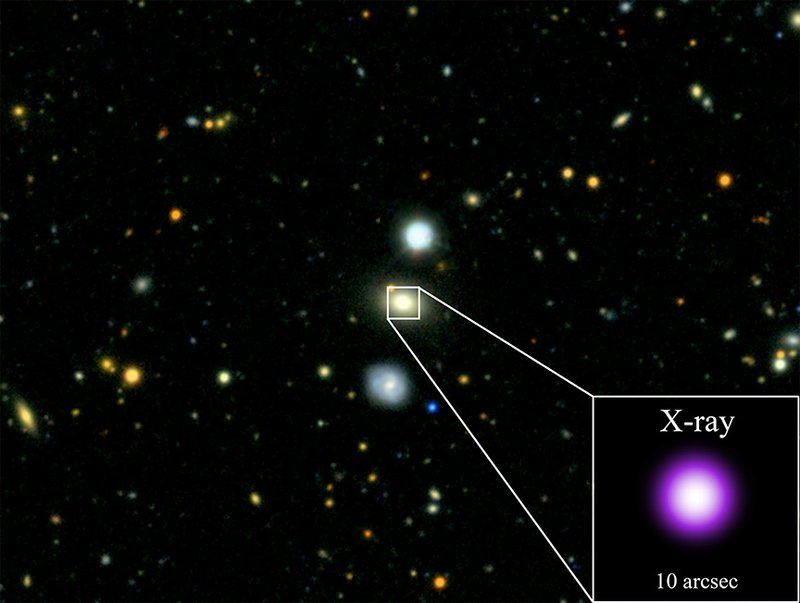
At a distance of about 860 million light-years from Earth, an amazing celestial event validated the team's model. Using advanced telescopes like NASA’s Hubble, James Webb, and Chandra X-ray Observatory, the team explored the mysterious world of black holes, shedding light on their feeding mechanisms through tidal disruption events (TDEs).

TDEs occur when a star is torn apart by the immense gravitational force of a black hole, creating a bright flare. By studying these events, scientists can learn about supermassive black holes (SMBHs) across vast cosmic distances, providing crucial insights into their behavior and properties.

Through meticulous modeling, the physicists accurately predicted the fluctuations in brightness of AT2018fyk, a repeating partial TDE that offered a rare glimpse into the interaction between a star and a supermassive black hole. Their predictions, culminating in the dimming of AT2018fyk in August 2023, demonstrated the precision of their model, opening new avenues for understanding these cosmic behemoths.

Using the computational power of supercomputers, the team revealed the intricate dynamics of black holes. Their findings highlight the invaluable role of technology in unraveling the mysteries of the universe.

In high-energy astrophysics, where light and matter merge in cosmic symphonies, the team's research showcases human ingenuity and the relentless pursuit of knowledge. By harnessing the capabilities of supercomputer modeling, they have illuminated the path toward a deeper understanding of the cosmos and our place within it.

As we gaze at the starlit sky, let the achievements of these visionary physicists inspire us to reach for the stars, for in the vast expanse of the universe, our quest for knowledge knows no bounds.

  1. Innovative 'Hailstone Library' revolutionizes storm forecasting with realistic data
  2. A recent discovery at Georgia State sheds light on the behavior of electrons

Page 5 of 61

  • 1
  • 2
  • 3
  • 4
  • 5
  • 6
  • 7
  • 8
  • 9
  • 10
POPULAR RIGHT NOW
  • Meta’s next frontier may not be social media; it may be supercomputing
    Meta’s next frontier may not be social media; it may be supercomputing
  • The future of cancer research runs on supercomputers
    Jill Mesirov, PhD
    Jill Mesirov, PhD
  • Rebuilding a lost continent: Supercomputers reveal Antarctica before the ice
    Antarctic ice meets the rocky coastline. Researchers traced landscape features from the two-kilometre-high coastal escarpment of Dronning Maud Land to the subglacial Gamburtsev Mountains, buried beneath 1–3 km of ice  Credit Matt Palmer
    Antarctic ice meets the rocky coastline. Researchers traced landscape features from the two-kilometre-high coastal escarpment of Dronning Maud Land to the subglacial Gamburtsev Mountains, buried beneath 1–3 km of ice Credit Matt Palmer
  • Supercomputers uncover a new class of cosmic explosions hidden in plain sight
    Supercomputers uncover a new class of cosmic explosions hidden in plain sight
  • AI supercharges the hunt for stronger magnets: Iowa State researchers launch a new era of intelligent materials discovery
    AI supercharges the hunt for stronger magnets: Iowa State researchers launch a new era of intelligent materials discovery
  • IBM's Historic stock collapse raises questions for the future of enterprise supercomputing
    IBM's Historic stock collapse raises questions for the future of enterprise supercomputing
  • Could a novel dark matter theory simultaneously resolve multiple cosmic enigmas? Supercomputer simulations provide a compelling, albeit currently unverified, potential solution
    Could a novel dark matter theory simultaneously resolve multiple cosmic enigmas? Supercomputer simulations provide a compelling, albeit currently unverified, potential solution
  • Melting icebergs may be reshaping Earth’s greatest ocean current
    Melting icebergs may be reshaping Earth’s greatest ocean current
  • Supercomputers replace ‘bathtub’ flood maps with physics-based digital twins of Britain’s coastline
    Supercomputers replace ‘bathtub’ flood maps with physics-based digital twins of Britain’s coastline
  • Supercomputers push neural quantum simulation beyond previous limits
    Supercomputers push neural quantum simulation beyond previous limits
MOST READ THIS YEAR
  • Cosmic ambition at scale: UK’s supercomputer unlocks a 2.5 petabytes universe
    Cosmic ambition at scale: UK’s supercomputer unlocks a 2.5 petabytes universe
  • Intel's Q1 results signal supercomputing surge driving Xeon momentum
    Intel's Q1 results signal supercomputing surge driving Xeon momentum
  • When stars fall apart: Supercomputing reveals the hidden physics of black holes
    When stars fall apart: Supercomputing reveals the hidden physics of black holes
  • FRONTPAGE
  • LATEST
  • POPULAR
  • REGISTER
  • SOCIAL
  • VIDEO
  • SUBSCRIPTION
  • RSS
  • GUIDELINES
  • PRIVACY
  • TOS
  • ABOUT
  • +1 (816) 799-4488
  • editorial@supercomputingonline.com
© 2001 - 2026 SuperComputingOnline.com, LLC. All rights reserved. This material may not be published, broadcast, rewritten or redistributed without permission.
Sign In
  • FRONT PAGE
  • LATEST
    • MEDIA KIT
    • MOST READ
    • RSS FEED
    • ACADEMIA
    • AEROSPACE
    • APPLICATIONS
    • ASTRONOMY
    • AUTOMOTIVE
    • BIG DATA
    • BIOLOGY
    • CHEMISTRY
    • CLIENTS
    • CLOUD
    • DEFENSE
    • DEVELOPER TOOLS
    • EARTH SCIENCES
    • ECONOMICS
    • ENGINEERING
    • ENTERTAINMENT
    • HEALTH
    • INDUSTRY
    • INTERCONNECTS
    • GAMING
    • GOVERNMENT
    • MANUFACTURING
    • MIDDLEWARE
    • MOVIES
    • NETWORKS
    • OIL & GAS
    • PHYSICS
    • PROCESSORS
    • RETAIL
    • SCIENCE
    • STORAGE
    • SYSTEMS
    • VISUALIZATION
  • VIDEOS
    • ADD YOUR VIDEOS
    • MANAGE VIDEOS
  • COMMUNITY
    • TRADE SHOWS
    • SOCIAL NETWORK VIDEOS
    • SURVEYS
    • APPLICATIONS BROWSER
    • CONVERSATION INBOX
    • SOCIAL ADVERTISER
    • GROUPS
    • MARKETPLACE LISTINGS
    • PAGES
    • LEADERBOARD
    • POINTS LISTING
      • BADGES
    • PRIVACY CONFIRM REQUEST
    • PRIVACY CREATE REQUEST

Hey there! We noticed you’re using an ad blocker.