

SUPERCOMPUTING NEWS SUPERCOMPUTING NEWS
    • MEDIA KIT
    • MOST READ
    • RSS FEED
    • ACADEMIA
    • AEROSPACE
    • APPLICATIONS
    • ASTRONOMY
    • AUTOMOTIVE
    • BIG DATA
    • BIOLOGY
    • CHEMISTRY
    • CLIENTS
    • CLOUD
    • DEFENSE
    • DEVELOPER TOOLS
    • EARTH SCIENCES
    • ECONOMICS
    • ENGINEERING
    • ENTERTAINMENT
    • GAMING
    • GOVERNMENT
    • HEALTH
    • OIL & GAS
    • INDUSTRY
    • INTERCONNECTS
    • MANUFACTURING
    • MIDDLEWARE
    • MOVIES
    • NETWORKS
    • PHYSICS
    • PROCESSORS
    • RETAIL
    • SCIENCE
    • STORAGE
    • SYSTEMS
    • VISUALIZATION
    • AcyMailing subscription form

    • ADD YOUR VIDEOS
    • MANAGE VIDEOS
    • CONVERSATION INBOX
    • SOCIAL ADVERTISER
    • SOCIAL NETWORK VIDEOS
    • SURVEYS
    • GROUPS
    • PAGES
    • MARKETPLACE LISTINGS
    • APPLICATIONS BROWSER
    • PRIVACY CONFIRM REQUEST
    • PRIVACY CREATE REQUEST
    • LEADERBOARD
    • POINTS LISTING
      • BADGES
    • TRADE SHOWS
Sign In
Tyler O'Neal, Staff Editor SCIENCE August 6, 2024, 5:00 pm

Supermicro achieves record growth in AI demand with sales soaring by 110% to $14.9 billion

In a remarkable display of success, Super Micro Computer, Inc., has announced its outstanding fourth quarter and full fiscal year 2024 financial results, culminating in a monumental year for the company.

Fourth Quarter Results Highlights

In the fourth quarter of fiscal year 2024, Supermicro reported staggering figures that reflected the company's momentum and success:

  • Net sales surged to an impressive $5.31 billion, up from $3.85 billion in the previous quarter and $2.18 billion in the comparable quarter of the previous year.
  • Despite a slight decrease in gross margin to 11.2%, the company recorded net income of $353 million.
  • Diluted net income per common share stood at $5.51, showcasing the company's profitability and growth trajectory.
  • These remarkable results were further bolstered by non-GAAP diluted net income per common share of $6.25.

Fiscal Year 2024 Highlights

The year 2024 proved to be a pivotal one for Supermicro, with record-breaking achievements that set a new standard in the industry:

  • Annual net sales for fiscal year 2024 reached an unprecedented $14.94 billion, reflecting a remarkable 110% year-over-year growth.
  • Net income for the fiscal year topped $1.21 billion, with non-GAAP net income reaching $1.34 billion.
  • Supermicro's President and CEO, Charles Liang, expressed optimism about the company's future, highlighting the significant growth fueled by new AI infrastructure demand.

Management's Optimistic Outlook

Looking ahead to fiscal year 2025, Supermicro has set high expectations, aiming for net sales between $26.0 billion to $30.0 billion. The company's management remains confident in its ability to capitalize on the growing demand for AI infrastructure solutions and solidify its position as a dominant force in the IT industry.

Industry Perspective

Supermicro's outstanding performance not only signifies its success but also reflects the increasing importance of AI technologies across various sectors. As businesses and organizations continue to invest in AI infrastructure to enhance efficiency and innovation, Supermicro's growth serves as a testament to the industry's potential for expansion and development.

Conclusion

Super Micro Computer's exceptional financial results for fiscal year 2024 underscore its position as a key player in the IT landscape. With a sharp focus on AI, Cloud, and emerging technologies, the company is well-positioned to lead the industry toward a future defined by innovation and growth. As Supermicro continues to set new benchmarks in the field of AI infrastructure, the outlook for the company remains bright, signaling a promising trajectory of success in the years to come.
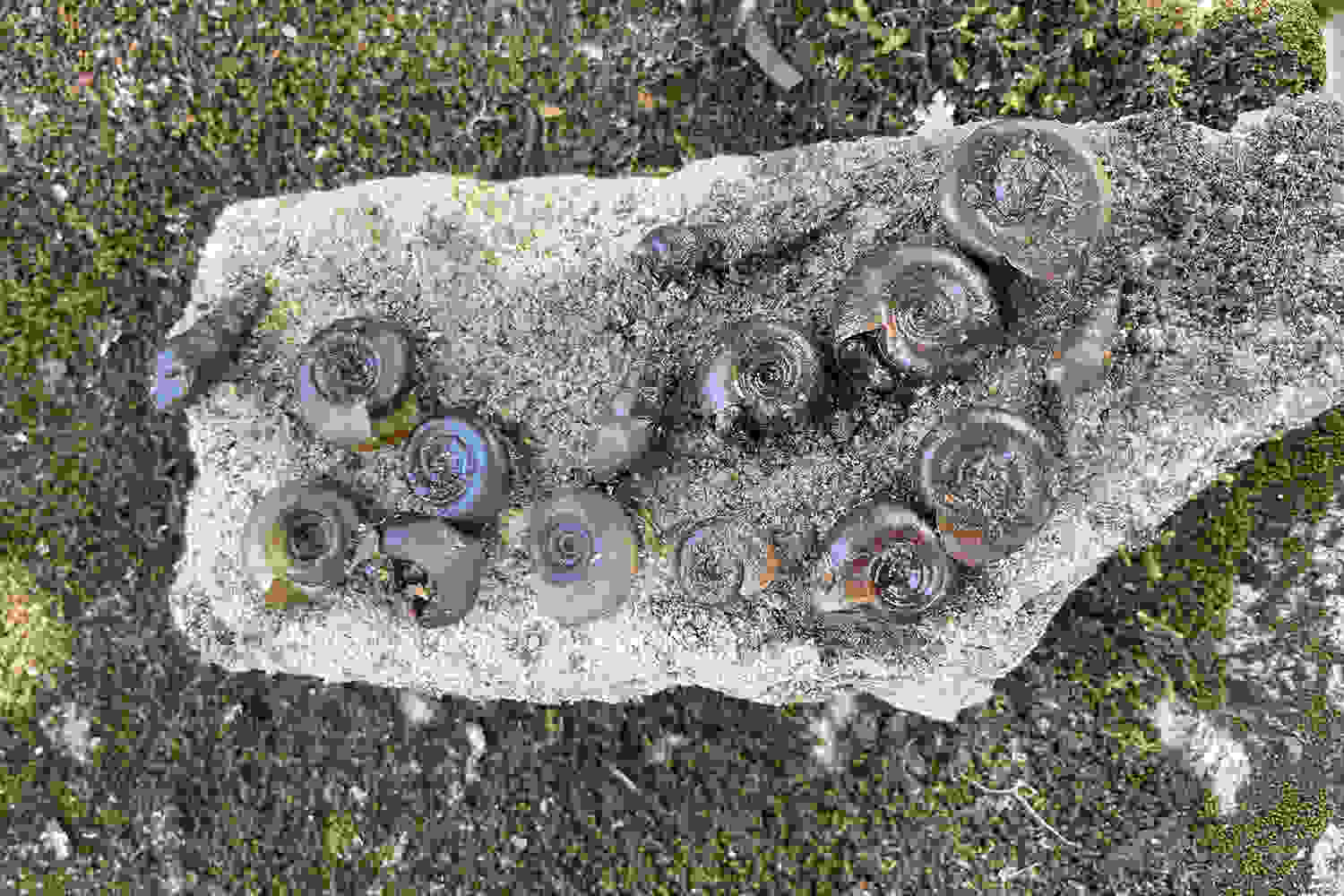
Researchers are gathering snail samples from different locations in Brazil to study the impact of climate change and urbanization on snail habitats. credit: Aly Singleton

Stanford predicts the impact of climate on a severe disease

Tyler O'Neal, Staff Editor SCIENCE August 5, 2024, 5:00 pm

Investigators from Stanford and Brazil are collaborating to predict the impact of climate and environmental changes on the spread of schistosomiasis, a parasitic disease in Brazil. The disease is spread by freshwater snails and affects over 200 million people in tropical regions worldwide. Climate change, deforestation, urban sprawl, and changing rainfall patterns can shift the locations where the snails thrive, affecting the spread of the disease. Roseli Tuan, a senior researcher at the São Paulo Secretary of Health, underlined the need to understand these changes for the future control of schistosomiasis. To address these challenges, researchers are developing models to predict how the disease's risk will change in response to environmental changes. These models combine long-term snail surveillance records with satellite imagery to map the habitat for schistosomiasis-transmitting snails with unprecedented precision. Erin Mordecai, an associate professor of biology at Stanford, emphasized the significant nature of the collaboration and its critical role in updating paradigms about schistosomiasis in Brazil and prioritizing public health interventions considering environmental changes.

Due to the innovative approach of the research, scientists and policymakers will gain valuable insights into potential shifts in disease prevalence. This will allow them to plan and implement interventions to combat schistosomiasis proactively.

One significant outcome of this collaborative effort is the identification of high-risk areas, which can be used to direct control efforts and resource allocation more effectively. Pinpointing areas with increased risk enables public health officials and policymakers to strategize the distribution of resources and interventions, targeting locations with a heightened potential for disease transmission.

The interdisciplinary nature of this research, involving environmental science, epidemiology, and public health, reinforces the importance of taking a holistic approach to understanding and combating complex diseases like schistosomiasis. By delving into the interactions between environmental changes, disease dynamics, and human behaviors, the research sheds light on the intricate factors contributing to the disease's transmission.

The implications of this research extend beyond Brazil, with potential applicability to other regions grappling with the effects of climate change on infectious diseases. Leveraging data-driven models and forecasting tools, the research holds promise for informing proactive, targeted interventions that can mitigate the impact of environmental changes on disease transmission.

This groundbreaking collaboration between Stanford and Brazil sets a precedent for the synergy between international research institutions and underscores the potential of such partnerships in addressing global health challenges. Furthermore, the fusion of expertise from different fields serves as a testament to the power of interdisciplinary approaches in unraveling complex health issues.

The findings of this research have the potential to catalyze meaningful action in global health, paving the way for a more informed and proactive approach to tackling the intersection of climate change and infectious diseases. As the research continues to evolve, the insights gained from this collaborative effort stand to make a significant difference in the ongoing fight against schistosomiasis and other environmentally influenced diseases.

Xinnor showcases collaborative work with NVIDIA, Solidigm, and KIOXIA at FMS 2024

Tyler O'Neal, Staff Editor SCIENCE August 2, 2024, 5:00 pm

Xinnor has announced a series of initiatives during the Future of Memory and Storage (FMS) conference, taking place from August 6-8, 2024, in Santa Clara, California.

At Booth #751, Xinnor will demonstrate the following:
- Its innovative xiRAID Opus software runs on the NVIDIA BlueField-3 Data Processing Unit (DPU), a cutting-edge solution designed to transform disaggregated storage infrastructures and virtualized environments.
- A xiRAID Classic 4.1 demo together with Solidigm D5-P5336 61.44TB QLC SSD.

In addition, Xinnor’s technology will be displayed at KIOXIA’s booth:
- KIOXIA will showcase RAID Offload technology at booth #307 with a prototype of Xinnor xiRAID. Combining the KIOXIA innovation calculating RAID parity on NVMe SSDs with Xinnor's unique RAID engine enables RAID data protection and enhances performance, while minimizing the usage of precious system resources, such as DRAM, CPU, and L3 cache.

Finally, Xinnor’s executives will participate in 2-panel sessions and one extra event:
- On Wednesday, August 7th at 9:45 AM, Dmitry Livshits, Xinnor’s CEO, will speak about “Distributed erasure coding for NVMe SSDs in virtualized cloud infrastructure” at the “Cloud Software” panel in Ballroom B.
- On Wednesday, August 7th at 7 PM, Dmitry Livshits and Davide Villa will host two technology tables at the “Chat with the Experts” event: “Endurance / RAID” and “Reliability and Performance SSDs” respectively.
- On Thursday, August 8th at 12:10 PM, Davide Villa, Xinnor’s CRO, will participate in the “Data-Intensive Customer Solution” panel in the meeting room GAMR1, to present a case study about implementing a fast cache tier in front of the 100PB tape library.

Xinnor invites all FMS attendees to visit Booth #751 to speak with our experts on how xiRAID Classic and Opus add data integrity when deploying NVMe SSDs with no compromise on performance.

  1. University of Maryland makes dubious claims about its new AF2RAVE drug discovery method
  2. Intel suspends dividend, cuts 15,000 jobs, reports dismal earnings results

Page 8 of 61

  • 3
  • 4
  • 5
  • 6
  • 7
  • 8
  • 9
  • 10
  • 11
  • 12
POPULAR RIGHT NOW
  • Meta’s next frontier may not be social media; it may be supercomputing
    Meta’s next frontier may not be social media; it may be supercomputing
  • The future of cancer research runs on supercomputers
    Jill Mesirov, PhD
    Jill Mesirov, PhD
  • Rebuilding a lost continent: Supercomputers reveal Antarctica before the ice
    Antarctic ice meets the rocky coastline. Researchers traced landscape features from the two-kilometre-high coastal escarpment of Dronning Maud Land to the subglacial Gamburtsev Mountains, buried beneath 1–3 km of ice  Credit Matt Palmer
    Antarctic ice meets the rocky coastline. Researchers traced landscape features from the two-kilometre-high coastal escarpment of Dronning Maud Land to the subglacial Gamburtsev Mountains, buried beneath 1–3 km of ice Credit Matt Palmer
  • Supercomputers uncover a new class of cosmic explosions hidden in plain sight
    Supercomputers uncover a new class of cosmic explosions hidden in plain sight
  • AI supercharges the hunt for stronger magnets: Iowa State researchers launch a new era of intelligent materials discovery
    AI supercharges the hunt for stronger magnets: Iowa State researchers launch a new era of intelligent materials discovery
  • IBM's Historic stock collapse raises questions for the future of enterprise supercomputing
    IBM's Historic stock collapse raises questions for the future of enterprise supercomputing
  • Could a novel dark matter theory simultaneously resolve multiple cosmic enigmas? Supercomputer simulations provide a compelling, albeit currently unverified, potential solution
    Could a novel dark matter theory simultaneously resolve multiple cosmic enigmas? Supercomputer simulations provide a compelling, albeit currently unverified, potential solution
  • Melting icebergs may be reshaping Earth’s greatest ocean current
    Melting icebergs may be reshaping Earth’s greatest ocean current
  • Supercomputers replace ‘bathtub’ flood maps with physics-based digital twins of Britain’s coastline
    Supercomputers replace ‘bathtub’ flood maps with physics-based digital twins of Britain’s coastline
  • Supercomputers push neural quantum simulation beyond previous limits
    Supercomputers push neural quantum simulation beyond previous limits
MOST READ THIS YEAR
  • Cosmic ambition at scale: UK’s supercomputer unlocks a 2.5 petabytes universe
    Cosmic ambition at scale: UK’s supercomputer unlocks a 2.5 petabytes universe
  • Intel's Q1 results signal supercomputing surge driving Xeon momentum
    Intel's Q1 results signal supercomputing surge driving Xeon momentum
  • When stars fall apart: Supercomputing reveals the hidden physics of black holes
    When stars fall apart: Supercomputing reveals the hidden physics of black holes
  • FRONTPAGE
  • LATEST
  • POPULAR
  • REGISTER
  • SOCIAL
  • VIDEO
  • SUBSCRIPTION
  • RSS
  • GUIDELINES
  • PRIVACY
  • TOS
  • ABOUT
  • +1 (816) 799-4488
  • editorial@supercomputingonline.com
© 2001 - 2026 SuperComputingOnline.com, LLC. All rights reserved. This material may not be published, broadcast, rewritten or redistributed without permission.
Sign In
  • FRONT PAGE
  • LATEST
    • MEDIA KIT
    • MOST READ
    • RSS FEED
    • ACADEMIA
    • AEROSPACE
    • APPLICATIONS
    • ASTRONOMY
    • AUTOMOTIVE
    • BIG DATA
    • BIOLOGY
    • CHEMISTRY
    • CLIENTS
    • CLOUD
    • DEFENSE
    • DEVELOPER TOOLS
    • EARTH SCIENCES
    • ECONOMICS
    • ENGINEERING
    • ENTERTAINMENT
    • HEALTH
    • INDUSTRY
    • INTERCONNECTS
    • GAMING
    • GOVERNMENT
    • MANUFACTURING
    • MIDDLEWARE
    • MOVIES
    • NETWORKS
    • OIL & GAS
    • PHYSICS
    • PROCESSORS
    • RETAIL
    • SCIENCE
    • STORAGE
    • SYSTEMS
    • VISUALIZATION
  • VIDEOS
    • ADD YOUR VIDEOS
    • MANAGE VIDEOS
  • COMMUNITY
    • TRADE SHOWS
    • SOCIAL NETWORK VIDEOS
    • SURVEYS
    • APPLICATIONS BROWSER
    • CONVERSATION INBOX
    • SOCIAL ADVERTISER
    • GROUPS
    • MARKETPLACE LISTINGS
    • PAGES
    • LEADERBOARD
    • POINTS LISTING
      • BADGES
    • PRIVACY CONFIRM REQUEST
    • PRIVACY CREATE REQUEST

Hey there! We noticed you’re using an ad blocker.