

SUPERCOMPUTING NEWS SUPERCOMPUTING NEWS
    • MEDIA KIT
    • MOST READ
    • RSS FEED
    • ACADEMIA
    • AEROSPACE
    • APPLICATIONS
    • ASTRONOMY
    • AUTOMOTIVE
    • BIG DATA
    • BIOLOGY
    • CHEMISTRY
    • CLIENTS
    • CLOUD
    • DEFENSE
    • DEVELOPER TOOLS
    • EARTH SCIENCES
    • ECONOMICS
    • ENGINEERING
    • ENTERTAINMENT
    • GAMING
    • GOVERNMENT
    • HEALTH
    • OIL & GAS
    • INDUSTRY
    • INTERCONNECTS
    • MANUFACTURING
    • MIDDLEWARE
    • MOVIES
    • NETWORKS
    • PHYSICS
    • PROCESSORS
    • RETAIL
    • SCIENCE
    • STORAGE
    • SYSTEMS
    • VISUALIZATION
    • AcyMailing subscription form

    • ADD YOUR VIDEOS
    • MANAGE VIDEOS
    • CONVERSATION INBOX
    • SOCIAL ADVERTISER
    • SOCIAL NETWORK VIDEOS
    • SURVEYS
    • GROUPS
    • PAGES
    • MARKETPLACE LISTINGS
    • APPLICATIONS BROWSER
    • PRIVACY CONFIRM REQUEST
    • PRIVACY CREATE REQUEST
    • LEADERBOARD
    • POINTS LISTING
      • BADGES
    • TRADE SHOWS
Sign In
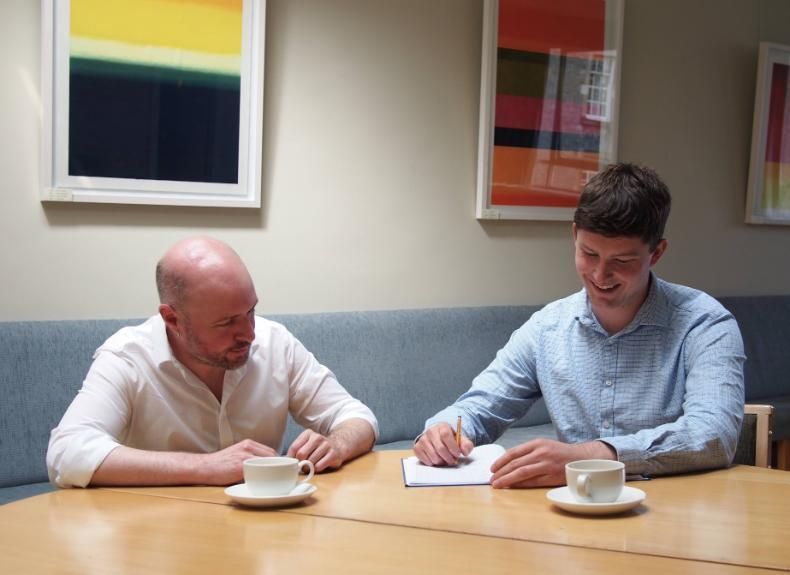
 Andrew Burgess (right) and his research mentor Dr David O’Regan (left)
Andrew Burgess (right) and his research mentor Dr David O’Regan (left)
Tyler O'Neal, Staff Editor SCIENCE July 17, 2024, 5:00 pm

Pioneering study reveals quantum particles' energy landscapes, advancing green tech

In a recent breakthrough in quantum mechanics, an international team of physicists, with Trinity College Dublin at its core, has proven innovative theorems that shed light on the intricate dynamics of collections of quantum particles. This pioneering work addresses long-standing questions and paves the way for more accurate supercomputer simulations of materials. It offers the potential to revolutionize green technologies.

Decoding the Energy Landscapes of Quantum Particles

The recent theorems, published in the well-respected journal Physical Review Letters, explore how the energy of systems of particles - including atoms, molecules, and other unusual matter - changes with variations in magnetism and particle count. By solving a major unresolved issue important for computer simulations in material science, this research continues the legacy of influential works dating back to the early 1980s.

Collaborative Efforts Yield Groundbreaking Results

The research was led by Andrew Burgess, a PhD Candidate at Trinity's School of Physics, Dr. Edward Linscott from the Paul Scherrer Institute in Switzerland, and Dr. David O’Regan, an Associate Professor in Physics at Trinity. They used theories and computer analyses to study the energy landscapes of quantum particles.

A Tangible Impact on Material Science and Green Technologies

The implications of this research extend far beyond the realm of theoretical physics. By enhancing our understanding of molecular and material behavior through supercomputer simulations, this work sets the stage for making simulations more reliable and accurate. This advancement could potentially facilitate the design of a new generation of materials that could power green technologies, thereby propelling sustainable innovation.

Visualizing the Energy Landscape

Dr. David O’Regan vividly illustrates the team's findings by likening the energy landscape to a steep-sided valley of angular tiles, similar to those found in retro arcade games. The height profile of this fractured valley mirrors the precise energy configurations of isolated collections of particles, with variations in electron numbers and magnetism shaping the terrain. This visualization encapsulates the meticulous mapping of energy landscapes up to high magnetic states, revealing steep and tilted valley walls that capture the essence of quantum mechanics.

Implications for Real-world Applications

While the significance of understanding the energy landscape may seem abstract, its practical implications are profound. By embedding this knowledge into computational simulations, researchers can optimize the development of next-generation materials for applications such as solar panels and energy-efficient catalysts. From enhancing battery performance to advancing renewable energy solutions, the insights gained from this research have far-reaching implications for addressing pressing global challenges.

Trailblazing Towards a Sustainable Future

The journey towards harnessing the power of quantum mechanics to drive sustainable innovation is characterized by the seamless integration of theoretical insights and practical applications. The interplay between innovative theories and computational simulations, as exemplified by this research, underscores the transformative potential of bridging the gap between abstract quantum theory and real-world solutions.

Conclusion

Published at the forefront of scientific discovery, this study not only expands our comprehension of quantum mechanics but also propels us toward a future where green technologies and sustainable solutions are within reach. As the realms of theoretical physics and material science converge, the foundations laid by this research promise to shape a future where quantum particles hold the key to unlocking a sustainable and technologically advanced world.
British doctors' study explores personalized simulations for blood cancer treatment

British doctors' study explores personalized simulations for blood cancer treatment

Tyler O'Neal, Staff Editor SCIENCE July 16, 2024, 5:00 pm

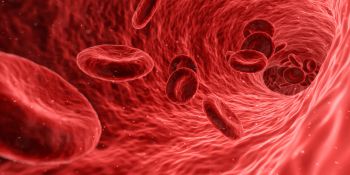
A recent study conducted by researchers at Brighton and Sussex Medical School (BSMS) has introduced a pioneering approach to predicting the efficacy of treatments for patients with Diffuse Large B-cell lymphoma (DLBCL), a prevalent form of blood cancer. This groundbreaking research capitalizes on genomic sequencing data to create personalized simulations of individual patients. These simulations offer insights into the impact of genetic mutations on cancer cell behavior.

Revolutionizing Clinical Decision-Making with Personalized Medicine

Dr. Simon Mitchell, Reader in Cancer Systems Biology at BSMS, led a research team that worked with Leukaemia UK and UKRI to create a method with the potential for personalized medicine. The team used genomic data from DLBCL patients to simulate the impact of specific mutations on anti-apoptotic and pro-proliferative signaling in cancer cells. Unlike traditional methods that focus on mutational clustering, these simulations provide a more detailed understanding of how multiple mutations interact.

Identifying Varied Prognoses with Precision

The study successfully identified patients with different prognoses (dismal, intermediate, and good) across various datasets using data from whole-exome sequencing (WES) or targeted sequencing panels. The simulations showed robust predictive accuracy even in the presence of mutational heterogeneity, highlighting the importance of integrating molecular network knowledge into data analysis. Notably, the models excelled in identifying patients with co-occurring mutations that drive cancer cell proliferation and resistance to apoptosis, which traditional clustering methods cannot achieve.

Toward a New Era of Precision Medicine

Dr. Simon Mitchell suggests that incorporating genetic sequencing at the diagnosis stage of DLBCL could greatly improve the determination of patient prognosis. As sequencing costs go down, this approach may become a standard diagnostic practice, helping to accurately identify patients who could benefit from alternative treatments. These developments in computational modeling have the potential to bring in a new era of precision medicine for blood cancer patients and beyond.

Leukaemia UK's Role in Advancing Blood Cancer Research

Dr. Simon Ridley, Director of Research & Advocacy at Leukaemia UK, expressed enthusiasm for supporting Dr. Mitchell's team's innovative work. This study represents crucial progress toward stratified medicine, enabling targeted treatments that could greatly benefit patients with blood cancer. Using computational tools to model various blood cancers, clinicians may eventually predict which treatments will yield the best outcomes for individual patients.

Broadening the Scope of Computational Modeling in Cancer Research

The computational modeling techniques showcased in this study extend beyond DLBCL and have the potential to be applied to other cancer types characterized by genetic heterogeneity. As genomic data becomes more accessible and computational methods continue to evolve, personalized simulations could play a pivotal role in the era of precision medicine, tailoring treatments to individual genetic profiles for improved patient outcomes.

Conclusion

This study represents a significant advancement in personalized cancer treatment strategies and patient care. The research team at BSMS has delved into the complex world of genomic data and computational simulations, setting the stage for a transformative era in precision medicine. Their work offers hope for improved treatment outcomes and prognosis predictions for patients fighting blood cancer.

Korean scientists harness deep learning to enhance typhoon forecasting

Korean scientists harness deep learning to enhance typhoon forecasting

Tyler O'Neal, Staff Editor SCIENCE July 15, 2024, 12:00 pm

In response to the increasing challenges posed by climate change, a groundbreaking study has revealed an innovative technology that utilizes real-time satellite data and deep learning to improve the accuracy of typhoon predictions. The research, led by Professor Jungho Im from the Department of Civil, Urban, Earth, and Environmental Engineering at the Ulsan National Institute of Science and Technology (UNIST) in Korea, marks a significant advancement in the field of tropical cyclone forecasting.

Innovative Approach to Typhoon Prediction

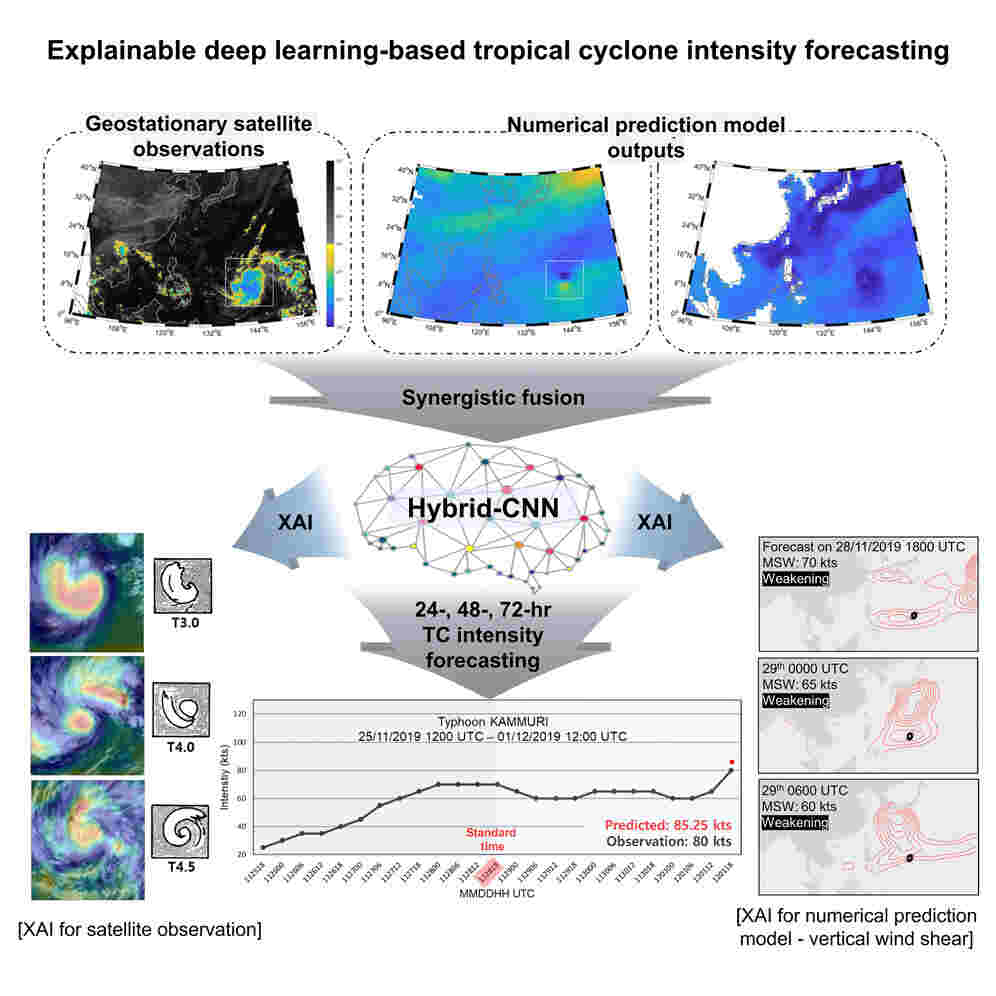
In the past, predicting typhoon intensity depended largely on analyzing data from geostationary satellites by meteorologists, which was a time-consuming process with inherent uncertainties related to numerical models. However, the research team at UNIST has developed a revolutionary deep learning-based prediction model called the Hybrid-Convolutional Neural Networks (Hybrid-CNN). This model seamlessly integrates real-time data from geostationary weather satellites with numerical model data. The Hybrid-CNN provides an objective and precise forecast of typhoon intensity with lead times of 24, 48, and 72 hours, significantly reducing the uncertainties associated with traditional numerical models.

Utilization of Transfer Learning and Satellite Data

Through the use of transfer learning techniques, the research team effectively utilized data from the Communication, Ocean, and Meteorological Satellite (COMS) launched in 2010 and the GEO-KOMPSAT-2A (GK2A) launched in 2019. This approach, based on artificial intelligence, visually and quantitatively analyzed the automatic typhoon intensity estimation process, improving the accuracy of typhoon forecasts by identifying and applying key environmental factors that influence changes in typhoon intensity.

Promising Implications for Disaster Preparedness

The advanced technology improves forecasting accuracy and has the potential to revolutionize disaster preparedness efforts by providing prompt and precise typhoon information for developing effective measures. - Professor Im

Conclusion

Combining advanced deep learning technologies with real-time satellite data is a significant leap forward in predicting and mitigating the impacts of typhoons, revolutionizing disaster preparedness and bolstering resilience to unpredictable weather patterns.

  1. NASA's Webb explores the beauty of the Universe by capturing majestic sunrises, sunsets on distant worlds
  2. Germany makes strides in quantum networking by securely propagating entanglement at the push of a button

Page 12 of 61

  • 7
  • 8
  • 9
  • 10
  • 11
  • 12
  • 13
  • 14
  • 15
  • 16
POPULAR RIGHT NOW
  • 10,000 AI agents, 130 billion tokens and 88 hours: How OpenAI turned Navier–Stokes into a supercomputing workload
    10,000 AI agents, 130 billion tokens and 88 hours: How OpenAI turned Navier–Stokes into a supercomputing workload
  • Supercomputing reveals why some black hole flares fade away
    Supercomputing reveals why some black hole flares fade away
  • NVIDIA's $96.2 billion quarter redefines the supercomputing economy
    NVIDIA's $96.2 billion quarter redefines the supercomputing economy
  • When physics computes: Simulations turn random skyrmion motion into directional information
    When physics computes: Simulations turn random skyrmion motion into directional information
  • Millions of CPU cores meet 69 billion molecules: AI rewrites the rules of computational drug discovery
    Millions of CPU cores meet 69 billion molecules: AI rewrites the rules of computational drug discovery
  • Jensen Huang to G20: Build the AI infrastructure, or risk being left behind
    Jensen Huang to G20: Build the AI infrastructure, or risk being left behind
  • Milky Way’s own gravity can mimic dark matter clues, supercomputer simulations suggest
    Milky Way’s own gravity can mimic dark matter clues, supercomputer simulations suggest
  • NASA’s Roman Space Telescope will turn the universe into a supercomputing problem
    NASA’s Roman Space Telescope will turn the universe into a supercomputing problem
  • The algo is the supercomputer: AI rewrites the search for protein ion-binding sites
    The algo is the supercomputer: AI rewrites the search for protein ion-binding sites
  • Supercomputing rewrites the Sun’s history and Earth’s climate
    Schematic of the heliosphere. Several elements that form the heliosphere are noted. The width of the sector region is expected to vary with the solar cycle. Figure created by Adam Hong.
    Schematic of the heliosphere. Several elements that form the heliosphere are noted. The width of the sector region is expected to vary with the solar cycle. Figure created by Adam Hong.
THIS YEAR'S MOST READ
  • Beamforming the future: BeammWave's 6G push signals the rise of orbital-terrestrial wireless networks
    Joakim Axmon
    Joakim Axmon
  • Wall Street wants to trade supercomputing power like oil
    Wall Street wants to trade supercomputing power like oil
  • AI breaks conservation barriers: Australia’s Wildlife Observatory leverages supercomputing to protect biodiversity
    AI breaks conservation barriers: Australia’s Wildlife Observatory leverages supercomputing to protect biodiversity
  • Silicon spintronics brings the P-computer closer to reality
    Microscope image of a semiconductor-integrated spintronic test chip developed by researchers at Tohoku University and NIST. The device demonstrates the first silicon-integrated probabilistic bit (p-bit), a key building block for future large-scale probabilistic computers designed for AI and optimization workloads.
    Microscope image of a semiconductor-integrated spintronic test chip developed by researchers at Tohoku University and NIST. The device demonstrates the first silicon-integrated probabilistic bit (p-bit), a key building block for future large-scale probabilistic computers designed for AI and optimization workloads.
  • Physics-trained ‘Digital Super Brain’ learns from supercomputers to accelerate discovery
    Physics-trained ‘Digital Super Brain’ learns from supercomputers to accelerate discovery
  • Hidden order, revealed at scale: Supercomputing, electron ptychography uncover the inner workings of relaxor ferroelectrics
    Hidden order, revealed at scale: Supercomputing, electron ptychography uncover the inner workings of relaxor ferroelectrics
  • Memory has become the new compute: Why Micron, SK Hynix crossing $1 trillion matters to supercomputing
    Memory has become the new compute: Why Micron, SK Hynix crossing $1 trillion matters to supercomputing
  • Cosmic ambition at scale: UK’s supercomputer unlocks a 2.5 petabytes universe
    Cosmic ambition at scale: UK’s supercomputer unlocks a 2.5 petabytes universe
  • Huawei’s Tau Scaling ambition tests the limits of post-Moore semiconductor reality
    He Tingbo from HUAWEI delivered a keynote speech titled "New Semiconductor Path in Practice"
    He Tingbo from HUAWEI delivered a keynote speech titled "New Semiconductor Path in Practice"
  • Intel's Q1 results signal supercomputing surge driving Xeon momentum
    Intel's Q1 results signal supercomputing surge driving Xeon momentum
  • FRONTPAGE
  • LATEST
  • POPULAR
  • REGISTER
  • SOCIAL
  • VIDEO
  • SUBSCRIPTION
  • RSS
  • GUIDELINES
  • PRIVACY
  • TOS
  • ABOUT
  • +1 (816) 799-4488
  • editorial@supercomputingonline.com
© 2001 - 2026 SuperComputingOnline.com, LLC. All rights reserved. This material may not be published, broadcast, rewritten or redistributed without permission.
Sign In
  • FRONT PAGE
  • LATEST
    • MEDIA KIT
    • MOST READ
    • RSS FEED
    • ACADEMIA
    • AEROSPACE
    • APPLICATIONS
    • ASTRONOMY
    • AUTOMOTIVE
    • BIG DATA
    • BIOLOGY
    • CHEMISTRY
    • CLIENTS
    • CLOUD
    • DEFENSE
    • DEVELOPER TOOLS
    • EARTH SCIENCES
    • ECONOMICS
    • ENGINEERING
    • ENTERTAINMENT
    • HEALTH
    • INDUSTRY
    • INTERCONNECTS
    • GAMING
    • GOVERNMENT
    • MANUFACTURING
    • MIDDLEWARE
    • MOVIES
    • NETWORKS
    • OIL & GAS
    • PHYSICS
    • PROCESSORS
    • RETAIL
    • SCIENCE
    • STORAGE
    • SYSTEMS
    • VISUALIZATION
  • VIDEOS
    • ADD YOUR VIDEOS
    • MANAGE VIDEOS
  • COMMUNITY
    • TRADE SHOWS
    • SOCIAL NETWORK VIDEOS
    • SURVEYS
    • APPLICATIONS BROWSER
    • CONVERSATION INBOX
    • SOCIAL ADVERTISER
    • GROUPS
    • MARKETPLACE LISTINGS
    • PAGES
    • LEADERBOARD
    • POINTS LISTING
      • BADGES
    • PRIVACY CONFIRM REQUEST
    • PRIVACY CREATE REQUEST

Hey there! We noticed you’re using an ad blocker.