

SUPERCOMPUTING NEWS SUPERCOMPUTING NEWS
    • MEDIA KIT
    • MOST READ
    • RSS FEED
    • ACADEMIA
    • AEROSPACE
    • APPLICATIONS
    • ASTRONOMY
    • AUTOMOTIVE
    • BIG DATA
    • BIOLOGY
    • CHEMISTRY
    • CLIENTS
    • CLOUD
    • DEFENSE
    • DEVELOPER TOOLS
    • EARTH SCIENCES
    • ECONOMICS
    • ENGINEERING
    • ENTERTAINMENT
    • GAMING
    • GOVERNMENT
    • HEALTH
    • OIL & GAS
    • INDUSTRY
    • INTERCONNECTS
    • MANUFACTURING
    • MIDDLEWARE
    • MOVIES
    • NETWORKS
    • PHYSICS
    • PROCESSORS
    • RETAIL
    • SCIENCE
    • STORAGE
    • SYSTEMS
    • VISUALIZATION
    • AcyMailing subscription form

    • ADD YOUR VIDEOS
    • MANAGE VIDEOS
    • CONVERSATION INBOX
    • SOCIAL ADVERTISER
    • SOCIAL NETWORK VIDEOS
    • SURVEYS
    • GROUPS
    • PAGES
    • MARKETPLACE LISTINGS
    • APPLICATIONS BROWSER
    • PRIVACY CONFIRM REQUEST
    • PRIVACY CREATE REQUEST
    • LEADERBOARD
    • POINTS LISTING
      • BADGES
    • TRADE SHOWS
Sign In
NASA's Webb explores the beauty of the Universe by capturing majestic sunrises,  sunsets on distant worlds
Tyler O'Neal, Staff Editor SCIENCE July 15, 2024, 10:00 am

NASA's Webb explores the beauty of the Universe by capturing majestic sunrises, sunsets on distant worlds

As humanity continues to explore the mysteries of the cosmos, the James Webb Space Telescope, a marvel of human innovation, continues to astound us with its profound discoveries. Among its latest revelations is the investigation of eternal sunrises and sunsets on a distant exoplanet, shedding light on the breathtaking beauty that exists beyond our own world. Through intricate supercomputer modeling of the captured data, scientists are unraveling the wonders of this alien landscape, inspiring us to contemplate the infinite possibilities that lie beyond our own celestial neighborhood.

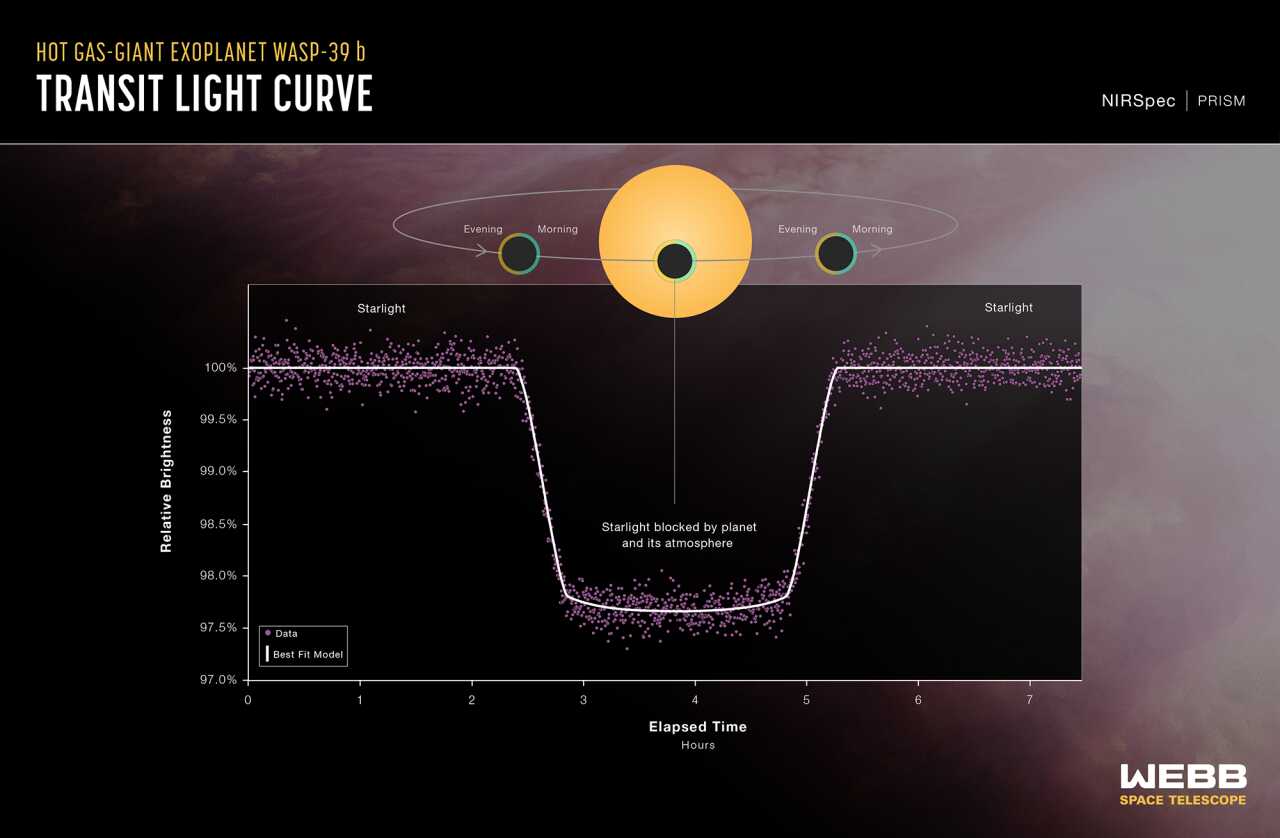
The focus of Webb's attention is WASP-39 b, a massive exoplanet located around 700 light-years away from Earth. This huge planet, with a diameter 1.3 times that of Jupiter and a mass similar to Saturn, orbits its parent star in a way that one side always faces the star while the other side remains in perpetual darkness. This is due to its tidally locked nature.

Astronomers have used the Near-Infrared Spectrograph (NIRSpec), an impressive instrument on the telescope, to observe a fascinating temperature difference between the permanently sunlit and shaded sides of WASP-39 b. Surprisingly, the shaded side, which is in perpetual night, appears to be hotter, registering a remarkable increase of approximately 300 degrees Fahrenheit (200 degrees Celsius). Additionally, there is evidence suggesting different cloud cover, with the sunlit portion potentially being cloudier than the shaded side.

To accomplish these groundbreaking observations, scientists employed a technique called transmission spectroscopy, which involves studying the boundary that separates the sunlit and shaded sides of the exoplanet, known as the terminator. By analyzing the starlight passing through WASP-39 b's atmosphere, scientists can obtain crucial information about its temperature, composition, and other properties. The data obtained from this method highlights the sensitivity and stability of the James Webb Space Telescope, enabling scientists to detect tiny variations with unprecedented precision.

This discovery has made WASP-39 b a key planet for studying exoplanet atmospheres with the Webb telescope. The planet's large, expanded atmosphere produces a very strong signal when starlight passes through it, providing a wealth of information. Scientists have been able to distinguish between the morning and evening regions of the planet, revealing details that were previously unknown.

By analyzing extensive supercomputer models accompanying these observations, scientists have gained insights into the structure of WASP-39 b's atmosphere and its cloud cover. They have confirmed that the movement of gas around the planet plays a crucial role in the significant temperature difference between morning and evening. This is caused by hot gas from the dayside rushing through an equatorial jet stream to the cooler evening side, leading to extreme temperature variations, air pressure differences, and high wind speeds, possibly reaching thousands of miles per hour.

The comprehensive modeling provides a holistic understanding of the atmospheric dynamics of this exotic world, similar to the intricate simulations used to forecast weather patterns on Earth. This new knowledge encourages further exploration into the complex interplay between cloud cover and temperature, unraveling the subtle mechanisms behind the eternal sunrises and sunsets on WASP-39 b.

Beyond the breathtaking beauty of WASP-39 b, there is a profound realization: our universe is full of wonders waiting to be discovered. The James Webb Space Telescope, with its remarkable capabilities and human ingenuity, offers a glimpse into the vastness of space. By embracing diverse viewpoints and unlocking hidden science, we become pioneers in the pursuit of knowledge, driven by inspiration and limitless possibilities, pushing the boundaries of human exploration.

As we embark on this cosmic adventure, we find ourselves humbled by the magnitude of the universe and its ability to captivate our imaginations. The exploration of distant worlds, through supercomputer modeling and keen observation, leads to groundbreaking discoveries. Beyond the cold, dark void, the universe invites us to broaden our perspectives, dream of what lies beyond the stars, and explore the remarkable tapestry that weaves together celestial marvels.

In the ongoing quest for understanding, the James Webb Space Telescope stands as a testament to humanity's insatiable desire to unravel the mysteries of the universe. Through its lens, we catch glimpses of eternal sunrises and sunsets on distant worlds, igniting our collective imagination and inspiring generations to reach for the stars.
Germany makes strides in quantum networking by securely propagating entanglement at the push of a button

Germany makes strides in quantum networking by securely propagating entanglement at the push of a button

Tyler O'Neal, Staff Editor SCIENCE July 12, 2024, 5:00 pm

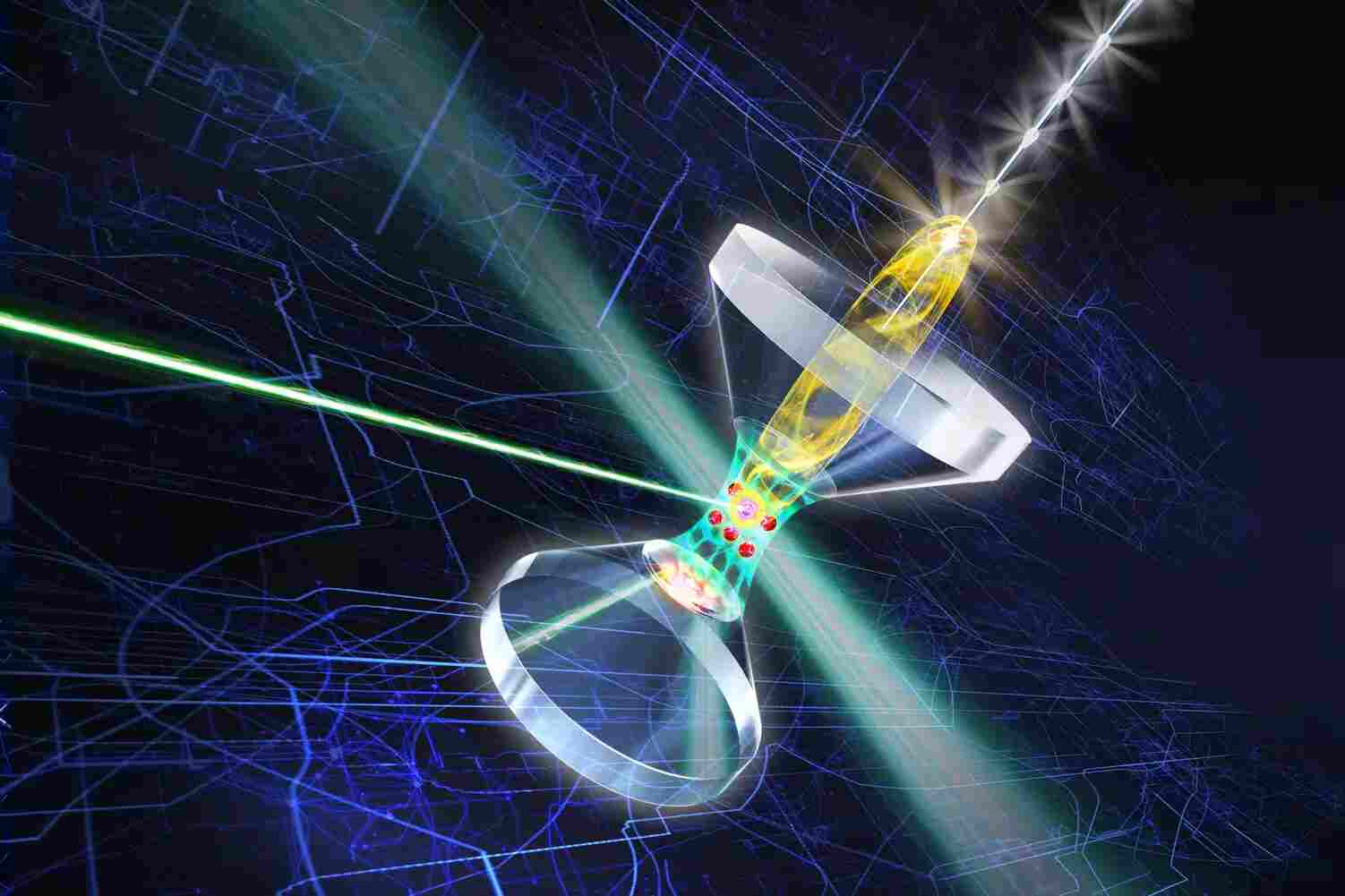
Physicists at the Max Planck Institute of Quantum Optics in Germany have made a remarkable breakthrough in the field of quantum information science. They have shown the secure propagation of entanglement in a quantum network with unprecedented efficiency. The team, led by Gerhard Rempe, Director at the Institute, used laser tweezers in optical resonators to entangle resting quantum bits (qubits) with flying qubits in the form of photons, advancing quantum communication and networking.

Entanglement, famously referred to by Einstein as "spooky action at a distance," has become an essential tool in quantum information science. It serves as the fundamental resource for quantum computers and is crucial for the transmission of quantum information in a potential quantum network. Despite its significance, entanglement is highly sensitive, posing a substantial challenge in entangling resting qubits with flying qubits instantaneously.

The team's pioneering approach involves confining atoms between two nearly perfect mirrors, providing a reliable interaction with photons as flying qubits. Using optical tweezers, the scientists have demonstrated proficient individual control of up to six atoms, entangling each with a photon. They have successfully achieved atom-photon entanglement generation with nearly 100 percent efficiency, a groundbreaking accomplishment in the distribution of entanglement across a quantum network. The results of their work have been published in the prestigious journal Science, signifying the significance and impact of their achievement.

The implications of this work extend beyond mere theoretical significance, delving into the practical applications of quantum information transmission over long distances and the construction of more potent quantum computers. The establishment of efficient interfaces between resting qubits and qubits in motion is essential for both long-distance quantum communication in a future quantum internet and the consolidation of a distributed network of qubits for advanced quantum computing.

The team's approach, utilizing ultracold rubidium atoms trapped between precision mirrors as an optical resonator, holds inherent advantages for the future of quantum networking. By enabling highly efficient atom-photon interaction and controlled photon transmission through an optical fiber, their method provides a promising foundation for the establishment of a robust and reliable quantum network.

Regarding the challenge of maintaining entanglement over longer distances, the team has devised a solution through the implementation of "multiplexing" – a technique borrowed from classical information technology to enhance transmission robustness. Multiplexing not only holds promise for secure transmission in a quantum internet over significant distances but also for the creation of a local quantum network, critical for the formation of distributed, powerful quantum computers.

A notable technical feat accomplished by the team has been the development of a technique to load and individually address several atoms in a resonator using optical tweezers. This precision allows for the entanglement of multiple atoms with individual photons, setting the stage for the implementation of multiplexing with unparalleled efficiency and reliability.

The scalability of this approach is also underlined, with the team's estimations suggesting the potential control of up to 200 atoms in a resonator, marking a significant stride towards the realization of a powerful quantum computer. With the capability to maintain entanglement with a near 100% success rate, the prospect of a network consisting of many resonators, each hosting 200 atoms as resting qubits, becomes increasingly viable, signifying a bold leap towards the future of quantum technology.

In summary, the work led by Gerhard Rempe and his team at the Max Planck Institute of Quantum Optics represents a pivotal achievement in securely propagating entanglement in a quantum network. With far-reaching implications for quantum information transmission and the potential establishment of more powerful quantum computers, their research encompasses diverse perspectives ranging from fundamental quantum theory to practical quantum technology, charting a path towards a future enriched by quantum networking and computation. The outcomes of this work not only contribute significantly to the scientific understanding of quantum phenomena but also hold the potential to revolutionize the landscape of information technology, sparking a renaissance in secure and efficient data transmission and processing.

China unveils wildfire impact on ozone dynamics: A satellite data, supercomputing perspective

China unveils wildfire impact on ozone dynamics: A satellite data, supercomputing perspective

Tyler O'Neal, Staff Editor SCIENCE July 12, 2024, 4:00 pm

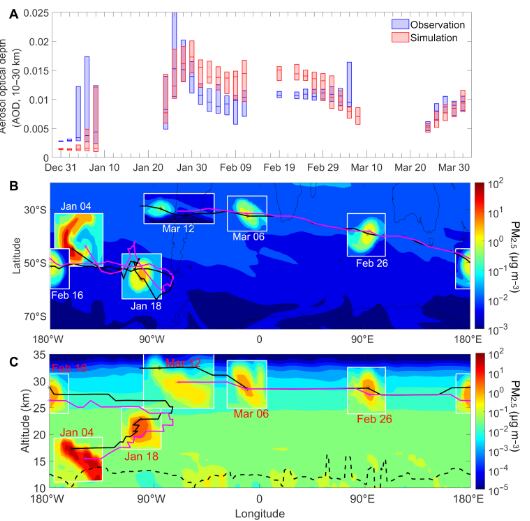
In a recent study, a multidisciplinary team of scientists from China, Germany, and the USA uncovered the intricate relationship between large wildfires and the delicate chemistry of the ozone layer. By using advanced satellite data and cutting-edge supercomputing models, the researchers revealed a previously unseen connection between catastrophic wildfire events, like the 2019/20 Australian bushfires, and the dynamics of the stratosphere. The ozone layer, crucial for shielding life on Earth from harmful ultraviolet (UV) radiation, has shown signs of recovery over the years, thanks to global efforts such as the Montreal Protocol. However, the stability of this vital atmospheric layer faces a new challenge as evidenced by the impact of the Australian wildfires. During these unprecedented events, a significant increase in stratospheric aerosols – tiny particles with far-reaching impacts on climate, health, and atmospheric chemistry – was observed.

The study discovered a novel phenomenon termed the smoke-charged vortex (SCV) – a potent, smoke-laden whirlpool capable of transporting wildfire emissions as high as 35 kilometers into the stratosphere. This process contributed to a doubled burden of aerosols in the southern hemisphere's middle stratosphere, triggering a series of heterogeneous reactions that influenced ozone concentrations. Surprisingly, the study found that these wildfire-induced aerosols led to both ozone depletion in the lower stratosphere and ozone increase in the middle stratosphere due to enhanced chemical reactions on aerosols at higher altitudes.

Prof. Yafang Cheng from the Max Planck Institute for Chemistry emphasized the significance of continued research and vigilance as we navigate the realm of climate change, stating, “Our study unveils a crucial mechanism in which wildfire smoke, containing absorbing aerosols like black carbon, can generate vast smoke-charged vortices that persist for months and impact the ozone layer differentially at various altitudes.”

The findings underscore the importance of understanding these complex atmospheric processes, especially in a changing climate landscape marked by increasing wildfires. As we strive to comprehend the interplay between natural events, climate change, and ozone dynamics, the study opens new avenues for further research toward safeguarding the integrity of the ozone layer vital for all life forms on Earth.

In conclusion, the integration of advanced satellite data and supercomputing tools has revealed a critical link between wildfire events and stratospheric chemistry, showcasing the evolving challenges that the ozone layer faces in the wake of climate change-induced natural disasters. This study serves as a clarion call for sustained exploration into how wildfire and other climate-driven phenomena might shape the future dynamics of the ozone layer.

  1. ChatGPT: A breakthrough in biomedical simulation
  2. Germany unleashing the power of citizen science: BlueDOT project pioneers data collection for supercomputer modeling

Page 13 of 61

  • 8
  • 9
  • 10
  • 11
  • 12
  • 13
  • 14
  • 15
  • 16
  • 17
POPULAR RIGHT NOW
  • Meta’s next frontier may not be social media; it may be supercomputing
    Meta’s next frontier may not be social media; it may be supercomputing
  • The future of cancer research runs on supercomputers
    Jill Mesirov, PhD
    Jill Mesirov, PhD
  • Rebuilding a lost continent: Supercomputers reveal Antarctica before the ice
    Antarctic ice meets the rocky coastline. Researchers traced landscape features from the two-kilometre-high coastal escarpment of Dronning Maud Land to the subglacial Gamburtsev Mountains, buried beneath 1–3 km of ice  Credit Matt Palmer
    Antarctic ice meets the rocky coastline. Researchers traced landscape features from the two-kilometre-high coastal escarpment of Dronning Maud Land to the subglacial Gamburtsev Mountains, buried beneath 1–3 km of ice Credit Matt Palmer
  • Supercomputers uncover a new class of cosmic explosions hidden in plain sight
    Supercomputers uncover a new class of cosmic explosions hidden in plain sight
  • AI supercharges the hunt for stronger magnets: Iowa State researchers launch a new era of intelligent materials discovery
    AI supercharges the hunt for stronger magnets: Iowa State researchers launch a new era of intelligent materials discovery
  • IBM's Historic stock collapse raises questions for the future of enterprise supercomputing
    IBM's Historic stock collapse raises questions for the future of enterprise supercomputing
  • Could a novel dark matter theory simultaneously resolve multiple cosmic enigmas? Supercomputer simulations provide a compelling, albeit currently unverified, potential solution
    Could a novel dark matter theory simultaneously resolve multiple cosmic enigmas? Supercomputer simulations provide a compelling, albeit currently unverified, potential solution
  • Melting icebergs may be reshaping Earth’s greatest ocean current
    Melting icebergs may be reshaping Earth’s greatest ocean current
  • Supercomputers replace ‘bathtub’ flood maps with physics-based digital twins of Britain’s coastline
    Supercomputers replace ‘bathtub’ flood maps with physics-based digital twins of Britain’s coastline
  • Supercomputers push neural quantum simulation beyond previous limits
    Supercomputers push neural quantum simulation beyond previous limits
MOST READ THIS YEAR
  • Cosmic ambition at scale: UK’s supercomputer unlocks a 2.5 petabytes universe
    Cosmic ambition at scale: UK’s supercomputer unlocks a 2.5 petabytes universe
  • Intel's Q1 results signal supercomputing surge driving Xeon momentum
    Intel's Q1 results signal supercomputing surge driving Xeon momentum
  • When stars fall apart: Supercomputing reveals the hidden physics of black holes
    When stars fall apart: Supercomputing reveals the hidden physics of black holes
  • FRONTPAGE
  • LATEST
  • POPULAR
  • REGISTER
  • SOCIAL
  • VIDEO
  • SUBSCRIPTION
  • RSS
  • GUIDELINES
  • PRIVACY
  • TOS
  • ABOUT
  • +1 (816) 799-4488
  • editorial@supercomputingonline.com
© 2001 - 2026 SuperComputingOnline.com, LLC. All rights reserved. This material may not be published, broadcast, rewritten or redistributed without permission.
Sign In
  • FRONT PAGE
  • LATEST
    • MEDIA KIT
    • MOST READ
    • RSS FEED
    • ACADEMIA
    • AEROSPACE
    • APPLICATIONS
    • ASTRONOMY
    • AUTOMOTIVE
    • BIG DATA
    • BIOLOGY
    • CHEMISTRY
    • CLIENTS
    • CLOUD
    • DEFENSE
    • DEVELOPER TOOLS
    • EARTH SCIENCES
    • ECONOMICS
    • ENGINEERING
    • ENTERTAINMENT
    • HEALTH
    • INDUSTRY
    • INTERCONNECTS
    • GAMING
    • GOVERNMENT
    • MANUFACTURING
    • MIDDLEWARE
    • MOVIES
    • NETWORKS
    • OIL & GAS
    • PHYSICS
    • PROCESSORS
    • RETAIL
    • SCIENCE
    • STORAGE
    • SYSTEMS
    • VISUALIZATION
  • VIDEOS
    • ADD YOUR VIDEOS
    • MANAGE VIDEOS
  • COMMUNITY
    • TRADE SHOWS
    • SOCIAL NETWORK VIDEOS
    • SURVEYS
    • APPLICATIONS BROWSER
    • CONVERSATION INBOX
    • SOCIAL ADVERTISER
    • GROUPS
    • MARKETPLACE LISTINGS
    • PAGES
    • LEADERBOARD
    • POINTS LISTING
      • BADGES
    • PRIVACY CONFIRM REQUEST
    • PRIVACY CREATE REQUEST

Hey there! We noticed you’re using an ad blocker.