Groningen physicists use new material for spintronics

Classic computers use binary values (0/1) to perform. By contrast, our brain cells can use more values to operate, making them more energy-efficient than computers. This is why scientists are interested in neuromorphic (brain-like) computing. Physicists from the University of Groningen in the Netherlands have used a complex oxide to create elements comparable to the neurons and synapses in the brain using spins, a magnetic property of electrons. Their results were published on 18 May in the journal Frontiers in Nanotechnology. 

Although computers can do straightforward calculations much faster than humans, our brains outperform silicon machines in tasks like object recognition. Furthermore, our brain uses less energy than computers. Part of this can be explained by the way our brain operates: whereas a computer uses a binary system (with values 0 or 1), brain cells can provide more analog signals with a range of values.

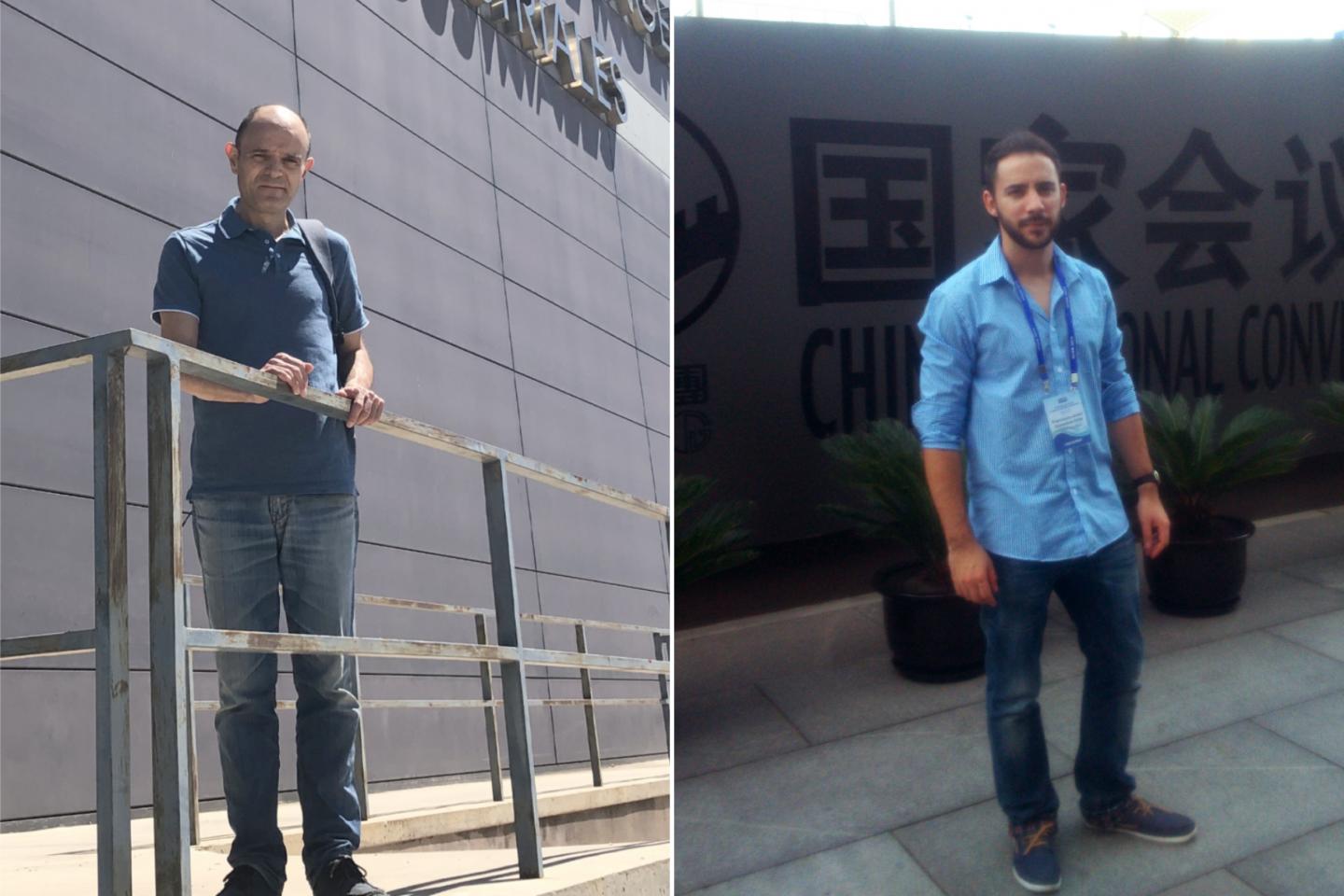
Thin filmsThis is Anouk Goossens, first author of the Frontiers in Nanotechnology paper.

The operation of our brains can be simulated in supercomputers, but the basic architecture still relies on a binary system. That is why scientists look for ways to expand this, creating hardware that is more brain-like but will also interface with normal computers. "One idea is to create magnetic bits that can have intermediate states," says Tamalika Banerjee, Professor of Spintronics of Functional Materials at the Zernike Institute for Advanced Materials, University of Groningen. She works on spintronics, which uses a magnetic property of electrons called 'spin' to transport, manipulate and store information.

In this study, her Ph.D. student Anouk Goossens, first author of the paper, created thin films of a ferromagnetic metal (strontium-ruthenate oxide, SRO) grown on a substrate of strontium titanate oxide. The resulting thin film contained magnetic domains that were perpendicular to the plane of the film. "These can be switched more efficiently than in-plane magnetic domains', explains Goossens. By adapting the growth conditions, it is possible to control the crystal orientation in the SRO. Previously, out-of-plane magnetic domains have been made using other techniques, but these typically require complex layer structures. 

Magnetic anisotropy This is Mina Leiviskä, second author of the Frontiers in Nanotechnology paper.

The magnetic domains can be switched using a current through a platinum electrode on top of the SRO. Goossens: "When the magnetic domains are oriented perfectly perpendicular to the film, this switching is deterministic: the entire domain will switch." However, when the magnetic domains are slightly tilted, the response is probabilistic: not all the domains are the same, and intermediate values occur when only part of the crystals in the domain have switched.

By choosing variants of the substrate on which the SRO is grown, scientists can control its magnetic anisotropy. This allows them to produce two different spintronic devices. 'This magnetic anisotropy is exactly what we wanted', says Goossens. "Probabilistic switching compares to how neurons function, while the deterministic switching is more like a synapse." Schematic of the proposed device structure for neuromorphic spintronic memristors. The write path is between the terminals through the top layer (black dotted line), the read path goes through the device stack (red dotted line). The right side of the figure indicates how the choice of substrate dictates whether the device will show deterministic or probabilistic behaviour.  CREDIT Banerjee group, University of Groningen

The scientists expect that in the future, brain-like computer hardware can be created by combining these different domains in a spintronic device that can be connected to standard silicon-based circuits. Furthermore, probabilistic switching would also allow for stochastic computing, a promising technology that represents continuous values by streams of random bits. Banerjee: "We have found a way to control intermediate states, not just for memory but also for computing."

China shows how errors in large-scale, convective tropical precipitation simulations using current global models may impact climate feedback

Heavy precipitation can cause large economic, ecological, and human life losses. Both its frequency and intensity have increased due to climate change influences. Therefore, it is becoming increasingly critical to accurately model and predict heavy precipitation events. However, current global climate models (GCMs) struggle to correctly model tropical precipitation, particularly heavy rainfall. Atmospheric scientists are working to identify and minimize model biases that arise when attempting to model large-scale and convective precipitation.

"Unrealistic convective and large-scale precipitation components essentially contribute to the biases of simulated precipitation," said Prof. Jing Yang, a faculty member in the Geographical Science Department at Beijing Normal University.

Prof. Yang and her postgraduate student Sicheng He, along with Qing Bao from the Institute of Atmospheric Physics at the Chinese Academy of Sciences, explored the challenges and barriers to achieving realistic rainfall modeling from the perspective of convective and large-scale precipitation. Heavy rain in Shenzhen on April 19, 2019 caused extensive flight delays, affecting thousands of passengers.  CREDIT Sicheng He

"Although sometimes total rainfall amounts can be simulated well, the convective and large-scale precipitation partitions are incorrect in the models," remarked Yang.

To clarify the status of convective and large-scale precipitation components within current GCMs, researchers comprehensively classified 16 CMIP6 models focusing on tropical heavy rainfall. In most cases, results show much more rainfall resolved from large-scale rainfall rather than convective components of CMIP6 model simulations, which is not realistic.

The research team divided model components into three distinct groups to better assess based on the percentage of large-scale precipitation: (1) whole mid-to-lower tropospheric wet biases (60%-80% large-scale rainfall); (2) mid-tropospheric wet peak (50% convective/large-scale rainfall); and (3) lower-tropospheric wet peak (90%-100% large-scale rainfall).

These classifications are closely associated with the vertical distribution of moisture and clouds within the tropical atmosphere. Because the radiative effects of low and high clouds differ, the associated differences in vertical cloud distributions can potentially cause different climate responses, therefore considerable uncertainties in climate projections.

The study is recently published in Advances in Atmospheric Sciences. "The associated vertical distribution of unique clouds potentially causes different climate feedback, suggesting accurate convective/large-scale rainfall partitions are necessary to reliable climate projection," noted Yang.

Future sparkles for diamond-based quantum technology

Two research breakthroughs are poised to accelerate the development of synthetic diamond-based quantum technology

Marilyn Monroe famously sang that diamonds are a girl's best friend, but they are also very popular with quantum scientists - with two new research breakthroughs poised to accelerate the development of synthetic diamond-based quantum technology, improve scalability, and dramatically reduce manufacturing costs.

While silicon is traditionally used for computer and mobile phone hardware, diamond has unique properties that make it particularly useful as a base for emerging quantum technologies such as quantum supercomputers, secure communications, and sensors.

However, there are two key problems; cost, and difficulty in fabricating the single-crystal diamond layer, which is smaller than one-millionth of a meter.

A research team from the ARC Centre of Excellence for Transformative Meta-Optics at the University of Technology Sydney (UTS) led by Professor Igor Aharonovich has just published two research papers Nanoscale and Advanced Quantum Technologies, that address these challenges. An artist's impression of a diamond building block in a future photonic circuit.  CREDIT Igor Aharonovich

"For a diamond to be used in quantum applications, we need to precise engineer 'optical defects' in the diamond devices - cavities and waveguides - to control, manipulate and read out information in the form of qubits - the quantum version of classical computer bits," said Professor Aharonovich.

"It's akin to cutting holes or carving gullies in a super-thin sheet of diamond, to ensure light travels and bounces in the desired direction," he said.

To overcome the "etching" challenge, the researchers developed a new hard masking method, which uses a thin metallic tungsten layer to pattern the diamond nanostructure, enabling the creation of one-dimensional photonic crystal cavities.

"The use of tungsten as a hard mask addresses several drawbacks of diamond fabrication. It acts as a uniform restraining conductive layer to improve the viability of electron beam lithography at nanoscale resolution," said the lead author of a paper in Nanoscale, UTS Ph.D. candidate Blake Regan.

"It also allows the post-fabrication transfer of diamond devices onto the substrate of choice under ambient conditions. And the process can be further automated, to create modular components for diamond-based quantum photonic circuitry," he said.

The tungsten layer is 30nm wide - around 10,000 times thinner than a human hair - however, it enabled a diamond to etch of over 300nm, a record selectivity for diamond processing.

A further advantage is that removal of the tungsten mask does not require the use of hydrofluoric acid - one of the most dangerous acids currently in use - so this also significantly improves the safety and accessibility of the diamond nanofabrication process.

To address cost and improve scalability, the team further developed an innovative step to grow single-crystal diamond photonic structures with embedded quantum defects from a polycrystalline substrate.

"Our process relies on a lower-cost large polycrystalline diamond, which is available as large wafers, unlike the traditionally used high-quality single crystal diamond, which is limited to a few mm2," said UTS Ph.D. candidate Milad Nonahal, lead author of the study in Advanced Quantum Technologies.

"To the best of our knowledge, we offer the first evidence of the growth of a single crystal diamond structure from a polycrystalline material using a bottom-up approach - like growing flowers from seed," he added.

"Our method eliminates the need for expensive diamond materials and the use of ion implantation, which is key to accelerating the commercialization of diamond quantum hardware," said UTS Dr. Mehran Kianinia, a senior author on the second study.

Tohoku researchers develop a numerical method that paves the way for simulating landslide tsunamis

Landslides occurring on land or underneath the sea - known as subaerial and submarine landslides respectively - can cause devastating tsunamis. They also pose other hazards such as severing submarine cables and pipelines.

Yet the mechanisms at play behind these landslides are less well understood, partly due to the multifaceted interactions taking place: a collapse of the seabed and/or the interaction between soil and water. Conventional approaches make it difficult to predict the behaviors of soil and seawater with high accuracy.

The researchers' breakthrough proposes a new hybrid simulation method that can express the complex interaction between soil structures - referred to as granular masses - and liquids.

"Our novel method couples together two computational methods that analyze the interactions of solids and liquids: the finite element method (FEM) along with the material point method (MEM)," said Kenjiro Terada, professor at Tohoku University's International Research Institute of Disaster Science and co-author of the study.

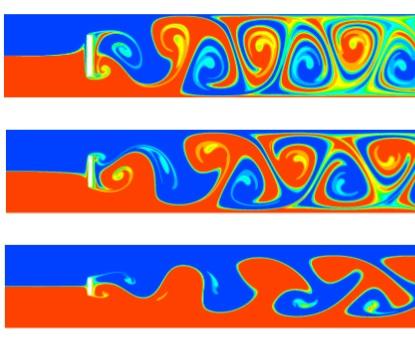
Simulated wave propagation, mimicking tsunami, induced by underwater granular collapse: deposited granular mass and water surface profile ⒸKenjiro Terada

Using the newly created algorithm, the researchers were able to simulate a wave mimicking a submarine granular collapse and a wave induced by a subaerial slide over an inclined plane. To their delight, the simulations were in reasonable agreement with the numerical measurements.

Several numerical examples also revealed that the proposed method can be applied to other types of potentially dangerous natural events that involve the interaction of air, water, and solids.

Looking ahead, Terada and his team aim to improve the accuracy of their experimental measurements and apply it to larger-scale real data.

Australian scientists rewrite the genesis of mosquito-borne viruses

Better designed vaccines for insect-spread viruses like dengue and Zika are likely after researchers discovered models of immature flavivirus particles were originally misinterpreted.

Researchers from The University of Queensland and Monash University have now determined the first complete 3D molecular structure of the immature flavivirus, revealing an unexpected organization.

UQ researcher Associate Professor Daniel Watterson said the team was studying the insect-specific Binjari virus when they made the discovery.

"We were using Australia's safe-to-handle Binjari virus, which we combine with more dangerous viral genes to make safer and more effective vaccines," Dr. Watterson said. Cryo-electron microscopy reconstruction of Binjari virus. The projecting spikes are a typical feature of immature flaviviruses such as dengue virus but reveal an unexpected organization.  CREDIT Associate Professor Fasseli Coulibaly

"But when analyzing Binjari we could clearly see that the molecular structure we've all been working from since 2008 wasn't quite correct.

"Imagine trying to build a house when your blueprints are wrong - that's exactly what it's like when you're attempting to build effective vaccines and treatments and your molecular 'map' is not quite right."

The team used a technique known as cryogenic electron microscopy to image the virus, generating high-resolution data from Monash's Ramaciotti Centre for Cryo-Electron Microscopy facility.

With thousands of collected two-dimensional images of the virus, the researchers then combined them using a high-performance computing platform called 'MASSIVE' to construct a high-resolution 3D structure.

Monash's Associate Professor Fasséli Coulibaly, a co-leader of the study, said the revelation could lead to new and better vaccines for flaviviruses, which have a huge disease burden globally.

"Flaviviruses are globally distributed and the dengue virus alone infects around 400 million people annually," Dr. Coulibaly said.

"They cause a spectrum of potentially severe diseases including hepatitis, vascular shock syndrome, encephalitis, acute flaccid paralysis, congenital abnormalities, and fetal death.

"This structure defines the exact wiring of the immature virus before it becomes infectious, and we now have a better understanding of the levers and pulleys involved in viral assembly.

"This is a continuation of fundamental research by us and others and, without this hard-won basic knowledge, we wouldn't have the solid foundation needed to design tomorrow's treatments."