Woolpert welcomes Amar Nayegandhi as the Global Head of Technology and Innovation

The respected ASPRS Fellow, photogrammetrist, and remote sensing scientist will oversee and enhance Woolpert’s architecture, engineering, and geospatial technology portfolio.

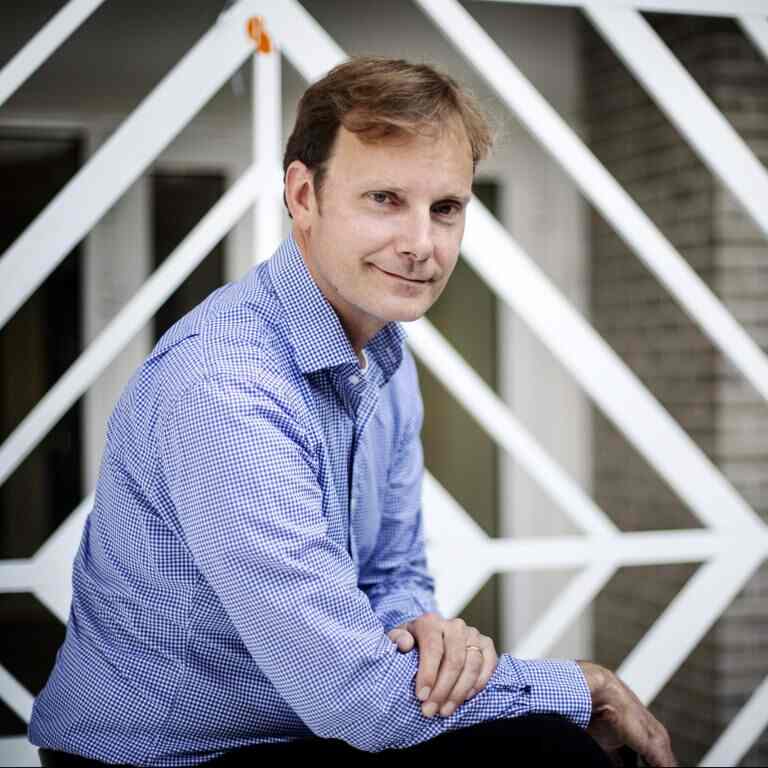
Woolpert has hired Amar Nayegandhi, Global Head of Technology and Innovation, to help support the firm’s international growth strategy. Nayegandhi will work with Woolpert’s executive and operational leadership and will be responsible for aligning, optimizing, and expanding Woolpert’s technology portfolio across its globally integrated architecture, engineering, and geospatial (AEG) platform.

Nayegandhi is an American Society for Photogrammetry and Remote Sensing (ASPRS) Fellow, certified photogrammetrist, and remote sensing scientist with over 25 years of technology services experience and leadership in the AEG industry. Working with Woolpert’s leadership team, he will help assess and streamline operational delivery efficiencies, workflows, tools, and processes and lead the development of the firm’s global delivery model.

“I am most excited to support Woolpert’s expanding global footprint and commitment to offering innovative technology solutions to solve our clients’ complex challenges in the architecture, engineering, and geospatial industries,” Nayegandhi said. “Woolpert’s forward-thinking approach to technology, from developing advanced remote sensing capabilities to enabling AI-based solutions, along with our incredible team of subject matter experts, enables us to deliver products and services that are unique in the AEG industry. I look forward to contributing to our client’s success, both across the country and around the world.”

Before joining Woolpert, Nayegandhi served as senior vice president at Dewberry, leading the firm’s geospatial and technology services operating unit. He also managed federal coastal science and resource management contracts at Jacobs, where he developed algorithms and post-flight data processing software for government-owned research topographic and bathymetric airborne lidar remote sensors.

“Amar’s deep expertise in technology best practices and innovative delivery methods is the perfect match for our continuously growing global business,” Woolpert President Neil Churman said. “We expect Amar will help us further integrate our entire set of AEG solution offerings while linking our global tech portfolio across regions and continents. Our growth strategy centers on people, culture, and talent, and bringing a professional of Amar’s caliber to Woolpert exemplifies our focus on building a world-class team.”

Nayegandhi, who will be based out of Woolpert’s St. Petersburg, Fla. office, earned his bachelor’s degree in electrical engineering from the University of Mumbai and master’s degree in computer science and engineering from the University of South Florida. He is a former director of the ASPRS Lidar Division, co-edited the ASPRS DEM User’s Manual, and has authored over 65 book chapters, refereed journal publications, and reports supporting the work of the U.S. Geological Survey and other federal agencies.

Woolpert wins $250M USAF geospatial services IDIQ

The five-year contract will support U.S. Air Force emergency planning and response for wartime and contingency, as well as human-caused and natural disasters.

The 771st Enterprise Sourcing Squadron, Strategic Sourcing Flight (EGB) at Wright-Patterson Air Force Base has tasked Woolpert with providing geospatial support and services under a five-year, $250 million, multiple award, indefinite delivery, indefinite quantity contract. The contract will support improved shared situational awareness, planning, and decision-making across the U.S. Air Force, including emergency planning and response for wartime and contingency, as well as human-caused and natural disasters.

This contract follows a geospatial IT task order supporting the Air Force Installation and Mission Support Center and Air Force Materiel Command awarded to Woolpert last year under a previous, recently completed USAF geospatial support and services IDIQ contract.

Under the new contract, Woolpert will utilize a comprehensive data analysis and management solution, developed in cooperation with the 448th Supply Chain Management Wing under the previous contract, to illuminate, secure, and monitor the USAF supply chain against natural and human-caused hazards. The solution leverages multiple domains of Woolpert’s proven technical expertise, including geospatial data management, data science and engineering services, and cloud-based geospatial service development.

The firm has performed numerous contracts for the Department of the Air Force since 2019, including providing imagery and consulting services for its Installation Geospatial Information and Services Program, also known as the GeoBase program.

Woolpert Vice President Matt Johnson said that this most recent contract award exemplifies Woolpert’s advanced geospatial analytical capabilities and the global company’s ability to meet the increasing geospatial and information technology needs of the DAF.

“We are honored to continue our support for the Department of Defense’s geospatial mission and are thankful to be able to demonstrate our value in providing improved situational awareness,” Johnson said.

The contract is underway.

NYU scientists' assertions about the rapid prediction of crystal structure skepticism

In a groundbreaking study published in the journal Nature Communications, researchers at New York University have introduced a new mathematical approach called "Crystal Math." This method claims to predict crystal structures using only a laptop within hours, whereas traditional methods require weeks or months of supercomputer processing power.

The researchers assert that this innovative framework could revolutionize drug development and electronic device fabrication by speeding up the prediction of crystal structures, which are essential for designing and optimizing various materials.

However, the scientific community remains skeptical about these bold claims. Dr. Mark Tuckerman, the study's senior author, acknowledges the limitations of traditional physics-based methods for predicting crystal structures. Despite this, many experts question whether a purely mathematical approach can provide accurate and reliable results.

Tuckerman and his team assert they have validated the principles of Crystal Math using existing crystal structure data. Nevertheless, critics highlight that the transition from theoretical mathematical concepts to practical, real-world applications is significant and may be more complex than the researchers suggest.

Moreover, the idea that Crystal Math can predict crystal structures in a fraction of the time supercomputers need raises concerns among experts familiar with the computational complexity of such tasks. Many in the scientific community find it hard to believe that a standard laptop could outperform weeks or months of supercomputer calculations.

Despite the skepticism surrounding the NYU researchers' claims, the potential implications of their work are noteworthy. If their mathematical approach does deliver on its promises, it could significantly impact industries ranging from pharmaceuticals to electronics.

As the debate continues over the validity and practicality of Crystal Math, NYU researchers face the challenge of providing concrete evidence and independent validation of their findings to gain broader acceptance in the scientific community. Until then, the scientific world remains cautiously optimistic yet skeptical about this ambitious endeavor.

Breaking barriers: Democratising AI for the greater good

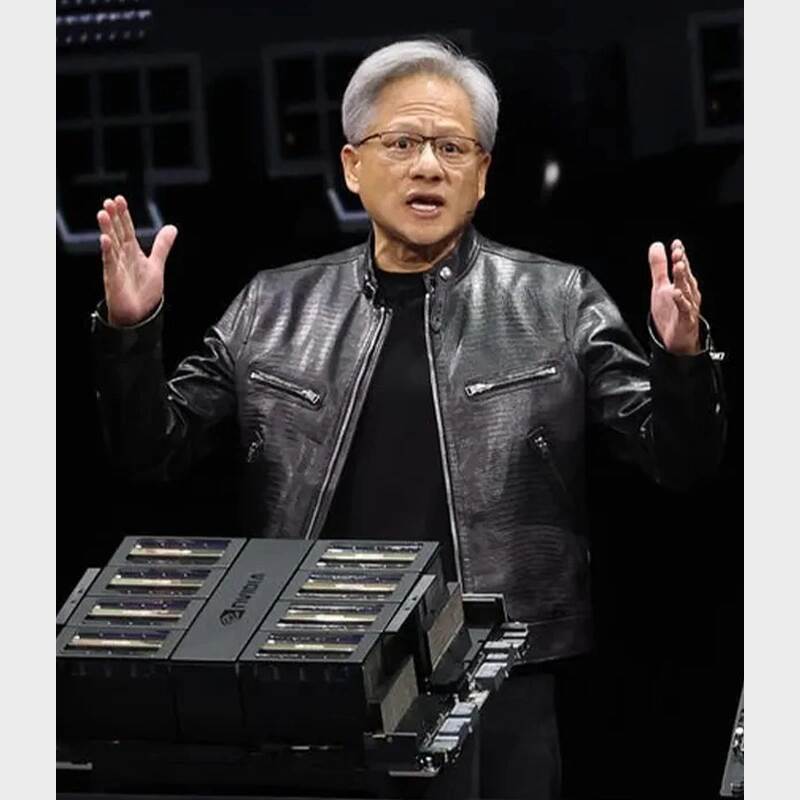
In a groundbreaking initiative to shape the future of artificial intelligence, global AI pioneer Dr. Ben Goertzel has announced over $1 million in grants aimed at empowering developers worldwide to advance benevolent Artificial General Intelligence (AGI) for the benefit of all humanity.

Dr. Goertzel, a renowned computer scientist and the visionary behind SingularityNET—the world's first decentralized AI platform—has embarked on a mission to accelerate the emergence of human-level AGI and superintelligence, strongly emphasizing the use of AI for societal improvement.

This initiative paves the way for innovative minds across the globe to participate in a movement that transcends boundaries and limitations. Whether in emerging markets like India, Turkey, and Brazil or in established tech hubs, the opportunity to contribute to the advancement of AGI is now more accessible, free from local financial constraints.

The initiative is about funding research and development and fostering a global community of fearless developers dedicated to ethical AI development, transparency, fairness, and inclusivity. The goal is to ensure that AI solutions positively impact society and that groundbreaking ideas are explored due to a lack of resources, mentorship, or visibility.

Dr. Goertzel envisions a future beyond advancing technology; he seeks to create a ripple effect that could transform the entire AI landscape. By engaging a diverse and inclusive community of developers, he aims to push the boundaries of what is possible in AGI, ensuring that advancements are equitable and beneficial for all of humanity.

The grants provided by SingularityNET's AI innovation fund,DeepFunding, will give recipients invaluable access to cutting-edge technology, frameworks, and a global network of AGI experts. This support will empower developers to pursue groundbreaking AGI research and development projects. Selected grant recipients will have between three and nine months to complete their R&D, with the potential to make significant advancements in AGI that could alter the trajectory of the entire field.

As Dr. Goertzel states, "We are poised to make dramatic progress toward human-level AGI and then superintelligence over the next few years. To increase the odds that this epochal development results in broad benefits for humanity, it is essential that as we move toward AGI, our AI software addresses a wide range of human needs and is developed globally and inclusively."

This initiative represents a momentous effort to democratize AI for good—a movement that aspires to harness the power of technology to create a better future for all. It invites individuals to dream, build, and lead the next phase of radical AGI breakthroughs, ensuring that the benefits of advanced AI innovation are accessible and advantageous to everyone, regardless of their background or location.

Unraveling the mysteries of water's anomalous properties

A recent breakthrough in studying water's unique behavior has shed light on an intriguing aspect of this essential molecule. The anomalies that characterize water's behavior continue to present a fascinating puzzle for the scientific community, prompting extensive research into the molecular mechanisms behind these distinct properties. A groundbreaking study led by Giancarlo Franzese and Luis Enrique Coronas from the University of Barcelona (UB) has introduced a new theoretical model that surpasses the limitations of previous methodologies, providing insights into how water behaves under extreme conditions.

Published in The Journal of Chemical Physics, this study not only significantly enhances our understanding of the physics of water but also has profound implications across various fields, including technology, biology, and biomedicine. The novel theoretical model, known as the CVF (named after the researchers Luis E. Coronas, Oriol Vilanova, and Giancarlo Franzese), effectively integrates ab initio quantum calculations, offering a more accurate representation of water's thermodynamic properties under diverse conditions.

One of the study's pivotal findings is the identification of a critical point between two liquid forms of water, which serves as the foundation of the anomalies that make water essential for life and crucial for many technological applications. Professor Giancarlo Franzese explains, "Although this conclusion has been reached in other water models, none possess the specific characteristics of the model we have developed in this study."

The CVF model's unique ability to accurately replicate thermodynamic properties such as compressibility and heat capacity distinguishes it from existing models. This achievement is due to incorporating quantum interactions between molecules, known as many-body problems extending beyond classical physics. Luis E. Coronas further clarifies, "Fluctuations in density, energy, and entropy in water are governed by these quantum interactions, with effects ranging from the nanometer scale to the macroscopic level."

The implications of this research extend far beyond theoretical physics, significantly impacting technology and biomedicine. The findings could spur the development of advanced biotechnologies and offer potential solutions for treating neurodegenerative diseases. Additionally, the CVF model can perform calculations in scenarios where other models falter, paving the way for biotechnological innovations.

As we continue to unravel the enigmatic properties of water, the importance of large-scale supercomputer simulations in understanding these anomalies cannot be overstated. This research spans technology and biomedicine, with potential applications including the creation of advanced biotechnologies and novel medical treatments. With this newfound understanding, we move closer to harnessing the unique characteristics of water to tackle pressing challenges across diverse fields.

The publication of this study marks a significant milestone in our quest to comprehend the inexplicable properties of water. As we delve deeper into the molecular intricacies of this vital molecule, the CVF model opens up a world of possibilities for scientific exploration and technological advancement, paving the way for innovative solutions to complex challenges.