Researchers at Sanford Burnham Prebys use modeling to investigate the shape-shifting mechanism of the Zika virus, identify possible vulnerabilities

Sanford Burnham Prebys Research Institute has unveiled new research on the Zika virus and its ability to reshape itself to a possible therapeutic vulnerability. The study highlights how the virus has the unique ability to produce 10 different proteins with limited genetic material, making it a striking example of efficient machinery. The study has discovered that Zika’s crucial enzyme, NS2B-NS3, performs multiple tasks, including breaking up proteins and dividing its own double-stranded RNA into single strands.

The team of researchers led by Alexey Terskikh, Associate Professor at Sanford Burnham Prebys, showed how the virus changes functions based on how it is shaped, cycling between open and super-open conformations, allowing it to grab and release a single strand of RNA. These functions are essential for viral replication. The study also discovered that NS2B-NS3's capacity for reshaping itself could create a possible therapeutic vulnerability.

The virus is transmitted by mosquitoes and infects uterine and placental cells, making it particularly dangerous for pregnant women, who face the risk of giving birth to a baby with severe birth defects. If the virus is deprived of its ability to reshape itself, it would become impossible for it to perform its critical functions, and no new Zika particles would be produced.

Understanding Zika on the molecular level is essential to developing a therapeutic target. While it may be difficult to create safe drugs that aim at the domains of the enzyme required for protease or helicase functions, as human cells have many similar molecules, a drug that blocks Zika's conformational changes could be effective.

The researchers used protein biochemistry fluorescence polarization, supercomputer modelling techniques, and recent crystal structures from the study, combined with earlier research, to dissect NS2B-NS3pro's life cycle. NS3pro and NS3hel are both parts of the essential enzyme, with NS2B-NS3pro carrying out protease activities that cut long polypeptides into Zika proteins. NS3hel, on the other hand, separates Zika's double-stranded RNA while also giving a strand to NS3pro.

Sanford Burnham Prebys research alongside other emerging studies will continue to advance our knowledge of the Zika virus and its unique shape-shifting machinery. With a new understanding of how the virus operates, we may unravel possible targets to tackle its spread and associated health risks.

Hai-Bo Yu is a theoretical physicist with expertise in the particle properties of dark matter. (Samantha Tieu)

UC Riverside uses supercomputer simulations to study dark matter; explaining two puzzling issues in astrophysics

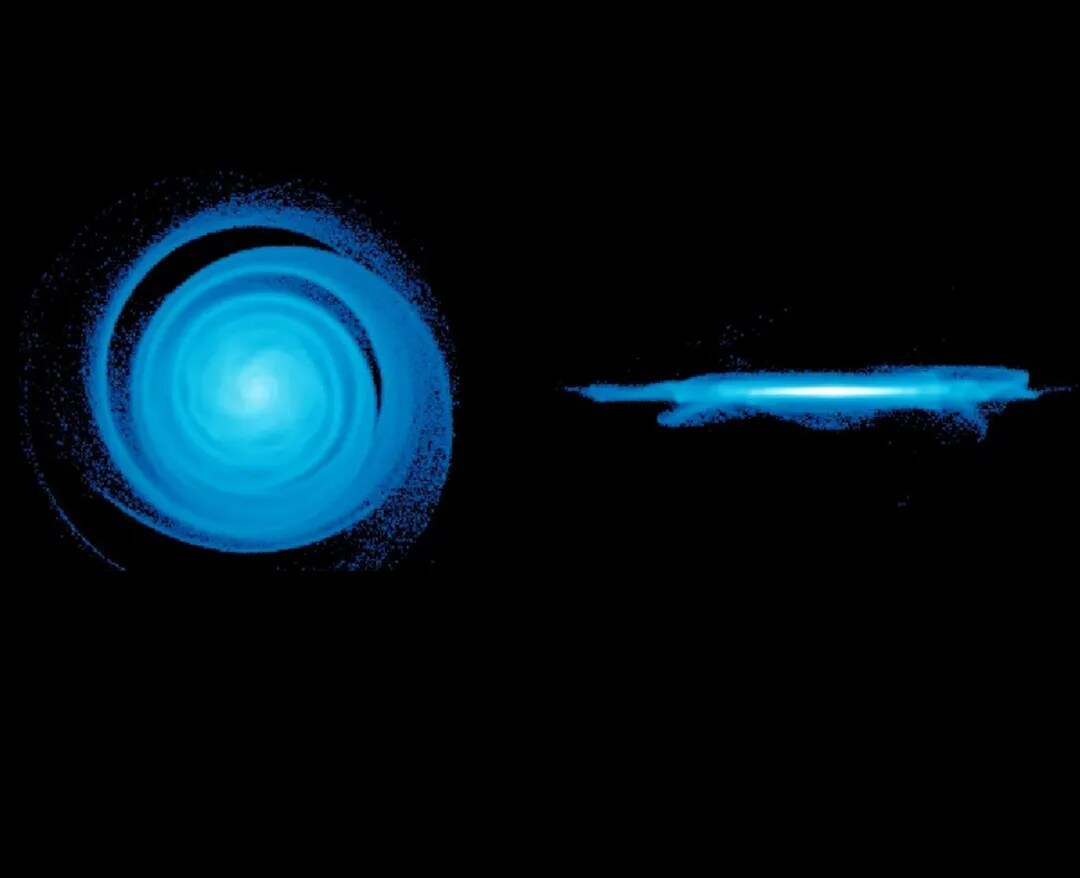
A recent study conducted by the University of California, Riverside, proposes a new theory called "self-interacting dark matter" (SIDM) that could solve two astrophysics mysteries related to dark matter. Dark matter makes up about 85% of the universe's matter, but it cannot be seen directly as it is nonluminous. The SIDM theory suggests that dark matter particles interact with each other through a dark force, causing stronger collisions closer to the center of galaxies.

The first mystery involves a high-density dark matter halo observed in a massive elliptical galaxy through gravitational lensing, which conflicts with the prevailing cold dark matter theory. The second puzzle concerns ultra-diffuse galaxies, which have very low-density dark matter halos that are hard to explain using the cold dark matter theory.

To address these mysteries, a research team led by Professor Hai-Bo Yu conducted high-resolution simulations of cosmic structure formation. These simulations showed that dark matter self-interactions result in heat transfer in halos, leading to diversified halo densities in the central regions of galaxies.

The team claims that the SIDM theory offers a compelling explanation for these two astrophysics mysteries, challenging the standard cold dark matter paradigm. They suggest that dark matter may be more complex and active than previously believed. The research also emphasizes the significance of using astrophysical observations and supercomputer simulations to study dark matter.

The study received support from the John Templeton Foundation and the U.S. Department of Energy. The full publication, titled "A Self-interacting Dark Matter Solution to the Extreme Diversity of Low-mass Halo Properties," is available as an open-access document. This research's potential implications are particularly relevant given the anticipated data influx from upcoming astronomical observatories like the James Webb Space Telescope and the Rubin Observatory.

The climate change threat beneath the waves: How methane release is accelerating

Climate change could trigger the release of vast amounts of methane into the Earth's atmosphere, according to a new study. An international team of researchers led by Newcastle University found that frozen methane, also known as "fire-ice" and trapped as a solid substance under the world's oceans, could be vulnerable to melting due to climate change.

As frozen methane and ice melts, the potent greenhouse gas, methane, is released and moves from the deepest parts of the continental slope to the edge of the underwater shelf. Methane hydrate, also known as fire-ice, is found buried on the ocean floor and thaws when the oceans warm, releasing methane into oceans and the atmosphere - known as dissociated methane - contributing to global warming.

The scientists used advanced three-dimensional seismic imaging techniques to examine the portion of the hydrate that dissociated during climatic warming off the coast of Mauritania in Northwest Africa. They identified a specific case where the migrated methane was released through a field of underwater depressions, known as pockmarks, during past warm periods, suggesting that much more methane could potentially be vulnerable and released into the atmosphere as a result of climate warming. 


Lead author, Professor Richard Davies, Pro-Vice-Chancellor, Global, and Sustainability, Newcastle University, said they stumbled over 23 pockmarks during the Covid lockdown discovery. Their work shows they formed because methane released from hydrate, from the deepest parts of the continental slope vented into the ocean. Scientists had previously thought this hydrate was not vulnerable to climatic warming, but they have shown that some of it is.

Researchers have previously studied how changes in bottom water temperature near continental margins can affect the release of methane from hydrates. However, these studies mainly focused on areas where only a small portion of global methane hydrates are located. This is one of only a small number that investigate the release of methane from the base of the hydrate stability zone, which is deeper underwater. The results show that methane released from the hydrate stability zone traveled a significant distance towards land.

Methane is the second most abundant anthropogenic greenhouse gas after carbon dioxide (CO2), and methane accounts for about 16% of global greenhouse gas emissions. The study results can play a key role in helping to predict and address the impact of methane on our changing climate.

The team plans to continue searching for evidence of methane vents along the margin and try to predict where massive methane seeps are likely to occur as our planet continues to warm. The researchers are now planning a scientific cruise to drill into the pockmarks and see if they can more closely tie them to past climatic warming events.

This new research highlights the urgent need for greater focus on our planet's ocean health and the pressing need to reduce greenhouse gas emissions to slow down climate change.

According to a recent study conducted by the University of Iowa, wildfires that have originated in the western United States and Canada have caused air quality to deteriorate. The study has revealed that this phenomenon has led to an increase in premature deaths, especially in fire-prone areas and regions located downwind. The research team has identified black carbon, a fine-particle air pollutant, as the primary cause of this problem. The map created by the researchers shows the regions with the highest concentrations of this pollutant, which has been linked with respiratory and heart diseases in humans.

University of Iowa shows how wildfires that have originated in the western United States, Canada have caused air quality to deteriorate

Wildfires have long been a natural occurrence, but in recent years, their frequency and intensity have increased significantly. These devastating wildfires not only wreak havoc on the environment but also have a profound impact on human health. A new study conducted by researchers at the University of Iowa has shed light on the toll that wildfires have taken on air quality and premature deaths in the continental United States over the past two decades. This article delves into the findings of the study, highlighting the increased air pollution from wildfires and its detrimental effects on human health.

The Worsening Air Quality in the Western U.S.

According to the study, the air quality in the western United States has significantly worsened from 2000 to 2020 due to the increase in the frequency and intensity of wildfires. The researchers focused on the concentration of black carbon, a fine-particle air pollutant known to be linked to respiratory and heart diseases. They found that black carbon concentrations in the western U.S. have risen by 86% annually, primarily due to wildfires.

The consequences of this worsening air quality are dire. The study estimates that there has been an increase of 670 premature deaths per year in the region during the two-decade period studied. These premature deaths can be attributed to the adverse health effects of black carbon exposure, although the exact impact on human health is not yet fully understood.

The Impact on Air Quality Improvement Efforts

The findings of the study reveal that these wildfires have undermined the efforts made by federal agencies, such as the Environmental Protection Agency (EPA), to improve air quality. Over the past 20 years, the EPA has implemented regulations to reduce automobile emissions and enhance air quality. However, the increase in wildfires and subsequent air pollution in fire-prone areas and downwind regions has negated the progress made in reducing emissions from other sources.

Jun Wang, the lead corresponding author of the study, emphasizes the significance of these findings, stating, "All the efforts for the past 20 years by the EPA to make our air cleaner basically have been lost in fire-prone areas and downwind regions. We are losing ground." This highlights the urgent need for effective measures to tackle the worsening air quality caused by wildfires.

Regional Differences in Premature Mortality Rates

Unsurprisingly, the study found that the highest premature mortality rates were observed in the western United States, where the wildfires originated, or where the regions were most affected by smoke from wildfires in Canada. The increase of 670 premature deaths per year is considered a conservative estimate, as the full extent of black carbon's impact on human health is not yet fully understood.

In contrast, the eastern United States did not experience major declines in air quality during the same period. This disparity further underscores the need for targeted interventions to address the specific challenges faced by fire-prone areas and downwind regions.

The Midwest and the Threat of Worsening Air Quality

While the Midwest did not witness significant declines in air quality during the study period, the researchers warn that the region is on the brink of experiencing the negative effects of wildfires. Smoke transported in the atmosphere can affect air quality, although the direct health impacts are currently minimal. However, if wildfires continue to increase in intensity or frequency, the air quality in the Midwest could deteriorate rapidly.

Jing Wei, the lead author of the study, explains, "We are on the borderline. If fires increase or become more frequent, our air quality will get worse." This serves as a wake-up call for policymakers and communities in the Midwest to take proactive measures to prevent further degradation of air quality.

The Methodology: Deep Learning and Satellite Data

To estimate the concentration of black carbon and premature deaths, the researchers employed advanced techniques in data analysis. They utilized satellite data and ground-based stations to monitor air quality. However, surface stations alone did not provide complete spatial coverage, especially in rural areas. To overcome this limitation, the researchers turned to "deep learning," a method that uses supercomputer systems to cluster data and generate accurate predictions.

By employing deep learning, the researchers were able to calculate black carbon concentrations at a kilometer-by-kilometer resolution, providing a comprehensive view of the extent of air pollution caused by wildfires. They also developed a formula that incorporated average life span, black carbon exposure, and population density to estimate premature deaths associated with wildfire emissions.

Implications for Public Health and Policy

The study's findings have significant implications for both public health and policy. The increasing intensity and frequency of wildfires in the United States have not only counteracted the reduction in anthropogenic emissions but have also exacerbated air pollution, posing higher risks for morbidity and mortality.

Addressing the challenges posed by wildfires requires a multi-faceted approach. Efforts should focus on reducing the occurrence and severity of wildfires through improved fire management strategies, early detection systems, and community awareness. Additionally, there is a need for robust air quality monitoring systems and the development of effective interventions to protect vulnerable populations, especially in fire-prone areas and downwind regions.

Conclusion

The study conducted by researchers at the University of Iowa highlights the alarming impact of wildfires on air quality and human health in the United States. The increase in the frequency and intensity of wildfires has led to a significant deterioration in air quality, particularly in the western regions of the country. This, in turn, has resulted in a higher number of premature deaths associated with black carbon exposure.

The findings underscore the urgent need for comprehensive measures to address the challenges posed by wildfires. Efforts should be focused on reducing wildfires, improving air quality monitoring systems, and implementing targeted interventions to protect vulnerable populations. By taking proactive steps, we can mitigate the adverse effects of wildfires on both the environment and human health, ensuring a safer and healthier future.

Caltech prof Bellan's simulations reveal the surprising discovery of X-rays in cold plasma

Professor Paul Bellan and his research team at Caltech have made a groundbreaking discovery that challenges previous understanding of plasma. Their experiments with magnetically accelerated plasma jets have revealed that high-energy electrons can produce X-rays in relatively "cold" plasma conditions, contrary to conventional understanding. This unexpected finding opens up new possibilities for scientific exploration.

The Journey of the Plasma Jet

Bellan's research involves creating magnetically accelerated jets of plasma within a vacuum chamber. By ionizing the gas, applying high voltage, and generating strong magnetic fields, the plasma is molded into a jet that travels at incredible speeds. Observations of these plasma jets have revealed intriguing stages of evolution in just a matter of microseconds.

The plasma jet initially takes the shape of an umbrella and gradually extends in length. Once it reaches a certain point, it transforms into a rapidly expanding corkscrew shape due to instability. This rapid expansion triggers another instability, leading to the formation of ripples within the jet. These ripples play a crucial role in accelerating electrons to high energies.

The Choking Effect and Electron Acceleration

The ripples within the plasma jet effectively "choke" the electric current flowing through it. This choking effect is similar to placing one's thumb over a water hose, restricting the flow and creating a pressure gradient that accelerates the water. In this case, the choked jet current generates an electric field strong enough to accelerate electrons to high energy levels.

Previously, it was believed that cold plasmas were incapable of generating high-energy electrons due to their collisional nature. However, Bellan's experiments have disproved this notion. Like a driver navigating through gridlocked traffic, electrons within a cold plasma would collide with other particles, impeding their acceleration. But Bellan has demonstrated that high-energy electrons can be produced in cold plasma by magnetically accelerating plasma jets.

Professor Paul Bellan's research at Caltech has revealed the generation of X-rays in cold plasma, challenging conventional wisdom. To understand how high-energy electrons were produced, Bellan developed a supercomputer code that simulated the behavior of thousands of electrons and ions deflecting off each other within an electric field. By tweaking the parameters and observing the changes in electron behavior, Bellan sought to uncover the secrets behind their acceleration.

As the electrons accelerated in the electric field, they occasionally transferred energy to nearby ions, exciting them to emit visible light while slowing down themselves. However, most electrons merely deflected slightly without exciting the ions. It was this occasional energy transfer that allowed a few electrons to continuously accelerate and reach high energy levels.

This discovery has implications for astrophysics and fusion energy research, as similar processes may occur in solar flares and other phenomena. Understanding the mechanisms behind electron acceleration in cold plasma opens up new avenues for research and potentially redefines our understanding of plasma physics. While the X-ray generation in cold plasma may not be directly applicable to practical fusion energy, it provides valuable insights into the underlying mechanisms at play.

In conclusion, as scientists continue to delve into the complexities of plasma dynamics, the mysteries of the universe may gradually unravel. The intricate interplay between particles and fields holds the key to unlocking new frontiers of knowledge.