SUPERCOMPUTING NEWS SUPERCOMPUTING NEWS
    • MEDIA KIT
    • MOST READ
    • RSS FEED
    • ACADEMIA
    • AEROSPACE
    • APPLICATIONS
    • ASTRONOMY
    • AUTOMOTIVE
    • BIG DATA
    • BIOLOGY
    • CHEMISTRY
    • CLIENTS
    • CLOUD
    • DEFENSE
    • DEVELOPER TOOLS
    • EARTH SCIENCES
    • ECONOMICS
    • ENGINEERING
    • ENTERTAINMENT
    • GAMING
    • GOVERNMENT
    • HEALTH
    • OIL & GAS
    • INDUSTRY
    • INTERCONNECTS
    • MANUFACTURING
    • MIDDLEWARE
    • MOVIES
    • NETWORKS
    • PHYSICS
    • PROCESSORS
    • RETAIL
    • SCIENCE
    • STORAGE
    • SYSTEMS
    • VISUALIZATION
    • AcyMailing subscription form

    • ADD YOUR VIDEOS
    • MANAGE VIDEOS
    • CONVERSATION INBOX
    • SOCIAL ADVERTISER
    • SOCIAL NETWORK VIDEOS
    • SURVEYS
    • GROUPS
    • PAGES
    • MARKETPLACE LISTINGS
    • APPLICATIONS BROWSER
    • PRIVACY CONFIRM REQUEST
    • PRIVACY CREATE REQUEST
    • LEADERBOARD
    • POINTS LISTING
      • BADGES
    • TRADE SHOWS
Sign In
Palantir, NVIDIA propose a ‘sovereign AI operating system,’ a new blueprint for AI supercomputing infrastructure
Deck LATEST March 12, 2026, 9:30 am

Palantir, NVIDIA propose a ‘sovereign AI operating system,’ a new blueprint for AI supercomputing infrastructure

With the rapid expansion of large-scale AI infrastructure, Palantir Technologies and NVIDIA have launched a joint initiative that is attracting significant interest from the high-performance computing sector. Their new Sovereign AI Operating System Reference Architecture is a comprehensive blueprint designed to help organizations create production-ready AI data centers that can operate advanced models while preserving stringent control over data and infrastructure.
 
Initially, this approach mirrors familiar high-performance computing (HPC) reference architectures, offering a validated stack that brings together compute, networking, storage, orchestration, and application frameworks. However, the system aims to go further by establishing what its developers call a true AI infrastructure operating system, one that unifies the stack from GPU hardware all the way to model deployment and enterprise workflows.
 
For supercomputing engineers accustomed to designing clusters for scientific simulation or AI training, the announcement raises a curious question: are we witnessing the emergence of an “AI operating system” layer for entire data centers?

A Turnkey AI Datacenter Stack

The new architecture, referred to as AIOS-RA, is designed as a turnkey platform that encompasses everything from hardware procurement to the development of production AI applications. It builds on NVIDIA’s enterprise reference architectures and has been validated to run Palantir’s full software ecosystem, including its data-integration and AI platforms.
 
Key components of the stack include:
  • GPU-accelerated compute nodes based on NVIDIA’s Blackwell-class systems
  • High-bandwidth networking, including Spectrum-X Ethernet fabrics
  • CUDA-X libraries and NVIDIA AI Enterprise software for optimized AI workloads
  • Palantir’s AIP, Foundry, Apollo, Rubix, and AIP Hub platforms for data integration, orchestration, and AI deployment.
At the software layer, the system runs on a Kubernetes-based orchestration substrate, coordinating distributed services and enabling AI models to interact directly with enterprise data sources.
 
From an HPC perspective, the architecture resembles a hybrid of traditional supercomputing clusters and modern cloud platforms, combining tightly coupled GPU resources with containerized service orchestration and model-driven applications.

Why “Sovereign” AI?

The most distinctive feature of the architecture is its emphasis on data sovereignty.
Organizations deploying large-scale AI increasingly face regulatory and security constraints that require data and models to remain within specific jurisdictions or controlled infrastructure. The proposed platform allows enterprises or governments to deploy AI systems on domestic or on-premises infrastructure while maintaining full control over data, models, and applications.
 
This requirement has become especially prominent in sectors such as defense, healthcare, and finance, where data residency and regulatory compliance often prohibit the use of global public-cloud AI services.
 
In this sense, the architecture reflects a broader industry shift: AI workloads are no longer just software pipelines; they are strategic infrastructure assets.

HPC Convergence With Enterprise AI

For HPC practitioners, the proposed architecture highlights a growing convergence between AI factories and traditional supercomputing systems.
 
Several design principles familiar to HPC engineers appear throughout the architecture:
  • GPU-dense compute nodes optimized for AI training and inference.
  • High-bandwidth networking fabrics designed to minimize latency across distributed workloads
  • Parallel data pipelines capable of feeding large models efficiently
  • Unified orchestration layers that coordinate heterogeneous workloads across clusters
However, unlike many scientific HPC environments, the stack is designed to support continuous operational AI workloads rather than batch simulation jobs.
 
In other words, the architecture treats the data center not as a machine that occasionally runs AI jobs, but as a persistent AI system operating at production scale.

Curiosity for the Supercomputing Community

The idea of an “AI operating system” for infrastructure invites both curiosity and debate among HPC engineers.
 
Traditional supercomputing environments already integrate complex software layers: schedulers, parallel file systems, MPI stacks, container runtimes, and resource managers. The new architecture attempts to unify many of these concepts within a platform designed specifically for AI-native workloads and enterprise data integration.
 
Whether this approach represents a genuine architectural shift or simply a rebranding of established HPC design patterns adapted for AI remains an open question.
 
What is clear, however, is that AI workloads are pushing infrastructure design toward tighter integration across hardware, orchestration, and application layers. As models grow larger and data pipelines more complex, the boundaries between cloud architecture, enterprise software, and supercomputing are rapidly dissolving.
 
For HPC practitioners observing the transformation of AI infrastructure, the partnership between Palantir and NVIDIA represents more than just a new product. It signals a larger shift, an exploration of how supercomputing architectures might become the standard foundation for production-scale AI systems.
Mapping a sea of light: Astronomers use supercomputers to probe the early Universe, but how much is signal vs. interpretation?

Mapping a sea of light: Astronomers use supercomputers to probe the early Universe, but how much is signal vs. interpretation?

Tyler O'Neal, Staff Editor LATEST March 10, 2026, 4:00 am
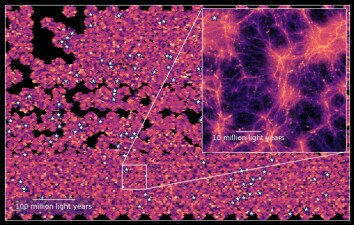
Astronomers at the McDonald Observatory, collaborating with the Hobby-Eberly Telescope Dark Energy Experiment, have created what they call the most detailed 3D map to date of faint hydrogen emissions from the early universe. This achievement is powered by massive data processing and supercomputing, highlighting both the opportunities and interpretive hurdles of computational cosmology.
 
This research seeks to map Lyman-alpha emission, the light given off when hydrogen atoms are energized by star formation, during a pivotal era about 9 to 11 billion years ago. The findings provide insight into how galaxies and intergalactic gas developed in this crucial period of cosmic history.
 
For HPC engineers and computational scientists, however, the project poses a key question: how much of the resulting map is based on direct observation, and how much is inferred through large-scale data processing?

Turning Half a Petabyte Into a Map

The raw data behind the project is formidable. Observations collected by the Hobby-Eberly Telescope produced more than 600 million spectra across a wide region of the sky. To process the data, researchers used supercomputing resources at the Texas Advanced Computing Center.
 
In total, roughly half a petabyte of observational data was sifted through using custom software pipelines designed to extract faint spectral signatures from the background noise.
 
This is a familiar workflow for HPC users: large-scale reduction pipelines, statistical signal extraction, and multi-stage modeling designed to convert massive observational datasets into structured scientific products.
 
But the map itself was not built by directly detecting every galaxy.
 
Instead, the team relied on a statistical technique known as line intensity mapping.

A Blurred Picture of the Cosmos

Traditional galaxy surveys attempt to catalog individual objects one by one. Intensity mapping takes a different approach: it measures the combined brightness of specific spectral lines across large regions of space, effectively capturing aggregate emission from both bright and faint sources simultaneously.
 
One scientist involved in the project compared the method to looking through a “smudged plane window,” the image is blurrier, but it reveals light from many otherwise invisible sources.
 
For HPC practitioners, this analogy should sound familiar. Intensity mapping is less about high-resolution object detection and more about statistical reconstruction from incomplete data, similar to techniques used in tomography, cosmological simulations, and signal processing.
 
In this case, the reconstruction relied on a computational assumption: regions near known bright galaxies are likely to host additional faint galaxies and intergalactic gas, due to the gravitational clustering of matter. The positions of bright galaxies were therefore used as anchors to infer the locations of surrounding faint structures.
 
This strategy dramatically increases the amount of usable information extracted from observational surveys, but it also introduces a layer of modeling.

When Data Analysis Becomes Astrophysics

The resulting map reveals what researchers describe as a “sea of light” filling the spaces between previously cataloged galaxies. The signal suggests the presence of numerous faint galaxies and diffuse hydrogen gas that traditional surveys have missed.
 
From a computational standpoint, the achievement is significant. Processing hundreds of millions of spectra and reconstructing a three-dimensional cosmic structure from partial signals requires large-scale parallel workflows, sophisticated statistical filtering, and high-throughput data handling.
 
But the skeptical HPC user might ask an uncomfortable question:

If the map relies partly on statistical inference and clustering assumptions, how much of the detected structure is truly observed, and how much is model-dependent reconstruction?

The researchers themselves acknowledge this tension. The new map, they say, can now serve as a reference point for testing cosmological simulations of the same epoch.

In other words, the observational data may help validate or challenge theoretical models that attempt to describe the early universe.

HPC’s Expanding Role in Observational Cosmology

Regardless of interpretive debates, the project highlights a growing trend in astronomy: observational science is becoming increasingly computational.
 
Large surveys such as HETDEX collect far more data than traditional analysis pipelines can process manually. Instead, researchers rely on supercomputers to filter, correlate, and model enormous datasets.
 
In practice, this means that discoveries increasingly emerge not just from telescopes, but from the intersection of instrumentation, algorithms, and HPC infrastructure.
 
For supercomputing engineers, this evolution presents both opportunity and responsibility. As astronomical datasets continue to scale toward the exabyte era, the distinction between data analysis and theoretical modeling will become increasingly intertwined.
 
And sometimes, the most important question is not simply what the universe is telling us, but how much of that message is being interpreted through the lens of our algorithms.
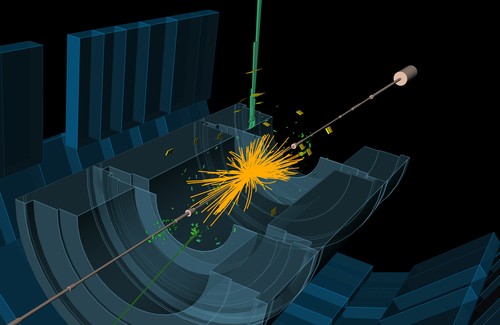
New method improves precision of particle collision simulations

New method improves precision of particle collision simulations

Tyler O'Neal, Staff Editor LATEST March 6, 2026, 7:03 pm
High-energy particle physics is built on two essential foundations: cutting-edge accelerators and advanced computational techniques. Researchers at the Institute of Nuclear Physics Polish Academy of Sciences, have now introduced a novel method that promises to greatly enhance the reliability of large-scale simulations, interpreting results from experiments like those at the Large Hadron Collider. This breakthrough holds significant promise for the supercomputing community.
 
A central challenge remains: how can computational physicists estimate the effects of calculations that are prohibitively resource-intensive to perform?

When Computation Meets the Limits of Physics

Modern particle physics experiments generate enormous datasets describing the aftermath of high-energy proton collisions. To interpret these events, scientists must compare experimental observations with theoretical predictions derived from complex numerical simulations based on quantum chromodynamics (QCD) and the Standard Model.
 
But the calculations required to simulate these interactions grow explosively in complexity. Perturbation theory, the mathematical framework typically used, expresses results as a series of corrections. Each successive order in the series represents a more precise description of the physics, but also requires dramatically more computational effort.
 
For large-scale collider simulations, computing higher-order corrections can become computationally prohibitive, even on modern HPC systems. As a result, physicists usually truncate the series after a manageable number of terms and then estimate the uncertainty introduced by the missing higher-order contributions.
 
The question, however, remains difficult: How large are the effects of the corrections that were never computed?

A New Approach to Estimating the Unknown

Physicists Matthew A. Lim of the University of Sussex and Dr. René Poncelet of IFJ PAN have proposed a new methodology for estimating these missing higher-order effects in perturbative calculations. Their work, published in Physical Review D, introduces a refined technique based on varying so-called nuisance parameters rather than relying solely on the traditional renormalization-scale variation method.
 
In the standard approach, theorists adjust the renormalization scale, a parameter linked to the energy scale of particle interactions, to evaluate how sensitive simulation results are to changes in that value. This variation provides a rough estimate of theoretical uncertainty.
 
The new method instead explores variations in physically interpretable parameters such as particle masses, coupling constants, or probability distribution functions. Because these quantities correspond more directly to measurable physics, the resulting uncertainty estimates can be less arbitrary and more grounded in experimental constraints.
 
For supercomputing engineers familiar with numerical modeling, the strategy resembles sensitivity analysis performed on large-scale simulations: perturb inputs within physically meaningful ranges and observe how the system responds.

Validating Against Real Collider Data

The researchers tested their framework across ten categories of proton-collision processes observed at the LHC. These included phenomena such as Higgs boson production, W and Z boson pair production, heavy-quark pair formation, and interactions generating gamma quanta and hadronic jets.
 
In cases where the traditional scale-variation approach already performed well, the new method yielded comparable results. However, in previously problematic scenarios, the nuisance-parameter technique produced more realistic uncertainty estimates, improving agreement between theoretical predictions and experimental observations.
 
According to Dr. Poncelet, the method offers a practical framework for estimating the impact of higher-order corrections in perturbative calculations, a capability that could sharpen the interpretation of collision data from both current and future accelerators.

Why This Matters for HPC

For the supercomputing community, the significance of the work extends beyond particle physics theory.
 
Large-scale collider simulations already consume vast computational resources across distributed HPC infrastructures worldwide. As researchers push toward higher precision, especially in the search for subtle deviations from the Standard Model that might signal new physics, computational demand continues to escalate.
 
Methods that improve the statistical reliability of truncated simulations can reduce the need for prohibitively expensive higher-order calculations while still preserving scientific accuracy. In other words, smarter mathematical frameworks can complement brute-force computing.
 
This interplay between algorithmic innovation and HPC capability is becoming increasingly central to modern scientific discovery. Even with the world’s fastest supercomputers, physicists cannot compute everything. The art lies in determining what must be calculated, what can be approximated, and how to quantify the difference.

Toward More Precise Digital Experiments

As next-generation particle accelerators and upgraded detectors deliver increasingly precise experimental data, theoretical models must advance alongside them. Improved methods for estimating uncertainty, such as the approach proposed by Lim and Poncelet, offer a practical way to keep simulations aligned with observations without demanding impractical levels of computational power.
 
For HPC engineers working at the intersection of physics and large-scale computation, the lesson is both technical and conceptual: improving simulations is not solely about building faster machines. It also requires better strategies for understanding and quantifying the uncertainties embedded within the equations that drive those simulations.
  1. CoreWeave, Perplexity forge a strategic HPC-driven AI partnership
  2. AI agents open new frontiers in predicting preterm birth
  3. Peering into cosmic darkness: Supercomputers illuminate one of the faintest galaxies ever seen
  4. Supercomputers tackle a stellar puzzle, but have we really solved it?
  5. Can Scientific AI truly solve quantum chemistry’s hardest problems?
  6. Mystery beneath the ice: Supercomputers illuminate the Antarctic gravity anomaly
  7. NextGen Water Resources Modeling Framework: Integrating hydrologic science, data systems

Page 29 of 62

  • 24
  • 25
  • 26
  • 27
  • 28
  • 29
  • 30
  • 31
  • 32
  • 33
POPULAR RIGHT NOW
  • Supercomputers replace ‘bathtub’ flood maps with physics-based digital twins of Britain’s coastline
    Supercomputers replace ‘bathtub’ flood maps with physics-based digital twins of Britain’s coastline
  • Supercomputers push neural quantum simulation beyond previous limits
    Supercomputers push neural quantum simulation beyond previous limits
  • Intel’s AI supercomputing revival: Q2 financial surge signals new era for CPU-powered HPC infrastructure
    Intel’s AI supercomputing revival: Q2 financial surge signals new era for CPU-powered HPC infrastructure
  • AI infrastructure financing fears shake semiconductor sector
    AI infrastructure financing fears shake semiconductor sector
  • AWS supercomputing investment reaches historic scale as Amazon’s AI strategy powers record financial results
    AWS supercomputing investment reaches historic scale as Amazon’s AI strategy powers record financial results
  • Catching the wave of the future: Supercomputers unlock the hidden dynamics of Venus
    Catching the wave of the future: Supercomputers unlock the hidden dynamics of Venus
  • NCAR supercomputers run planet scale climate experiments impossible in the real world
    NCAR supercomputers run planet scale climate experiments impossible in the real world
  • AI hunts the cosmos: Machine learning helps astronomers discover the first ‘Wandering’ supermassive black hole caught destroying a star
    AI hunts the cosmos: Machine learning helps astronomers discover the first ‘Wandering’ supermassive black hole caught destroying a star
  • Supercomputing for the masses: Meta's vision of a personal superintelligence for everyone
    Supercomputing for the masses: Meta's vision of a personal superintelligence for everyone
  • NVIDIA helps turn AI compute into a new asset class as Wall Street mobilizes $500 billion
    NVIDIA helps turn AI compute into a new asset class as Wall Street mobilizes $500 billion
THIS YEAR'S MOST READ
  • Beamforming the future: BeammWave's 6G push signals the rise of orbital-terrestrial wireless networks
    Joakim Axmon
    Joakim Axmon
  • Wall Street wants to trade supercomputing power like oil
    Wall Street wants to trade supercomputing power like oil
  • Cosmic ambition at scale: UK’s supercomputer unlocks a 2.5 petabytes universe
    Cosmic ambition at scale: UK’s supercomputer unlocks a 2.5 petabytes universe
  • Hidden order, revealed at scale: Supercomputing, electron ptychography uncover the inner workings of relaxor ferroelectrics
    Hidden order, revealed at scale: Supercomputing, electron ptychography uncover the inner workings of relaxor ferroelectrics
  • Intel's Q1 results signal supercomputing surge driving Xeon momentum
    Intel's Q1 results signal supercomputing surge driving Xeon momentum
  • Huawei’s Tau Scaling ambition tests the limits of post-Moore semiconductor reality
    He Tingbo from HUAWEI delivered a keynote speech titled "New Semiconductor Path in Practice"
    He Tingbo from HUAWEI delivered a keynote speech titled "New Semiconductor Path in Practice"
  • When stars fall apart: Supercomputing reveals the hidden physics of black holes
    When stars fall apart: Supercomputing reveals the hidden physics of black holes
  • MIT develops computational framework to probe dark matter via gravitational waves
    MIT develops computational framework to probe dark matter via gravitational waves
  • Memory has become the new compute: Why Micron, SK Hynix crossing $1 trillion matters to supercomputing
    Memory has become the new compute: Why Micron, SK Hynix crossing $1 trillion matters to supercomputing
  • AI breaks conservation barriers: Australia’s Wildlife Observatory leverages supercomputing to protect biodiversity
    AI breaks conservation barriers: Australia’s Wildlife Observatory leverages supercomputing to protect biodiversity
  • FRONTPAGE
  • LATEST
  • POPULAR
  • REGISTER
  • SOCIAL
  • VIDEO
  • SUBSCRIPTION
  • RSS
  • GUIDELINES
  • PRIVACY
  • TOS
  • ABOUT
  • +1 (816) 799-4488
  • editorial@supercomputingonline.com
© 2001 - 2026 SuperComputingOnline.com, LLC. All rights reserved. This material may not be published, broadcast, rewritten or redistributed without permission.
Sign In
  • FRONT PAGE
  • LATEST
    • MEDIA KIT
    • MOST READ
    • RSS FEED
    • ACADEMIA
    • AEROSPACE
    • APPLICATIONS
    • ASTRONOMY
    • AUTOMOTIVE
    • BIG DATA
    • BIOLOGY
    • CHEMISTRY
    • CLIENTS
    • CLOUD
    • DEFENSE
    • DEVELOPER TOOLS
    • EARTH SCIENCES
    • ECONOMICS
    • ENGINEERING
    • ENTERTAINMENT
    • HEALTH
    • INDUSTRY
    • INTERCONNECTS
    • GAMING
    • GOVERNMENT
    • MANUFACTURING
    • MIDDLEWARE
    • MOVIES
    • NETWORKS
    • OIL & GAS
    • PHYSICS
    • PROCESSORS
    • RETAIL
    • SCIENCE
    • STORAGE
    • SYSTEMS
    • VISUALIZATION
  • VIDEOS
    • ADD YOUR VIDEOS
    • MANAGE VIDEOS
  • COMMUNITY
    • TRADE SHOWS
    • SOCIAL NETWORK VIDEOS
    • SURVEYS
    • APPLICATIONS BROWSER
    • CONVERSATION INBOX
    • SOCIAL ADVERTISER
    • GROUPS
    • MARKETPLACE LISTINGS
    • PAGES
    • LEADERBOARD
    • POINTS LISTING
      • BADGES
    • PRIVACY CONFIRM REQUEST
    • PRIVACY CREATE REQUEST

Hey there! We noticed you’re using an ad blocker.