SUPERCOMPUTING NEWS SUPERCOMPUTING NEWS
    • MEDIA KIT
    • MOST READ
    • RSS FEED
    • ACADEMIA
    • AEROSPACE
    • APPLICATIONS
    • ASTRONOMY
    • AUTOMOTIVE
    • BIG DATA
    • BIOLOGY
    • CHEMISTRY
    • CLIENTS
    • CLOUD
    • DEFENSE
    • DEVELOPER TOOLS
    • EARTH SCIENCES
    • ECONOMICS
    • ENGINEERING
    • ENTERTAINMENT
    • GAMING
    • GOVERNMENT
    • HEALTH
    • OIL & GAS
    • INDUSTRY
    • INTERCONNECTS
    • MANUFACTURING
    • MIDDLEWARE
    • MOVIES
    • NETWORKS
    • PHYSICS
    • PROCESSORS
    • RETAIL
    • SCIENCE
    • STORAGE
    • SYSTEMS
    • VISUALIZATION
    • AcyMailing subscription form

    • ADD YOUR VIDEOS
    • MANAGE VIDEOS
    • CONVERSATION INBOX
    • SOCIAL ADVERTISER
    • SOCIAL NETWORK VIDEOS
    • SURVEYS
    • GROUPS
    • PAGES
    • MARKETPLACE LISTINGS
    • APPLICATIONS BROWSER
    • PRIVACY CONFIRM REQUEST
    • PRIVACY CREATE REQUEST
    • LEADERBOARD
    • POINTS LISTING
      • BADGES
    • TRADE SHOWS
Sign In
Tyler O'Neal, Staff Editor BIOLOGY September 20, 2021, 6:00 pm

Rice, UH win NIH award to build useful bacterial colonies

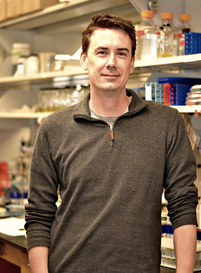
Rice synthetic biologist Matthew Bennett and his colleagues have won a four-year, $1.2 million National Institutes of Health grant to advance the art and science of creating custom-designed microbial colonies. Rice University synthetic biologist Matthew Bennett and his colleagues have won a grant to advance the development of custom-designed microbial colonies for a variety of applications.

The award to principal investigators Bennett and Krešimir Josić, a professor of mathematics at the University of Houston, and co-principal investigator Oleg Igoshin, a professor of bioengineering and biosciences at Rice, will enable the development of technologies like synthetic “tissues” that enhance soils or gut microbiomes, or self-healing coatings that continuously synthesize protective molecules. 

The grant administered by the National Institute of General Medical Sciences will help them combine applied mathematics, biophysics, computational modeling, and experimental synthetic biology to improve their control of microbial colonies that form complex multicellular structures.

“This is an extension of a study to make asymmetric cellular differentiation happen in bacteria,” said Bennett, a professor of biosciences and of bioengineering. “That’s a property of stem cells, which give birth to new cells of a different type, like skin or pancreatic cells.”

Missing wind variability means future impacts of climate change may be underestimated in Europe, North America

Tyler O'Neal, Staff Editor BIOLOGY September 20, 2021, 12:00 pm

Climate models may be underestimating the impact climate change will have on the UK, North America, and other extratropical regions due to a crucial missing element, new research has shown.

Scientists at the University of Reading have warned that current projections of how a warming world will affect regional temperatures and rainfall do not take into account the fact that extratropical winds – which have a strong influence on climate in the mid-latitudes – vary greatly from decade to decade.

The research team used observations of these winds over the 20th century to better represent their variability in climate model predictions of the future. They found that this made the predictions of future climate less certain in the extratropics – particularly in the North Atlantic region and particularly in winter – and that unusually hot, cold, wet, or dry decades are projected to be much more likely by the middle of the century in this region than existing climate simulations suggest.

Dr. Christopher O’Reilly in the University of Reading’s Department of Meteorology, said: “Variations between decades in the strength of winds in the more temperate regions of the world are a crucial missing ingredient in projections of the future climate of those regions.

“By adding this extra variability into climate models, we showed that these winds may be an additional source of uncertainty on top of climate change. This could mean that within these regions,  temperatures are pushed to relatively extreme highs or lows more often. While in some decades they could counteract increases to temperatures and heavy rainfall caused by climate change, in other periods they could make these extremes even more extreme.

“This is yet another reminder that preparation will be crucial as we face up to more variable regional climates as an impact of climate change in the future.”

The team used wind observation data from the Met Office, Copernicus Climate Data Store, and NOAA, among others, to carry out their analysis and bolster the climate model predictions with supercomputing.

The range of temperature and rainfall most likely to occur in future decades increased by 50% across Northern Europe, Northern America, and the Mediterranean – with uncertainty nearly doubling in some cases.

This strengthens previous research that suggests rainfall and temperatures that are very unlikely today will fall within the likely range in the future due to climate change.

The updated projections showed that the Mediterranean would see a higher frequency of drier-than-average winters. As studies show that dry winters in this region make heatwaves in Europe more common the following summer, this has health and infrastructure implications for several countries.

Sensing what plants sense: Iowa State builds integrated framework that helps scientists explain biology, predict crop performance

Tyler O'Neal, Staff Editor BIOLOGY June 7, 2021, 12:00 pm

Scientists have invested great time and effort into making connections between a plant's genotype, its genetic makeup, its phenotype, or its observable traits. Understanding a plant's genome helps plant biologists predict how that plant will perform in the real world, which can be useful for breeding crop varieties that will produce high yields or resist stress.

But environmental conditions play a role as well. Plants with the same genotype will perform differently when grown in different environments. A new study led by an Iowa State University scientist uses advanced data analytics to help scientists understand how the environment interacts with genomics in corn, wheat, and oats. The results could lead to more accurate and faster models that will allow plant breeders to develop crop varieties with desirable traits.

The study was published recently in the academic journal Molecular Plant. Iowa State University researchers use advanced data analytics to help scientists understand how environmental conditions interact with genomics in corn, pictured here, as well as other crops.  CREDIT Jianming Yu
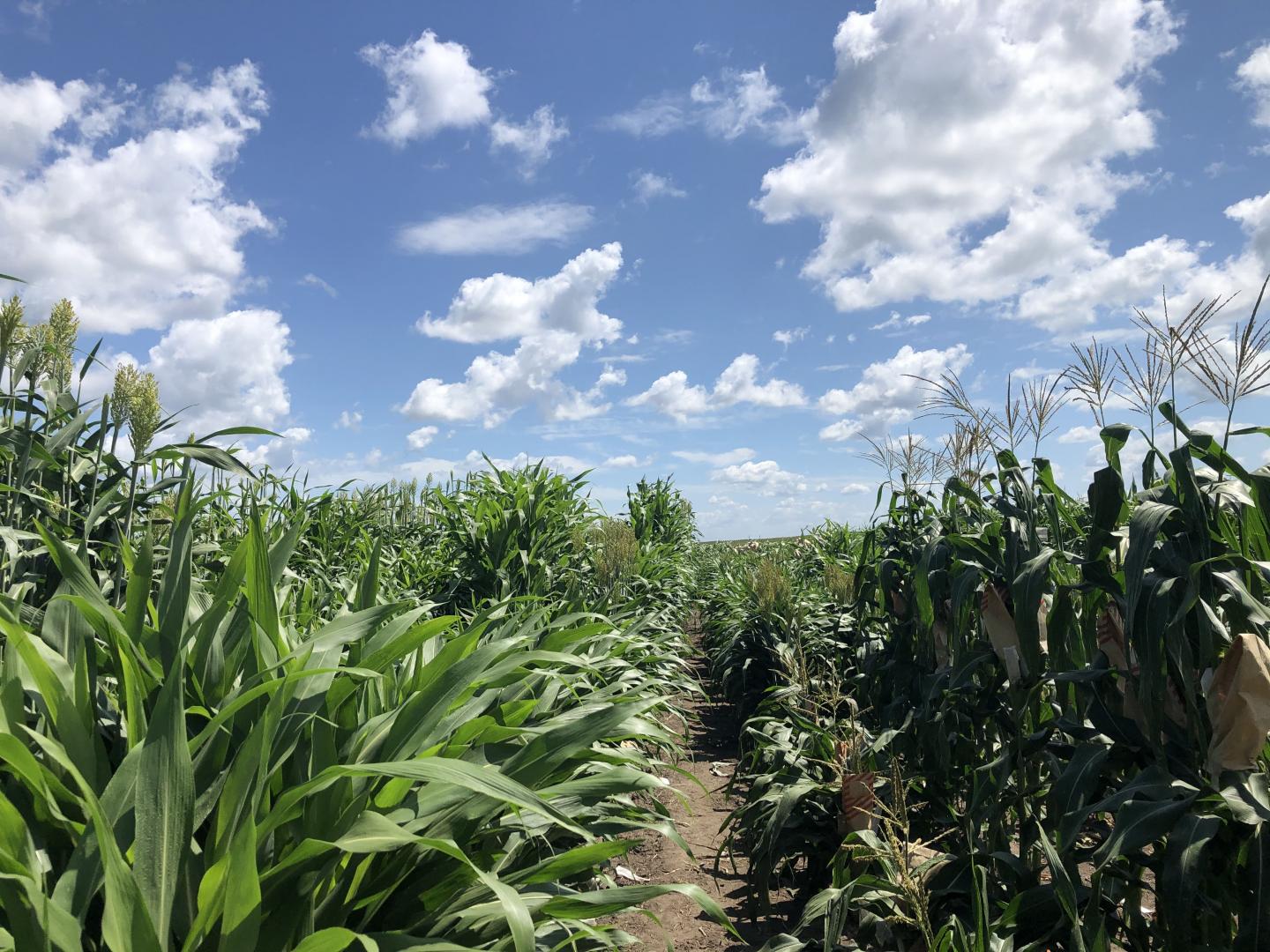
Jianming Yu, a professor of agronomy and the Pioneer Distinguished Chair in Maize Breeding, said the study sheds light on phenotypic plasticity, or the ability of crops to adapt to environmental changes. This could help plant breeders better understand how "shapable" plant species are or how much potential they have to perform well in different environments.

"We knew that genetic performance is context-dependent. It's not static; It's dependent on environmental conditions," said Xianran Li, an adjunct associate professor and the first author of the study. "Two alleles of a gene perform differently in one environment but the same in another. What is challenging is to understand the interplay between genes and the environment under natural field conditions. The obvious obstacle is that natural environments are much more complex than controlled laboratory conditions. How can we detect the major signals plants perceive?"

The study made use of previously gathered data on the three crop species from across the globe. A group of 17 scientists from four institutions contributed to the current study, but a much larger group of scientists carried out the initial experiments that generated the data. The dataset included 282 inbred lines of corn evaluated in the United States and Puerto Rico; 288 inbred lines of wheat evaluated in Africa, India, and Middle Eastern countries; and 433 inbred populations of oats evaluated in the United States and Canada. The data included environmental conditions such as temperature and availability of sunlight. The phenotypic data analyzed in the study included yields, plant height and flowering time, or the window of time during which the plant reaches the reproductive stage.

Advanced data analytics allowed the researchers to develop an environmental index, extracting the major differentiating pattern among the studied natural field conditions. With this explicit environmental dimension defined, how individual genes respond to external signals and collectively lead to the varied final performance of an organism can be systematically evaluated.

"It is like the undiscernible pulses of a plant's perception of the outside conditions now become visible on a monitor screen," said Tingting Guo, a research scientist in agronomy and co-first author of the study.

The study "presents an integrated framework that not only reveals the genetic effect dynamics along with an identified environmental index but also enables accurate performance predictions and forecasting," the authors wrote in the paper.

"We are pleased to be able to design such a framework to cover two major research areas, genome-wide association studies and genomic selection (GWAS and GS)," Yu said.

The study found the integrated framework predicted flowering time and plant height accurately, while predictions for yields were more difficult. Li said that's most likely due to how many different environmental parameters affect yield at different growth stages beyond just temperature and sunlight. The research team will continue refining its methods to account for more environmental factors to better predict yields.

Yu and his collaborators first developed their initial data analytics in sorghum but have since expanded their research to include other major global crops. This could help plant scientists design a better plan for finding varieties to test. Yu said applying advanced data analytics to all the available genomic, phenotypic, and environmental data can help breeders zero in on varieties they're interested in much faster and more efficiently.

"We believe we have the requisite amount of data to make better predictions about plant performance," Yu said. "Now, we're trying to gain knowledge and wisdom from the data to guide the real-world decision-making process."


  1. Stowers investigator develops explainable AI for decoding genome biology
  2. MIT's Boyden shows the symphony of cellular signals driving biology

Page 11 of 17

  • 6
  • 7
  • 8
  • 9
  • 10
  • 11
  • 12
  • 13
  • 14
  • 15
POPULAR RIGHT NOW
  • AI supercharges the hunt for stronger magnets: Iowa State researchers launch a new era of intelligent materials discovery
    AI supercharges the hunt for stronger magnets: Iowa State researchers launch a new era of intelligent materials discovery
  • IBM's Historic stock collapse raises questions for the future of enterprise supercomputing
    IBM's Historic stock collapse raises questions for the future of enterprise supercomputing
  • Could a novel dark matter theory simultaneously resolve multiple cosmic enigmas? Supercomputer simulations provide a compelling, albeit currently unverified, potential solution
    Could a novel dark matter theory simultaneously resolve multiple cosmic enigmas? Supercomputer simulations provide a compelling, albeit currently unverified, potential solution
  • Melting icebergs may be reshaping Earth’s greatest ocean current
    Melting icebergs may be reshaping Earth’s greatest ocean current
  • Supercomputers replace ‘bathtub’ flood maps with physics-based digital twins of Britain’s coastline
    Supercomputers replace ‘bathtub’ flood maps with physics-based digital twins of Britain’s coastline
  • Supercomputers push neural quantum simulation beyond previous limits
    Supercomputers push neural quantum simulation beyond previous limits
  • Intel’s AI supercomputing revival: Q2 financial surge signals new era for CPU-powered HPC infrastructure
    Intel’s AI supercomputing revival: Q2 financial surge signals new era for CPU-powered HPC infrastructure
  • AI infrastructure financing fears shake semiconductor sector
    AI infrastructure financing fears shake semiconductor sector
  • AWS supercomputing investment reaches historic scale as Amazon’s AI strategy powers record financial results
    AWS supercomputing investment reaches historic scale as Amazon’s AI strategy powers record financial results
  • Catching the wave of the future: Supercomputers unlock the hidden dynamics of Venus
    Catching the wave of the future: Supercomputers unlock the hidden dynamics of Venus
THIS YEAR'S MOST READ
  • Wall Street wants to trade supercomputing power like oil
    Wall Street wants to trade supercomputing power like oil
  • Beamforming the future: BeammWave's 6G push signals the rise of orbital-terrestrial wireless networks
    Joakim Axmon
    Joakim Axmon
  • Cosmic ambition at scale: UK’s supercomputer unlocks a 2.5 petabytes universe
    Cosmic ambition at scale: UK’s supercomputer unlocks a 2.5 petabytes universe
  • Hidden order, revealed at scale: Supercomputing, electron ptychography uncover the inner workings of relaxor ferroelectrics
    Hidden order, revealed at scale: Supercomputing, electron ptychography uncover the inner workings of relaxor ferroelectrics
  • Intel's Q1 results signal supercomputing surge driving Xeon momentum
    Intel's Q1 results signal supercomputing surge driving Xeon momentum
  • When stars fall apart: Supercomputing reveals the hidden physics of black holes
    When stars fall apart: Supercomputing reveals the hidden physics of black holes
  • Multi-layer simulations reveal the hidden supply chain of solar prominences
    Multi-layer simulations reveal the hidden supply chain of solar prominences
  • Japanese scientists decode dolphin speed with supercomputing: Turbulence, vortices, and the hidden physics of propulsion
    Japanese scientists decode dolphin speed with supercomputing: Turbulence, vortices, and the hidden physics of propulsion
  • Cosmic feedback at scale: Supercomputing reveals how quasars regulate the early Universe
    Cosmic feedback at scale: Supercomputing reveals how quasars regulate the early Universe
  • Modeling life at the microscopic scale: A computational breakthrough in oxygen transport
    Modeling life at the microscopic scale: A computational breakthrough in oxygen transport
MOST READ OF ALL-TIME
  • Largest Computational Biology Simulation Mimics The Ribosome
    Details
    112127
    The amino acid (green) slithers into the chemical reaction center, moving through an evolutionarily ancient corridor of the ribosome (purple). The amino acid is delivered to the reaction core by the transfer RNA molecule (yellow).
    The amino acid (green) slithers into the chemical reaction center, moving through an evolutionarily ancient corridor of the ribosome (purple). The amino acid is delivered to the reaction core by the transfer RNA molecule (yellow).
  • Silicon 'neurons' may add a new dimension to chips
    Details
    81040
    Silicon 'neurons' may add a new dimension to chips
  • Linux Networx Accelerators Expected to Drive up to 4x Price/Performance
    Details
    75563
  • Complex Concepts That Really Add Up
    Details
    73693
    Complex Concepts That Really Add Up
  • Blue Sky Studios Donates Animation SuperComputer to Wesleyan
    Details
    68166
    Each rack holds 52 Angstrom Microsystem-brand “blades,” with a memory footprint of 12 or 24 gigabytes each. (Photos by Olivia Bartlett Drake)
    Each rack holds 52 Angstrom Microsystem-brand “blades,” with a memory footprint of 12 or 24 gigabytes each. (Photos by Olivia Bartlett Drake)
  • Humanities, HPC connect at NERSC
    Details
    57973
  • TeraGrid ’09 'Call for Participation'
    Details
    54976
  • Turbulence responsible for black holes' balancing act
    Details
    52339
  • Cray Wins $52 Million SuperComputer Contract
    Details
    50162
  • SDSC Researchers Accurately Predict Protein Docking
    Details
    46115
  • FRONTPAGE
  • LATEST
  • POPULAR
  • REGISTER
  • SOCIAL
  • VIDEO
  • SUBSCRIPTION
  • RSS
  • GUIDELINES
  • PRIVACY
  • TOS
  • ABOUT
  • +1 (816) 799-4488
  • editorial@supercomputingonline.com
© 2001 - 2026 SuperComputingOnline.com, LLC. All rights reserved. This material may not be published, broadcast, rewritten or redistributed without permission.
Sign In
  • FRONT PAGE
  • LATEST
    • MEDIA KIT
    • MOST READ
    • RSS FEED
    • ACADEMIA
    • AEROSPACE
    • APPLICATIONS
    • ASTRONOMY
    • AUTOMOTIVE
    • BIG DATA
    • BIOLOGY
    • CHEMISTRY
    • CLIENTS
    • CLOUD
    • DEFENSE
    • DEVELOPER TOOLS
    • EARTH SCIENCES
    • ECONOMICS
    • ENGINEERING
    • ENTERTAINMENT
    • HEALTH
    • INDUSTRY
    • INTERCONNECTS
    • GAMING
    • GOVERNMENT
    • MANUFACTURING
    • MIDDLEWARE
    • MOVIES
    • NETWORKS
    • OIL & GAS
    • PHYSICS
    • PROCESSORS
    • RETAIL
    • SCIENCE
    • STORAGE
    • SYSTEMS
    • VISUALIZATION
  • VIDEOS
    • ADD YOUR VIDEOS
    • MANAGE VIDEOS
  • COMMUNITY
    • TRADE SHOWS
    • SOCIAL NETWORK VIDEOS
    • SURVEYS
    • APPLICATIONS BROWSER
    • CONVERSATION INBOX
    • SOCIAL ADVERTISER
    • GROUPS
    • MARKETPLACE LISTINGS
    • PAGES
    • LEADERBOARD
    • POINTS LISTING
      • BADGES
    • PRIVACY CONFIRM REQUEST
    • PRIVACY CREATE REQUEST

Hey there! We noticed you’re using an ad blocker.