

SUPERCOMPUTING NEWS SUPERCOMPUTING NEWS
    • MEDIA KIT
    • MOST READ
    • RSS FEED
    • ACADEMIA
    • AEROSPACE
    • APPLICATIONS
    • ASTRONOMY
    • AUTOMOTIVE
    • BIG DATA
    • BIOLOGY
    • CHEMISTRY
    • CLIENTS
    • CLOUD
    • DEFENSE
    • DEVELOPER TOOLS
    • EARTH SCIENCES
    • ECONOMICS
    • ENGINEERING
    • ENTERTAINMENT
    • GAMING
    • GOVERNMENT
    • HEALTH
    • OIL & GAS
    • INDUSTRY
    • INTERCONNECTS
    • MANUFACTURING
    • MIDDLEWARE
    • MOVIES
    • NETWORKS
    • PHYSICS
    • PROCESSORS
    • RETAIL
    • SCIENCE
    • STORAGE
    • SYSTEMS
    • VISUALIZATION
    • AcyMailing subscription form

    • ADD YOUR VIDEOS
    • MANAGE VIDEOS
    • CONVERSATION INBOX
    • SOCIAL ADVERTISER
    • SOCIAL NETWORK VIDEOS
    • SURVEYS
    • GROUPS
    • PAGES
    • MARKETPLACE LISTINGS
    • APPLICATIONS BROWSER
    • PRIVACY CONFIRM REQUEST
    • PRIVACY CREATE REQUEST
    • LEADERBOARD
    • POINTS LISTING
      • BADGES
    • TRADE SHOWS
Sign In
Tyler O'Neal, Staff Editor DEVELOPER TOOLS August 10, 2022, 9:40 am

Zooming in on Merging Spiral Galaxies

Zoom in reveals a pair of interacting spiral galaxies — NGC 4568 and NGC 4567 — as they begin to clash and merge.These galaxies are entangled by their mutual gravitational field and will eventually combine to form a single elliptical galaxy in around 500 million years.Also visible in the image is the glowing remains of a supernova that was detected in 2020.Credit:International Gemini Observato...
...

Read more https://www.supercomputingonline.com/gallery/category/how-to-style/zooming-in-on-merging-spiral-galaxies

Cedars-Sinai creates supercomputer models of brain cells

Tyler O'Neal, Staff Editor DEVELOPER TOOLS August 9, 2022, 11:58 am

Using artificial intelligence, Cedars-Sinai neuroscientists create the most realistic and complex supercomputer models of individual brain cells to date, paving the way for experiments not possible in the lab
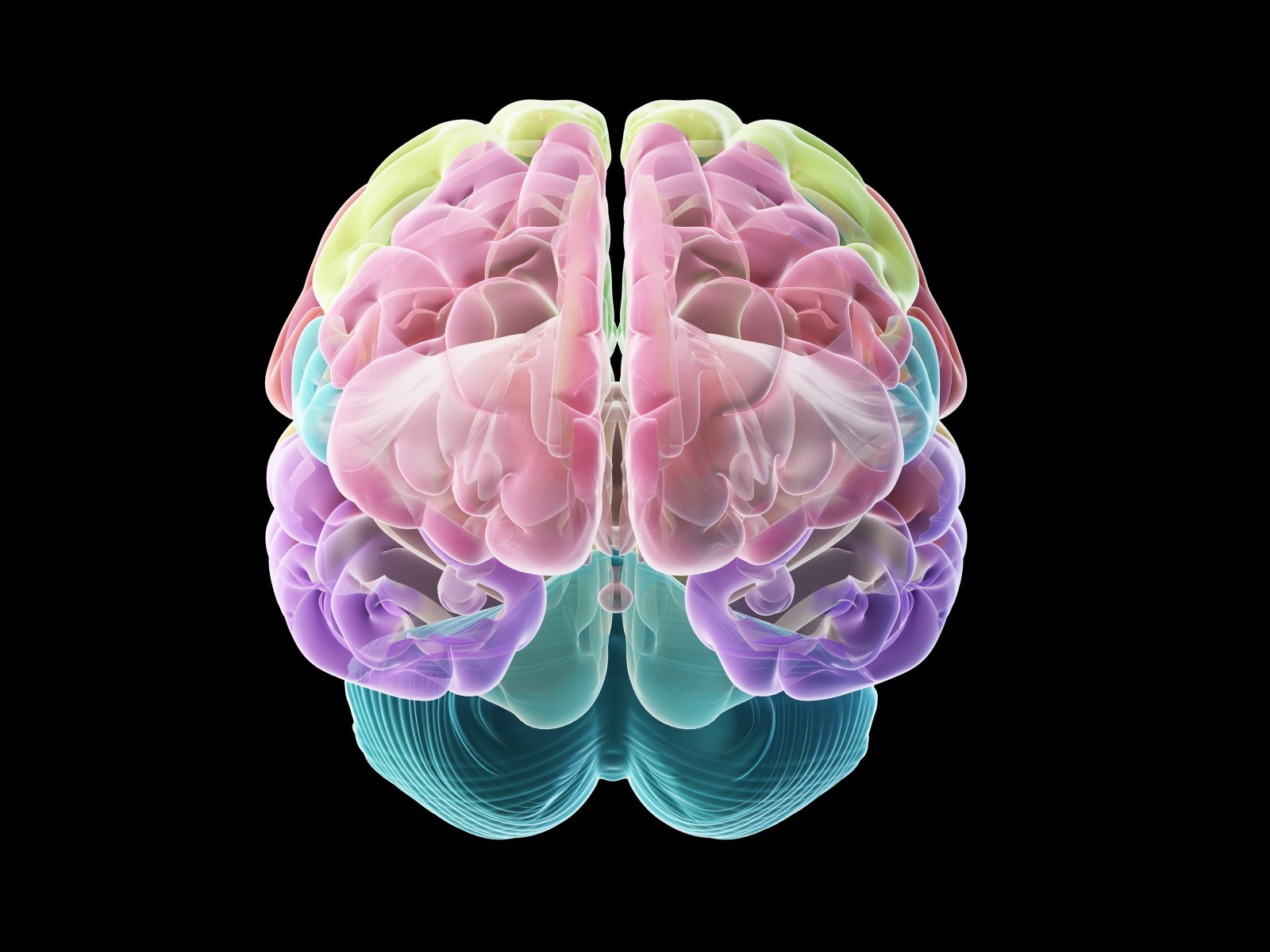
New research from Cedars-Sinai: Investigators have created bio-realistic and complex computer models of individual brain cells. Illustration by Getty.

Cedars-Sinai investigators have published today in the peer-reviewed journal Cell Reports, details how these models could one-day answer questions about neurological disorders—and even human intellect—that isn’t possible to explore through biological experiments.

“These models capture the shape, timing, and speed of the electrical signals that neurons fire to communicate with each other, which is considered the basis of brain function,” said Costas Anastassiou, Ph.D., a research scientist in the Department of Neurosurgery at Cedars-Sinai, and senior author of the study. “This lets us replicate brain activity at the single-cell level.”

The models are the first to combine data sets from different types of laboratory experiments to present a complete picture of the electrical, genetic, and biological activity of single neurons. The models can be used to test theories that would require dozens of experiments to examine in the lab, Anastassiou said. 

“Imagine that you wanted to investigate how 50 different genes affect a cell’s biological processes,” Anastassiou said. “You would need to create a separate experiment to ‘knock out’ each gene and see what happens. With our computational models, we will be able to change the recipes of these gene markers for as many genes as we like and predict what will happen.”

Another advantage of the models is that they allow researchers to completely control experimental conditions. This opens the possibility of establishing that one parameter, such as a protein expressed by a neuron, causes a change in the cell or a disease condition, such as epileptic seizures, Anastassiou said. In the lab, investigators can often show an association, but it is difficult to prove a cause.

“In laboratory experiments, the researcher doesn’t control everything,” Anastassiou said. “Biology controls a lot. But in a computational simulation, all the parameters are under the creator’s control. In a model, I can change one parameter and see how it affects another, something that is very hard to do in a biological experiment.”

To create their models, Anastassiou and his team from the Anastassiou Lab (@anastassiou_lab)—members of the Departments of Neurology and Neurosurgery, the Board of Governors Regenerative Medicine Institute, and the Center for Neural Science and Medicine at Cedars-Sinai, used two different sets of data on the mouse primary visual cortex, the area of the brain that processes information coming from the eyes. 

The first data set presented complete genetic pictures of tens of thousands of single cells. The second linked the electrical responses and physical characteristics of 230 cells from the same brain region. The investigators used machine learning to integrate these two datasets and create bio-realistic models of 9,200 single neurons and their electrical activity.

“This work represents a significant advancement in high-performance computing,” said Keith L. Black, MD, chair of the Department of Neurosurgery and the Ruth and Lawrence Harvey Chair in Neuroscience at Cedars-Sinai. “It also gives researchers the ability to search for relationships within and between cell types and to glean a deeper understanding of the function of cell types in the brain.” 

The study was conducted in collaboration with the Allen Institute for Brain Science in Seattle, which also provided data.

“This work led by Dr. Anastassiou fits in well with Cedars-Sinai’s dedication to bringing together mathematics, statistics, and computer science with technology to address all the important questions in biomedical research and healthcare,” said Jason Moore, Ph.D., chair of the Department of Computational Biomedicine. “Ultimately, this computational direction will help us understand the deepest mysteries of the human brain.” 

Anastassiou and his team are next working to create computational models of human cells to study brain function and disease in humans. 

Funding: The research was supported by the National Institutes of Health grant number RO1 NS120300-01. 

OU researchers win two NSF pandemic prediction, prevention projects

Tyler O'Neal, Staff Editor DEVELOPER TOOLS August 8, 2022, 2:00 pm

Two groups of researchers at the University of Oklahoma have each obtained nearly $1 million in grants from the National Science Foundation as part of its Predictive Intelligence for Pandemic Prevention initiative, which focuses on fundamental research and capabilities needed to tackle grand challenges in infectious disease pandemics through prediction and prevention.

To date, researchers from 20 institutions nationwide were selected to receive an NSF PIPP Award. OU is the only university to receive two grants to the same institution.

“The next pandemic isn’t a question of ‘if,’ but ‘when,’” said OU Vice President for Research and Partnerships Tomás Díaz de la Rubia. “Research at the University of Oklahoma is going to help society be better prepared and responsive to future health challenges.”

Next-Generation Surveillance

David Ebert, Ph.D., professor of computer science and electrical and computer engineering in the Gallogly College of Engineering, is the principal investigator on one of the projects, which explores new ways of sharing, integrating, and analyzing data using new and traditional data sources. Ebert is also the director of the Data Institute for Societal Challenges at OU, which applies OU expertise in data science, artificial intelligence, machine learning, and data-enabled research to solving societal challenges.

While emerging pathogens can circulate among wild or domestic animals before crossing over to humans, the delayed response to the COVID-19 pandemic has highlighted the need for new early detection methods, more effective data management, and integration and information sharing between officials in both public and animal health.

Ebert’s team, composed of experts in data science, computer engineering, public health, veterinary sciences, microbiology, and other areas, will look to examine data from multiple sources, such as veterinarians, agriculture, wastewater, health departments, and outpatient and inpatient clinics, to potentially build algorithms to detect the spread of signals from one source to another. The team will develop a comprehensive animal and public health surveillance, planning, and response roadmap that can be tailored to the unique needs of communities.

“Integrating and developing new sources of data with existing data sources combined with new tools for detection, localization and response planning using a One Health approach could enable local and state public health partners to respond more quickly and effectively to reduce illness and death,” Ebert said. “This planning grant will develop proof-of-concept techniques and systems in partnership with local, state, and regional public health officials and create a multistate partner network and design for a center to prevent the next pandemic.”

The Centers for Disease Control and Prevention describes One Health as an approach that bridges the interconnections between people, animals, plants, and their shared environment to achieve optimal health outcomes.

Co-principal investigators on the project include Michael Wimberly, Ph.D., professor in the College of Atmospheric and Geographic Sciences; Jason Vogel, Ph.D., director of the Oklahoma Water Survey and professor in the Gallogly College of Engineering School of Civil Engineering and Environmental Science; Thirumalai Venkatesan, director of the Center for Quantum Research and Technology in the Dodge Family College of Arts and Sciences; and Aaron Wendelboe, Ph.D., professor in the Hudson College of Public Health at the OU Health Sciences Center.

Predicting and Preventing the Next Avian Influenza Pandemic

Several countries have experienced deadly outbreaks of avian influenza, commonly known as bird flu, that have resulted in the loss of billions of poultry, thousands of wild waterfowl, and hundreds of humans. Researchers at the University of Oklahoma are taking a unique approach to predicting and prevent the next avian influenza pandemic.

Xiangming Xiao, Ph.D., professor in the Department of Microbiology and Plant Biology and director of the Center for Earth Observation and Modeling in the Dodge Family College of Arts and Sciences, is leading a project to assemble a multi-institutional team that will explore pathways for establishing an International Center for Avian Influenza Pandemic Prediction and Prevention.

The goal of the project is to incorporate and understand the status and major challenges of data, models, and decision support tools for preventing pandemics. Researchers hope to identify future possible research and pathways that will help to strengthen and improve the capability and capacity to predict and prevent avian influenza pandemics.

“This grant is a milestone in our long-term effort for interdisciplinary and convergent research in the areas of One Health (human-animal-environment health) and big data science,” Xiao said. “This is an international project with geographical coverage from North America, Europe, and Asia; thus, it will enable OU faculty and students to develop the greater ability, capability, capacity, and leadership in the prediction and prevention of the global avian influenza pandemic.”

Other researchers on Xiao’s project include co-principal investigators A. Townsend Peterson, Ph.D., professor at the University of Kansas; Diann Prosser, Ph.D., research wildlife ecologist for the U.S. Geological Survey; and Richard Webby, Ph.D., director of the World Health Organization Collaborating Centre for Studies on the Ecology of Influenza in Animals and Birds with St. Jude Children’s Research Hospital. Wayne Marcus Getz, a professor at the University of California, Berkeley, is also assisting on the project.

The National Science Foundation grant for Ebert’s research is set to end on Jan. 31, 2024, while Xiao’s grant will end on Dec. 31, 2023.


  1. Hokkaido University uses simulations to map a treasure trove of fluorinated compounds
  2. Magnetic superstructures resonate with Osaka Metro 6G developers

Page 7 of 20

  • 2
  • 3
  • 4
  • 5
  • 6
  • 7
  • 8
  • 9
  • 10
  • 11
POPULAR RIGHT NOW
  • Alibaba’s superintelligence ambition puts supercomputing at the center of the AI race
    Alibaba’s superintelligence ambition puts supercomputing at the center of the AI race
  • AI’s trillion dollar compute race hits a hard limit: There isn’t enough power
    AI’s trillion dollar compute race hits a hard limit: There isn’t enough power
  • AI agents search 1.9 billion protein clusters, discover a new biological system
    AI agents search 1.9 billion protein clusters, discover a new biological system
  • Japan's AI supercomputer strategy starts with 400 MW of power
    Japan's AI supercomputer strategy starts with 400 MW of power
  • Supercomputing turns dark-matter waves into a testable prediction
    Artist's impression illustrating how wave-like density patterns produced by ultralight dark matter could warp space and alter the path of light from a distant source. As the light travels past the lensing object on its way to Earth, it follows a distorted path shaped by the surrounding mass distribution. The reflective sphere symbolizes the still-unknown nature of dark matter. The image was created using 3D computer graphics software. Credit: Amruth Alfred
    Artist's impression illustrating how wave-like density patterns produced by ultralight dark matter could warp space and alter the path of light from a distant source. As the light travels past the lensing object on its way to Earth, it follows a distorted path shaped by the surrounding mass distribution. The reflective sphere symbolizes the still-unknown nature of dark matter. The image was created using 3D computer graphics software. Credit: Amruth Alfred
  • Supercomputing the first stars: How MEGATRON reconstructed the chemical fingerprints of the early universe
    Supercomputing the first stars: How MEGATRON reconstructed the chemical fingerprints of the early universe
  • 15.6 Microseconds, 156 simulations: Supercomputing maps the moving machinery of an enzyme
    15.6 Microseconds, 156 simulations: Supercomputing maps the moving machinery of an enzyme
  • Who owns the AI supercomputer? Amazon may sell $8 billion of Nvidia Grace Blackwell chips, lease them back
    Who owns the AI supercomputer? Amazon may sell $8 billion of Nvidia Grace Blackwell chips, lease them back
  • The AI supercomputer has a new bottleneck: The community it needs to run in
    The AI supercomputer has a new bottleneck: The community it needs to run in
  • The AI supercomputer’s power problem is moving inside the rack: Delta pushes 800 VDC toward NVIDIA’s next generation
    The AI supercomputer’s power problem is moving inside the rack: Delta pushes 800 VDC toward NVIDIA’s next generation
THIS YEAR'S MOST READ
  • Wall Street wants to trade supercomputing power like oil
    Wall Street wants to trade supercomputing power like oil
  • Beamforming the future: BeammWave's 6G push signals the rise of orbital-terrestrial wireless networks
    Joakim Axmon
    Joakim Axmon
  • Silicon spintronics brings the P-computer closer to reality
    Microscope image of a semiconductor-integrated spintronic test chip developed by researchers at Tohoku University and NIST. The device demonstrates the first silicon-integrated probabilistic bit (p-bit), a key building block for future large-scale probabilistic computers designed for AI and optimization workloads.
    Microscope image of a semiconductor-integrated spintronic test chip developed by researchers at Tohoku University and NIST. The device demonstrates the first silicon-integrated probabilistic bit (p-bit), a key building block for future large-scale probabilistic computers designed for AI and optimization workloads.
  • AI breaks conservation barriers: Australia’s Wildlife Observatory leverages supercomputing to protect biodiversity
    AI breaks conservation barriers: Australia’s Wildlife Observatory leverages supercomputing to protect biodiversity
  • Hidden order, revealed at scale: Supercomputing, electron ptychography uncover the inner workings of relaxor ferroelectrics
    Hidden order, revealed at scale: Supercomputing, electron ptychography uncover the inner workings of relaxor ferroelectrics
  • Physics-trained ‘Digital Super Brain’ learns from supercomputers to accelerate discovery
    Physics-trained ‘Digital Super Brain’ learns from supercomputers to accelerate discovery
  • Cosmic ambition at scale: UK’s supercomputer unlocks a 2.5 petabytes universe
    Cosmic ambition at scale: UK’s supercomputer unlocks a 2.5 petabytes universe
  • Memory has become the new compute: Why Micron, SK Hynix crossing $1 trillion matters to supercomputing
    Memory has become the new compute: Why Micron, SK Hynix crossing $1 trillion matters to supercomputing
  • Huawei’s Tau Scaling ambition tests the limits of post-Moore semiconductor reality
    He Tingbo from HUAWEI delivered a keynote speech titled "New Semiconductor Path in Practice"
    He Tingbo from HUAWEI delivered a keynote speech titled "New Semiconductor Path in Practice"
  • Intel's Q1 results signal supercomputing surge driving Xeon momentum
    Intel's Q1 results signal supercomputing surge driving Xeon momentum
  • FRONTPAGE
  • LATEST
  • POPULAR
  • REGISTER
  • SOCIAL
  • VIDEO
  • SUBSCRIPTION
  • RSS
  • GUIDELINES
  • PRIVACY
  • TOS
  • ABOUT
  • +1 (816) 799-4488
  • editorial@supercomputingonline.com
© 2001 - 2026 SuperComputingOnline.com, LLC. All rights reserved. This material may not be published, broadcast, rewritten or redistributed without permission.
Sign In
  • FRONT PAGE
  • LATEST
    • MEDIA KIT
    • MOST READ
    • RSS FEED
    • ACADEMIA
    • AEROSPACE
    • APPLICATIONS
    • ASTRONOMY
    • AUTOMOTIVE
    • BIG DATA
    • BIOLOGY
    • CHEMISTRY
    • CLIENTS
    • CLOUD
    • DEFENSE
    • DEVELOPER TOOLS
    • EARTH SCIENCES
    • ECONOMICS
    • ENGINEERING
    • ENTERTAINMENT
    • HEALTH
    • INDUSTRY
    • INTERCONNECTS
    • GAMING
    • GOVERNMENT
    • MANUFACTURING
    • MIDDLEWARE
    • MOVIES
    • NETWORKS
    • OIL & GAS
    • PHYSICS
    • PROCESSORS
    • RETAIL
    • SCIENCE
    • STORAGE
    • SYSTEMS
    • VISUALIZATION
  • VIDEOS
    • ADD YOUR VIDEOS
    • MANAGE VIDEOS
  • COMMUNITY
    • TRADE SHOWS
    • SOCIAL NETWORK VIDEOS
    • SURVEYS
    • APPLICATIONS BROWSER
    • CONVERSATION INBOX
    • SOCIAL ADVERTISER
    • GROUPS
    • MARKETPLACE LISTINGS
    • PAGES
    • LEADERBOARD
    • POINTS LISTING
      • BADGES
    • PRIVACY CONFIRM REQUEST
    • PRIVACY CREATE REQUEST

Hey there! We noticed you’re using an ad blocker.