

SUPERCOMPUTING NEWS SUPERCOMPUTING NEWS
    • MEDIA KIT
    • MOST READ
    • RSS FEED
    • ACADEMIA
    • AEROSPACE
    • APPLICATIONS
    • ASTRONOMY
    • AUTOMOTIVE
    • BIG DATA
    • BIOLOGY
    • CHEMISTRY
    • CLIENTS
    • CLOUD
    • DEFENSE
    • DEVELOPER TOOLS
    • EARTH SCIENCES
    • ECONOMICS
    • ENGINEERING
    • ENTERTAINMENT
    • GAMING
    • GOVERNMENT
    • HEALTH
    • OIL & GAS
    • INDUSTRY
    • INTERCONNECTS
    • MANUFACTURING
    • MIDDLEWARE
    • MOVIES
    • NETWORKS
    • PHYSICS
    • PROCESSORS
    • RETAIL
    • SCIENCE
    • STORAGE
    • SYSTEMS
    • VISUALIZATION
    • AcyMailing subscription form

    • ADD YOUR VIDEOS
    • MANAGE VIDEOS
    • CONVERSATION INBOX
    • SOCIAL ADVERTISER
    • SOCIAL NETWORK VIDEOS
    • SURVEYS
    • GROUPS
    • PAGES
    • MARKETPLACE LISTINGS
    • APPLICATIONS BROWSER
    • PRIVACY CONFIRM REQUEST
    • PRIVACY CREATE REQUEST
    • LEADERBOARD
    • POINTS LISTING
      • BADGES
    • TRADE SHOWS
Sign In
Tyler O'Neal, Staff Editor DEVELOPER TOOLS September 9, 2022, 3:00 pm

UM researchers reveal ocean cooling is an impossible solution to mitigate hurricanes

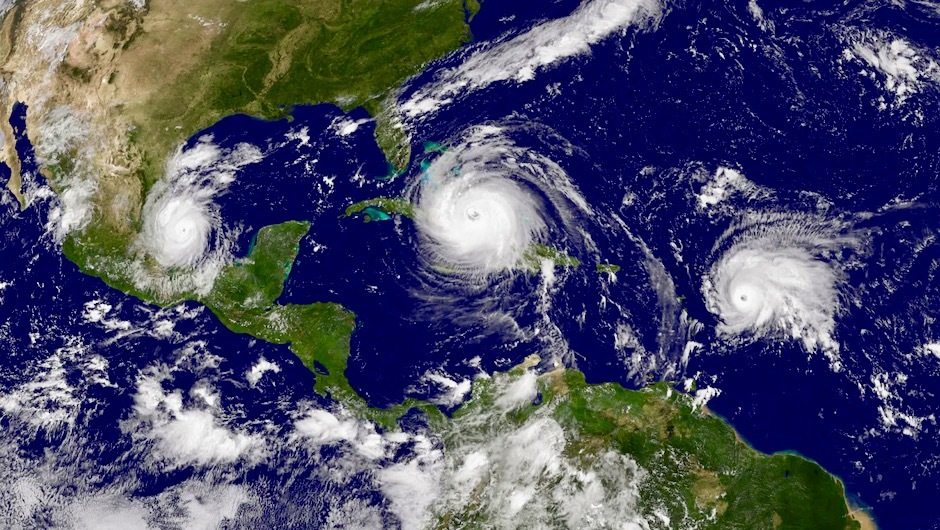
A new study found that even if we did have the infinite power to artificially cool enough of the oceans to weaken a hurricane, the benefits would be minimal. The study led by scientists at the University of Miami (UM) Rosenstiel School of Marine, Atmospheric and Earth Science showed that the energy alone that is needed to use intervention technology to weaken a hurricane before landfall makes it a highly inefficient solution to mitigate disasters. A satellite image from the National Oceanic and Atmospheric Administration captures an active hurricane season which included Hurricanes Katia and Irma and Tropical Storm Jose (from left to right) on September 8, 2017  CREDIT NOAA
“The main result from our study is that massive amounts of artificially cooled water would be needed for only a modest weakening in hurricane intensity before landfall,” said the study’s lead author James Hlywiak, a graduate of the UM Rosenstiel School. “Plus, weakening the intensity by marginal amounts doesn’t necessarily mean that the likelihood for inland damages and safety risks would decrease as well. While any amount of weakening before landfall is a good thing, for these reasons it makes more sense to direct focus toward adaptation strategies such as reinforcing infrastructure, improving the efficiency of evacuation procedures, and advancing the science around detection and prediction of impending storms.”

To scientifically answer questions about the effectiveness of artificially cooling the ocean to weaken hurricanes, the authors used a combination of air-sea interaction theories and a highly sophisticated supercomputer model of the atmosphere.

In their computer simulations, they cooled areas of the ocean up to 260,000 km2 in size - larger than the state of Oregon and equating to 21,000 cubic kilometers of water - by up to 2 degrees Celsius. Even with the largest area of cooling, the simulated hurricanes weakened by only 15 percent. The amount of energy extracted from the ocean to achieve this small reduction is equivalent to more than 100 times the amount consumed across the entire United States in 2019 alone.

“You might think that the main finding of our article, that it’s pointless to try to weaken hurricanes, should be obvious,” said David Nolan, a professor of atmospheric sciences at the UM Rosenstiel School and senior author of the study. “And yet, various ideas for hurricane modification appear often in popular media and are even submitted for patents every few years. We’re happy to be able to put something into the peer-reviewed literature that actually addresses this.”

The study was supported by a University of Miami Graduate Fellowship and National Science Foundation PREEVENTS grant (Award # 1663947).
Enhancing our physical understanding of climactic processes using improved climate models

Tyler O'Neal, Staff Editor DEVELOPER TOOLS September 8, 2022, 11:00 am

More frequent extreme climate events have become a major global challenge. To mitigate the human and economic costs of these events, climatologists consistently create future climate predictions. These projections help policymakers develop actionable climate policies to avoid the most dangerous climate change effects. Because of the high data volume required for accurate forecasts, scientists rely on supercomputer-run climate models to make predictions and project changes in the climate system. However, an incomplete physical understanding of the Earth’s dynamic climatic processes remains a major limitation regarding climate model usability.

Chibuike Ibebuchi from the Institute of Physical Geography, University of Würzburg, conducted a recent study, which applied a synoptic climatological statistical modeling approach called “circulation typing with fuzzy rotated principal component analysis.” This new technique is designed to enhance the physical understanding of the mechanisms through which teleconnections, such as the sub-tropical Indian Ocean Dipole, impact seasonal rainfall variability in southern Africa, a region that is vulnerable to climate extremes. Circulation typing considers both space and time for rainfall anomalies.

Ibebuchi believes that climate modeling and projection improvements can advance with more research studies that aim toward gaining a better physical understanding of climate processes on the synoptic and global scales. Furthermore, research should analyze how the synoptic and large-scale climate processes interact with regional climates. Researchers can achieve this by enhancing techniques for effectively breaking down climate data sets through space and time to unravel the distinct (continuous) variability associated with the climate system.

More specifically, for these subsequent studies, Ibebuchi aims toward developing and optimizing existing statistical methods for decomposing or breaking down data sets to unravel physically meaningful climate forecasting signals. This includes diagnosing misrepresentations in climate modeling processes. 

Climate data can help model the spread of COVID-19

Tyler O'Neal, Staff Editor DEVELOPER TOOLS September 8, 2022, 10:00 am

Data from 196 countries finds high UV radiation levels are strongly associated with reduced COVID-19 transmission rates

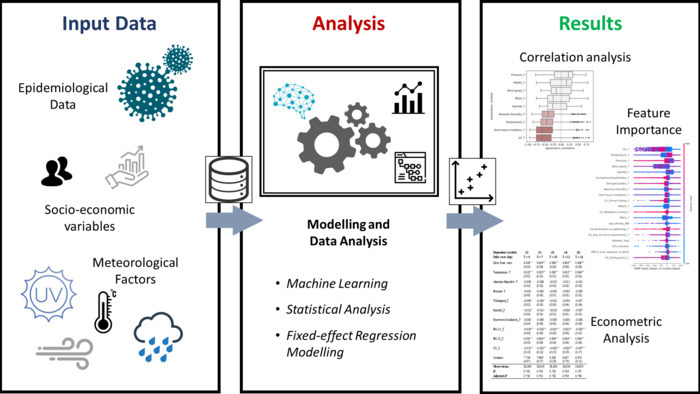
COVID-19 transmission can be more accurately modeled by incorporating meteorological factors, with ultraviolet (UV) radiation as the main driver, according to a new study published this week in the open-access journal PLOS ONE by a team of scientists from the Qatar Environment & Energy Research Institute (QEERI), at Hamad Bin Khalifa University and Transvalor S.A., France. The ensuing results show that meteorological factors play a key role in regression models of COVID-19 risk, with ultraviolet radiation (UV) as the main driver. These results are corroborated by statistical correlation analyses and fixed-effect regression modeling where UV radiation coefficients are found to be significantly negatively correlated with COVID-19 transmission rates.  CREDIT Giovanni Scabbia, CC-BY 4.0 (https://creativecommons.org/licenses/by/4.0/)

A growing number of studies suggest that climate may impact the spread of COVID-19 but the extent to which it modifies COVID-19 risk and transmission is not well understood. Studies on the impact of climate have been piecemeal or poorly controlled — limited to single countries, only taking into account a few climatic parameters, or ignoring socioeconomics, for instance.

In the new paper, the researchers studied data on reported COVID-19 cases in 196 countries over a 14-month period, using socioeconomic, environmental, and global health factors as control variables. They developed three different analytic approaches — statistical, machine learning, and econometric — which modeled the potential contributions of climate to confirmed case numbers.

The results suggest that while disease susceptibility, lockdown compliance, and increased testing are the most effective strategies for preventing the spread of COVID-19, UV radiation is the climate factor most strongly correlated with the spread of COVID-19, with greater UV radiation associated with reduced transmission. For other meteorological and air quality factors, including temperature, absolute humidity, and solar radiation, discrepancies between results in the three analysis methods emphasized the difficulty in understanding the correlations. For instance, the humidity was positively correlated with COVID-19 spread in the machine learning analysis and negatively correlated in the econometric analysis. The temperature was moderately negatively associated with COVID-19 in the statistical analysis but positively correlated with COVID-19 transmission in both the machine learning and econometric analyses.

The authors conclude that UV radiation emerges as the most impactful meteorological factor in COVID-19 transmission across all methods. This could help refine transmission predictions based on seasonality or weather forecasts, and help inform future pandemic response measures that limit the economic impact of complete lockdowns. They point out that this is supported by overwhelming evidence that UV light can effectively kill SARS-CoV-2 and other coronaviruses.

The authors add: “The impact of climate on COVID-19 transmission rates has been the subject of many studies, but it is still poorly understood. In our study, we demonstrated that meteorological factors play a key role in statistical, machine learning, and econometric analyses of COVID-19 risk, with ultraviolet radiation (UV) as the main driver.”

  1. Uncertain analysis in finite elements models
  2. University of Bristol develops pioneering mathematical formula that revolutionizes modeling

Page 2 of 20

  • 1
  • 2
  • 3
  • 4
  • 5
  • 6
  • 7
  • 8
  • 9
  • 10
POPULAR RIGHT NOW
  • Supercomputers replace ‘bathtub’ flood maps with physics-based digital twins of Britain’s coastline
    Supercomputers replace ‘bathtub’ flood maps with physics-based digital twins of Britain’s coastline
  • Supercomputers push neural quantum simulation beyond previous limits
    Supercomputers push neural quantum simulation beyond previous limits
  • Intel’s AI supercomputing revival: Q2 financial surge signals new era for CPU-powered HPC infrastructure
    Intel’s AI supercomputing revival: Q2 financial surge signals new era for CPU-powered HPC infrastructure
  • AWS supercomputing investment reaches historic scale as Amazon’s AI strategy powers record financial results
    AWS supercomputing investment reaches historic scale as Amazon’s AI strategy powers record financial results
  • AI infrastructure financing fears shake semiconductor sector
    AI infrastructure financing fears shake semiconductor sector
  • Catching the wave of the future: Supercomputers unlock the hidden dynamics of Venus
    Catching the wave of the future: Supercomputers unlock the hidden dynamics of Venus
  • NCAR supercomputers run planet scale climate experiments impossible in the real world
    NCAR supercomputers run planet scale climate experiments impossible in the real world
  • AI hunts the cosmos: Machine learning helps astronomers discover the first ‘Wandering’ supermassive black hole caught destroying a star
    AI hunts the cosmos: Machine learning helps astronomers discover the first ‘Wandering’ supermassive black hole caught destroying a star
  • Supercomputing for the masses: Meta's vision of a personal superintelligence for everyone
    Supercomputing for the masses: Meta's vision of a personal superintelligence for everyone
  • NVIDIA helps turn AI compute into a new asset class as Wall Street mobilizes $500 billion
    NVIDIA helps turn AI compute into a new asset class as Wall Street mobilizes $500 billion
THIS YEAR'S MOST READ
  • Wall Street wants to trade supercomputing power like oil
    Wall Street wants to trade supercomputing power like oil
  • Beamforming the future: BeammWave's 6G push signals the rise of orbital-terrestrial wireless networks
    Joakim Axmon
    Joakim Axmon
  • Cosmic ambition at scale: UK’s supercomputer unlocks a 2.5 petabytes universe
    Cosmic ambition at scale: UK’s supercomputer unlocks a 2.5 petabytes universe
  • Hidden order, revealed at scale: Supercomputing, electron ptychography uncover the inner workings of relaxor ferroelectrics
    Hidden order, revealed at scale: Supercomputing, electron ptychography uncover the inner workings of relaxor ferroelectrics
  • Intel's Q1 results signal supercomputing surge driving Xeon momentum
    Intel's Q1 results signal supercomputing surge driving Xeon momentum
  • When stars fall apart: Supercomputing reveals the hidden physics of black holes
    When stars fall apart: Supercomputing reveals the hidden physics of black holes
  • MIT develops computational framework to probe dark matter via gravitational waves
    MIT develops computational framework to probe dark matter via gravitational waves
  • Explainable AI moves into the watershed: FAMU-FSU engineers build predictive framework for real-time E. coli forecasting
    FAMU-FSU College of Engineering Assistant Professor Nasrin Alamdari. (Scott Holstein/FAMU-FSU College of Engineering)
    FAMU-FSU College of Engineering Assistant Professor Nasrin Alamdari. (Scott Holstein/FAMU-FSU College of Engineering)
  • Multi-layer simulations reveal the hidden supply chain of solar prominences
    Multi-layer simulations reveal the hidden supply chain of solar prominences
  • Japanese scientists decode dolphin speed with supercomputing: Turbulence, vortices, and the hidden physics of propulsion
    Japanese scientists decode dolphin speed with supercomputing: Turbulence, vortices, and the hidden physics of propulsion
  • FRONTPAGE
  • LATEST
  • POPULAR
  • REGISTER
  • SOCIAL
  • VIDEO
  • SUBSCRIPTION
  • RSS
  • GUIDELINES
  • PRIVACY
  • TOS
  • ABOUT
  • +1 (816) 799-4488
  • editorial@supercomputingonline.com
© 2001 - 2026 SuperComputingOnline.com, LLC. All rights reserved. This material may not be published, broadcast, rewritten or redistributed without permission.
Sign In
  • FRONT PAGE
  • LATEST
    • MEDIA KIT
    • MOST READ
    • RSS FEED
    • ACADEMIA
    • AEROSPACE
    • APPLICATIONS
    • ASTRONOMY
    • AUTOMOTIVE
    • BIG DATA
    • BIOLOGY
    • CHEMISTRY
    • CLIENTS
    • CLOUD
    • DEFENSE
    • DEVELOPER TOOLS
    • EARTH SCIENCES
    • ECONOMICS
    • ENGINEERING
    • ENTERTAINMENT
    • HEALTH
    • INDUSTRY
    • INTERCONNECTS
    • GAMING
    • GOVERNMENT
    • MANUFACTURING
    • MIDDLEWARE
    • MOVIES
    • NETWORKS
    • OIL & GAS
    • PHYSICS
    • PROCESSORS
    • RETAIL
    • SCIENCE
    • STORAGE
    • SYSTEMS
    • VISUALIZATION
  • VIDEOS
    • ADD YOUR VIDEOS
    • MANAGE VIDEOS
  • COMMUNITY
    • TRADE SHOWS
    • SOCIAL NETWORK VIDEOS
    • SURVEYS
    • APPLICATIONS BROWSER
    • CONVERSATION INBOX
    • SOCIAL ADVERTISER
    • GROUPS
    • MARKETPLACE LISTINGS
    • PAGES
    • LEADERBOARD
    • POINTS LISTING
      • BADGES
    • PRIVACY CONFIRM REQUEST
    • PRIVACY CREATE REQUEST

Hey there! We noticed you’re using an ad blocker.