

SUPERCOMPUTING NEWS SUPERCOMPUTING NEWS
    • MEDIA KIT
    • MOST READ
    • RSS FEED
    • ACADEMIA
    • AEROSPACE
    • APPLICATIONS
    • ASTRONOMY
    • AUTOMOTIVE
    • BIG DATA
    • BIOLOGY
    • CHEMISTRY
    • CLIENTS
    • CLOUD
    • DEFENSE
    • DEVELOPER TOOLS
    • EARTH SCIENCES
    • ECONOMICS
    • ENGINEERING
    • ENTERTAINMENT
    • GAMING
    • GOVERNMENT
    • HEALTH
    • OIL & GAS
    • INDUSTRY
    • INTERCONNECTS
    • MANUFACTURING
    • MIDDLEWARE
    • MOVIES
    • NETWORKS
    • PHYSICS
    • PROCESSORS
    • RETAIL
    • SCIENCE
    • STORAGE
    • SYSTEMS
    • VISUALIZATION
    • AcyMailing subscription form

    • ADD YOUR VIDEOS
    • MANAGE VIDEOS
    • CONVERSATION INBOX
    • SOCIAL ADVERTISER
    • SOCIAL NETWORK VIDEOS
    • SURVEYS
    • GROUPS
    • PAGES
    • MARKETPLACE LISTINGS
    • APPLICATIONS BROWSER
    • PRIVACY CONFIRM REQUEST
    • PRIVACY CREATE REQUEST
    • LEADERBOARD
    • POINTS LISTING
      • BADGES
    • TRADE SHOWS
Sign In
Tyler O'Neal, Staff Editor DEVELOPER TOOLS September 8, 2022, 9:00 am

Uncertain analysis in finite elements models

The book “Uncertain Analysis in Finite Elements Models” explains uncertainty analysis for finite elements and general nonlinear problems. It starts with the fundamentals of the topic and progresses to complex methods through 9 chapters. Each chapter focuses on a specific, relevant topic and provides information in a structured reading format for advanced learners. The author explains different models relevant to the topic where applicable, in an effort to cover the diverse aspects of mathematical analysis.

In the first chapter, nonlinear stochastic finite elements for general nonlinear problems and elastoplastic problems are discussed, and three methods are proposed. In Chapter 2, the calculation formula of stochastic finite element is given by using the third-order Taylor expansion and a simple calculation method is addressed. The stress-strength interference model, Monte Carlo simulation, and a new iterative method (NIM) of reliability calculation for linear static problems and linear vibration are proposed. Reliability calculation methods using the homotopy perturbation method (MIHPD) and second order reliability method for nonlinear static problems and nonlinear vibration are proposed.

In Chapter 3, the structural fuzzy reliability calculation of static problem, linear vibration, nonlinear problem, and nonlinear vibration is studied by using the stochastic finite element method. The normal membership function is selected as the membership function, and the calculation formula of fuzzy reliability is presented.

In Chapter 4, Taylor expansion, Neumann expansion, Sherman Morrison Woodbury expansion, and a new iterative method (NIM) for interval finite element calculation of static problems are proposed.

In Chapter 5, Perturbation technology, Taylor expansion, Neumann expansion, Sherman Morrison Woodbury expansion, and a new iterative method (NIM) for interval finite element calculation of structural linear vibration are addressed.

Chapter 6 proposes five calculation methods of nonlinear interval finite element for general nonlinear problems and elastoplastic problems. In the seventh chapter, five methods of interval finite element calculation methods for nonlinear structures are presented.

In the eighth chapter, two improved methods of the random field are proposed. The midpoint method, local average method, interpolation method, and improved interpolation method of interval field and fuzzy field are proposed. The calculation method of mixed field is introduced. In the last chapter, calculation methods of random interval finite element, random fuzzy finite element, and random fuzzy and interval finite element are proposed by using Taylor expansion and Neumann expansion.
University of Bristol develops pioneering mathematical formula that revolutionizes modeling

Tyler O'Neal, Staff Editor DEVELOPER TOOLS September 7, 2022, 8:00 am

A groundbreaking mathematical equation has been discovered, which could transform medical procedures, natural gas extraction, and plastic packaging products in the future.

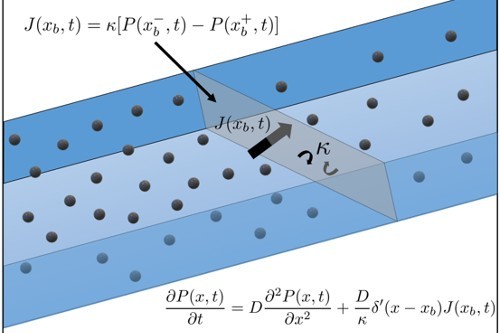
The new equation, developed by scientists at the University of Bristol, indicates that diffusive movement through permeable material can be modeled exactly for the very first time. It comes a century after world-leading physicists Albert Einstein and Marian von Smoluchowski derived the first diffusion equation and marks important progress in representing motion for a wide range of entities from microscopic particles and natural organisms to man-made devices. Scientists have discovered a new equation to model exactly diffusive movement through permeable material for the first time. University of Bristol

Until now, scientists looking at particle motion through porous materials such as biological tissues, polymers, various rocks, and sponges, have had to rely on approximations or incomplete perspectives.

The findings provide a novel technique presenting exciting opportunities in a diverse range of settings including health, energy, and the food industry.

Lead author Toby Kay, who is completing a Ph.D. in Engineering Mathematics, said: “This marks a fundamental step forward since Einstein and Smoluchowski’s studies on diffusion. It revolutionizes the modeling of diffusing entities through complex media of all scales, from cellular components and geological compounds to environmental habitats.

“Previously, mathematical attempts to represent movement through environments scattered with objects that hinder motion, known as permeable barriers, have been limited. By solving this problem, we are paving the way for exciting advances in many different sectors because permeable barriers are routinely encountered by animals, cellular organisms, and humans.”

Creativity in mathematics takes different forms and one of these is the connection between different levels of description of a phenomenon. In this instance, by representing random motion in a microscopic fashion and then subsequently zooming out to describe the process macroscopically, it was possible to find the new equation.

Further research is needed to apply this mathematical tool to experimental applications, which could improve products and services. For example, being able to model accurately the diffusion of water molecules through biological tissue will advance the interpretation of diffusion-weighted MRI (Magnetic Resonance Imaging) readings. It could also offer a more accurate representation of air spreading through food packaging materials, helping to determine shelf life and contamination risk. In addition, quantifying the behavior of foraging animals interacting with macroscopic barriers, such as fences and roads, could provide better predictions on the consequence of climate change for conservation purposes.

The use of geolocators, mobile phones, and other sensors has seen the tracking revolution generate movement data of ever-increasing quantity and quality over the past 20 years. This has highlighted the need for more sophisticated modeling tools to represent the movement of wide-ranging entities in their environment, from natural organisms to man-made devices.

Senior author Dr. Luca Giuggioli, Associate Professor in Complexity Sciences at the University of Bristol, said: “This new fundamental equation is another example of the importance of constructing tools and techniques to represent diffusion when space is heterogeneous, that is when the underlying environment changes from location to location.

“It builds on another long-awaited resolution in 2020 of a mathematical conundrum to describe random movement in confined space. This latest discovery is a further significant step forward in improving our understanding of motion in all its shapes and forms – collectively termed the mathematics of movement – which has many exciting potential applications.”

UK deploys AI online to reduce common drug side effects

Tyler O'Neal, Staff Editor DEVELOPER TOOLS September 7, 2022, 7:00 am

Artificial intelligence could help clinicians assess which patients are likely to encounter the harmful side effects of some commonly used antidepressants, antihistamines, and bladder medicines.

Research led by the University of Exeter and Kent and Medway NHS and Social Care Partnership Trust, published in Age and Ageing, assessed a new tool designed to calculate which medicines are more likely to experience adverse anticholinergic effects on the body and brain. These complications can occur from many -prescription and over-the-counter drugs which affect the brain by blocking a key neurotransmitter called acetylcholine. Many medicines, including some bladder medications, anti-depressants, and medications for stomach and Parkinson’s disease have some degree of anticholinergic effect. They are commonly taken by older people.

Anticholinergic side effects include confusion, blurred vision, dizziness, falls and a decline in brain function. Anticholinergic effects may also increase the risks of falls and may be associated with an increase in mortality. They have also been linked to a higher risk of dementia when used long-term.

Now, researchers have developed a tool to calculate the harmful effects of medicines using artificial intelligence. The team created a new online tool, International Anticholinergic Cognitive Burden Tool (IACT), it uses natural language processing which is an artificial intelligence methodology, and chemical structure analysis to identify medications that have an anticholinergic effect.

The tool is the first to incorporate a machine learning technique, to develop an automatically updated tool available on a website portal. The anticholinergic burden is assessed by assigning a score based on reported adverse events and aligning closely with the chemical structure of the drug being considered for prescription, resulting in a more accurate and up-to-date scoring system than any previous system. Ultimately, after further research and modeling with real-world patient data the tool developed could help to support prescribing and reducing risks from common medicines.

Professor Chris Fox, at the University of Exeter, is one of the study authors. He said:: “Use of medicines with anticholinergic effects can have significant harmful effects for example falls and confusion which is avoidable,  we urgently need to reduce the harmful side effects as this can leads to hospitalization and death. This new tool provides a promising avenue towards a more tailored personalized medicine approach, of ensuring the right person gets a safe and effective treatment whilst avoiding unwanted  anticholinergic effects.”

The team surveyed 110 health professionals, including pharmacists and prescribing nurses.  Of this group, 85 percent said they would use a tool to assess the risk of anticholinergic side effects, if available. The team also gathered usability feedback to help improve the tool further.

Dr. Saber Sami,  at the University of East Anglia, said: “Our tool is the first to use innovative artificial intelligence technology in measures of anticholinergic burden – ultimately, once further research has been conducted the tool should support pharmacists and prescribing health professionals in finding the best treatment for patients.”

Professor Ian Maidment, from Aston University, said: “I have been working in this area for over 20 years. Anticholinergic side effects can be very debilitating for patients. We need better ways to assess these side-effects.”

The research team includes collaboration with AKFA University Medical School, Uzbekistan, and the Universities of East Anglia, Aston, Kent, and Aberdeen. They aim to continue the development of the tool with the aim that it can be deployed in day-to-day practice which this study supports.

  1. University of New South Wales shows how the Southern Ocean takes on the heat of climate change
  2. Helsinki researchers use ML to unlock the genomic code in clinical cancer samples

Page 3 of 20

  • 1
  • 2
  • 3
  • 4
  • 5
  • 6
  • 7
  • 8
  • 9
  • 10
POPULAR RIGHT NOW
  • Supercomputers replace ‘bathtub’ flood maps with physics-based digital twins of Britain’s coastline
    Supercomputers replace ‘bathtub’ flood maps with physics-based digital twins of Britain’s coastline
  • Supercomputers push neural quantum simulation beyond previous limits
    Supercomputers push neural quantum simulation beyond previous limits
  • Intel’s AI supercomputing revival: Q2 financial surge signals new era for CPU-powered HPC infrastructure
    Intel’s AI supercomputing revival: Q2 financial surge signals new era for CPU-powered HPC infrastructure
  • AWS supercomputing investment reaches historic scale as Amazon’s AI strategy powers record financial results
    AWS supercomputing investment reaches historic scale as Amazon’s AI strategy powers record financial results
  • AI infrastructure financing fears shake semiconductor sector
    AI infrastructure financing fears shake semiconductor sector
  • Catching the wave of the future: Supercomputers unlock the hidden dynamics of Venus
    Catching the wave of the future: Supercomputers unlock the hidden dynamics of Venus
  • NCAR supercomputers run planet scale climate experiments impossible in the real world
    NCAR supercomputers run planet scale climate experiments impossible in the real world
  • AI hunts the cosmos: Machine learning helps astronomers discover the first ‘Wandering’ supermassive black hole caught destroying a star
    AI hunts the cosmos: Machine learning helps astronomers discover the first ‘Wandering’ supermassive black hole caught destroying a star
  • Supercomputing for the masses: Meta's vision of a personal superintelligence for everyone
    Supercomputing for the masses: Meta's vision of a personal superintelligence for everyone
  • NVIDIA helps turn AI compute into a new asset class as Wall Street mobilizes $500 billion
    NVIDIA helps turn AI compute into a new asset class as Wall Street mobilizes $500 billion
THIS YEAR'S MOST READ
  • Wall Street wants to trade supercomputing power like oil
    Wall Street wants to trade supercomputing power like oil
  • Beamforming the future: BeammWave's 6G push signals the rise of orbital-terrestrial wireless networks
    Joakim Axmon
    Joakim Axmon
  • Cosmic ambition at scale: UK’s supercomputer unlocks a 2.5 petabytes universe
    Cosmic ambition at scale: UK’s supercomputer unlocks a 2.5 petabytes universe
  • Hidden order, revealed at scale: Supercomputing, electron ptychography uncover the inner workings of relaxor ferroelectrics
    Hidden order, revealed at scale: Supercomputing, electron ptychography uncover the inner workings of relaxor ferroelectrics
  • Intel's Q1 results signal supercomputing surge driving Xeon momentum
    Intel's Q1 results signal supercomputing surge driving Xeon momentum
  • When stars fall apart: Supercomputing reveals the hidden physics of black holes
    When stars fall apart: Supercomputing reveals the hidden physics of black holes
  • MIT develops computational framework to probe dark matter via gravitational waves
    MIT develops computational framework to probe dark matter via gravitational waves
  • Explainable AI moves into the watershed: FAMU-FSU engineers build predictive framework for real-time E. coli forecasting
    FAMU-FSU College of Engineering Assistant Professor Nasrin Alamdari. (Scott Holstein/FAMU-FSU College of Engineering)
    FAMU-FSU College of Engineering Assistant Professor Nasrin Alamdari. (Scott Holstein/FAMU-FSU College of Engineering)
  • Multi-layer simulations reveal the hidden supply chain of solar prominences
    Multi-layer simulations reveal the hidden supply chain of solar prominences
  • Japanese scientists decode dolphin speed with supercomputing: Turbulence, vortices, and the hidden physics of propulsion
    Japanese scientists decode dolphin speed with supercomputing: Turbulence, vortices, and the hidden physics of propulsion
  • FRONTPAGE
  • LATEST
  • POPULAR
  • REGISTER
  • SOCIAL
  • VIDEO
  • SUBSCRIPTION
  • RSS
  • GUIDELINES
  • PRIVACY
  • TOS
  • ABOUT
  • +1 (816) 799-4488
  • editorial@supercomputingonline.com
© 2001 - 2026 SuperComputingOnline.com, LLC. All rights reserved. This material may not be published, broadcast, rewritten or redistributed without permission.
Sign In
  • FRONT PAGE
  • LATEST
    • MEDIA KIT
    • MOST READ
    • RSS FEED
    • ACADEMIA
    • AEROSPACE
    • APPLICATIONS
    • ASTRONOMY
    • AUTOMOTIVE
    • BIG DATA
    • BIOLOGY
    • CHEMISTRY
    • CLIENTS
    • CLOUD
    • DEFENSE
    • DEVELOPER TOOLS
    • EARTH SCIENCES
    • ECONOMICS
    • ENGINEERING
    • ENTERTAINMENT
    • HEALTH
    • INDUSTRY
    • INTERCONNECTS
    • GAMING
    • GOVERNMENT
    • MANUFACTURING
    • MIDDLEWARE
    • MOVIES
    • NETWORKS
    • OIL & GAS
    • PHYSICS
    • PROCESSORS
    • RETAIL
    • SCIENCE
    • STORAGE
    • SYSTEMS
    • VISUALIZATION
  • VIDEOS
    • ADD YOUR VIDEOS
    • MANAGE VIDEOS
  • COMMUNITY
    • TRADE SHOWS
    • SOCIAL NETWORK VIDEOS
    • SURVEYS
    • APPLICATIONS BROWSER
    • CONVERSATION INBOX
    • SOCIAL ADVERTISER
    • GROUPS
    • MARKETPLACE LISTINGS
    • PAGES
    • LEADERBOARD
    • POINTS LISTING
      • BADGES
    • PRIVACY CONFIRM REQUEST
    • PRIVACY CREATE REQUEST

Hey there! We noticed you’re using an ad blocker.