Heinonen uses geochemical modeling tool to show magma floods erupt from deeper sources than earlier believed

The flood basalts in Dronning Maud Land, Antarctica, originate from exceptionally deep mantle source.  CREDIT Arto LuttinenLarge magma eruptions have produced great floods of basalt lava on the continents during Earth’s history. Conventionally, the largest flood basalt eruptions are thought to be possible only in regions where the continental tectonic plates are unusually thin, so that deep mantle material can rise close to the Earth’s surface. In such low-pressure environments, the melting of the hot mantle can generate very large amounts of magma.

A new study by researchers from the University of Helsinki and Aarhus University challenges this widely held view.

"The idea that flood basalt eruptions generally require melting of the mantle under low-pressure conditions is largely based on the trace element compositions of the erupted magmas", explains Dr. Jussi Heinonen, University of Helsinki, the lead author of the recent Journal of Petrology article describing this study.

He specifies further that the relative amounts of rare earth elements in many flood basalts point to magma formation in the presence of low-pressure mantle minerals.

Support from supercomputing

The new study was carried out as part of a research project focusing on the origin of flood basalts that erupted in southern Africa and Antarctica when these continents were attached as parts of Pangaea some 180 million years ago.

"We became curious about the occurrence of most flood basalts in regions where the African and Antarctic tectonic plates are thick rather than thin", describes Dr. Arto Luttinen, leader of the University of Helsinki team. "Moreover, we found that many flood basalts that have rare earth element compositions, suggesting high-pressure formation conditions, are located in thin regions of the tectonic plates."

The idea of an alternative hypothesis started forming after the team discovers a type of flood basalt in Mozambique that shows compositional evidence for exceptionally high eruption temperatures.

"These flood basalts made us consider the possibility that melting of exceptionally hot mantle could lead to the formation of high-pressure magmas with trace element features similar to those of low-pressure magmas", adds Ph.D. student Sanni Turunen from the University of Helsinki.

The researchers decided to test their hypothesis using the geochemical modeling tool REEBOX PRO, which enables realistic simulation of the behavior of minerals, melts and their trace element contents during mantle melting.

"We were thrilled to find out that the simulations supported our hypothesis by predicting total consumption of garnet, a diagnostic mineral of high-pressure conditions when mantle melting occurred at the high temperatures indicated by the flood basalts", says Dr. Eric Brown, Aarhus University, a co-author of the article and one of the developers of the REEBOX PRO tool.

Magmas formed at high pressure can thus chemically resemble low-pressure magmas when the mantle source is very hot. Furthermore, the results indicated the survival of garnet at relatively low pressures when a different kind of mantle source was selected for the modeling.

"Our results help us to understand the apparent controversy between the occurrences of southern African and Antarctic flood basalts and their trace element characteristics. Most importantly, we show that voluminous flood basalts can form in regions of thick tectonic plates and that the trace element compositions of flood basalts are unreliable messengers of magma generation depths unless the influences of mantle temperature and composition are accounted for", the authors conclude.

Japanese scientists create the transformation between different topological spin textures for neuromorphic supercomputing

Japanese scientists create the transformation between different topological spin textures for neuromorphic supercomputingThe transformation between skyrmions and bimerons has now been realized by scientists at Japan's Shinshu University

Skyrmions and bimerons are fundamental topological spin textures in magnetic thin films with asymmetric exchange interactions and they can be used as information carriers for next generation low energy consumption memory, advanced neuromorphic supercomputing, and advanced quantum supercomputing as they have multiple degrees of freedom that can carry information. The transformation between isolated skyrmions and bimerons will be an essential operation for future computing architecture based on multiple different topological bits. Therefore, the community needs to find effective ways to realize the creation, transformation, and manipulation of skyrmions and bimerons in magnetic materials.

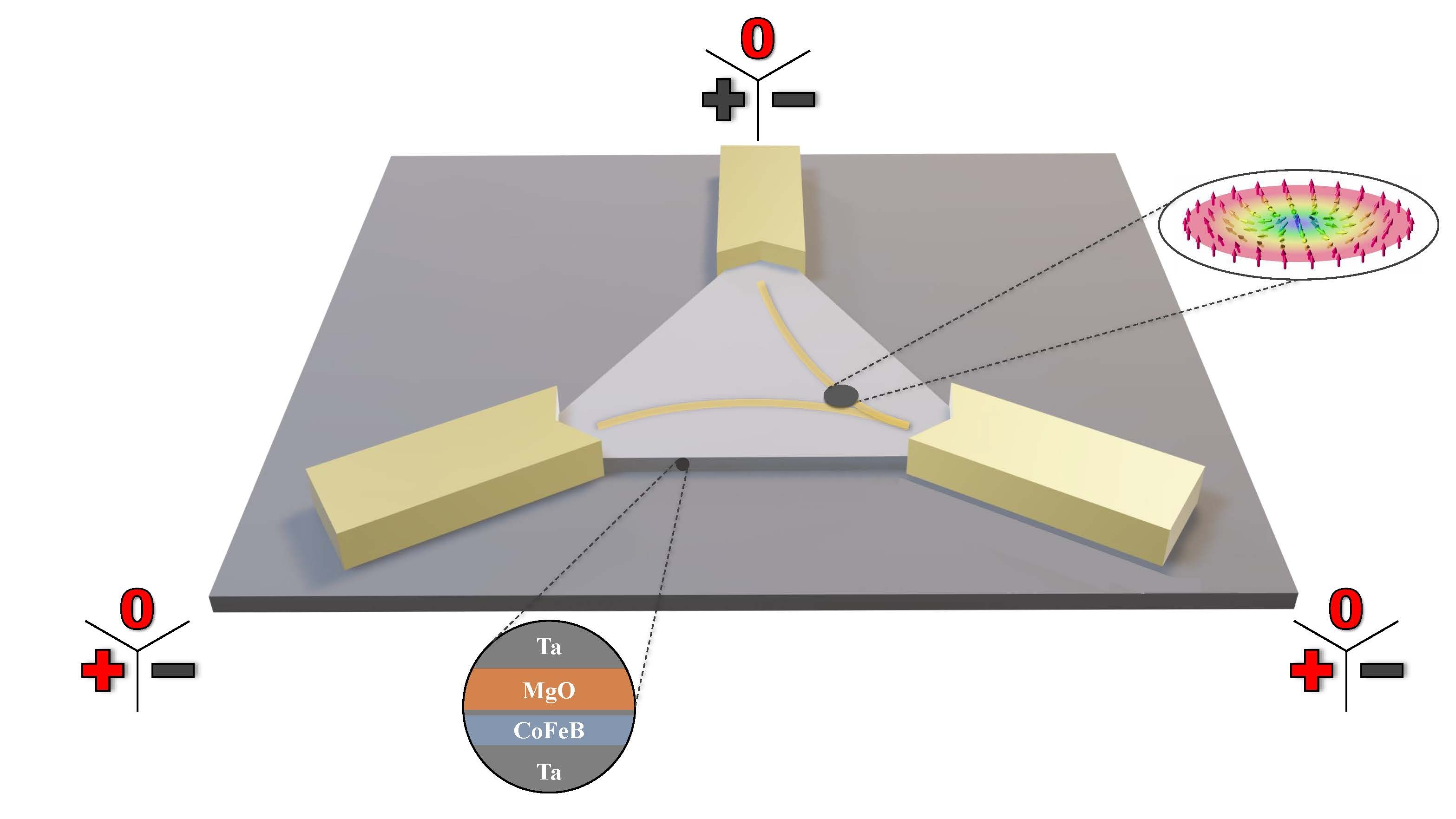
In a recent study published in Nano Letters, the group led by Xiaoxi Liu, a Professor in the Department of Electrical and Computer Engineering at Shinshu University in Japan and their international collaborators demonstrate in experiments and simulations that the creation of isolated skyrmions and their subsequent transformation to bimerons are possible in a magnetic disk surrounded by a current-carrying and omega-shaped microcoil, where the electric current-induced Oersted field and temperature-induced perpendicular magnetic anisotropy variation play important roles in the transformation between skyrmions and bimerons. Researchers find that the current injected into the microcoil can generate an Oersted field to switch the magnetization of the magnetic disk in the out-of-plane directions. Meanwhile, the current injected into the microcoil can heat the magnetic disk and increases the device's temperature. As a result, a temperature-induced decrease of magnetic anisotropy is realized in the magnetic disk, which leads to the magnetization reorientation from the out-of-plane direction to the in-plane direction and thus, fosters the transformation from skyrmions to bimerons. Researchers also find deformed skyrmion bubbles and chiral labyrinth domains during the transformation between skyrmions and bimerons.

The researchers’ results demonstrate the possibility that two different types of topological spin textures can be hosted by the same magnetic film with asymmetric exchange interactions, which may provide guidelines for building novel spintronic applications based on different types of topological spin textures.

“Our experiment clarified for the first time the transformation between different topological spin textures,” explains Liu. He also mentions, “Skyrmions and bimerons are two most important information carriers for next-generation memory and advanced computing architectures. Our research has a fundamental physical interest. It is also important for future data storage and computing community”.

Researchers will try to study magnetic and spintronic device applications based on the transformation of different types of topological spin textures. An example is voltage-gated spintronic devices based on skyrmions and bimerons. “Our ultimate goal is the application of topological spin textures for low energy consumption, high-density memory, and advanced neuromorphic computing,” says Liu.

Johns Hopkins APL uses AI, satellite images to track greenhouse emissions

Marisa Hughes (center) works with a team that includes experts in machine learning, remote sensing and computer vision to leverage artificial intelligence to produce accurate estimates for road transportation emissions of the top 500 emitting cities worldwide.  CREDIT JHU/APL, Ed WhitmanThe Environmental Protection Agency estimates that the transportation sector accounts for approximately 27% of all greenhouse gas emissions annually in the United States, and emissions from road transportation — driven by carbon-creating internal combustion vehicles — account for a large majority of that.

For years, researchers have tried to measure these emissions more closely, but existing inventories are often outdated, incomplete, and limited. 

Now, scientists at the Johns Hopkins Applied Physics Laboratory (APL) in Laurel, Maryland, have leveraged artificial intelligence and machine learning (ML) to produce accurate estimates for road transportation emissions of the top 500 emitting cities worldwide. 

{media id=292,layout=solo}

“In particular, we were able to estimate the average annual daily traffic on individual road segments in urban areas and combined this with localized estimates of vehicle emissions factors to produce a total emissions estimate,” explained Marisa Hughes, the assistant program manager for Environmental Resilience in APL’s Research and Exploratory Development Mission Area.

“The ability to calculate emissions per road segment provides an unprecedented level of detail and global coverage,” said Hughes, who helps manage the Laboratory’s climate change efforts. “The combination of ML-predicted road activity along with region-specific emissions factors data creates automated, accurate, global, timely and actionable road transportation greenhouse gas emissions estimates.”

Actionable is the keyword, Hughes said. “You can’t change what you can’t measure, and that’s a big challenge when it comes to tackling climate change. We need to know where the greenhouse gas emissions are coming from, but that means accounting for a vast number of minuscule contributions across time and geography.”

MAKING THE INVISIBLE VISIBLE

There are an estimated 1.4 billion motor vehicles in the world. An APL team of experts in remote sensing and computer vision thought they could measure the greenhouse gases from these vehicles by pulling signatures of emissions from visual satellite data, essentially making the invisible visible. They set about looking at existing emissions data, correlating it with those images, and teasing out anything they could with neural networks.

Then the team realized there was another way to address the challenge, Hughes said. APL had experience in mapping patterns of life for the Intelligence Community on a project called Functional Map of the World, where experts mapped out land use and structures, and used satellite data from different times of day to understand and differentiate between similar-looking structures, like office buildings versus apartment complexes.

“We thought, what if we took this same ‘pattern of life’ analysis and, instead of focusing on buildings, we looked at networks of roads that were connecting them,” recalled Derek Rollend, a senior ML researcher at APL. “We built a deep neural network that would take inputs that were available globally: satellite imagery, road network data, and population.”

Because some areas had fine-grained emissions and vehicle count data, “we were able to train our machine learning models with this ground-truth data on vehicle activity there, and then apply the model predictions first at the country level, and most recently for the top 500 cities globally,” he continued.

This work contributes a major piece to a larger effort to monitor greenhouse gas emissions on a global scale, conducted by Climate TRACE [Tracking Real-time Atmospheric Carbon Emissions], an international coalition created to make meaningful climate action faster and easier by independently tracking greenhouse gas emissions with unprecedented detail and speed. The coalition — which includes APL — counts former Vice President Al Gore among its chief funders and supporters, and Time magazine honored the effort as one of the top 100 inventions of 2020.

This work represents how APL is bringing its unique expertise to make sustainable contributions to the global challenges of climate change.

“It is a great example of how our unique skills and capabilities across machine learning, satellite imaging, and systems modeling can be applied to understand and one day solve complex problems,” said Bobby Armiger, who along with Hughes co-leads the Labwide focus on climate change research.

On Nov. 9, Climate TRACE released the most detailed inventory of greenhouse gas emissions ever compiled, providing asset-level emissions data for 81,087 individual sources worldwide — and APL’s transportation data was a part of that release. In addition to releasing facility-level information, Climate TRACE updated its independent inventory of emissions from every country to include data from 2021, providing a full view of annual greenhouse gas emissions since 2015 — the year of the Paris Agreement, an international treaty on climate change.

BRINGING RADICAL TRANSPARENCY TO GLOBAL EMISSIONS

Members of the Climate TRACE coalition have rallied around a goal they call radical transparency.

“It’s about knowing where all the greenhouse gases are, where the emissions are coming from, and, at the same time, being very open about how we are calculating those emissions,” Hughes said. “That’s a really big challenge. But if you’ve got that radical transparency, then you can dive in and start to do some analysis and some comparisons to figure out what’s working and what’s not in terms of mitigating emissions.”

One of the coalition’s goals for the coming year is to understand how to bring differently sourced, overlapping data sets and emissions inventories together to create a new best estimate of what’s going on.

“That dream of radical transparency and knowing where all of the emissions are coming from in real-time with every new satellite image is still a ways ahead of us,” Hughes said. “But now it feels within reach.”

Broadhurst develops a model of a supernova in distant space to understand the origin of the elements in the Universe

UPV/EHU Ikerbasque Research Professor and DIPC Associate Tom Broadhurst | Photo: IkerbasqueA supernova is a stellar explosion, which occurs when the lives of some really massive stars come to an end. In this violent epilogue, the star expels the material from its outer layers by means of a shock wave, allowing us to see the various elements it was composed of.

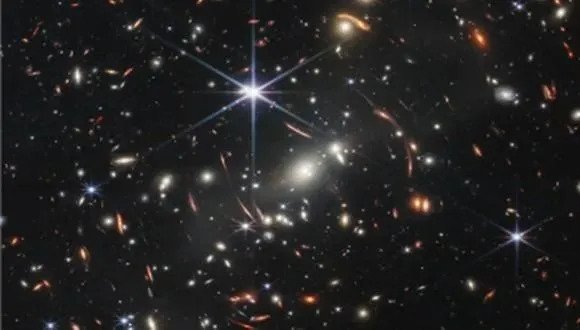
An international team with the participation of Tom Broadhurst, Ikerbasque Research Professor of the University of the Basque Country (UPV/EHU) and Associate of the Donostia International Physics Center (DIPC), has obtained three images, each in a different color, of the same supernova in the distant universe, thanks to the magnifying power of a galaxy located in the foreground.

The research team developed a model of the gravitational field of the galaxy that acted as a lens, and that way it was possible to determine that the light from these three images traveled along three different paths, differing in distance by a few days. This accounts for the three colors obtained in the images because a variation in the color emitted takes place as the gas in the supernova expands and cools. The higher the temperature is, the bluer the light emitted will be, and as the temperature falls, the light emitted tends toward red. So the blue image is a photograph of the supernova a few hours after the stellar explosion, while the green and red images correspond to 2 and 8 days, respectively, after the explosion.

This information enabled the radius of the star that exploded to be determined; it was a red super-giant with a radius equal to 500 times that of the Sun, and exploded 11.5 billion years ago, long before the Earth was born, specifically at the moment when our Galaxy is thought to have formed. The images of this supernova captured by the Hubble Space Telescope are highly magnified by the gravitational field of a nearby galaxy that acts as a lens and allows us to see much further in distance and in time than all local supernovae in nearby galaxies.

The study of the explosions of these red super-giant stars tallies with the current understanding of how the heavier atomic elements were created inside stars and during supernova explosions: elements forged inside stars are released in these supernova explosions to become the next generation of gas and material from which solar systems and life as we know it are created. Without these explosions, the gas in today's galaxies would only include the hydrogen and helium that formed during the Big Bang and would not support complex life that requires other heavier chemical elements. Moreover, this supernova observed through a gravitational lens demonstrates that an event taking place in the distant Universe can be witnessed several times, so in principle, we could focus our instruments in advance to get a detailed view of the eruption of a star turning into a supernova.


ISB researchers show gut microbiome's supersized role in shaping molecules in our blood

Institute for Systems Biology (ISB) researchers show which blood metabolites are associated with the gut microbiome, genetics, or the interplay between both – findings have promising implications for guiding targeted therapies

The nearly 200-year-old phrase “you are what you eat” has some new evidence. ISB researchers have found that the gut microbiome, including what we feed it, is largely responsible for the variation in circulating blood metabolites across people. This knowledge will help guide targeted interventions designed to alter the composition of the human blood metabolome. The findings will be published in Nature Metabolism on Thursday, November 10 at 8 a.m. PT.

“We know that person-to-person variation in the blood metabolome – the small molecules found in the bloodstream that can interact with all the systems of our body – can tell us a lot about health and disease status. Figuring out what governs this variation is a necessary step that gets us closer to precision approaches to healthcare,” said Dr. Sean Gibbons, an ISB faculty member and co-corresponding author of the paper.

The research team examined 930 blood metabolites that were present in more than 1,500 individuals. Over 60 percent of the detected metabolites were significantly associated with either host genetics or the gut microbiome. “Notably, 69 percent of these associations were driven solely by the microbiome, with 15 percent driven solely by genetics and 16 percent were under hybrid genetic-microbiome control,” said ISB Senior Research Scientist Dr. Christian Diener, lead author of the study. Diener and co-lead author Chengzhen Dai analyzed the de-identified metabolomic, genomic, and microbiome data from consenting patients in a consumer scientific wellness program. 

They found that the blood metabolite variation explained by the microbiome was largely independent of the variation explained by the genome, even for hybrid metabolites that were significantly associated with both genetics and microbes. Additionally, certain metabolite-microbe associations were only significant in individuals with specific genetic backgrounds, indicating a nuanced interplay between the microbiome and host genetics in shaping the blood metabolome.

These new findings are promising for a couple of reasons. First, the high number of microbiome-specific metabolites suggests that much of our blood metabolome could be modified through dietary, probiotic, and other lifestyle interventions. Second, metabolites that are under stricter genetic control may not be responsive to lifestyle modification, making them targets for pharmacological interventions that directly target host pathways. 

“A deeper understanding of the determinants of the blood metabolome will provide us with a window into how these circulating metabolite levels can be engineered and optimized for health,” said Dr. Andrew Magis, co-corresponding author of the paper. “Understanding which circulating small molecules fall predominantly under host versus microbiome control will help guide interventions designed to prevent and/or treat a range of diseases.”