SUPERCOMPUTING NEWS SUPERCOMPUTING NEWS
    • MEDIA KIT
    • MOST READ
    • RSS FEED
    • ACADEMIA
    • AEROSPACE
    • APPLICATIONS
    • ASTRONOMY
    • AUTOMOTIVE
    • BIG DATA
    • BIOLOGY
    • CHEMISTRY
    • CLIENTS
    • CLOUD
    • DEFENSE
    • DEVELOPER TOOLS
    • EARTH SCIENCES
    • ECONOMICS
    • ENGINEERING
    • ENTERTAINMENT
    • GAMING
    • GOVERNMENT
    • HEALTH
    • OIL & GAS
    • INDUSTRY
    • INTERCONNECTS
    • MANUFACTURING
    • MIDDLEWARE
    • MOVIES
    • NETWORKS
    • PHYSICS
    • PROCESSORS
    • RETAIL
    • SCIENCE
    • STORAGE
    • SYSTEMS
    • VISUALIZATION
    • AcyMailing subscription form

    • ADD YOUR VIDEOS
    • MANAGE VIDEOS
    • CONVERSATION INBOX
    • SOCIAL ADVERTISER
    • SOCIAL NETWORK VIDEOS
    • SURVEYS
    • GROUPS
    • PAGES
    • MARKETPLACE LISTINGS
    • APPLICATIONS BROWSER
    • PRIVACY CONFIRM REQUEST
    • PRIVACY CREATE REQUEST
    • LEADERBOARD
    • POINTS LISTING
      • BADGES
    • TRADE SHOWS
Sign In
ML, supercomputing unite to revolutionize high-power laser optics
O'NEAL LATEST February 2, 2026, 11:00 am

ML, supercomputing unite to revolutionize high-power laser optics

Researchers at the University of Strathclyde in Scotland are leveraging advanced computational techniques to transform scientific discovery. By integrating machine learning algorithms with powerful supercomputer models, they have significantly accelerated the design process for robust optical components used in high-power laser systems. This innovative approach not only shortens design cycles but also uncovers new physical phenomena, marking a breakthrough with wide-reaching impacts across science, industry, and emerging technologies.
 
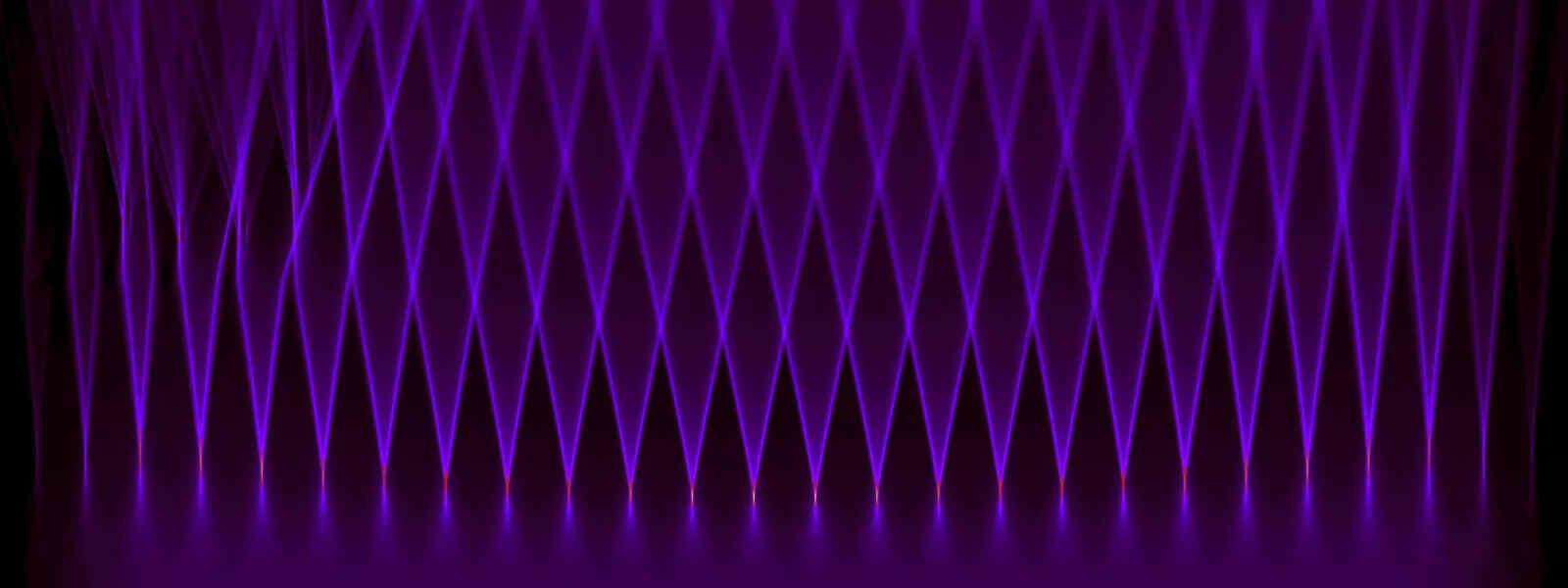
High-power lasers are vital to advancements in nuclear fusion, high-field physics, and advanced manufacturing, but their optical components must endure extreme intensities without failing. Traditional optics are often large, expensive, and challenging to scale, which restricts the development of next-generation laser facilities. To overcome these limitations, Strathclyde’s multidisciplinary team is developing plasma photonic structures, temporary, self-assembled mirrors formed in ionized gas, that can fulfill the same roles at a much smaller and more cost-effective scale.
 
The central challenge lies in navigating a highly complex parameter space where interdependent variables determine performance. Traditional design methods involve resource-intensive, trial-and-error iterations that may require hundreds of thousands to millions of individual evaluations before an acceptable design can be identified. By coupling machine learning algorithms with supercomputer-driven physical models, specifically deep kernel Bayesian optimization (DKBO) paired with particle-in-cell (PIC) simulations, researchers have reduced this process to just a few dozen iterations, enabling rapid identification of high-reflectivity, robust plasma mirror designs.
 
This achievement depends on computationally intensive supercomputer simulations to model the spatio-temporal evolution of transient plasma structures and evaluate performance metrics such as reflectivity and pulse compression. The simulations, executed at high resolution with millions of interacting particles, are inherently demanding and could not be conducted at scale without HPC resources. In fact, the team’s use of national supercomputing services, including the ARCHER2 UK National Supercomputing Service, exemplifies how targeted computational power can transform scientific inquiry.
 
According to lead Dr. Slavi Ivanov of Strathclyde’s Department of Computer and Information Sciences, the integration of DKBO with particle-in-cell models enables not just faster design optimization but also unexpected discovery. In their work, the optimization framework found regimes where incident laser pulses are compressed by the plasma mirror structure, a phenomenon that emerged from the simulations rather than human intuition, underscoring the capacity of machine-assisted design to reveal new physics.
 
Professor Dino Jaroszynski, co-author and distinguished laser physicist, described the research as an engine of discovery that expands the objectives beyond mere performance targets. “By specifying innovative or unconventional design goals, we can uncover mechanisms that might otherwise remain hidden,” he noted, suggesting that this approach could redefine how optical components are conceived for extreme environments.
 
The implications of this work extend well beyond high-power lasers themselves. The general nature of the machine learning and simulation framework means it can be adapted to other optical elements, from beam splitters to focusing devices, and even to real-time experimental optimization workflows where objective functions are derived from empirical measurements. This flexibility opens new pathways for rapid, HPC-enabled design across photonics, telecommunications, and other advanced technologies.
 
Importantly for the supercomputing community, this research illustrates how machine learning and HPC models can be coupled in powerful synergy. Machine learning provides an intelligent search strategy that dramatically reduces the number of required simulation runs, while the supercomputer executes the high-fidelity physical models necessary to evaluate each candidate design. This integrated loop, where algorithms guide simulations and simulations train algorithms, is becoming a hallmark of contemporary computational science.
 
As high-performance computing infrastructure continues to advance in both capability and accessibility, hybrid approaches such as deep kernel Bayesian optimisation are becoming essential tools for addressing complex, multidisciplinary challenges. From the design of next-generation optical components to the discovery of previously unknown physical phenomena, the integration of machine learning with high-fidelity simulation is accelerating innovation and narrowing the gap between theoretical research and practical application.
 
For the Supercomputing community, the Strathclyde plasma mirror project illustrates how supercomputing has evolved beyond traditional numerical analysis into a collaborative force in scientific discovery, enabling researchers to navigate vast design spaces, reveal unexpected behaviors, and redefine how technologies are engineered for extreme operating conditions.
Supercomputing reveals hidden galactic architecture around the Milky Way

Supercomputing reveals hidden galactic architecture around the Milky Way

Tyler O'Neal, Staff Editor LATEST January 28, 2026, 8:36 pm
Leveraging the capabilities of modern high-performance computing (HPC), astronomers have unraveled a cosmic mystery: the Milky Way and its closest neighboring galaxies are embedded in a sprawling sheet of matter that shapes the movement of surrounding galaxies. This breakthrough, featured in Nature Astronomy, was achieved using advanced simulations powered by cutting-edge supercomputers to model the mass distribution and dynamics of our local universe.
 
For decades, cosmologists have grappled with an apparent contradiction in galactic motion. While most galaxies in the universe recede from one another in accord with the expansion described by the Hubble–Lemaître law, our immediate neighborhood, the Local Group comprising the Milky Way, the Andromeda Galaxy, and dozens of dwarf galaxies, exhibits surprisingly coherent motion patterns that ordinary mass distributions failed to explain. The Andromeda Galaxy itself moves toward the Milky Way at about 100 km/s, a phenomenon long understood as gravitational interaction within the Local Group. Yet the behavior of other nearby galaxies did not align with theoretical expectations.
 
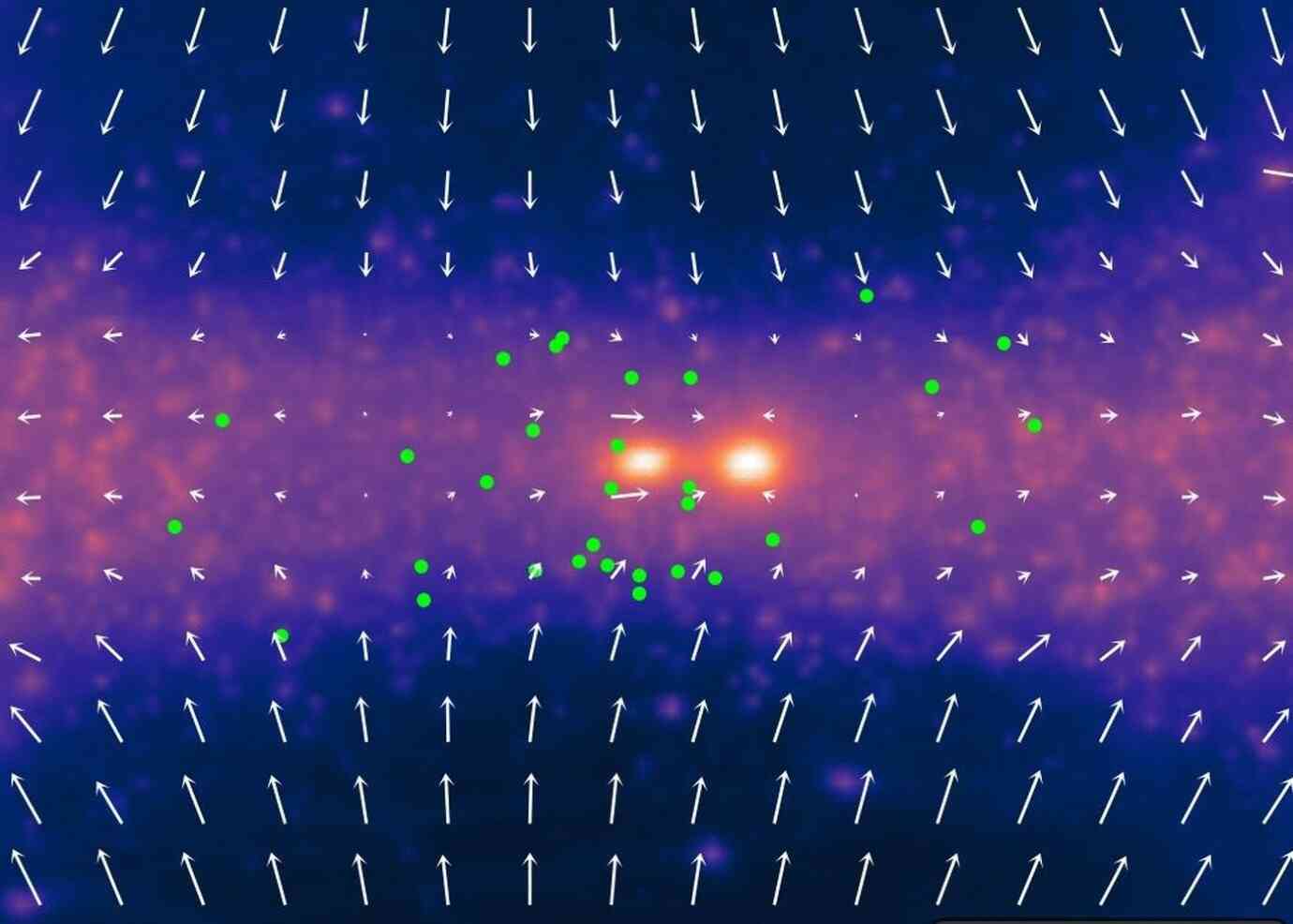
Now, an international team led by doctoral researcher Ewoud Wempe and Professor Amina Helmi at the University of Groningen has shown that the key to this puzzle lies not within the confines of the Local Group alone but in an extended, planar mass structure surrounding it. Using sophisticated cosmological simulations constrained by observational data, including the positions, masses, and velocities of 31 galaxies just beyond the Local Group, the researchers demonstrated that the vast majority of dark matter and visible matter in our vicinity is organized in a flat sheet extending tens of millions of light-years. Above and below this planar structure are vast voids with minimal matter.wempe
 
What sets this discovery apart is the critical role of supercomputing in constructing these “virtual twin” universes. The team’s simulations began with initial conditions seeded by early-universe observations and then evolved forward using numerical methods that solve Einstein’s equations of gravity together with fluid dynamics for dark matter and baryonic matter. Such calculations involve millions of interacting elements and demand parallel computation at scale, the exclusive domain of HPC systems. By performing these simulations on powerful supercomputers, astronomers were able to trace the gravitational influence of the large-scale sheet on galaxy motions and verify that this configuration reproduces observed velocities with high fidelity.
 
According to Helmi, this marks the first time that the distribution and velocity field of dark matter in the region surrounding our galactic neighborhood have been quantitatively constrained in a manner consistent with both ΛCDM cosmology and observed local dynamics. “Astronomers have been trying to solve this problem for decades,” Helmi said. “It is extraordinary that, based purely on the motions of galaxies, we can infer a mass distribution that matches the observed positions and motions of galaxies within and just outside the Local Group.”
 
For the supercomputing community, this achievement is profoundly inspirational. It highlights how modern HPC infrastructures, with their massive parallelism, high memory bandwidth, and optimized numerical libraries, are enabling scientists to probe cosmic questions that were once deemed intractable. These simulations not only illuminate the hidden architecture of our cosmic neighborhood but also exemplify how simulation-based science complements observation, allowing researchers to explore scenarios that cannot be directly imaged or measured.
 
Beyond resolving a decades-old enigma in galactic astronomy, this work reinforces the broader scientific view that large-scale structures, from filaments of the cosmic web to planar mass configurations like the one now identified around the Milky Way, are fundamental to understanding the universe’s evolution. Supercomputers are not just tools for speeding up calculations; they are essential engines of discovery that empower scientists to simulate the universe with realism and precision.
 
As supercomputing technology advances, both in terms of hardware and algorithms, scientists are poised to create increasingly detailed “virtual universes.” These sophisticated simulations will not only put our cosmological models to the test but also inform future telescope and space mission observations, leading to a richer understanding of our cosmic context.
 
According to the study’s authors, uncovering the influence of the Local Sheet on galactic motion is more than just resolving a persistent mystery; it demonstrates the remarkable discoveries possible when computational power, observational insights, and scientific curiosity are combined on a cosmic scale.
Supercomputing drives materials breakthrough for green computing: 3D graphene-like electronic behavior unlocks new low-energy electronics

Supercomputing drives materials breakthrough for green computing: 3D graphene-like electronic behavior unlocks new low-energy electronics

Tyler O'Neal, Staff Editor LATEST January 27, 2026, 9:57 pm
Marking a major advance in sustainable computing, researchers at the University of Liverpool have developed a groundbreaking three-dimensional material that mirrors the remarkable electronic properties of two-dimensional graphene, while offering the durability needed for practical use.
 
Detailed in the journal Matter, this innovation holds the potential to enable greener, more energy-efficient electronics and underscores the essential role of supercomputing in discovering and designing new materials, a development that could reshape the landscape of high-performance and low-power computing.
 
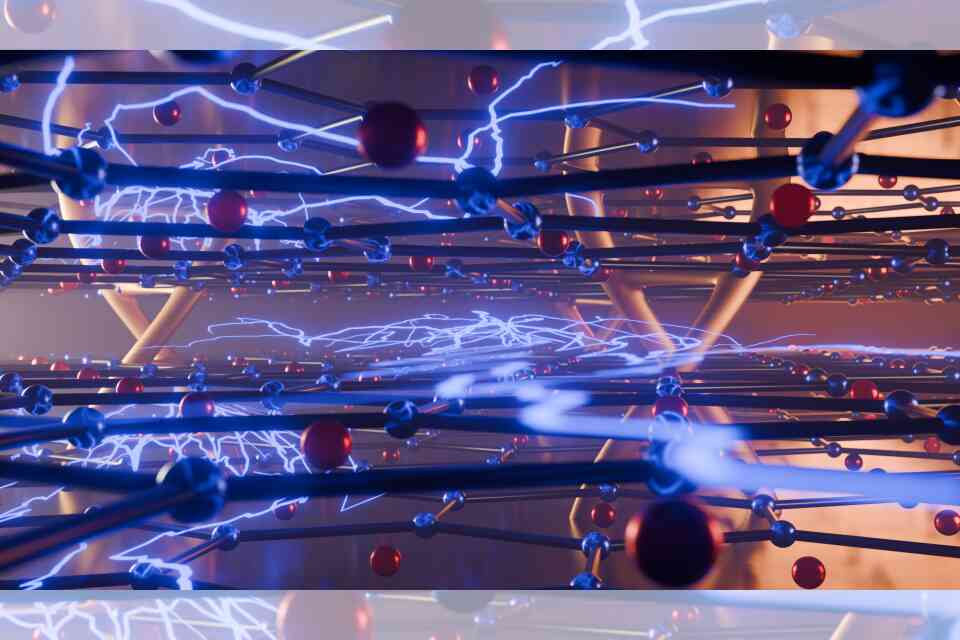
Graphene is a single layer of carbon atoms organized in a honeycomb pattern. This material has fascinated scientists and engineers due to its exceptional electrical, thermal, and mechanical characteristics. Electrons in graphene act like massless Dirac fermions, which allows for extremely fast electron movement with minimal energy loss. Despite these impressive qualities, applying graphene's unique properties to practical, large-scale devices has faced persistent obstacles: its ultra-thin structure is fragile, hard to incorporate into bulk technologies, and expensive to manufacture at scale.
 
The new study addresses this by demonstrating that hafnium tin, HfSn₂, a fully three-dimensional crystal, can mimic graphene’s fast, two-dimensional electron flow. In the HfSn₂ structure, honeycomb layers are arranged in a special chiral stacking pattern that preserves the signature electronic behavior of graphene, specifically, high electron mobility with low energy dissipation, despite the material being fully 3D. This electronic behavior is associated with Weyl points in the material’s band structure, points where conduction and valence bands touch, allowing electrons to move with minimal resistance.
 
These insights emerged from a combination of theoretical modeling, crystallographic simulations, and experimental characterization, and could not have been realized without high-performance computational tools. Supercomputers enable researchers to explore how atomic arrangement, chemical bonding, and quantum mechanical effects interplay across multiple length scales, from electrons to crystals, and to identify Weyl electronic states and transport properties that are inaccessible to simpler computational methods.
 
In particular, density functional theory (DFT) and related ab initio simulation frameworks, inherently computationally intensive, were crucial in predicting how electrons behave within the 3D honeycomb lattice and how different stacking arrangements influence transport. These simulations, typically run on supercomputing clusters equipped with optimized parallel solvers and high memory bandwidth, allow researchers to map out electronic band structures and isolate topological features such as Weyl points with high precision. Without this scale of computation, evaluating the energetic and structural feasibility of such new materials would be prohibitively slow and less reliable.
 
The ability to use supercomputer-driven simulations to screen candidate materials accelerates the discovery process dramatically. Instead of relying solely on costly and time-consuming experimental synthesis of countless samples, researchers can now refine materials candidates through in silico modeling, identifying promising structures that combine desired electronic properties with robustness and environmental resilience.
 
Why does this matter for the green computing agenda? Modern computing systems, from mobile devices to data centers, consume vast amounts of energy. Next-generation logic and spintronic devices (which exploit electron spin as well as charge) require materials that combine low-energy electronic transport with stability under operational conditions. A 3D material that mimics graphene’s electron transport while being easier to integrate into conventional device architectures could lead to significantly lower energy consumption in future information processing and memory technologies, directly addressing sustainability challenges in both artificial intelligence and high-performance computing sectors.
 
Moreover, supercomputing plays a central role beyond discovery; it enables multiscale modeling that connects atomic-scale electronic behavior with device-level performance predictions. By integrating quantum mechanical simulations with larger-scale finite-element and mesoscopic models, researchers can assess how new materials will behave under real operational loads, including temperature variation, stress, and electron-phonon interactions, before ever fabricating a prototype.
 
The discovery of HfSn₂ highlights a compelling convergence of materials science, quantum physics, and high-performance computing. Together, these disciplines are enabling new approaches to energy-efficient electronics. As researchers increasingly rely on supercomputing resources to navigate complex materials landscapes, the pace of breakthroughs aimed at reducing the environmental footprint of computing is expected to accelerate, pointing toward a more sustainable and environmentally responsible digital infrastructure.
  1. Supercomputing’s next frontier: NVIDIA, CoreWeave unite to build the AI factories of tomorrow
  2. Supercomputing advances the quest to resolve the Hubble tension in cosmology
  3. Supercomputers power evolutionary insight: From house sparrows to conservation strategies
  4. Supercomputing accelerates breakthroughs in diabetes drug discovery
  5. Supercomputers illuminate the cosmic life cycle: Charting stars off the beaten path
  6. Universal Music Group, NVIDIA AI: A new dawn for music discovery, creation
  7. Adaptive intelligence in molecular matter, bold claims, but where’s the supercomputing?

Page 34 of 62

  • 29
  • 30
  • 31
  • 32
  • 33
  • 34
  • 35
  • 36
  • 37
  • 38
POPULAR RIGHT NOW
  • Supercomputers replace ‘bathtub’ flood maps with physics-based digital twins of Britain’s coastline
    Supercomputers replace ‘bathtub’ flood maps with physics-based digital twins of Britain’s coastline
  • Supercomputers push neural quantum simulation beyond previous limits
    Supercomputers push neural quantum simulation beyond previous limits
  • Intel’s AI supercomputing revival: Q2 financial surge signals new era for CPU-powered HPC infrastructure
    Intel’s AI supercomputing revival: Q2 financial surge signals new era for CPU-powered HPC infrastructure
  • AI infrastructure financing fears shake semiconductor sector
    AI infrastructure financing fears shake semiconductor sector
  • AWS supercomputing investment reaches historic scale as Amazon’s AI strategy powers record financial results
    AWS supercomputing investment reaches historic scale as Amazon’s AI strategy powers record financial results
  • Catching the wave of the future: Supercomputers unlock the hidden dynamics of Venus
    Catching the wave of the future: Supercomputers unlock the hidden dynamics of Venus
  • NCAR supercomputers run planet scale climate experiments impossible in the real world
    NCAR supercomputers run planet scale climate experiments impossible in the real world
  • AI hunts the cosmos: Machine learning helps astronomers discover the first ‘Wandering’ supermassive black hole caught destroying a star
    AI hunts the cosmos: Machine learning helps astronomers discover the first ‘Wandering’ supermassive black hole caught destroying a star
  • Supercomputing for the masses: Meta's vision of a personal superintelligence for everyone
    Supercomputing for the masses: Meta's vision of a personal superintelligence for everyone
  • NVIDIA helps turn AI compute into a new asset class as Wall Street mobilizes $500 billion
    NVIDIA helps turn AI compute into a new asset class as Wall Street mobilizes $500 billion
THIS YEAR'S MOST READ
  • Beamforming the future: BeammWave's 6G push signals the rise of orbital-terrestrial wireless networks
    Joakim Axmon
    Joakim Axmon
  • Wall Street wants to trade supercomputing power like oil
    Wall Street wants to trade supercomputing power like oil
  • Cosmic ambition at scale: UK’s supercomputer unlocks a 2.5 petabytes universe
    Cosmic ambition at scale: UK’s supercomputer unlocks a 2.5 petabytes universe
  • Hidden order, revealed at scale: Supercomputing, electron ptychography uncover the inner workings of relaxor ferroelectrics
    Hidden order, revealed at scale: Supercomputing, electron ptychography uncover the inner workings of relaxor ferroelectrics
  • Intel's Q1 results signal supercomputing surge driving Xeon momentum
    Intel's Q1 results signal supercomputing surge driving Xeon momentum
  • Huawei’s Tau Scaling ambition tests the limits of post-Moore semiconductor reality
    He Tingbo from HUAWEI delivered a keynote speech titled "New Semiconductor Path in Practice"
    He Tingbo from HUAWEI delivered a keynote speech titled "New Semiconductor Path in Practice"
  • When stars fall apart: Supercomputing reveals the hidden physics of black holes
    When stars fall apart: Supercomputing reveals the hidden physics of black holes
  • MIT develops computational framework to probe dark matter via gravitational waves
    MIT develops computational framework to probe dark matter via gravitational waves
  • Memory has become the new compute: Why Micron, SK Hynix crossing $1 trillion matters to supercomputing
    Memory has become the new compute: Why Micron, SK Hynix crossing $1 trillion matters to supercomputing
  • AI breaks conservation barriers: Australia’s Wildlife Observatory leverages supercomputing to protect biodiversity
    AI breaks conservation barriers: Australia’s Wildlife Observatory leverages supercomputing to protect biodiversity
  • FRONTPAGE
  • LATEST
  • POPULAR
  • REGISTER
  • SOCIAL
  • VIDEO
  • SUBSCRIPTION
  • RSS
  • GUIDELINES
  • PRIVACY
  • TOS
  • ABOUT
  • +1 (816) 799-4488
  • editorial@supercomputingonline.com
© 2001 - 2026 SuperComputingOnline.com, LLC. All rights reserved. This material may not be published, broadcast, rewritten or redistributed without permission.
Sign In
  • FRONT PAGE
  • LATEST
    • MEDIA KIT
    • MOST READ
    • RSS FEED
    • ACADEMIA
    • AEROSPACE
    • APPLICATIONS
    • ASTRONOMY
    • AUTOMOTIVE
    • BIG DATA
    • BIOLOGY
    • CHEMISTRY
    • CLIENTS
    • CLOUD
    • DEFENSE
    • DEVELOPER TOOLS
    • EARTH SCIENCES
    • ECONOMICS
    • ENGINEERING
    • ENTERTAINMENT
    • HEALTH
    • INDUSTRY
    • INTERCONNECTS
    • GAMING
    • GOVERNMENT
    • MANUFACTURING
    • MIDDLEWARE
    • MOVIES
    • NETWORKS
    • OIL & GAS
    • PHYSICS
    • PROCESSORS
    • RETAIL
    • SCIENCE
    • STORAGE
    • SYSTEMS
    • VISUALIZATION
  • VIDEOS
    • ADD YOUR VIDEOS
    • MANAGE VIDEOS
  • COMMUNITY
    • TRADE SHOWS
    • SOCIAL NETWORK VIDEOS
    • SURVEYS
    • APPLICATIONS BROWSER
    • CONVERSATION INBOX
    • SOCIAL ADVERTISER
    • GROUPS
    • MARKETPLACE LISTINGS
    • PAGES
    • LEADERBOARD
    • POINTS LISTING
      • BADGES
    • PRIVACY CONFIRM REQUEST
    • PRIVACY CREATE REQUEST

Hey there! We noticed you’re using an ad blocker.